

 © Eurodesk Brussels Link, 2024
How to handle your mental health when going abroad
Last updated on Thursday, 10/10/2024
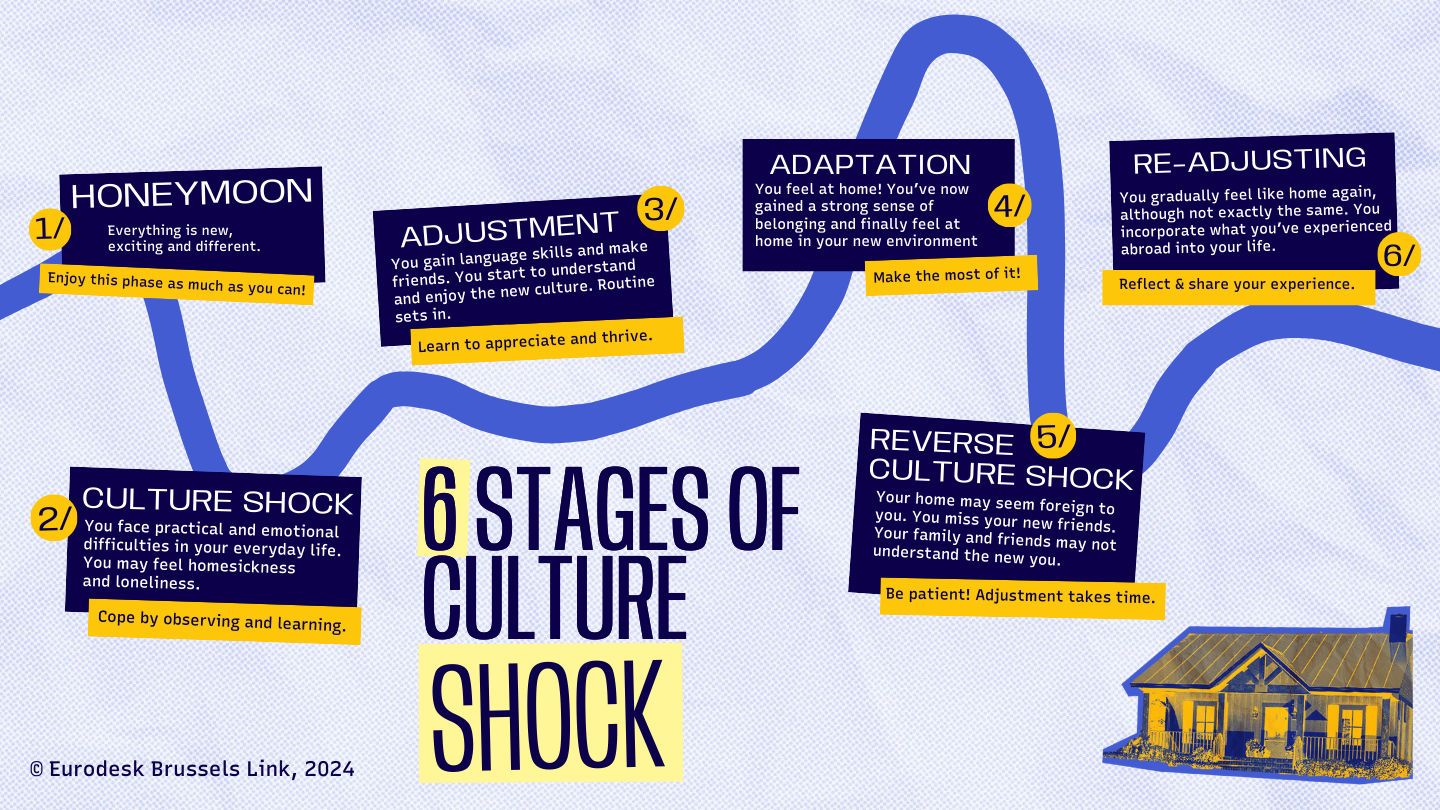
Going abroad for international mobility be it to study, do an internship, volunteer or work can be a life-changing opportunity filled with memories and learning experiences that you will carry throughout the rest of your life. Nonetheless, as exciting as it can sound, leaving one’s comfort zone comes with its challenges and it’s important to look after your well-being and be aware that you may experience “culture shock”.
Embarking on a journey abroad isn’t merely about changing locations or travelling. It’s a chance for personal growth and self-discovery as you immerse yourself in a new environment and culture while meeting new people. This experience can expand your horizons, challenge your assumptions, and help you become more open-minded, flexible and resilient.
However, adapting to this new environment comes with challenges that can affect your mental health.
When we talk about mental health, we're referring to your emotional, psychological, and social well-being. It's how you navigate your thoughts, feelings, and actions. Like physical health, mental health is crucial for your overall well-being. It affects your ability to cope with stress, connect with others, make choices, and experience life to the fullest.
It's essential to take care of your mental health while going abroad, as unfamiliar environments, cultures, and experiences can lead to stress, anxiety, and homesickness - what is commonly referred to as “culture shock”. Not overlooking your mental health will ensure your experience goes smoothly.
Here are 10 tips for coping with change:
- Be open-minded
- Stay connected
- Build a support system
- Learn about the other culture
- Stay active
- Practice self-care
- Keep a routine
- Seek help if needed
- Celebrate small wins
- Record
Remember that culture shock is a natural process when encountering a new culture. As you become more familiar with your surroundings, the feelings of culture shock will gradually fade. However, there are some signs that you shouldn’t ignore since they may indicate that something is not quite right:
- When you feel constantly overwhelmed by sadness, anxiety, or frustration to the point where it significantly impacts your daily life.
- When you isolate yourself from others. While it's natural to feel homesick or shy, prolonged isolation can be a red flag.
- When you experience persistent headaches, stomachaches, insomnia, or changes in appetite, it could be a sign of underlying emotional distress. These symptoms should not be ignored.
- When you turn to alcohol or drugs as a coping mechanism for dealing with hurtful, stressful, or emotional situations.
If you experience some of these, take a moment to reflect on how you’re feeling. Talk to your friends and family or to a professional if you’re struggling. Don’t isolate yourself. It's normal to feel overwhelmed or homesick, especially in a new and unfamiliar environment. However, if these feelings become too intense or start interfering with your ability to enjoy your experience, it's essential to seek support.
Written by Eurodesk Brussels Link