

 Image by Gerd Altmann from Pixabay
"I understood I would serve in the army, I just didn't know when": From graphic designer to soldier
Last updated on Monday, 16/02/2026
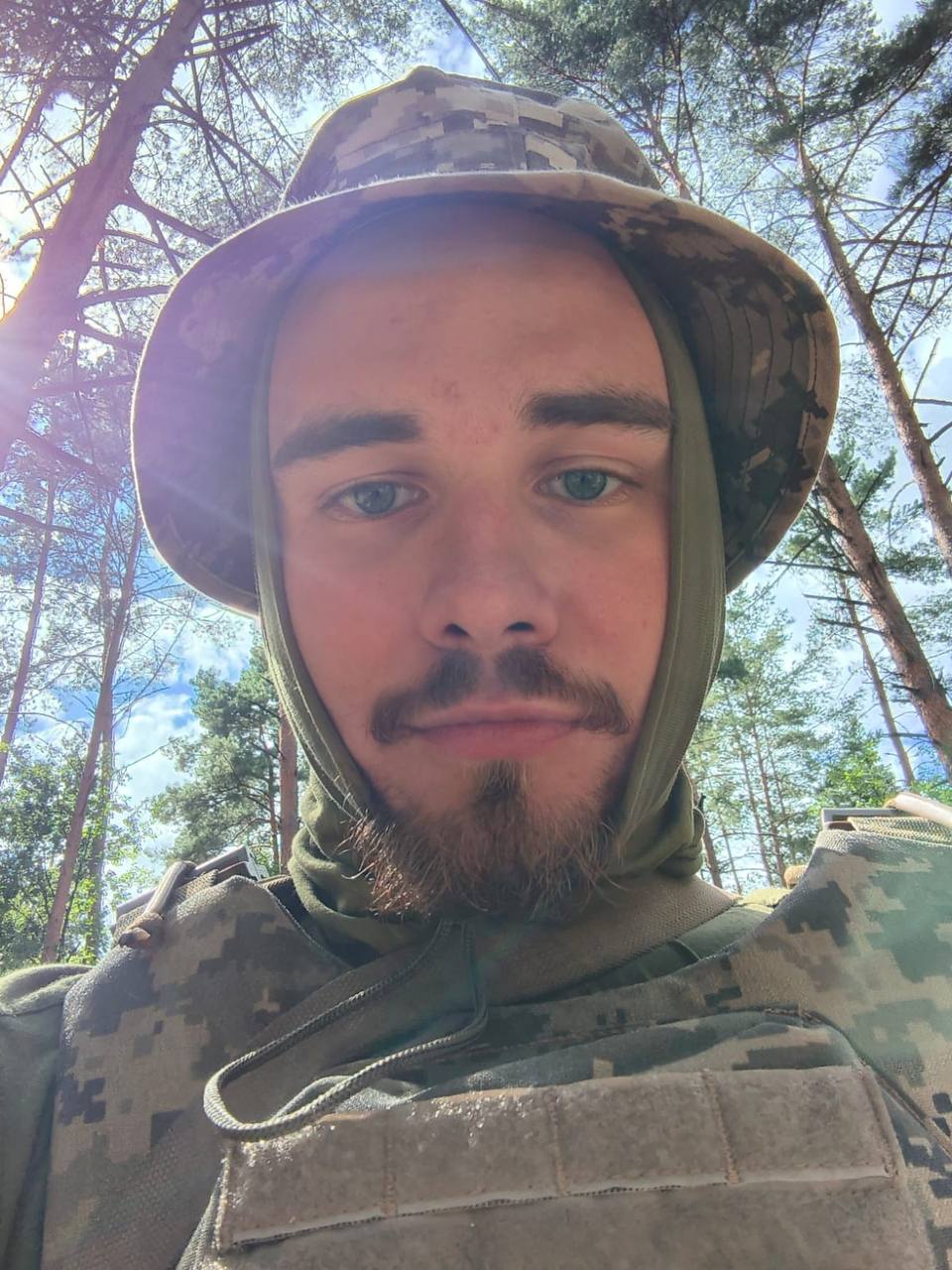
Interview with Vadym „Dys” Trokhymenko, volunteer drone operator in the Ukrainian Armed Forces, who was 19 when Russia launched its full-scale invasion. Three years later, after volunteering, fundraising, changing his language and losing a close friend at the front, Vadym signed a contract with the Ukrainian Armed Forces and became a drone operator.
(The interview was conducted in Ukrainian and translated into English)
What was your life like before the Russian full-scale invasion?
My name is Vadym, I’m 23 now. Before Russia’s full-scale invasion of Ukraine, I was a journalism student. I also worked at the Shakhtar Donetsk football club as a football security officer [responsible for ensuring safety at football events].I was a bit into graphic design. I was just living my best life.
I didn't believe that a full-scale war would start. I thought that Russia would flex its muscles and calm down eventually. I was very wrong. 24 February, 2022 turned my life upside down. I had to change completely.
How did you experience the day of the invasion, 24 February, 2022?
I woke up, checked my phone, and saw 70 notifications. And I thought, damn, the war has started. Then I read about rocket strikes on Odesa, rocket strikes on Kyiv. My whole world just collapsed.
I had to adapt somehow. On the first day, I walked around like I was in a nightmare. I just couldn't believe it. It happened very, very quickly. During that day, I had to evacuate my whole family – my mum, dad, and grandmother – to a village nearby. I live close to the Trypilska Thermal Power Plant, which has often been targeted by Russia since the beginning of the full-scale invasion. So it was very dangerous to be near it. I remember on the first day standing in line at a pharmacy when the missile hit the power plant. It was very dangerous.
You didn't evacuate further away, right? To the West of Ukraine or abroad?
No, never further west. No one [from my family] wanted to flee or run away. Some friends left for the West of Ukraine or abroad. But I stayed. My position was that I would most likely enlist in the Territorial Defence. On the 25th of February, I was already at the doorstep to join. They didn't take me because either I didn't have enough courage at that moment to go all the way to Territorial Defence, or because of my age. Later, they told me that 19-year-olds – and I was 19 at the time – were not accepted into the Territorial Defence, so they turned me back, just like my friend “Amigo”.
How did your life continue after that? Did you keep working despite the war?
Back then, I was working at the Shakhtar football club. It was evacuated to the Lviv region, but I didn't want to evacuate with it, so I stayed in the Kyiv region. I had a pretty clear position. I already knew that if my city were occupied, I would either become a partisan or join the Armed Forces of Ukraine. And I had to somehow adapt, somehow live with the thought that the war had begun.
I remember on the night of 25 February, I went outside, and there was such a beautiful starry sky. I looked up, cried a little, and thought, damn, most likely, I'm going to die. Because, based on what I believed back then, we had very little chance of surviving. Most likely, we won't be able to hold out. I believed in those propaganda tales, like “the second biggest army in the world” [meaning Russia’s army – ed.], and so on, and so on. I thought we would eventually have to take up arms and die fighting.
Tell me about the first time you became a volunteer and started collecting donations. How did you start?
I began volunteering from the very beginning [of the full-scale invasion] after I wasn't accepted into the Territorial Defence. I created some posters and promotional materials [for the Ukrainian army], which went viral across the internet and were even featured on Telegram channels. From around May 2022 until October 2023, I fell into a kind of hibernation, thinking that the war was somewhere far away, in the east, that the Russians had been pushed back out of the Kyiv region, and that we just had to get on with our lives somehow. For a while, I forgot about the war, but later I came back to reality.
I started speaking Ukrainian. I was a Russian-speaker before, but I had to accept my identity, and, in fact, I started to get involved in the volunteer movement, a movement of conscious people. Then I started fundraising. It all started somewhere around October 2023. I opened my first fundraising, as I remember now, it was 10,000 UAH (around 200 EUR) for 113 AZOV (a unit of the Azov formation within Ukraine’s security forces). It was very difficult to collect it, because 10,000 for the first collection is a big sum of money.
Then, somehow, it just took off. I really enjoyed collecting. As of today, I have about 45 closed fundraisings, totalling 250,000 UAH (5,200 EUR). Even now in the army, I collected during Basic Military Training. It has become such a hobby.
Why did you decide to change your language, from Russian to Ukrainian?
I found myself in a Ukrainian-speaking environment. It's very contagious for me, in a good way. I saw that everyone around me was speaking Ukrainian. I started to feel like a black sheep. Moreover, I spoke Ukrainian quite well even before switching, but I needed to change my identity first.
It was quite awkward at the beginning because I come from a Russian-speaking family. They all speak Russian, except for my grandparents. So basically, I was raised as a Russian-speaking child. Switching languages required a lot of effort, but I managed.
One of the people who motivated me the most was my friend who served in the 3rd Assault Brigade. He switched to the Ukrainian language himself – he was also a Russian speaker since childhood. His example really inspired me.
Later, I saw that my own example began to inspire other people, and I saw how my circle of friends, who were still Russian-speaking, began to switch to Ukrainian. I realised that I was moving in the right direction.
Let's move to the moment just before you decided to join the army and sign a contract. What motivated you?
From the very beginning, I understood that I would serve in the army; I just didn't know when. In August 2024, I went to the Atlas Festival in Kyiv (Atlas Festival is a major annual music and cultural festival in Kyiv, which in recent years has also hosted charity and military-related exhibitions in support of Ukraine’s Armed Forces), and there was an exhibition with military displays and various brigades’ representatives. During these big events, you can often try to fly FPV drones. You just go into the simulator, pick up a remote control for the first time in your life and fly.
Well, that's what I did. I flew, I really liked it, and I thought, damn, this is cool. I came home, bought myself a simulator, and just started flying for myself. And then I started looking into job offers for drone operators. In August 2024, I tried it for the first time, and exactly one year later, in August 2025, I signed a contract.
The second thing that really motivated me was that in January 2025, my friend “Amigo”, with whom I had stood on 25 February 2022 to join the Territorial Defence, was killed. He died fighting in the ranks of the 3rd Assault Brigade. He fought for almost three years.
And for me, it was a turning point. It changed me as a person, and I realised that joining the army was only a matter of time. I couldn't work at the time; I was already working as a designer in a creative agency. And, damn it, somehow life wasn't as fun or joyful anymore.
I understood that this touched me directly. I had to choose a position in the Army. I started going to training grounds a lot, about four or five times in total.
I started choosing among the best teams. I ended up in a branch of the military called Unmanned Systems Forces. We systematically shot down Russian Shahed UAVs using interceptor drones (Shahed UAVs are Iranian-made one-way attack drones, often called “kamikaze drones”, used by Russia to strike Ukrainian cities and infrastructure. Russia employs them widely for nighttime attacks, and Ukraine intercepts them using air defence systems and, increasingly, interceptor drones.
How do you feel morally about your decision, and have you ever regretted it?
I accepted it easily because, in my opinion, it's even easier to be in the army than in civilian life. Honestly.
I joined the service this year, and I like it. I do incredible work to protect the citizens of my country. I ended up in a team of incredible people. I like it. This is one of the best lives I could have lived. Therefore, I cannot regret any decision.
I want to ask you about European youth, some of whom are currently living their best lives in peace. They live in their countries, enjoy life, while Ukrainian youth have to fight. Does this evoke any emotions in you? Do you think about the fact that there is a different life abroad, and people don't even think about the war?
Well, Europeans have no objective reason to think about the war. They live in peace, which, in my opinion, is likely to change soon because Russia will continue its offensive operations against Europe.
I don't feel any resentment. First of all, I am defending my fellow citizens, and secondly, I understand that I am defending the peace that still exists in Europe as well.
It just happens that the Ukrainian generation of young people, because we are at war, are joining the army, starting to work to protect Ukraine's future, to protect Ukrainian statehood, and so on.
So, yes, that's right. I don't feel anything at all. As for European youth, I don't think about them. I think more about Ukrainian youth. Ukrainian youth are here in the army, some fighting with swords, some with shields, as in my case (“Swords” represent direct combat roles, while “shields” represent defensive or support roles, such as operating drones or helping protect civilians).
What do you dream about?
I call myself a patriot of my country. I love Ukraine very much. And I dream of a strong, truly independent Ukraine, which will be quite developed in the military sector, which will be able to stand up for itself, which will have an incredibly patriotic generation of young people, which will be economically attractive, which will simply be a strong Ukraine. Actually, I think we are moving in that direction.
We are moving, well, I don't know, in small steps, but we are still moving towards this dream of mine, and I am very honoured to be involved. I also dream of peace, that it will finally come, and that rockets will not fly into our city. Today (14th November) was such an awful night. Air defence work, many drones, many rockets, many explosions, but, well, after all, this is war.
So yes, I guess I dream of a strong Ukraine.
Young Journalists in Europe - Meet the author
Anna Kalenichenko
“I’m a Ukrainian living abroad. Politics and diplomacy guide me in making choices that actually matter right now. Through honest conversations and meaningful actions, I want to be sure we’re building a story we can be proud of and not one we’ll regret.”
This article reflects the views of the authors only. The European Commission and Eurodesk cannot be held responsible for it.