

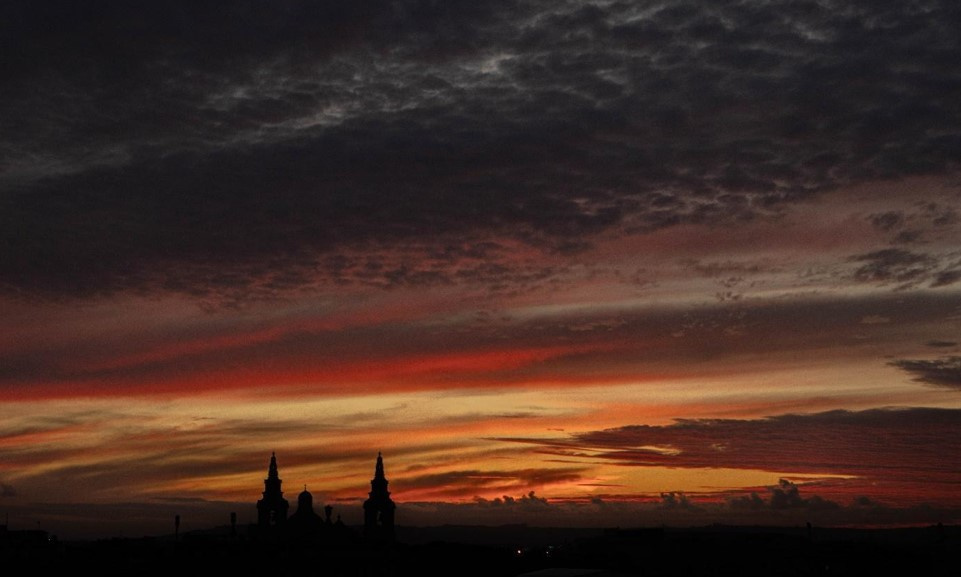
 © Maltese Sunset – Photo taken by Juliana Zammit
Is it Arabic? Is it Italian? No, it’s Maltese!
Last updated on Wednesday, 03/06/2026
The island of Malta... I bet you think it’s part of Italy (We get told that a lot!). This little, little, island (yet with a population of more than half a million) is part of the Mediterranean Sea and is quite forgotten unless some big scandal drops (like the killing of journalist Daphne Caruana Galizia) which has put the island in every headline across the world. Malta also has two official languages: Maltese and English – with Maltese also known as ‘il-Malti’, being the only Semitic tongue in the official languages of the European Union and the only Semitic language written using the Latin alphabet.
The Unique Maltese Language: A Semitic Tongue in Europe
Picture this: A language that’s like a linguistic cocktail, bringing together different types of Arabic, Italian, English, and even a sprinkle of its special flavor through different consonants, vowels, and grammar. Maltese is spoken by more than 500,000 people in the Maltese population including those who live abroad.
Attention! You’re in a history class...
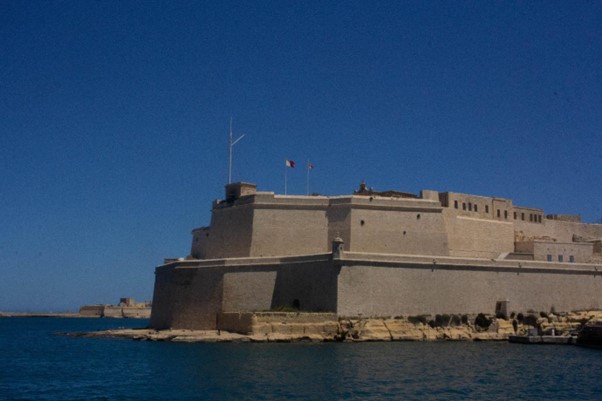
© Fort St Angelo – Fort used by the Knights of St John against the Ottomans – Photo taken by Juliana Zammit
When Malta was conquered by the Arabs between 870 and 1091, the Arabic language quickly settled onto the island. However, other languages were introduced with legal jargon spoken in Latin and communication with the Palermo government in Sicilian.
This all happened when the islands fell into the hands of the Normans, Kingdom of Sicily, and Crown of Aragon (Yep, we got conquered a lot!). Soon enough, the Knights of St. John decided to join the slumber party and introduced the Tuscan language which lead to the presence of Italian in official documents.
In 1814, English was made the dominant language when the island became a British Crown Colony (Haha, take that, Italy... joking, we love you!). Thanks to the colonizers, Maltese became an official language in 1964 alongside English.
Maltese Grammar
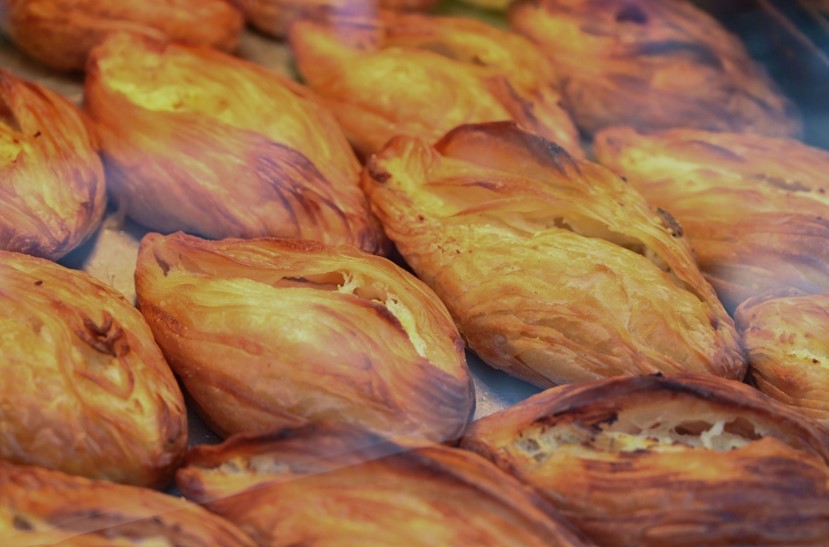
© Maltese Traditional Food - Pastizzi - Photo taken by Juliana Zammit
Enough about History, here’s a quick grammar lesson to get you prepared for your visit to Malta (you have to know how to pronounce pastizzi!).
Looking at the alphabet, grammar, and vocabulary, there is a big influence of Arabic which can be seen in words for mother, son, daughter, boy, girl, (omm, iben, bint, tifel, tifla). Other members of the family have Italian names like nannu, zija, neputija, kuġin, (grandfather, aunt, niece, cousin). There is also the use of English words also known as code-switching, as a stand-in for nonexistent Maltese words like ‘foundation’.
Most importantly, apart from the 26 letters in the alphabet, we also have a ‘c’ (Ċ), a ‘g’ (Ġ) and a ‘z’ (Ż) with a dot on top, a ‘gh’ written as one letter with the head of the ‘h’ cut off (GĦ), an ‘h’ with the head cut off (Ħ).
Now onto the important part: how to pronounce pastizzi! If you ever find yourself in Malta with a grumbling stomach, just seek the nearest pastizzi shop on Google Maps and ask for a pastizzi (pahs-tiz-zee) and you’ll get a taste of our traditional food along with our language.
There are also the famous phrases that you’ll catch a lot of Maltesers throwing around like:
‘Mela (me-la): ‘So…’, ‘Agreed,’ ‘Of Course’, or ‘Obviously’ (meeeela!).
‘Uwejja (uu-wey-ya): ‘Oh come on!’, ‘please’, ‘hurry up’ or else ‘you’ve got to be kidding me!’
Bis-serjetà? (biss-ser-ye-ta): ‘Seriously?’ and can be used with a hint of sarcasm.
Jew (yeww): literally means ‘or’ but should be used in disbelief like ‘int miġnun, jew? (Are you crazy or…?’
If you ever hear one of these phrases or even all of them in one sentence from a Maltese person, it means some kind of gossip was just spilled.
The Maltese Language Being Taken Away from Parliament
You’re probably wondering, why is she yapping on and on about this random Siculo-Arabic (meaning varieties of Arabic that were spoken in the Emirate of Sicily (which included Malta) from the 9th century) language? Well, the European Parliament announced last March that it would be removing Maltese from its translation languages till the next mandate in 2029. This is due to a lack of Maltese interpreters which is an ongoing issue since Malta’s accession into the European Union in 2004.
According to the EU’s language policy, The EU has adopted a ‘full multilingual language policy’, which is supposed to mean that all EU languages are equally important. Most importantly, it continues by stating that every Member of the European Parliament has the ‘‘right to speak in the language of their choice.’’
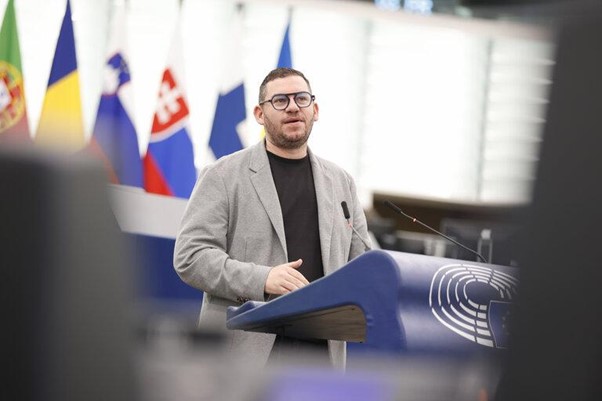
© Cyrus Engerer, Maltese MEP - Photo via Media Centre, European Parliament
MEP Cyrus Engerer, who comes from Malta, spoke back in March to the European Parliament, addressing his inability to speak in his native language due to the lack of Maltese language interpreters in the institution. However, this issue stems from the Maltese government's failure to respond to a letter from European Parliament President Roberta Metsola in February of this year, which sought to address a problem that has persisted for the last 20 years concerning the Maltese language.
This was not the first incident where Maltese ‘‘vanished’’ - the ‘‘brand-new’’ national airline of Malta also announced that Maltese had been dropped as a language requirement for its staff because it expects ‘‘more than 80 percent’’ of its customers to be foreign. Imagine flying back home on your national airline and you can’t even speak your native language…?
Survey: National Forum on the Maltese Language
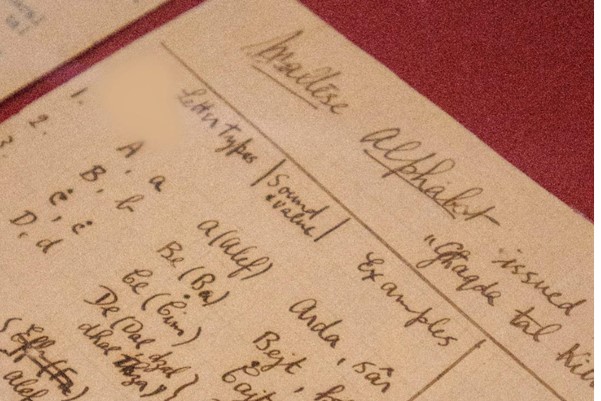
Maltese Language Exhibition - Malese Alphabet - Photo taken by Juliana Zammit
The forum on the Maltese Language, held two days after World Day for Official Languages, which is celebrated on the 23rd of April, raised awareness about our language and its importance to our identity. A survey was conducted with 600 participants aged 16 and above which resulted in:
● 97% of respondents in Malta consider Maltese to be their first language, with 95.4% considering it one of their main languages, while 12.7% consider English as one of their main languages. Nearly 95% of Maltese speak Maltese with their families, and 13.5% speak English with them, with the majority of these last ones residing in the North (19.8%).
● Parents of children under 18 speak Maltese to their children (68.3%), while 15.9% speak to them in English, and another 15.9% use both languages. Parents aged 26-45 are most likely to say their children understand only English (24.3%), especially those living in the North of the Grand Harbour (30.4%).
● At work, nearly 80% of Maltese speak Maltese, and over half (53.2%) speak English with their colleagues. Maltese is specially used in banks (75.7%) and less used in bars and restaurants (16.1%).
● Almost half of the Maltese attend cultural activities, with a preference for those using the Maltese language only (53.7%). Additionally, nearly 85% of Maltese agree that foreigners living in Malta should learn Maltese.
The Importance of The Language from The Perspective of a Maltese Teacher
Fortunately, we don’t let our language go so easily. Through exhibitions, song contests, national councils, and being able to earn a high education in the Maltese language, the population thrives to keep the language alive.
Speaking to Matthew Zammit, a young Maltese teacher, he shared that he finds it satisfying when teaching the language, seeing the influence his teaching leaves on his students and how they’ll be using what they’ve learnt during their everyday lives. Leaving us with a piece of advice for anyone wanting to learn Maltese, he shared: ‘jekk trid titgħallem lingwa kun espost għaliha billi tisma’ lill-kelliema jużawha, tara stazzjonijiet Maltin u l-aktar importanti, tippratika l-lingwa’ (if you wish to learn the Maltese language, be exposed to it by listening to Maltese speakers, watching Maltese TV stations and most importantly, practicing the language).
Peppa Pig is Maltese?
On a good note, MEP candidate James Ryder stated in a recent election debate that he’d love to work on having popular international kids' shows dubbed in Maltese, since the cartoons broadcasted on tv are in English. “How amazing would it be if we could have those accessible to our children in Maltese?” Ryder continued. “And fun fact: Iceland does Peppa Pig in Icelandic with a much smaller population than ours.’’
Well, this was something that made sense for once. Not even 48 hours later, Co-founder and Director of Media Exclusive, a production company bringing and producing some of the top franchise TV shows worldwide to Malta, Ben Camille shared his excitement for the project and emphasized the importance of promoting the Maltese language in a fun and engaging way.
Viva l-lingwa maltija! (Long live the Maltese language!)
Although the Maltese might be overtaken by the English language in some cases, it still stays close to our hearts. The French may have ‘C’est la vie’ which translates to ‘that’s life’ and the Italians may have ‘Veni, vidi, vici’ which translates to ‘I came, I saw, I conquered’ but we have ‘Mur Hallini u Itlaq l'Hemm’ which translates to ‘go, leave me alone, and go away’ which is a famous song from a Maltese singer, Freddie Portelli, and we cannot forget about our television shows with different characters,all with their dramatics (we love you Gladys!)
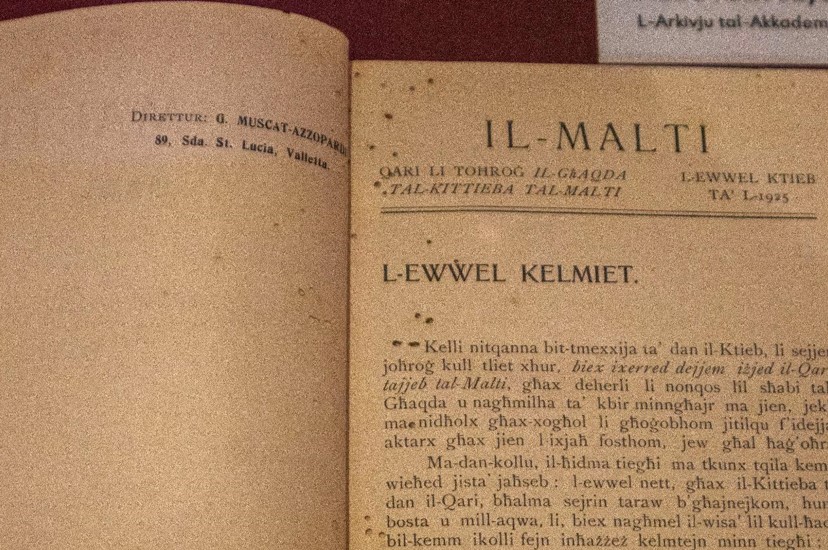
© Maltese Language Exhibition - ‘Maltese: The first words’ - Photo taken by Juliana Zammit
Last year, an exhibition titled "Il-Malti: Il-Mixja sal-Għarfien Uffiċjali" (Maltese: The Journey to Official Recognition) was held at the National Museum of Archaeology in Valletta, the capital city of Malta, showcasing the long path of the Maltese language to becoming an official language of the country, as well as its recognition in EU institutions
Whilst the government is taking reasonable measures to see that foreigners who are in Malta communicate better by having the possibility to follow courses in Maltese, it’s important that people who are born and raised in Malta make their own efforts to keep the Maltese language alive – with that being said, time to go continue my duolingo streak!
_______________
Young Journalists in Europe - Meet the author
Juliana Zammit
Hello, I'm Juliana Zammit, a 20-year-old journalism student. I have loved writing and telling stories since I was little. Over time, I've grown to enjoy learning and researching new things. I also studied photography for two years, which taught me to see the world differently and find beauty in ordinary things. I hope to tell many stories through words and pictures.
This article reflects the views of the authors only. The European Commission and Eurodesk cannot be held responsible for it.