

 © Marcos Yagüe
Life with a Rare Disease. Through the eyes of Irene, 13.
Last updated on Tuesday, 30/06/2026
Sometimes, what we believe is exceptional is actually quite common. Millions of European families have young members with disabling rare diseases. But many of them feel invisible. Can we make a change by listening to them?
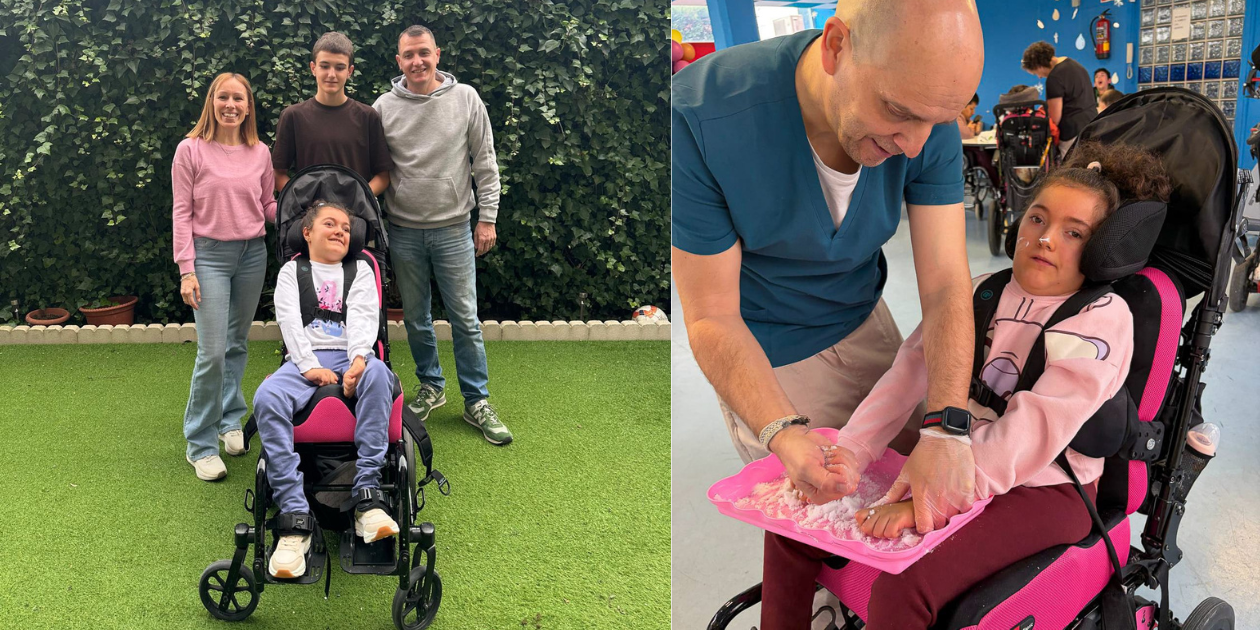
Susana and Miguel are a Spanish couple from Madrid with two teenage children: Rubén, 16, and Irene, 13. I got to spend a day with this family.
“As the weather is nice, I brought her out here to get some sunshine,” says Susana as we get to meet Irene, who is smiling in her wheelchair in their house’s garden. Irene’s smile isn’t like that of any other girl. She has a very rare mutation in the GNAO1, a gene which is responsible for the severe intellectual disability and physical incapacity she suffers from. It only affects around 300 people in the world. The G203R variant of the mutation Irene suffers from provokes the most disabling symptoms. Irene’s cognitive skills are much more limited than those of someone without her mutation. She’s also almost totally unable to move
Irene also has a severe movement disorder that causes periodic episodes of abrupt involuntary mobility. On top of all this, she regularly experiences epileptic attacks. She requires many medications and constant doctor visits. Yet seeing Irene smiling in the garden, engaging with her mother as she hugs her, leaves you with the impression that Irene is, above all, a girl who feels.
Rare diseases like Irene’s affect a very small number of the population. The EU categorises as rare such diseases affecting ‘less than 5 per 10 000 people in the Community’. But when adding all of the more than 7000 rare diseases existing, they account for a significant number of patients: between 27 and 36 million in Europe. More than 70% of them have lived with it since childhood.
A very extraordinary - yet typical- daily routine
After breakfast, it’s time to take Irene to the minibus that drives her to school. From Monday to Friday, Irene attends a private centre specialised in children with cerebral palsy. Susana has nothing but kind words for the school: “We loved it from our first day because the whole place feels like a family.” Irene is there from ten in the morning until five in the afternoon. We got in touch with Raúl, her teacher. He explained that every day they usually put Irene in front of a visual computer. They also hold a pupils’ gathering with songs and, depending on the day, they might play with robots, practise psychomotor skills or do auditory stimulation.
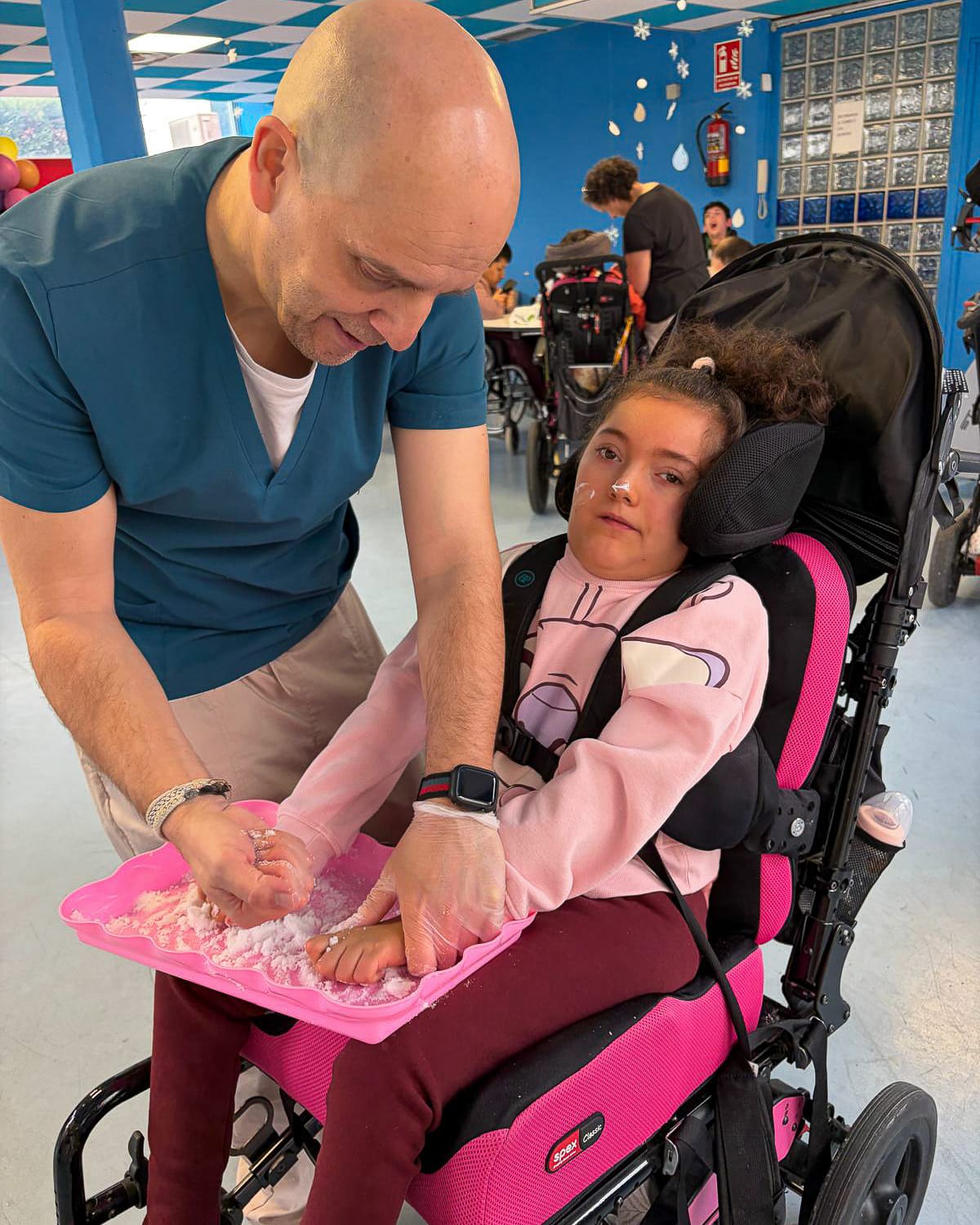
© Susana. Irene is practising sensorial stimulation at school with Raúl.
Just as we’re mentioning him, Rubén returns from school. “Irene is a fighter,” he tells me when I asked him about his sister. Rubén has lived with Irene practically for all his life, as he was three years old when she was born. During lunch, Susana tells us that from the very beginning, they decided not to make a drama out of Irene’s illness. “I think we’ve managed to help our son view it in a natural way”, she mentions. Rubén argues that over the years, he has become increasingly involved in taking care of Irene. He knows how to prepare all the medicines Irene needs and what to do to calm her sister when crying. But when she experiences epileptic attacks, he also gets more nervous. “He’s more aware of the danger,” says Miguel. Rubén knows that every attack Irene experiences could lead to her needing to be hospitalised, as it has happened other times.
After lunch, the house falls into silence. Miguel wants to finish some work, Susana needs to rest, and Rubén's got to study. I spend time thinking. Although Irene’s case is exceptional, many young people can relate to this family. Most readers of the story will know someone close who, to some degree, needs their care. For young Europeans, especially, who are already facing serious economic problems such as unemployment, looking after an ill family member can add to financial stress. Miguel told me they receive a monthly pension from the Spanish Government and discounts on orthopaedic devices from the Regional Government of Madrid. But he stressed how insufficient that feels by telling me that “more than half of what they receive is spent on the school fee”.
When Miguel finishes work, he and Susana go to pick up Irene, while Rubén keeps studying. On the way to the minibus, they tell me what a struggle it is to cope with rare diseases. Susana remembers that all the nights, when Irene is suffering attacks, she has to wake up to calm her. This constantly takes away hours of sleep for her. “I am used to living tired”, she points out. They have also had a tremendous amount of periodic hospital visits that have not stopped and will never stop.
We arrive at the minibus, where we greet the minibus technicians, Edu and Abi. Irene appears somewhat uncomfortable getting off the bus in her wheelchair, but once she’s on the street, she smiles at us. People witnessing Irene could help raise the awareness that these parents feel is lacking. “There are far more people than we can imagine”, Susana states. They have tried to change it lately. Today, they’re members of GNAO1 Action, an international association comprising five families with children from Spain, Finland, Mexico and Argentina with the same mutation variant as Irene. Their aim is to fund research that is already underway, which will seek to find a more specialised treatment for each child.
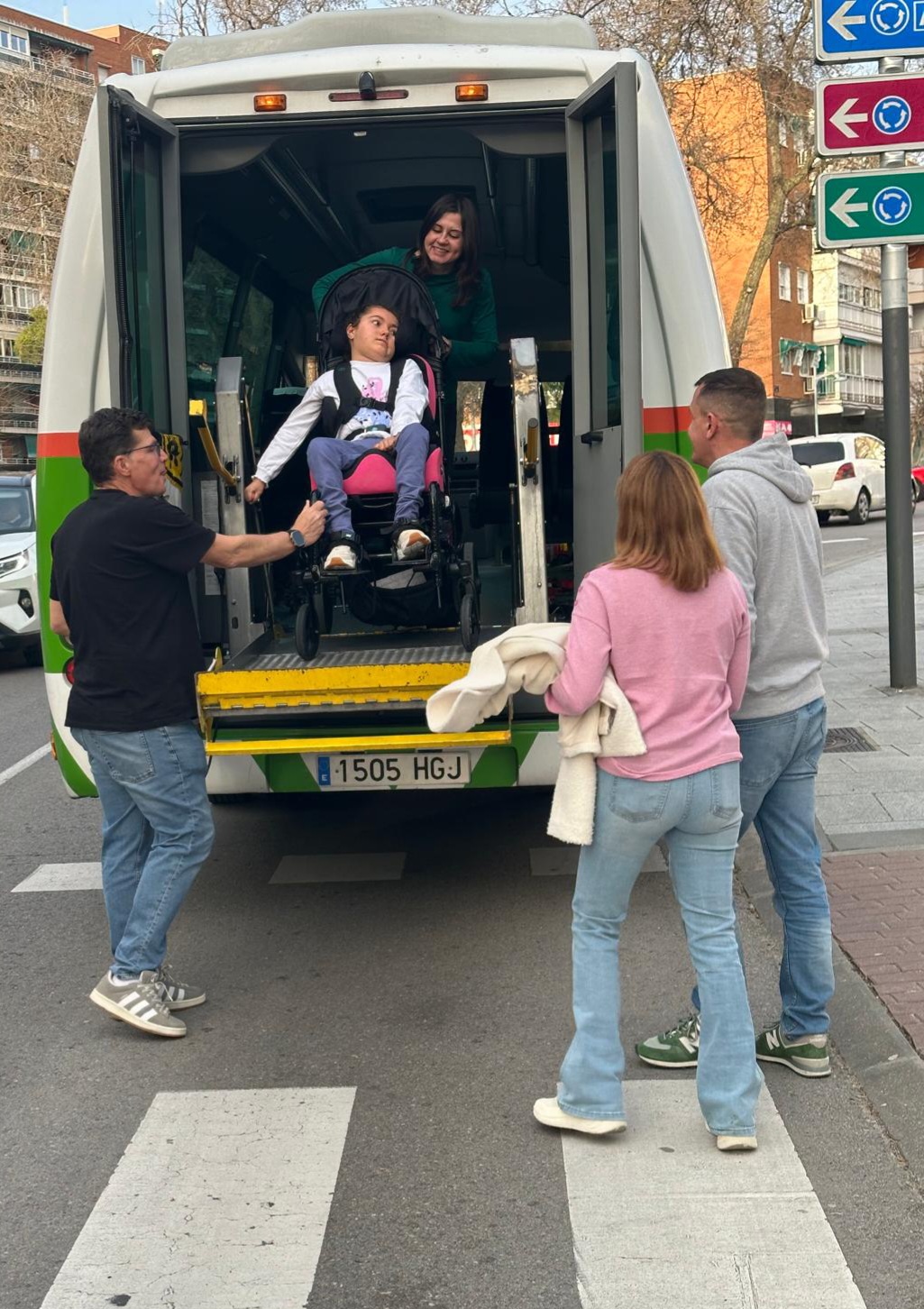
© Marcos Yagüe. Irene gets out of the minibus with her parents on the right, Abi in the vehicle and Edu on the left.
Back home, they emphasise that funding comes strictly from charity events organised by the families, like paddle tennis tournaments. Lots of young people attend these. For Susana, despite the lack of awareness, there are already plenty of people showing solidarity. But they do not share the same view of the institutions. Neither the local, regional, nor the Spanish governments nor the European Union funds their research. “The mayor of Alcorcón promised in a meeting that they would contact the Minister of Health, but that never happened”, recalls Miguel. They are not sure if the mayor’s office didn’t reach the ministry or if the ministry didn’t attend to the petition, because the mayor stopped communicating with the association after the meeting. But Miguel especially feels like they have played with their feelings. “It’s not right to give people false hope”, he signals.
It’s getting late, so I bid them farewell. Their home is now filled with joy as they sing and dance for Irene, her favourite song, “El payaso Tallarín”, which is about a noodle moving everywhere. She always laughs when hearing it, and so does the rest of the family. The shine in their eyes must not make us forget that they are facing a significant challenge in their lives while feeling that the institutions are not doing enough. It’s our responsibility as a society to help raise the awareness of these families caring for young Europeans like Irene – and of the young people involved in their care, like Rubén. They, too, are part of Europe’s youth.
Young Journalists in Europe - Meet the author
Marcos Yagüe
“Where there is a footprint, there was once a piece of soil stepped on by thousands, but only one who will be remembered. I am Marcos, a 19-year-old Spanish student of History and Politics. When free, I enjoy reading and writing stories, swimming and wandering through the city. For me, journalism is about bringing to light all those stories that never left a footprint, but did step on the soil.”
Article collaborators: Nailah Casals de Vega
This article reflects the views of the author only. The European Commission and Eurodesk cannot be held responsible for it.