

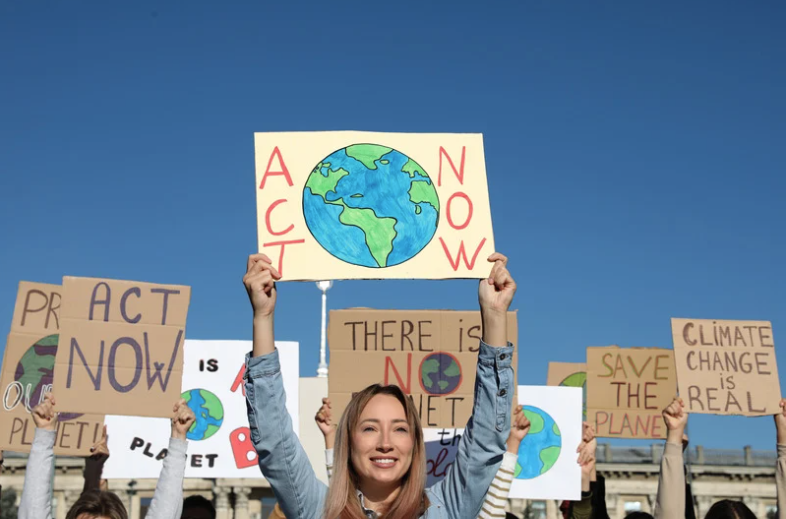
 ©africa-images from CANVA
Impact of climate change on young people's mental health
Last updated on Monday, 15/09/2025
Climate change and mental health may appear to be unrelated topics, but they are, in fact, deeply interconnected. The impacts of climate change are increasingly affecting the mental health of young Europeans. Let’s break this down…
A study titled: ‘The Role of the Youth Sector in Addressing Young People’s Climate Emotions’ revealed that 75% of young respondents expressed fear for the future, while 85% reported moderate worry about climate change. Perhaps most troubling is that 59% described feeling very worried, and 45% indicated that their concerns related to climate change were negatively affecting their day-to-day functioning.
Young people are experiencing a variety of climate-related emotions that extend beyond just anxiety. These emotions include eco-anxiety, which is defined as a chronic fear of environmental doom; climate grief; and solastalgia, a term that describes the distress felt when changes in the environment negatively impact one’s home. These are not abstract; they manifest in tangible ways, affecting young people’s sense of security and hope for the future.
In light of these circumstances, the EU specifically has increasingly recognised the importance of addressing climate and mental health-related concerns. The European Green Deal, formulated to tackle these issues, seeks not only to safeguard and enhance the EUs natural resources but also to protect the health and well-being of its citizens from environmental risks and impacts.
In practice, various EU initiatives are now directly addressing these challenges catered for young people. Which include:
Erasmus+ climate projects for young people: Projects such as "Peace on Earth: empowering women for peace within, with others and for nature" trained 32 youth workers to professionally support young people struggling with eco-anxiety. "Reducing Eco-Anxiety Through Nature Connection" aimed to immerse participants in understanding, recognising and coping with eco-anxiety.
European Solidarity Corps: Projects like "Waterfront projects” enhance the capacity of young artists in Gothenburg (Sweden), Lesvos (Greece) and Zadar (Croatia) to address environmental challenges and eco-anxiety they cause to communities.
Horizon Europe, equipped with a budget of €95.5 billion until 2027, offers numerous funding opportunities for research and innovation on the health effects of climate change, with particular focus on young people. Six ongoing European research and innovation projects focus specifically on the impacts of climate change on health and collaborate within the Climate-Health Cluster.
Furthermore, the European Environment Agency published the first European Climate Risk Assessment (EUCRA) in March 2024, which specifically warns that climate risks have already reached critical levels and could become catastrophic without urgent action - a finding particularly relevant for young people who will face the long-term consequences.
Recognising these challenges, the European Commission responded with the Communication 'Managing climate risks - protecting people and prosperity', which identifies specific actions for impacted clusters, including youth mental health support.
The EU Preparedness Union Strategy, adopted in March 2025, identifies climate risks among current threats and commits to closing gaps in support for young people. The strategy plans to conduct detailed assessments of risks across various sectors, with a particular focus on youth vulnerability.
Education holds a central role in this society, which is why in 2022, the Council of the European Union took a proactive step by adopting recommendations focused on learning for the green transition and sustainable development.
These recommendations underscore the critical need to address eco-anxiety by equipping educators with the knowledge and skills necessary to teach about the climate crisis while also providing support for students experiencing eco-anxiety.
In practice, various EU initiatives are now directly addressing these challenges catered for young people. Which include:
The European Commission is currently developing the Strategic Research and Innovation Agenda on climate and health, following the 'Research Perspectives on the Health Impacts of Climate Change' conference in February 2024. This initiative specifically seeks to bridge the gap between research and policy implementation for young people, ensuring that new scientific insights translate into effective youth-focused public health interventions.
Climate change can feel overwhelming, especially when its effects weigh on our mental health. But recognising these challenges is also the first step in addressing them. While eco- anxiety and climate grief are very real, there is also the chance to overcome them. With the right support, young people can reshape climate challenges into opportunities for action, creating a healthier and greener future for themselves and the future generations to come.
Written by Eurodesk Brussels Link