

 © Photo by Dmitrii E. on Unsplash
The Vatican goes viral: Are Generation Z finding new faith?
Zuletzt aktualisiert am Mittwoch, 03/06/2026
When online culture and ancient traditions collide, what do you get? One of the most entertaining weeks of the year so far. But does “Conclave Twitter” speak to a wider social shift among young people towards organised religion?
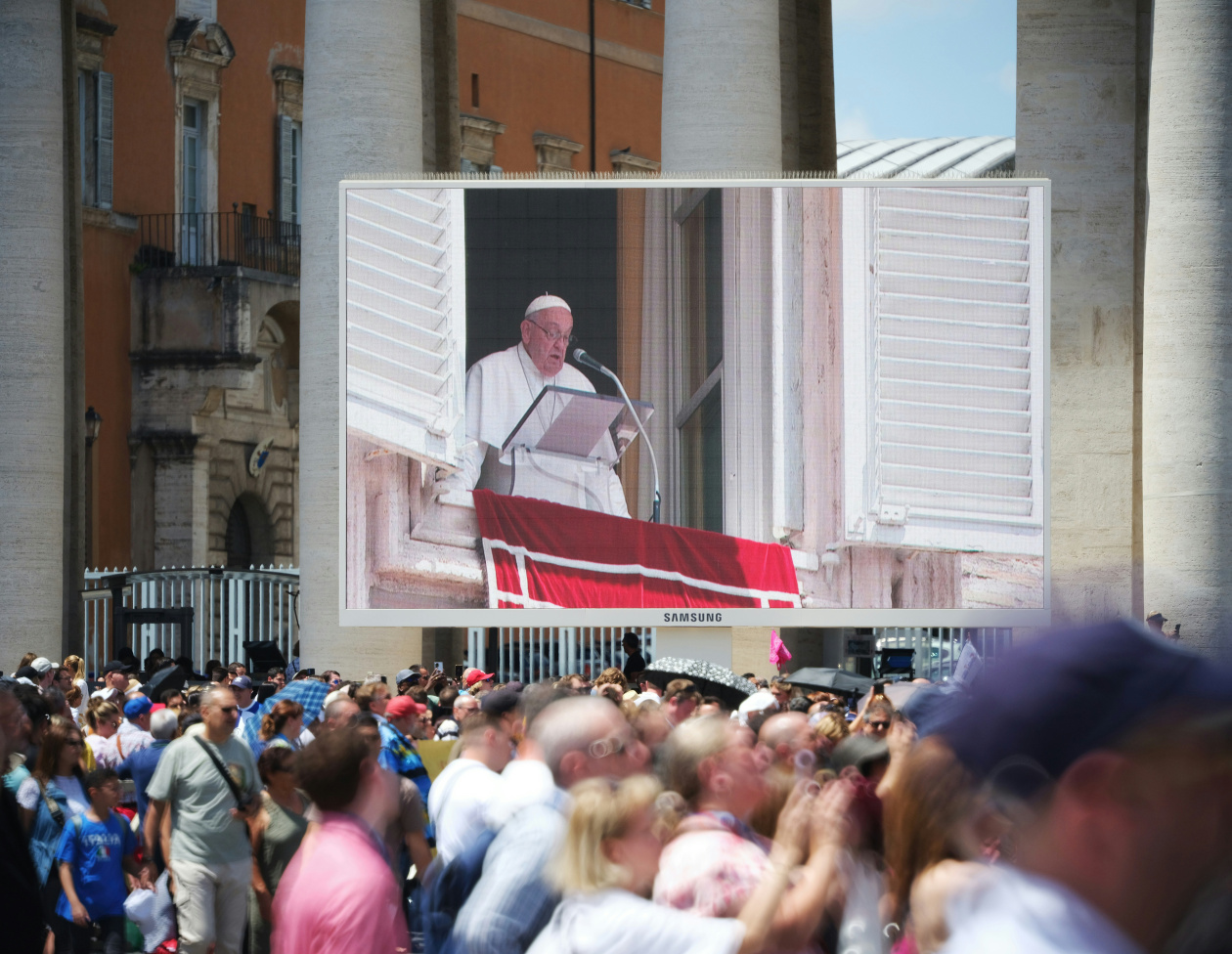
A video circulates: white smoke billows from the chimney of the Sistine Chapel. The crowds gathered in the Vatican erupted with excitement, knowing a new pope had been elected. It’s striking footage - and you probably saw it on the six-inch screen of your phone, part of a barrage of content about the Papal Conclave this May after the death of Pope Francis. From ironic to intensely invested, young users of TikTok, Instagram and X (formerly Twitter), all weighed in, choosing their champions - overwhelmingly Filipino Cardinal Tagle, beloved for his karaoke chops and progressive image, but who ultimately couldn’t win the conservative vote.
At the heart of this gleeful chaos stood Pope Crave, an account on X that ostensibly reported on the conclave with the tone of your typical celebrity gossip page. What began as light-hearted commentary quickly became a viral phenomenon, as a post-ironic audience immersed themselves in the traditions of an institution older than most state governments. By engaging so earnestly in a world they perceived as alien to them, young citizens of cyberspace made the medium the message, and the passion the punchline. But why do we perceive these worlds - of teenagers, of tradition - as being so far apart?
Stephen Bullivant’s report from 2018 on “Europe’s Young Adults and Religion” sheds some light on the subject. That year, the proportion of young adults between the ages of 16 and 29 who don’t identify with any religion reached staggering highs, of 91% in the Czech Republic and 80% in Estonia; most of those young Estonians, born long after the end of the Soviet occupation which suppressed religious practice, recounted having been raised with no religion whatsoever. This widespread secularism reflects broader cultural and generational shifts. Growing up in a highly technological and individualistic era, many young people seem to be distancing themselves from traditional institutions like the Church. Of the minority of young adults who identified as Christian in Europe, increasingly few said they attended religious services, let alone weekly Mass. This data is certainly difficult to reconcile with the runaway fun of Pope Crave.
Public perception of the Catholic Church in the 2010s would have been shaped by global scandals. In 2014, twelve long years after the Boston Globe first broke the story of clerical sexual abuse in the United States in 2002, the Pontifical Commission for the Protection of Minors was established by Pope Francis. The Irish Commission to Inquire into Child Abuse, or Ryan Report, from 2009, described a “climate of fear” perpetuated by cover-ups and neglectful inspectors. The report concluded grimly that the Church, upon discovering abuse, placed the “reputation of the Congregation” above child safety. Today, the lowest number of people who identify as Roman Catholic in Ireland is between the ages of 25 and 29.
However, recent figures might suggest that the stigma associated with the Church, once perceived as permanent, may now be fading. Across Europe, people are becoming more religious than at any point in the last decade. A study conducted by YouGov in 2024 in the United Kingdom reported a 50% increase in attendance at churches of all Christian denominations since 2018. The most dramatic rise in participation in the Christian faith came from 18- to 24-year-olds, among whom church affiliation has risen sharply and attendance at church in general has quadrupled since 2018. In 2025, the Catholic Church in France reported the highest number of adult catechumens (people seeking to be baptised) in the 18-25 age group since 2002. This level of commitment seems to reflect a broader shift across Europe: a study reporting more than 100,000 young people taking the Confirmation in Finland shows that over the last five years, the number of young people seeking this sacrament in the Lutheran Church of Finland has slightly decreased, but within that group, the number of boys who say they believe in God has almost doubled. University students, new graduates, and the teenagers who were once disconnected from religious institutions are returning en masse.
Why are Generation Z, once seen as the most secular generation, turning back to religion? The 2024 report on UK youth pointed to a search for meaning as a major factor contributing to this uptick. The skyrocketing rates of social isolation in the aftermath of the COVID-19 pandemic might support that lofty claim. Community spaces that once served as vital meeting grounds and social lifelines - youth groups, sports clubs, and student societies - ground to a halt, some permanently so, as public funds dried up. In that context, the sense of purpose and community offered by organised religion might have become increasingly attractive. Maybe the prospect of a weekly ritual appeals to the anxious, overstimulated young people of today; maybe in the face of unprecedented political instability, a moral framework to fall back on isn’t such an outdated concept after all.
Or maybe this is just another facet of the new counterculture. Among young men, we’ve seen a rise in socially conservative sentiment, which mirrors this shift towards the Church; Recent American studies suggest men and boys are the drivers of the uptick in youth churchgoing. The rise of a new masculinity on social media, defined by adherence to structure, traditional moral codes, and faith, has been heavily documented. Influencers like Andrew Tate are able to garner massive followings through expressing increasingly extreme sentiments in line with traditional gender norms, often self-positioning in proud opposition to the contemporary political landscape.
Perhaps it was this shift in online culture - towards tradition, towards a new digital masculinity - that facilitated the frenzy around the selection of the new Pope, Leo XIV. Of course, it’s impossible to ignore the coincidence of the release of the Oscar-nominated film Conclave starring Ralph Fiennes just last year, a film which would have offered young people an accessible primer on the inner workings of the Church, just in time to see it happen in real life.
It’s hard to say whether the Internet - famously flighty in its affections – will continue its flirtation with the Catholic Church, as the Conclave jokes grow stale and the international news cycle begins again. The rise in reported Christianity among young people may well lay the foundations for more active participation in the Church in the long term. Nonetheless, it will prove difficult to reproduce the unique media power of that plume of white smoke over St. Peter’s Square.
Young Journalists in Europe - Meet the author
Hazel Mulkeen
“I’m a student at Trinity College Dublin, currently pursuing a bachelor’s in French and German. As a competitive debater with a particular interest in public affairs and economics, I’m fascinated by how each citizen’s rights interact with governmental policies. I’m honoured to be a Young Journalist this year, and I hope to find and share stories that resonate with young Europeans".
Article collaborator: Efe Yalabikoglu, Friederike Kroeger
This article reflects the views of the authors only. The European Commission and Eurodesk cannot be held responsible for it.