
 © Hungarian presidency of the Council of the EU
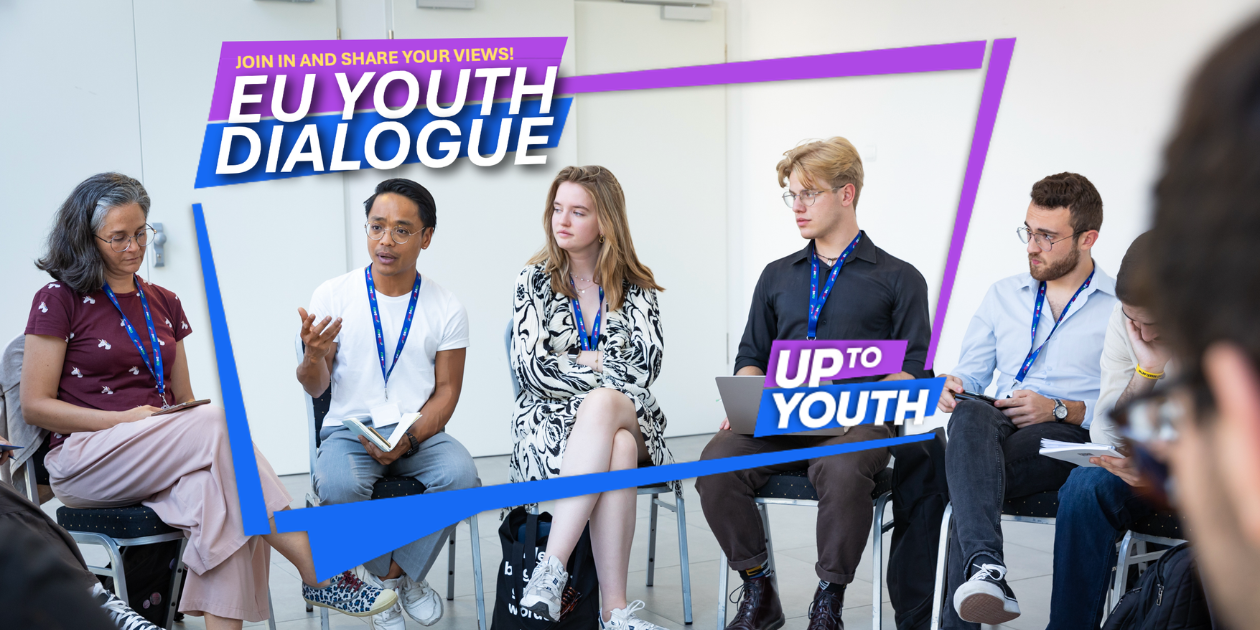
The 12th cycle of the EU Youth Dialogue is starting! Join in and share your views!
An nuashonrú is déanaí an An Mháirt, 11/08/2026
For many of us, social media platforms have become the main gateway to political and civic information. However, it can be incredibly hard to know what to trust and what not, given the rapid acceleration of AI-generated content and polarising online debates.
If you have ever felt overwhelmed by information manipulation or digital pressure, you are not alone! The 12th cycle of the EU Youth Dialogue (EUYD) is making your digital reality a priority by focusing on the European Youth Goal #4: Information and Constructive Dialogue. It aims to ensure that you have better access to reliable information, to support your ability to evaluate information critically, and to help you engage in participatory and constructive dialogue.
What’s the EU Youth Dialogue?
It’s one of the most important youth participation mechanisms in the European Union, with more than 30 000 young people consulted in each 18-month cycle! It aims to ensure that the opinions and views of young people and youth organisations are taken into account when making and implementing EU policies. Learn more about the process!
The 12th cycle is running from 1 July 2026 to 31 December 2027, and is led by the Council Presidency trio of Ireland, Lithuania, and Greece.
Why this topic?
The way we get information has completely changed. Algorithms tend to push whatever is loudest, angriest or most sensational, not whatever is true. It's becoming increasingly difficult to tell solid journalism apart from opinion, spin or straight-up manipulation. At the same time, AI-generated content is becoming more widespread, making it even harder to know what’s real or trustworthy. On top of that, social media platforms are designed to keep you hooked, and scrolling for hours every day. This impacts your focus, your mood, your sleep, your time for everything else.
So how do we stay informed and heard online without it wearing us down? And how do we make sure that everyone has access to quality information and can take part in democratic life? This is what the 12th cycle of the EUYD tries to answer!
So, what’s next?
Over the next 18 months, the three Presidencies will work together on Youth Goal #4. The EUYD is broken down into two stages: the consultation phase and the implementation phase. In addition, each Presidency organises an EU Youth Conference. There, youth representatives and policy makers have the opportunity to discuss, work together, and present recommendations that can feed into concrete policy documents!
- Ireland (EU Youth Conference: September 2026): Kicking off the consultation phase, Ireland will focus on empowering young people to be critical, responsible users and creators of information. The Irish Presidency will explore how to build trustworthy information environments, strengthen safe, accessible physical youth spaces, and promote intergenerational dialogue on information. Youth delegates at the Irish Youth Conference will also finalise the revision of the European Youth Goals.
- Lithuania (EU Youth Conference: March 2027): Moving from ideas to action, Lithuania will review the consultation results and discuss concrete implementation pathways. The Lithuanian Presidency will focus on promoting youth-led solutions that strengthen healthy internet use, media literacy and democratic resilience, and encourage policy dialogue on platform accountability. It will also discuss the role of trusted adults (parents, teachers and youth workers) in shaping young people’s civic participation and engagement, and ways of equipping them with the digital literacy to be reliable, supportive information sources.
- Greece (EU Youth Conference: September 2027): Wrapping up the implementation phase and the 12th cycle as a whole, Greece will consolidate all the recommendations into structured policy outputs. The main focus of the Greek Presidency will be on strengthening competences related to media literacy, digital citizenship and ethical content creation, as well as enhancing young people’s ability to critically assess information, understand the dynamics of digital information ecosystems (including algorithmic systems and AI-generated content), and navigate misinformation in ways that support informed participation in democratic life and constructive public discourse.
Why your opinion matters!
The insights gathered during the EU Youth Dialogue will directly contribute to shaping the future direction of European youth policy and the new European Youth Goals.
How to get involved?
National consultations are rolling out across Europe right now! Get involved by connecting with your National Contact Point to find out how you can participate in the consultations!
Written by Eurodesk