

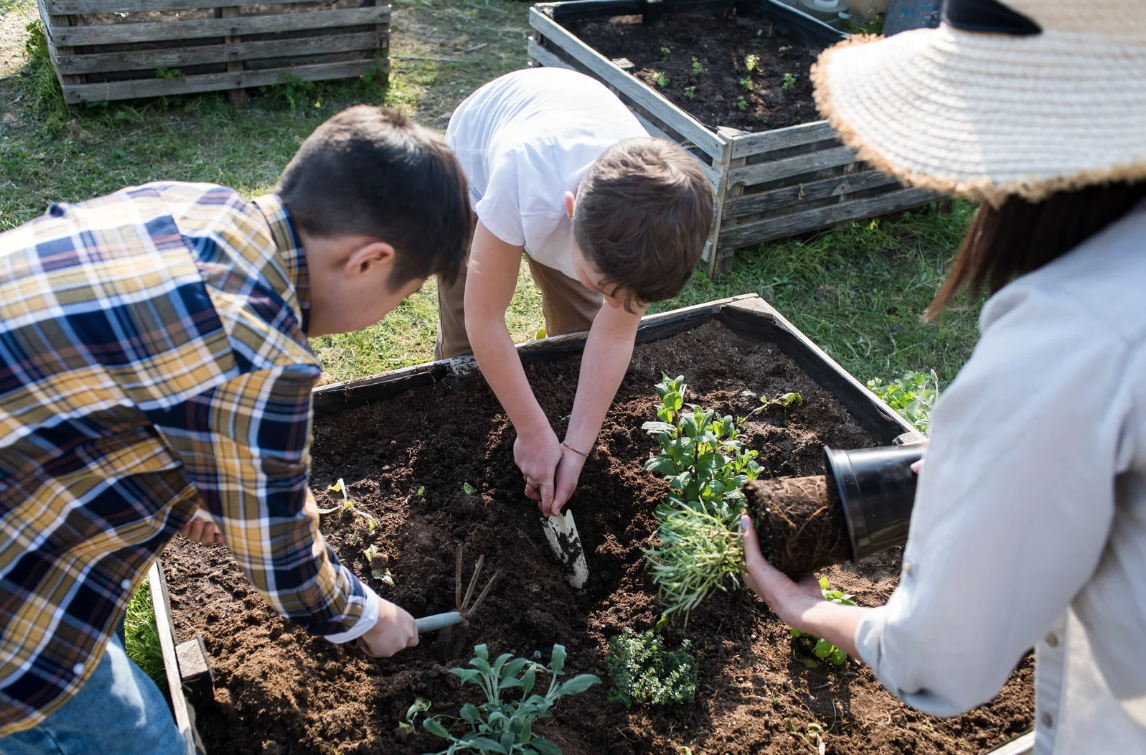
 ©Stefano Oppo from corelens
How students can transform their school into a sustainable establishment
Última atualização segunda-feira, 15/09/2025
Are you ready to make your school more sustainable? As climate change continues to worsen and extreme weather events increasingly disrupt education across the EU, young people are stepping up to create a more sustainable environment in their schools. Here are some ideas and inspiration to help you transform your educational institution into a sustainable establishment.
The current state of environmental education in the EU reveals some notable statistics. While 84% of young people indicate that they consider sustainability important, fewer than one-third engage in daily actions to support the environment.
Additionally, only 42% of young people aged between 13 and 14 in the European Union report having substantial opportunities to learn about sustainability within their educational institutions.
The disconnect between sustainability education and teaching practice can be attributed to several factors. Teachers have identified time constraints, limited space, and insufficient resources that hinder their ability to incorporate sustainability into their school’s curriculum.
Although many young people are interested in pursuing careers in green sectors, they often lack awareness of the opportunities that exist in this field.
Adopting waste reduction strategies and embracing circular economy principles can transform the schools approach to managing resources.
Developing hands-on environmental projects and creating or enhancing the school gardens offer practical learning experiences that connect students directly with nature and sustainable practices.
For example, partnering with local environmental organisations brings external expertise and real-world context into the classroom, whilst having the school stay aligned with EU Green Deal objectives prepares students to be more sustainably aware.
Moreover, you can also find inspiration from other schools that have succeeded in becoming sustainable establishments. The 1st General Lyceum of Spata is a clear example of student- led environmental action through their grECOtrails social enterprise. This non-profit organisation creates a digital platform for sustainable school visits across Greece, focusing on environmental responsibility, cultural heritage, and local development.
Once projects such as waste reduction and school gardens are in place, schools can take further steps by addressing energy consumption and infrastructure. You can suggest that your school install solar panels and energy-efficient LED lighting, which would lead to your school reducing its carbon footprint.
Implementing smart heating systems and ensuring proper insulation can minimise energy waste. Additionally, water conservation programmes, such as rainwater harvesting, can significantly decrease water usage.
Erasmus+ programmes offer project sustainability goals. Such projects allow schools to share environmental education practices, develop renewable energy programmes, and even create digital learning tools. An example of this is the Green Erasmus project.
There are also endless opportunities ranging from grants, volunteering and learning, for students or their school to participate in. Some of these include: A student essay competition, ClimateScience Olympiad, EUteens4Green, Generation Climate Europe and the beVisioneers Fellowship.
Overall, it will not be easy to turn your school into a sustainable establishment, but you can always start by taking inspiration from other places, such as the 1st General Lyceum of Spata, and the support available through schemes like Erasmus+, mobility programmes, grants, volunteering programmes and much more!
The future of a greener education is in your hands.
Written by Eurodesk