

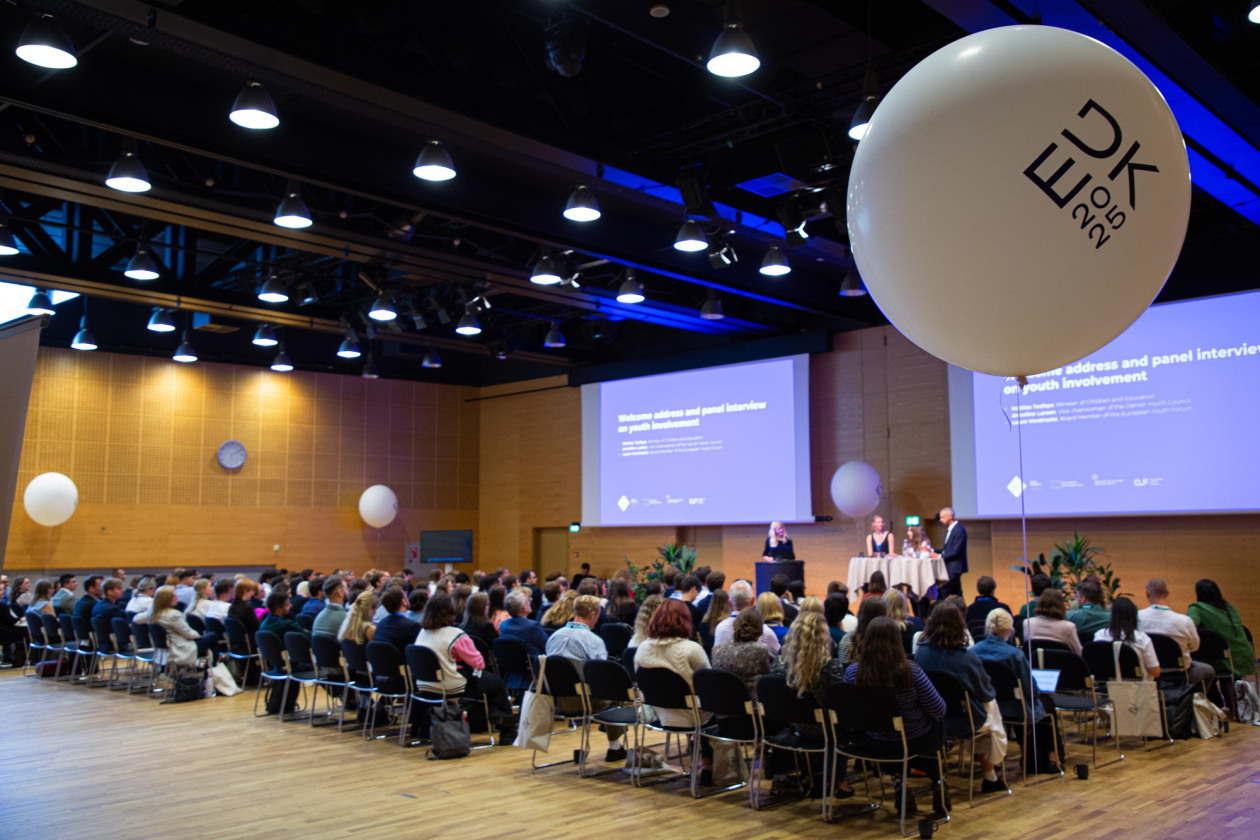
 © Danish Presidency/Council of the European Union, 2025. Description: Young people attending a conference. There are some white balloons in the room.
Debates, Dreams, and Democracy: the EU Youth Conference
Data dell'ultima modifica Martedì, 02/06/2026
As a young journalist, I had the opportunity to take part in the EU Youth Conference in Copenhagen. But I am not here to write about the beauty of Copenhagen in autumn or the boat ride through its canals. I want you to feel what it was like to be there and understand why, as a young person, you should care.
The EU Youth Conferences bring together youth delegates from across Europe and its neighbourhood from EU member states, candidate countries, and places where youth activism faces real challenges. I met people working with LGBTQ+ groups, others representing sports and cultural youth councils, and delegates from the Balkans campaigning for their countries EU accession. In one conversation, you could move from a debate about sports funding to another about censorship or climate anxiety.
The conference began with energy. A powerful speech about Belarus reminded everyone that freedom and democracy are never guaranteed. It stressed that youth involvement is vital for any society that wants to remain democratic. Experts from the European Commission explained how the EU Youth Dialogue works. They also showed how our ideas could shape future EU policies.
Between presentations, vegan lunches, and quick walks through Tivoli, we got to know each other with a mix of laughter, accents, and big hopes. With our ideas finalised, the next challenge awaited: presenting them directly to the decision-makers.
Inside the Working Groups Groups
This is where everything happens. Youth and ministerial delegates sit together and discuss the most pressing topics concerning young people and Erasmus+ projects. Several delegates noted that the Erasmus+ website can be far too complicated and time-consuming. Other groups spoke about adapting to the less safe environment Europe faces today, making grant applications easier, and why small organisations struggle to access EU funds. Some focused on helping youth organisations in countries with shrinking civic space, or on confronting the housing crisis that often limits young people s mobility.
After hours of debate, brainstorming, and coffee, each group came up with three recommendations, which were then voted on in the plenary session. One from each group made it into the final policy paper.
Some of these ideas were:
● reserving 15 per cent of the Erasmus+ budget just for small, youth-led organisations;
● ensuring that students receive their Erasmus+ grants before leaving for their mobility, not after;
● creating more volunteering projects that help local communities;
● preparing organisations to face disinformation and hybrid threats;
● funding soft skills such as communication, leadership, and critical thinking;
● supporting crisis training and cooperation with neighbours outside the EU, and
● giving Erasmus+ Youth a clearer and more visible place within the wider Erasmus programme, beyond higher education exchanges.
Voices clashed, debates raged, and then silence. Some disagreements were resolved, others were left in the closet of forgotten ideas. But stories were shared that revealed connections across borders and generations.
Like every experiment in democracy, the process was both fulfilling and frustrating. For many, it was a first taste of real politics where you have to fight for your ideas, compromise, and sometimes watch good ones drown in polite, empty language. Yet when someone managed to cut through the noise, it was powerful. With our proposals ready, we faced the next challenge: presenting them to those in power.
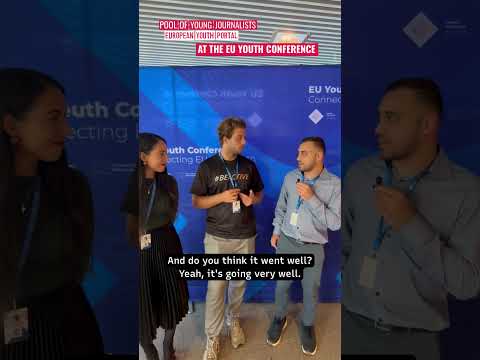
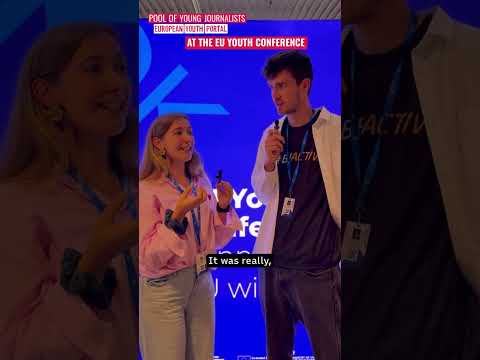

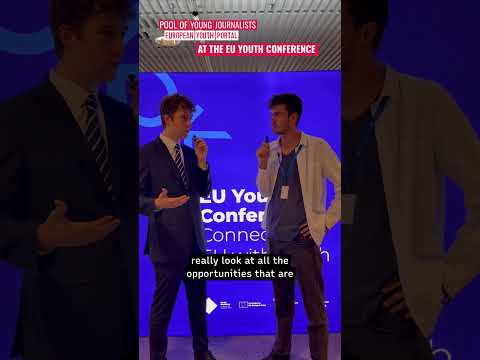
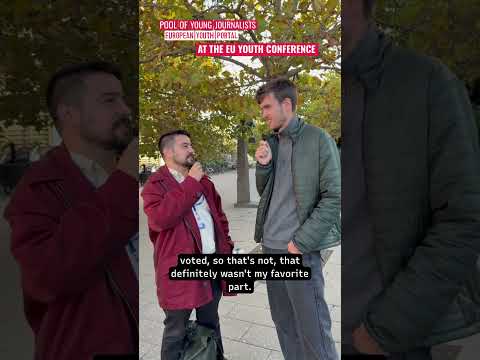
Playlist available on Youtube
So what now?
If you are a young person who wants to drive positive change, you should definitely get involved. Find your National Youth Council and get in touch with them on how to apply for EU youth delegate positions, and make your voice heard. The EU gives young people more opportunities than ever before, and the freedoms we enjoy studying abroad, volunteering across Europe, working without borders are the results of policies shaped not only in Brussels but also in places like this Conference.
There is room to make things better, but one thing is clear: this is where change starts.
So do not just read about it be part of it.

Danish Presidency/Council of the European Union, 2025
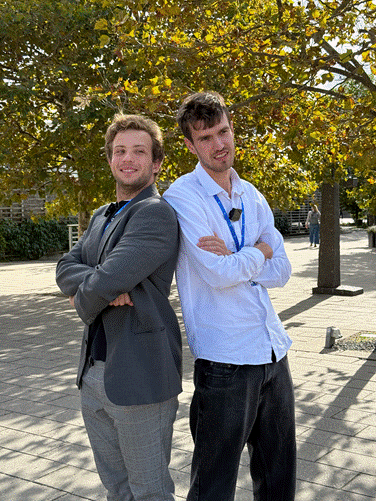
Lexi (left) and Oliver (right). The 2 Young Journalists attended the EU Youth Conference in Copenhagen.
______________________
Young Journalists in Europe - Meet the author
Oliver Čechmánek
My most impactful experiences include volunteering at a scout festival in North Macedonia and assisting at the Ukrainian border shortly after the invasion.
This article reflects the views of the authors only. The European Commission and Eurodesk cannot be held responsible for it.