

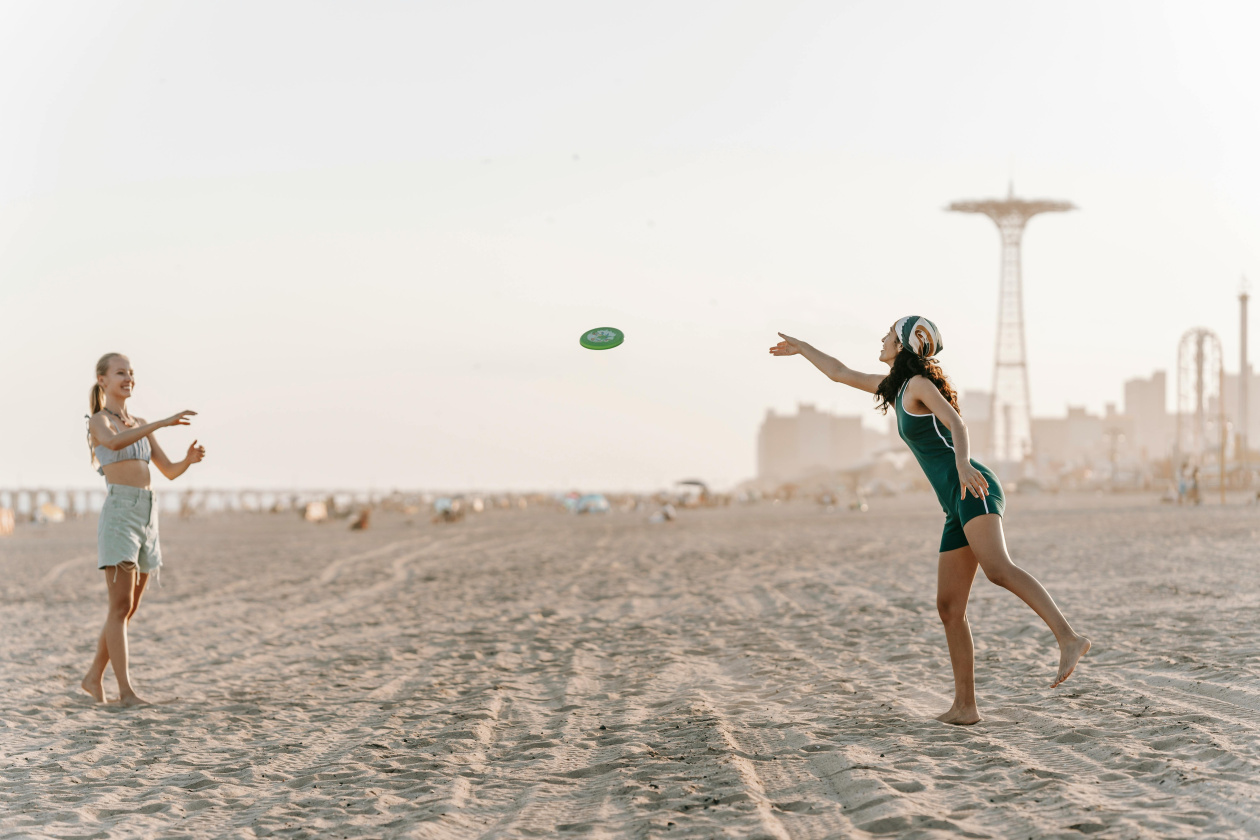
 © Photo by Katya Wolf from Pexels 2021
Fringe sports across Europe to stay active
Laatste wijziging Maandag, 17/02/2025
Sports such as soccer, tennis, and rugby are widely known and played in Europe, receiving lots of attention through competitions and televised matches. But what about lesser-known sports such as quidditch, parkour, or hurling? If you’re not into traditional sports, these activities just might pique your interest to stay active while participating in something unique.
Quidditch
Harry Potter fans rejoice! You may not have known that this sport from the wizarding world has breached reality. Quidditch (also known as quadball) is a mixed-gender, full-contact sport. Two teams of seven players each compete with the primary objective of passing a ball through the defenders' hoops while preventing their opponents from passing it through their own hoops. The game is played on a rectangular pitch using broomsticks similarly as the original sport from the movies.
If you’re interested, check out Quadball Europe, the official organisers of European-wide quidditch tournaments. Here’s also a helpful list of quidditch teams in Europe.
Parkour
Originating in France, this sport has had its moment all over the world. Parkour is a sport which involves getting from one location to another as quickly, efficiently and creatively as possible. It relies a lot on balance and strength as you may have to jump across large gaps, pull yourself up onto walls, and do many other dynamic movements that activate all parts of the body. Parkour is typically done either on an obstacle course or in cities using buildings and structures such as walls and stairs. Manoeuvring your body through these settings may also be quite dangerous so it is best to engage in strength training beforehand and practising in a dedicated obstacle course.
Organisations such as Parkour Outreach or Parkour Uni feature events, training sessions and communities of parkour enthusiasts for you to get your start in learning all about this dynamic activity.
Hurling
With ancient Gaelic Irish origins, this mixed-gender team game similar to lacrosse is played by using a stick, called a hurley, to move a ball, the sliotar, past the opponent’s goalpost. Players can catch the sliotar with their hands, balance it on their hurley, or strike it in the air or on the ground. Movement with the ball involves a mix of running, passing, and tactical plays. Two teams of 15 play against each other on a rectangular field with H-shaped goals at the end. Each goal scored is worth 3 points, and at the end of the match, the team with the most points wins.
Gaelic Games Europe lists some clubs across Europe that play other Gaelic sports, which include hurling.
Bandy
This winter sport is widely played in Sweden and Russia. Similar to ice hockey, though played without a puck, the objective of the game is that players move a single bandy ball into the opposing team’s goal using bandy sticks. Additionally, unlike ice hockey, bandy is played with two teams of 11 players on a larger ice rink about the size of a football field. The team scoring the most points at the end of regulation time wins.
The Federation of International Bandy hosts tournaments for men, women, youth and seniors.
Bossaball
Popular in Belgium and the Netherlands, this sport is an interesting combination of aspects from volleyball, soccer, and gymnastics. Bossaball is played on an inflatable court with a net in the middle and a trampoline on each side. Players in two teams of 4 strike the ball with any part of their body with the aim of grounding the ball on the other team’s court. The team with the most points at the end of the game is deemed the winner.
Bossaball Sports hosts worldwide tournaments and offers bossaball court rentals.
Beyond these sports mentioned, there are plenty of others, such as Petanque (France), Korfball (Netherlands and Belgium), Pesäpallo (Finland), Pelota (Spain), etc. Even if not officially recognised worldwide, there are plenty of niche sports in different countries and even their regions within them.
So why not explore one of these mentioned in the list or research a new sport you may have never heard, and pick up a unique skill along the way?
Are you practising any of those fringe sports? Post it on Instagram and tag @eurodesk - we’d love to see it!
Written by Eurodesk Brussels Link