

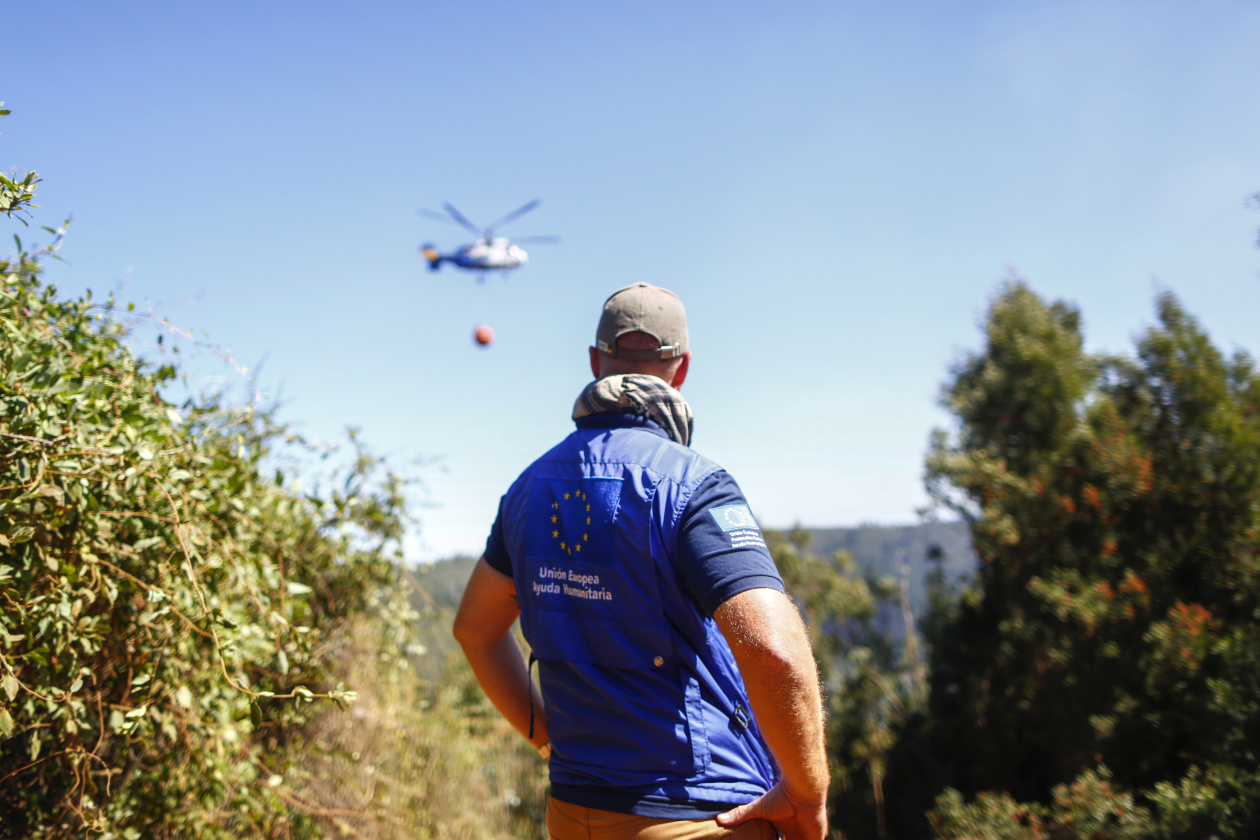
 © European Union, 2023
What is Humanitarian Aid Volunteering?
Utolsó frissítés szerda, 15/04/2026
Do you want to use your time and skills to help people where they need it most? The Humanitarian Aid Volunteering initiative lets you support real projects in crisis areas outside the EU, learn new skills and see the world from a completely new perspective. As part of the European Solidarity Corps, it’s for young people ready to stand with communities in need, bring help where it matters most, and bring hope where it’s needed more. Discover how your actions can make a real difference!
What it is about
The Humanitarian Aid Volunteering gives young people aged 18 to 35 (who live in an EU country or in Iceland, Liechtenstein, Türkiye or the Republic of North Macedonia) the chance to join projects in countries where communities are currently dealing with crises or emergencies.
Each project is rooted in real humanitarian work, and your role can vary greatly depending on where you go. You might support local efforts in disaster preparedness and recovery, help run community initiatives on health or food security, or contribute to projects tackling the impacts of climate change. What unites them all? You’ll be helping organisations strengthen their support for people in vulnerable situations, and becoming part of a wider humanitarian response.
There are a few different ways to take part. Some opportunities are longer placements where you join an organisation on your own and become part of their daily work for several months (individual volunteering). Others are shorter experiences in which you volunteer alongside other young people for a set period (team volunteering). In both cases, it’s a full-time, well-structured adventure that helps you learn, grow, and make a real contribution safely and meaningfully.
How you can participate
There are a few mandatory steps you need to complete before applying for these projects. First, register on the European Solidarity Corps Portal and indicate in your profile that you’re interested in joining the Humanitarian Aid volunteering activities.
Next, complete and pass the specific Humanitarian Aid training on the EU Academy. This includes a self-assessment, online training and an online test.
Just a heads-up: due to high demand, registration for the face-to-face humanitarian aid training closes periodically. Keep checking the EU Academy for openings. Completing the training doesn’t guarantee selection for a placement, as there are often more applicants than available spots.
If you pass and are still interested, you’ll be invited to complete a face-to-face training session. After that, you’re ready to apply!
For more details, check the Info Kit for Volunteers in Humanitarian Aid.
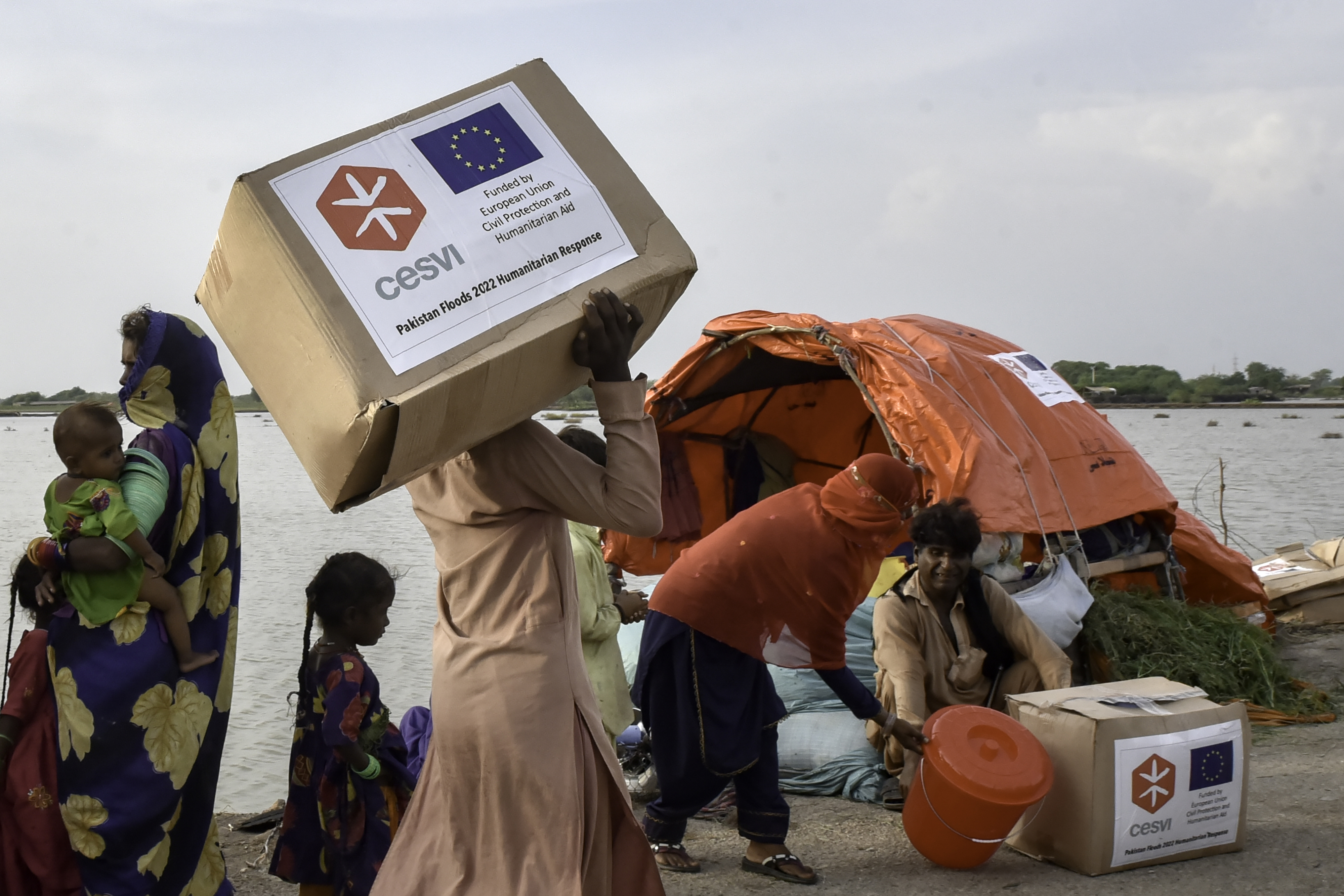
Flood-affected people from the Hindu Community are going back to their makeshift tents after receiving relief supplies from a distribution centre under the supervision of Cecvi, funded by the European Union humanitarian Aid.
© European Union, 2022
What happens if you’re selected
Don’t worry, you won’t be left to figure things out alone. All the essentials like travel, accommodation, and insurance are covered, and you even receive a small allowance, so you can focus on the experience rather than the costs. You’re also supported by organisations before and during your placement, with guidance, preparation and practical help.
Many volunteers say they come back with stronger skills than they expected, like teamwork, communication, problem-solving, adaptability, but especially with a clearer sense of what they can contribute to the world.
Don’t forget!
Humanitarian Aid Volunteering is a serious commitment, but it’s also a unique opportunity to gain experience, build skills and make a real difference where it’s most needed.
Written by Eurodesk