 © Belgian Representation to the EU, 2023
The EU Youth Test/Check: what is it and why should it be implemented in all Member States?
Atnaujinta Antradienis, 02/06/2026
Have you heard of the EU Youth Test/Check? This impact assessment tool measures how future policies will affect youth. As active citizens of today’s and future Europe, is it crucial that youth has a say when policies are being drafted. Discover how Austria, France, Germany and Belgium have included youth in the legislative process and why all Member States should also implement the EU Youth Test!
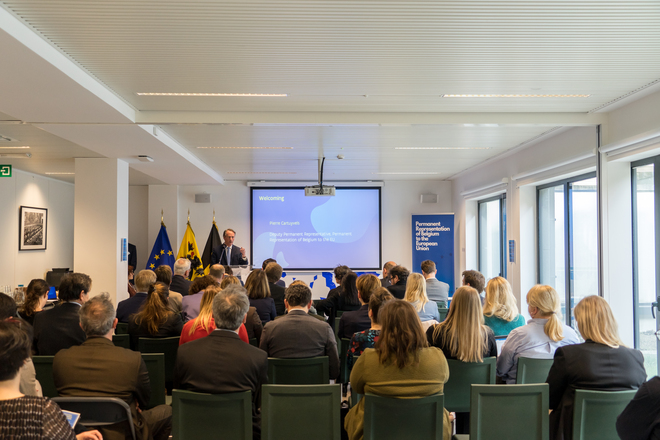
On 26 April, the Permanent Representation of Belgium to the EU organised the EU Youth Test/Check event, where various European players gathered to discuss the importance of this tool. National representatives of four European countries were also present and they shared good implementation practices of the Youth Test that could be replicated on a larger scale. This meeting was organised in light of an upcoming event in the context of the European Year of Youth 2022 legacy and in view of the preparation for the upcoming Belgian EU presidency on Youth in 2024. Needless to say, it was a real eye-opener for our young journalists present there.
What is the EU Youth Test/Check?
The EU Youth Test or Check is a strategic foresight instrument whose purpose is to ensure the inclusion of youth voices in policy-making processes within the European Union. In other words, it is a tool used to make sure that the needs and expectations of young people are taken into consideration when developing policies that can impact them. The EU Youth Test is part of the framework of the EU Youth Strategy 2019-2027 and focuses on unifying youth policies within the EU by submitting every topic to a youth perspective. The pillars of this instrument are consulting the young people, making an impact assessment and preparing attenuating measures if a negative impact is found.
As emphasised during the event, having such a tool is vital in a democracy, where everything begins with mutual respect and the inclusion of the youth. It is essential that young people have a say in decisions that will affect their lives in the future, especially since they are the ones having to live the longest with the impact of the consequent changes.
© Belgian Representation to the EU, 2023
Representatives of youth organisations were present and actively participated in the discussion.
What good practices do we already have on a national level in Europe?
One of the goals of the event was to share good practices and hopefully inspire the Member States to adopt the Youth Test. The four countries actively participating in the discussion - Austria, France, Germany and Belgium - presented what has been done at a national level and the tools they have implemented.
Austria:
Austria has implemented the Jugendcheck, an impact assessment tool introduced in 2013. Furthermore, the CY/RIA (Children and Youth Regulatory Impact Assessment) has been mandatory for all bills and regulations that may affect a certain number of children and youth. This assessment has become an integral part of the Austrian Youth Strategy, making decision-makers more aware of the potential consequences of their proposed laws.France:
France has implemented the Clause d'impact jeunesse to ensure equality among all young people and intergenerational justice. This impact assessment tool, announced in 2016, aims to support youth towards employment and autonomy while providing access to public services without discrimination. In addition, the Advisory Council for Youth Policies (COJ) suggests improvements to the government and presents activity reports. However, there is a need to increase awareness and extend the youth check to Members of Parliament (MPs). Despite a relatively low number of youth tests performed compared to the number of drafted policies, efforts are being made to improve the process by including initiatives by the parliament, updating the impact study, and introducing indicators for monitoring bills in the long term.Germany:
Germany has also implemented the Jugendcheck, which contributes to more youth-oriented legislation and raises awareness about the needs of the young generation. The youth test is conducted by the Competency Center Youth Check (ComYC), a scientific institution that measures the impact a legislative proposal has on young people. This standardized assessment tool considers 11 impact dimensions and 6 areas of life, determining the specific impacts on different age groups. The German Jugendcheck has proven effective in drawing attention to the concerns of young people and has gained support across party lines. While it is not a youth participation tool, it has successfully raised awareness among policymakers, public administrators, and the expert community.Belgium (Flanders):
In Belgium, specifically in Flanders, multiple instruments have been put in place to ensure the impact assessment of draft parliamentary acts on young people. One of these instruments is JoKER (Youth, Child, Impact, and Report), which has been in existence since 2008. JoKER focuses not only on youth policy but also on the broader context of children's rights. The instrument is prepared by the competent administration/minister and is applicable to draft parliamentary acts that are directly relevant to persons under 25 years of age. To monitor the implementation of this instrument, a supporting team for youth provides a website, a manual, and advice. The process takes into consideration five specific questions related to the impact on young people, and practical examples are provided. In Belgium, the emphasis is on recognizing children and young people as active citizens of today's Europe.
© Belgian Representation to the EU, 2023
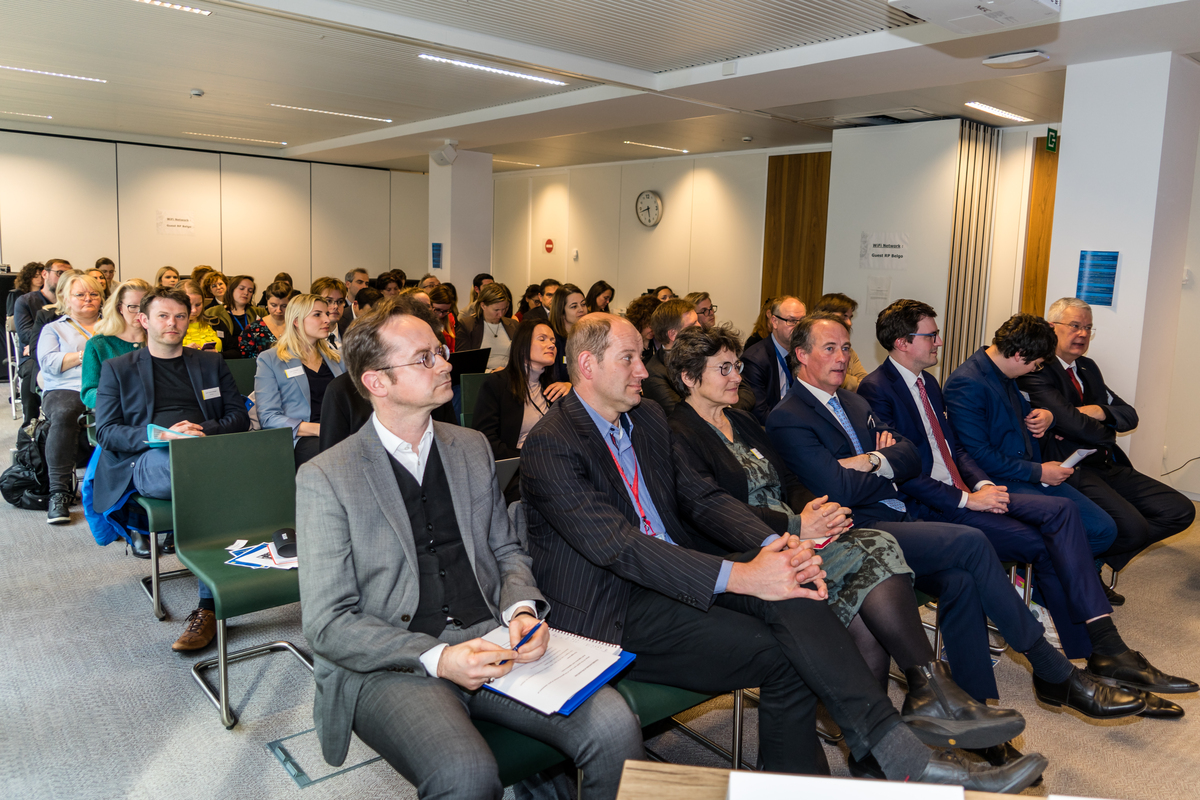
The event gathered professionals who work with youth and were keen to share and learn best practices regarding the EU Youth Test/Check.
What is next?
One of the legacies of the European Year of Youth 2022 is the raise of awareness on how children and young people must be recognised as active citizens of today's Europe. For this to truly happen, youth needs to be involved in the legislative process. So, the next steps should include precisely this: better regulation tools integrating youth will assess impact of the referred legislation on young Europeans, and consultations with young people will be initiated from the early stages of the proposal process. Or at least, this is the idea.
We were a bit surprised to know the Youth Test/Check has not been implemented in all Member States yet, as it seems clear the importance of understanding the impact of new legislation for young people. We hope the good practices shared during the event will be useful for the remaining Member States and will result in the fast and efficient implementation of the Youth Test.
As Daphne Scherer, from EU Parliament Committee on Culture and Education, said “the next generation will be affected by policies being shaped today”. Either by the implementation of impact assessment tools targeting youth or by sharing our views on new and existing EU policies (check the Have your say portal!), we should have a say on what our future - youth’s future, Europe’s future - will look like.
_______________
Meet the authors
Amelia-Denisa Zăbavă
My name is Amelia and I’m originally from Romania, though I have been living in Belgium for the past couple of years. I discovered the world of documentary filmmaking in high school and since then, I’ve been exploring new ways and formats to tell stories. As an aspiring journalist, I’m mainly interested in topics related to education, youth engagement, media literacy, arts and culture. In my free time, you can find me at the seaside, strolling around the city taking pictures or at the cinema.
Rute Carlos Matos Cardoso
I’m a Portuguese young journalist and curious is my middle name. I’ve worked with all media formats (TV, radio, printed and online), covered almost every topic possible and moved to three different countries, so far. After writing for a youth magazine and founding a podcast, in North Macedonia, I took charge of a youth TV, in Denmark. Right now, I’m starting a freelancing career and I’m excited to continue to give voice to young Europeans through the European Youth Portal.
This article reflects the views of the authors only. The European Commission cannot be held responsible for it.