

 © jacoblund from Getty Images/CANVA
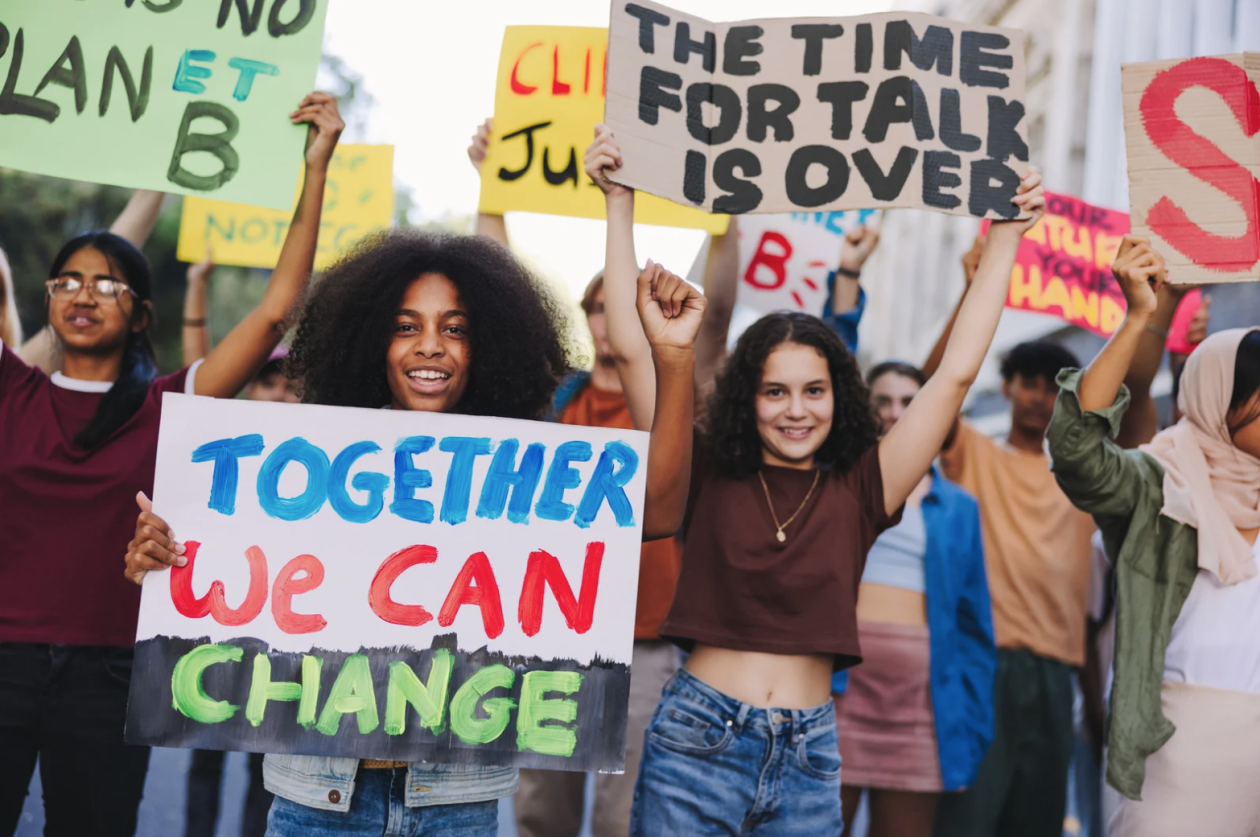
Europe’s youth are stepping up and it’s not just on International Youth Day!
Son güncelleme Salı, 12/08/2025
Whilst International Youth Day celebrates 1.2 billion young people aged 15-24 globally every year, it is also important to consider what is unfolding in Europe currently. Gen Z and millennials care about political issues and are increasingly holding positions of power.
After the 2024 European Parliament elections, there are approximately 12 seats in the European Parliament held by Millennials and Gen Z born in 1995 or later. The youngest group of MEPs include Lena Schiling from Austria, born in 2001, who at 24 years old is the youngest member in the European Parliament. Other Gen Z MEPs include Fidias Panayiotou from Cyprus and Sabrina Repp from Germany.
The Millennial MEPs include Sebastião Bugalho from Portugal, Bruno Gonçalves from Luxembourg, Kira Marie Peter Hansen from Denmark, Emma Rafowicz from France, Julie Rechagneux from France, Lukas Sieper from Germany, Anna Strolenberg from the Netherlands, Zala Tomašič from Slovenia, and Catarina Vieira from the Netherlands.
There is also a growing movement across EU countries to lower the voting age to 16.
- Austria first implemented the lowering of the voting age to 16 for all elections, in 2007.
- Belgium and Germany have joined Austria in allowing 16-year-olds to vote only in the European Elections in 2024.
- Malta took a more direct approach in 2018, lowering the voting age from 18 to 16 for all elections - local, national and European. In Malta, young people aged 16 and 17 can participate fully in democratic life, including nominating themselves for local council elections at the age of 16.
- Greece permits 17-year-olds to vote, whilst the remaining EU countries maintain the voting age at 18.
- Cyprus has recently approved lowering the voting age to 17 in a parliamentary vote, although the change will take effect in the upcoming election.
There has long been a debate about whether young people should participate in political discussions, as they are often considered ‘inexperienced’ or ‘unable’ to understand such complex issues.
However, this perspective is being challenged, as recent data and reports suggest that young people are, in fact, politically engaged.
Contrary to assumptions about political apathy, young Europeans are civically engaged. According to the European Commission’s EU Youth Strategy Implementation Report (2022-2024), over 70% of young people reported that they voted. The same report revealed that young people do participate in civic activities such as volunteering.
On the other hand, while young people are actively engaged in politics, a Eurobarometer survey highlighted the concerns that shape their views about the future. When considering what lies ahead, 41% of young Europeans are most worried about the cost of living, whilst 30% fear for peace and global stability. Economic stability concerns 27% of young people, followed closely by climate change and the environment (26%). Housing affordability, job security and employment opportunities, and mental health and well-being each concern 23% of young Europeans.
With young people concerned about their future, the scale of youth political engagement becomes even more apparent when they have the opportunity to participate directly in policy-making. Through the EU Youth Dialogue initiative alone, 130,000 young people have voiced their opinions on policy over the past five years.
European institutions have listened to this increase in youth engagement by creating new mechanisms for participation. The European Commission has established the President's Youth Advisory Board specifically to give young people a voice in shaping the EU's future.
Moreover, following the success of the Youth Policy Dialogues, which were first held during the European Year of Youth in 2022. The policy dialogues were also held during the European Youth Week 2024 and throughout the first 100 days of the current Commissioners' mandate. These youth policy dialogues have become a tool for policymakers to directly communicate with young people and ensure they have a voice to help transform the future of the EU.
Similarly, to build upon the results of the European Year of Youth in 2022, the European Commission has introduced a ‘youth check’. The process for checking youth impact involves an assessment of how relevant a proposal is to young people, along with consultations with them. In some situations, the impact is looked at in more detail through an impact assessment report and by the Regulatory Scrutiny Board.
As the Commission's political guidelines for 2024-2029 acknowledge, young people play an important role in driving social change and ensuring the long-term sustainability of European societies.
Young people are becoming more involved in politics across Europe, from voting at younger ages to holding seats in the European Parliament. Their ideas and worries are being heard, and they are helping to create real change
Written by Eurodesk Brussels Link