

 © Giedre Sapranauskaite, 2026
Highway to Political Press Control: Documenting Media Freedom Crisis in Lithuania
Utolsó frissítés péntek, 17/07/2026
25 April 2026. Vilnius Cathedral Square. 30,000 people. Speeches given by journalists, cultural figures, artists, and historians. Music performances. Signs stating “Hands off free speech”. Even a sudden rainfall didn’t scare people away. This was the 6th time thousands of Lithuanians gathered together to protest against the proposed LRT (Lithuanian national broadcaster) law amendments, and the 9th major protest since September 2025, when the new government was sworn in. But what exactly was happening? And can we really say that the crisis is over?
How did we get to one of the biggest protests since Lithuania regained independence in 1990?
Some could argue that it began in September 2025, when a populist and nationalist political party called Nemunas Dawn – now out of the coalition – took over the Ministry of Culture. Or in November 2025, when the same party introduced a proposal which would make it much easier to dismiss the Lithuanian national broadcaster’s director. But I believe it’s worth starting the story a couple of months before the 2024 parliamentary election.
It was late August when the leader of the Social Democratic Party, Vilija Blinkevičiūtė, after avoiding this question for several months, finally announced that she would serve as the Prime Minister if the party succeeded in the upcoming elections. Almost immediately after the news came out, political scientists and journalists started questioning Blinkevičiūtė‘s claim, pointing out that she just said this to keep the ratings up and improve her party's chances of winning the elections, and that she won't give up her seat at the European Parliament. It comes as no surprise that two months later (two days after the Social Democratic Party secured the majority of the votes in the elections), news that Blinkevičiūtė won‘t be the one forming the government was hogging the headlines. Blaming her age and health, she announced that a younger colleague from the party, Gintautas Paluckas, would take the lead.
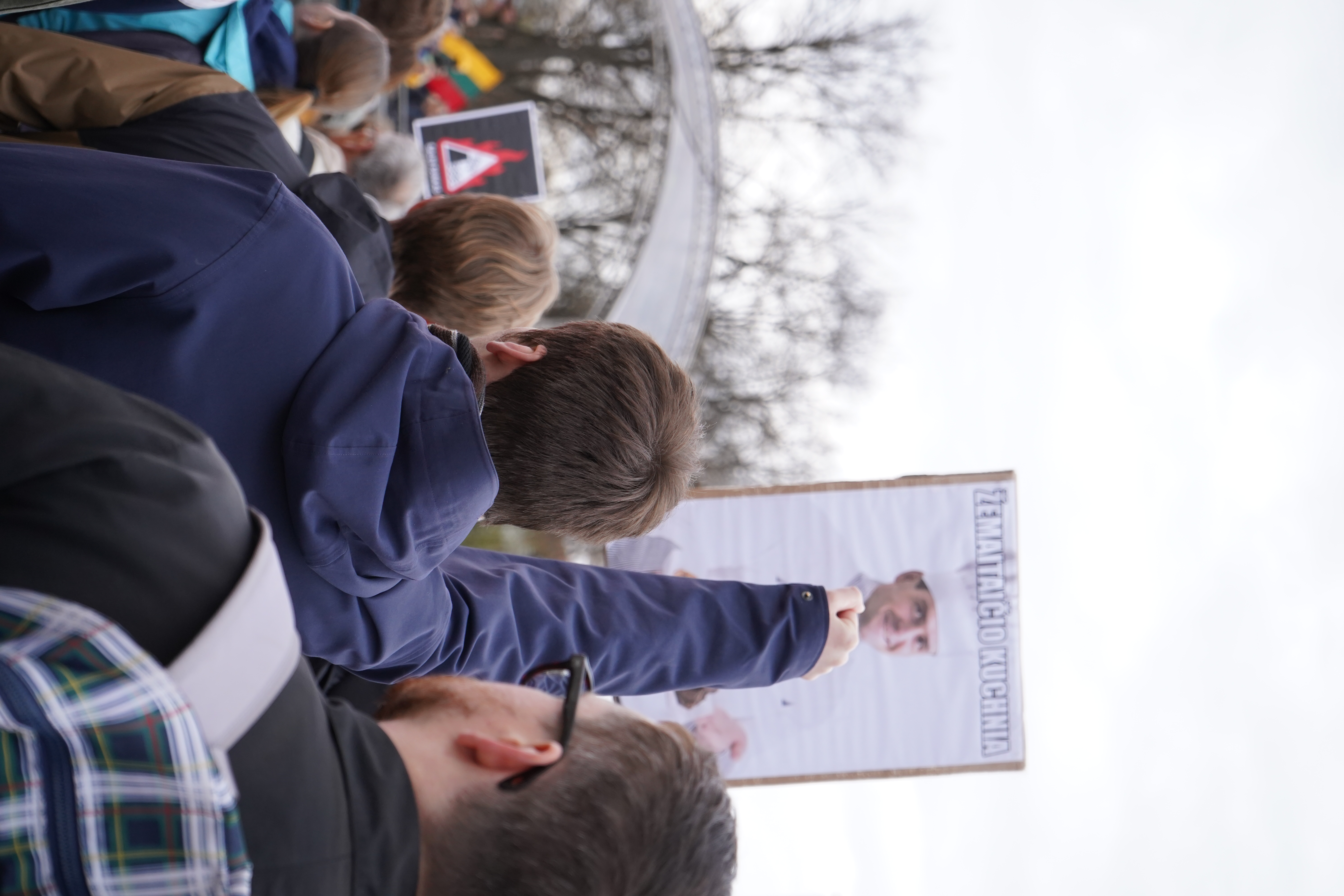
That wasn’t the only promise that was broken soon after the elections. Less than two weeks later, they formed the coalition with two parties: The Union of Democrats "For Lithuania" and Nemunas Dawn. The leader of the latter, Remigijus Žemaitaitis, at the time was on trial for several antisemitic posts on his Facebook account, and the Constitutional Court had already declared his claims unconstitutional. Despite all the pre-election promises of the Social Democrats not to work together with Žemaitaitis and Nemunas Dawn, the coalition agreement was signed.
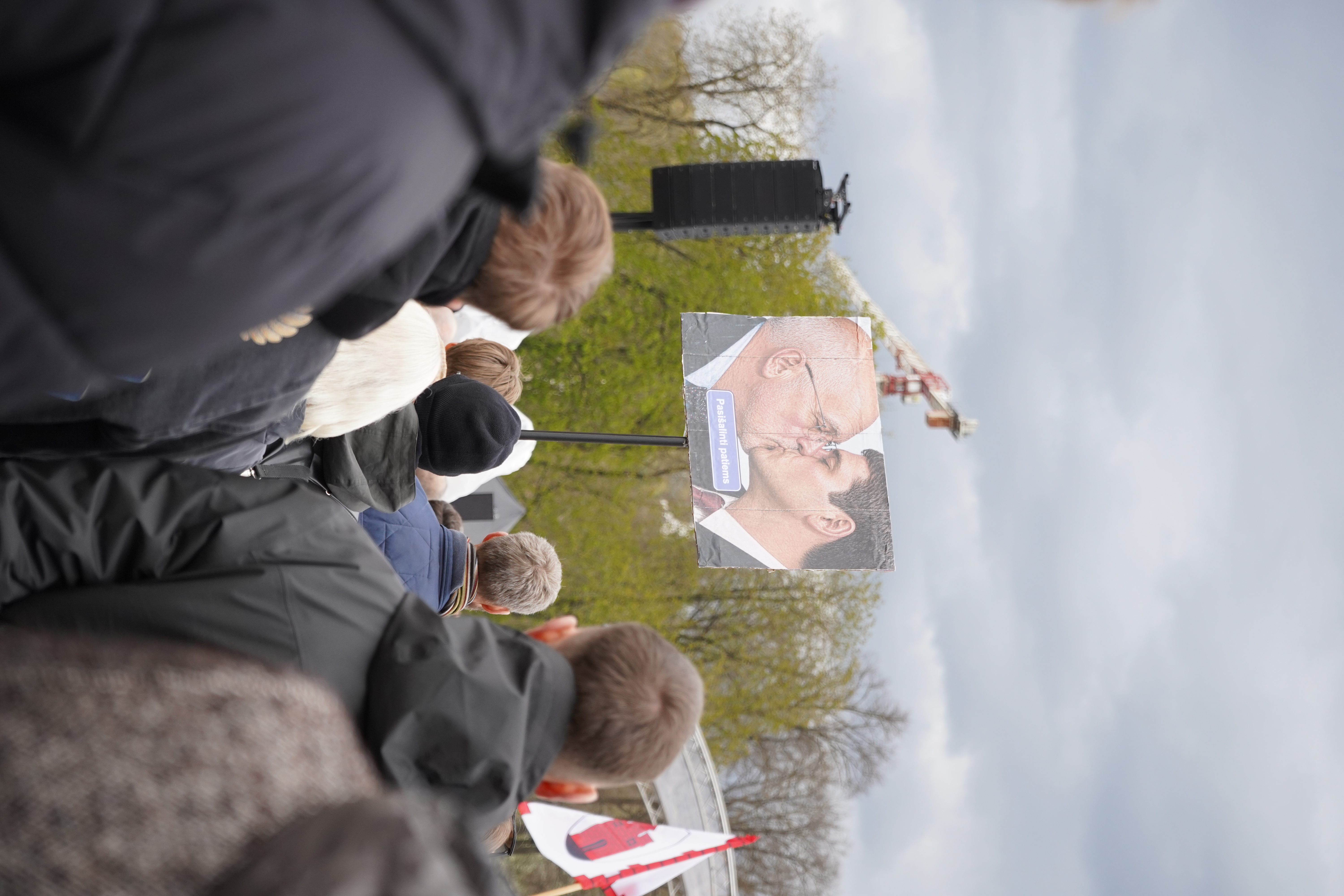
As if that wasn‘t enough, in May 2025, "Siena" investigative journalism centre and an "Laisvės TV" independent online channel published an investigative report on a €200,000 soft loan that the national development bank ILTE granted to a company partially owned by Paluckas when he was already Prime Minister. A possible conflict of interest arose.

A couple of months later, the second part was published. It was uncovered that only on 8 July 2025, Paluckas finished paying a €16,500 fine from his conviction back in 2012. While initially he was supposed to pay the whole sum in a year, Paluckas asked for an extension to finish paying the fine until the end of 2015, which was granted. He paid €11,580 euros in 2014, but the rest of the sum was left unpaid until a week after the journalists started asking questions about it in the summer of 2025. Furthermore, three days later, the founder of "Laisvės TV" shared proof that Paluckas's business had potentially embezzled €145,200 from an EU-funded LEADER initiative.
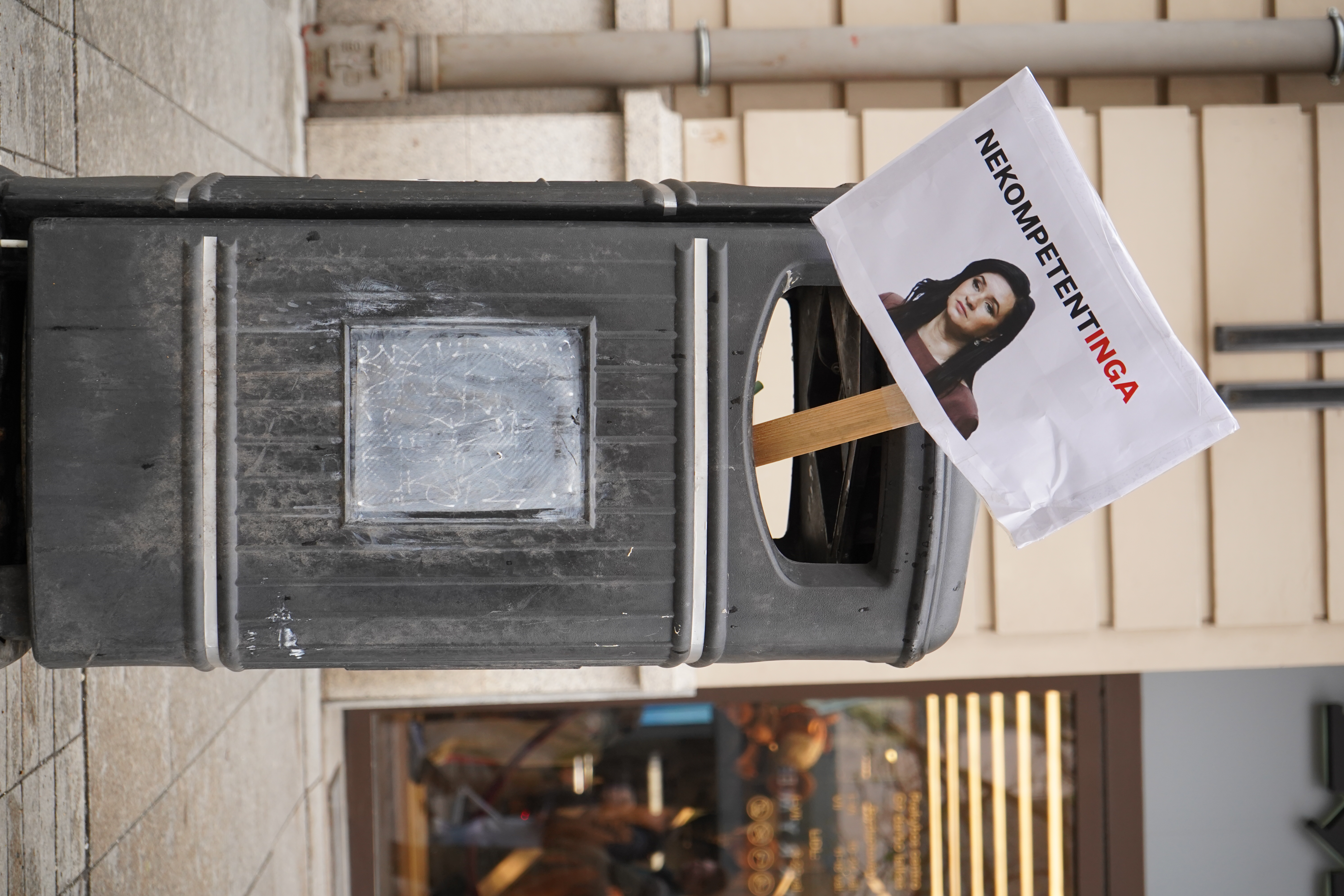
Due to all of these scandals and the pressure from the citizens, Paluckas resigned, and Inga Ruginienė was elected as the new Prime Minister. She was elected to the parliament in 2024 and immediately became the Social Democratic Party's candidate for the Minister of Social Security and Labour position despite not having any previous experience working in the parliament or other governing bodies in Lithuania.
In addition, during the formation of the new government, the Minister of Culture position was handed over from the Social Democratic Party to the Nemunas Dawn Party, which nominated Ignotas Adomavičius, who had no political experience and was a commercial director of a company that makes pasta and ravioli. His only connection to culture was graduating from an art school in 2002.
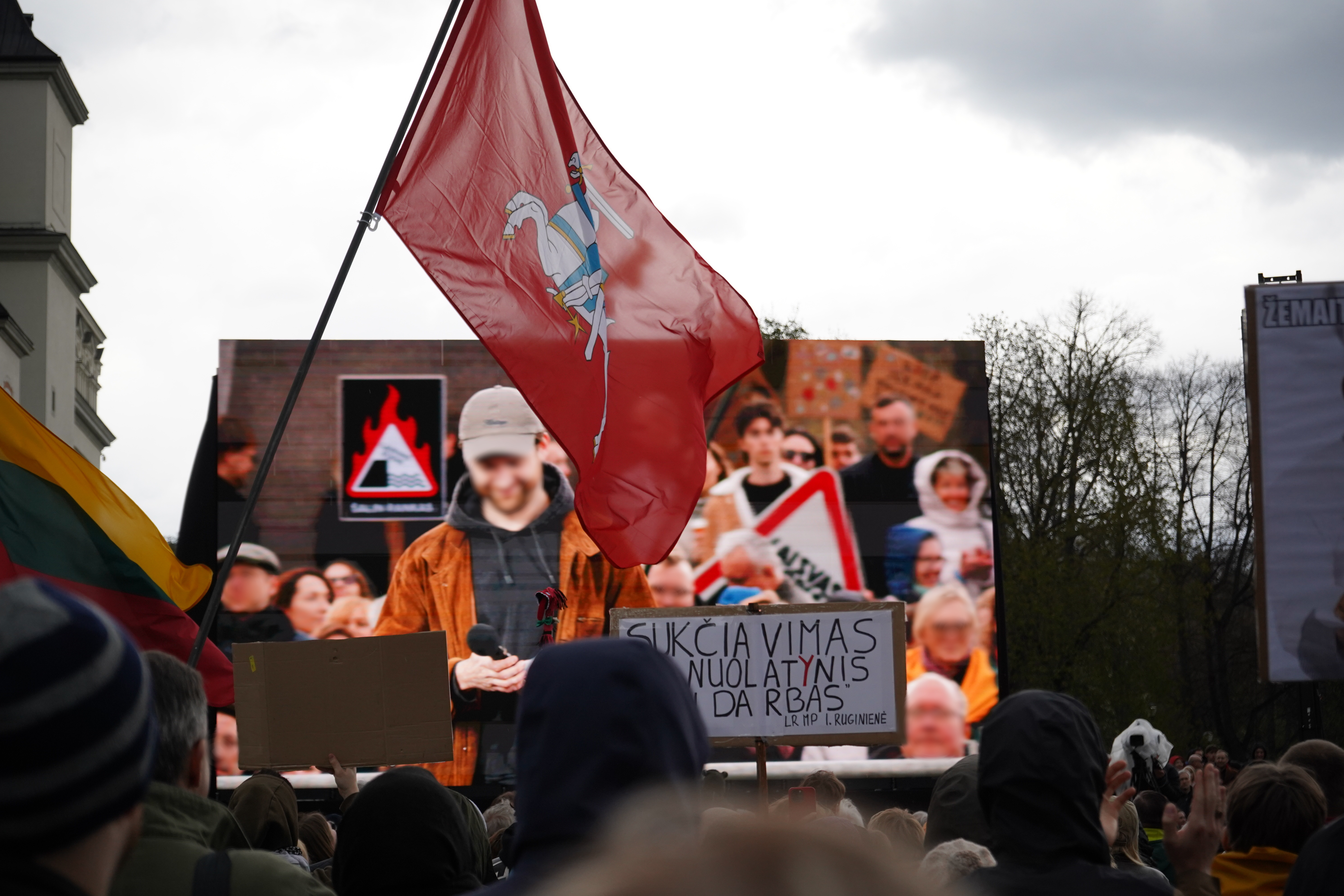
As one can imagine, the arts and culture community in Lithuania wasn’t thrilled about this decision. In fact, the people were so infuriated that their futures were now in the hands of a populist party that spread anti-European narratives, and the Culture Assembly movement was born. As they say, they bring “together hundreds of cultural institutions, independent artists, and organisations committed to protecting cultural autonomy, artistic freedom, and the integrity of democratic governance.” They also initiated the first protest on 25 September 2025, stating that the Nemunas Dawn party being in charge of the Ministry of Culture, is a danger to Lithuania’s democracy, freedom and safety. After protests, strikes and various cultural initiatives, Ignotas Adomavičius resigned, and the minister seat went back into the hands of the Social Democrats.
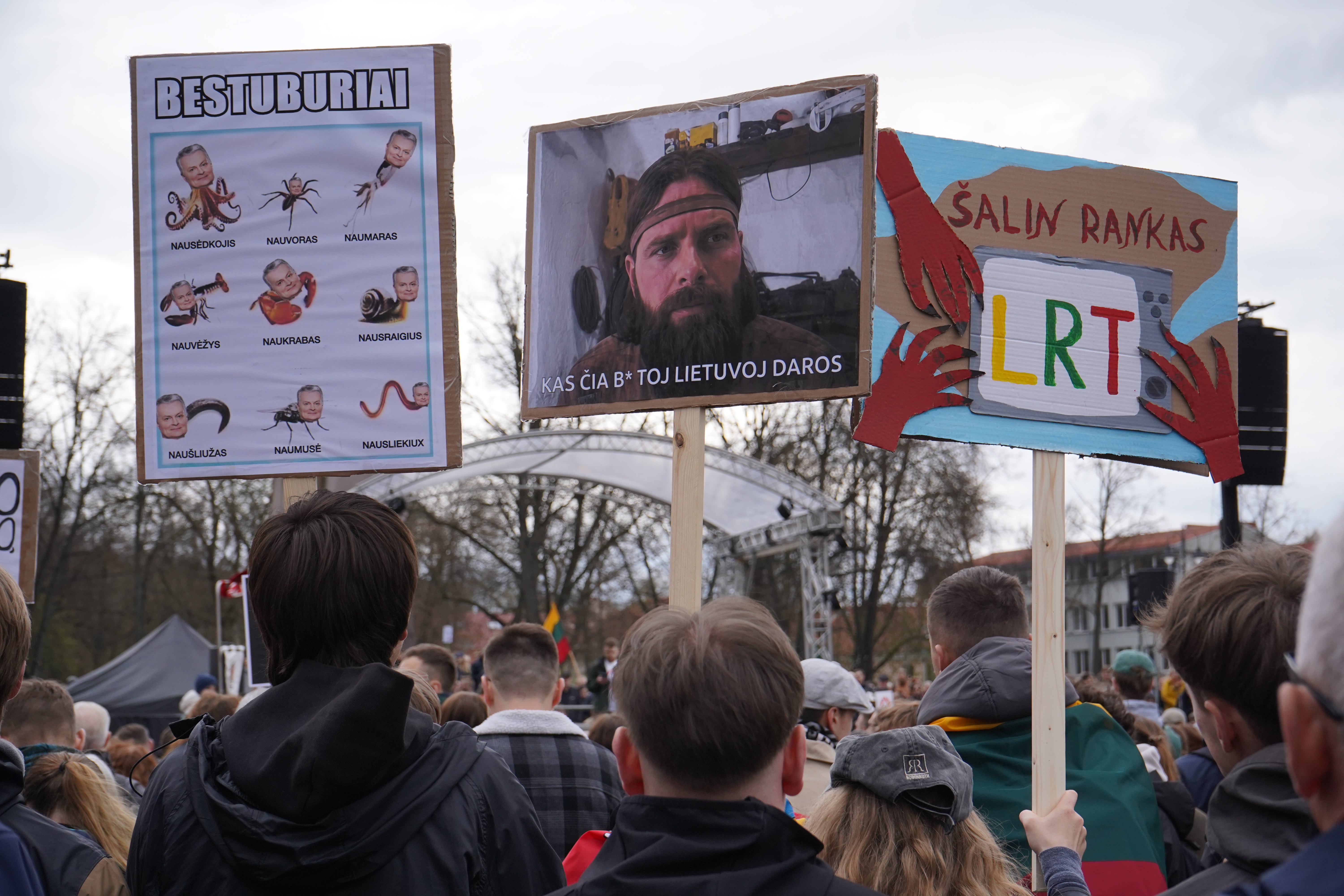
Bulldozer of the LRT law amendment
We have finally reached the main topic of this article – the proposed LRT amendments. At the end of November, Nemunas Dawn party and a few members from the Political Group of the Lithuanian Farmers and Greens Union and the Christian Families Alliance proposed an amendment to the law regulating Lithuanian national radio and television (further - LRT). Currently, the LRT director can only be dismissed by 2/3 of the votes of the LRT council members by an open ballot. However, the amendment would change it to only half of the votes by a closed ballot.
It might not seem a big deal at first, however, as noted in an official letter by the Association of Professional Journalists from Lithuania to the Social Democratic party, the majority (8 out of 12) council members are appointed by the president and the parliament, which means that if the amendment is passed, there’s a possibility for the council to fire the director based on the political, and not public interest. This is a threat not only to the national broadcaster but also to the principles of democracy and the citizens’ right to receive unbiased information.
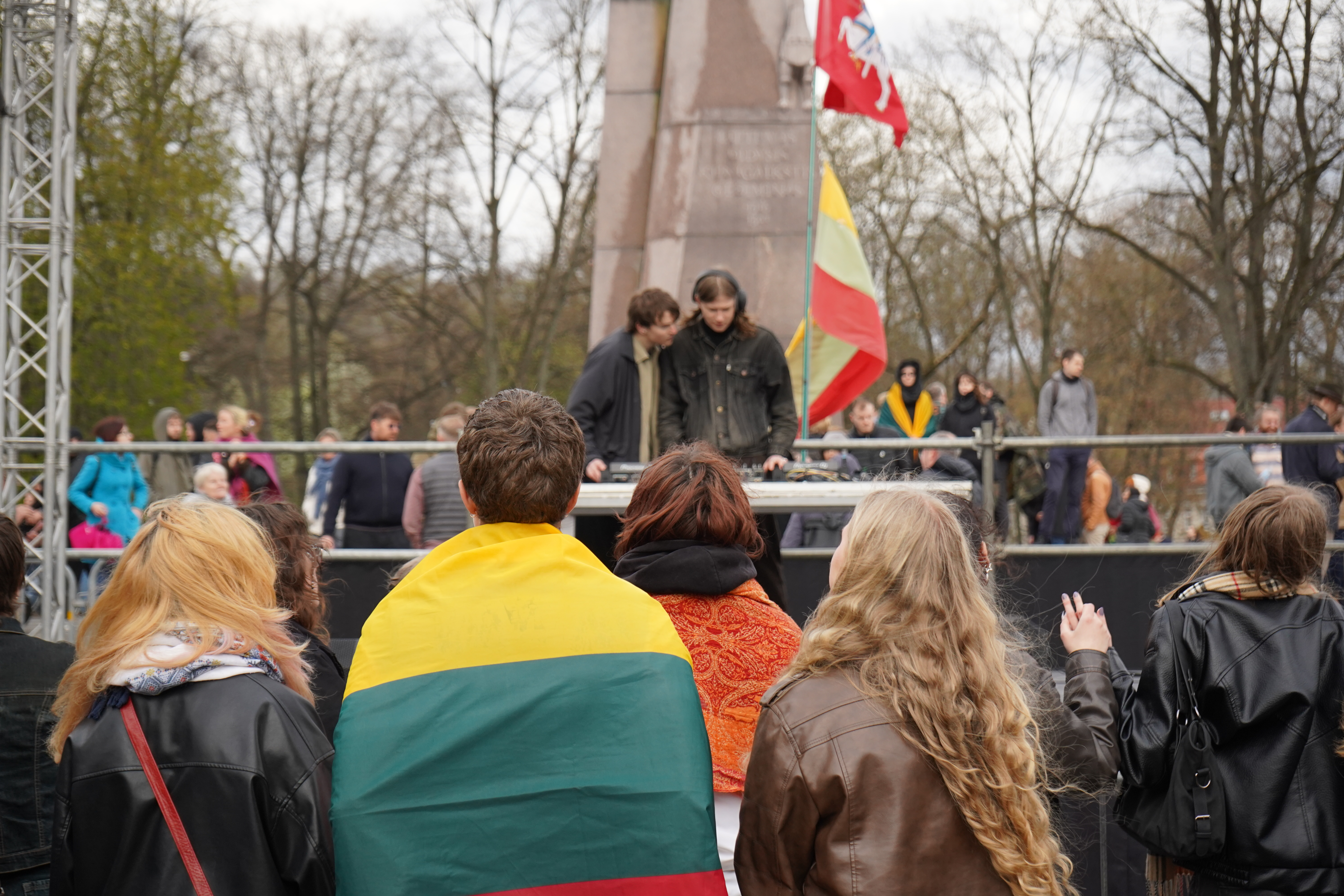
There was a lot of backlash: the letter from the journalists, a petition that was signed by almost 150,000 people in just a few days, and even the Parliament’s legal department expressed a concern that this amendment goes against the constitutional jurisprudence and the EU regulations. Despite all that, three days after the proposal was registered, the ruling party voted to add it to the day’s agenda and froze the LRT budget for three years. As a response, the Association of Professional Journalists organised the first protest against these new amendments on 9 December.
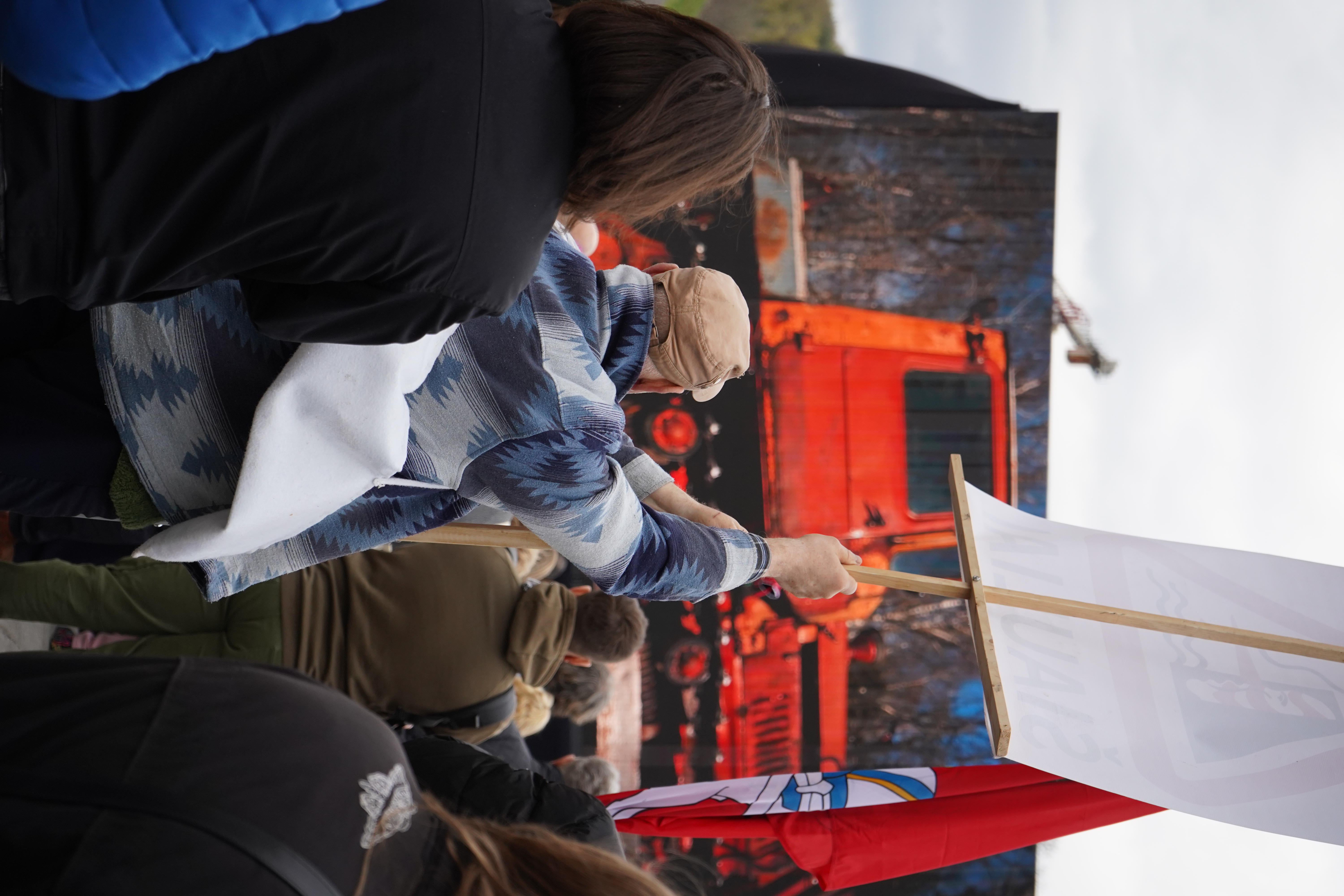
By mid-December, a new term was emerging regarding this whole situation – “bulldozer”. It was used, and still is, to convey how the ruling coalition is rushing to pass the proposal. They promised to have a conversation with the experts, but they chose those “experts” from their own party and refused to include members of the Association of Professional Journalists. They called special culture committee sessions for the consideration of this proposal to speed up the process. According to Lithuanian law, media organisations have the right to participate in the open sessions.
However, Birutė Davidonytė, the chairwoman of the Association of Professional journalists and one of the main initiators of the recent protests, shared on Facebook that she was removed from one of these sessions. The ruling coalition ignored the European Parliament’s statement that the amendments clash with EU law and should be rejected. They didn’t care that 30,000 people came to the last protest. The Venice Commission (the Council of Europe’s advisory body, which provides legal advice to its members) provided an official 27-page opinion, which claims that this whole process is not up to ”standards of good law-making necessary for legislation of constitutional and societal importance”. Even this document was only given half an hour of consideration in the Committee on Culture session on 13 May. The chairman skipped the most disapproving points of the draft.
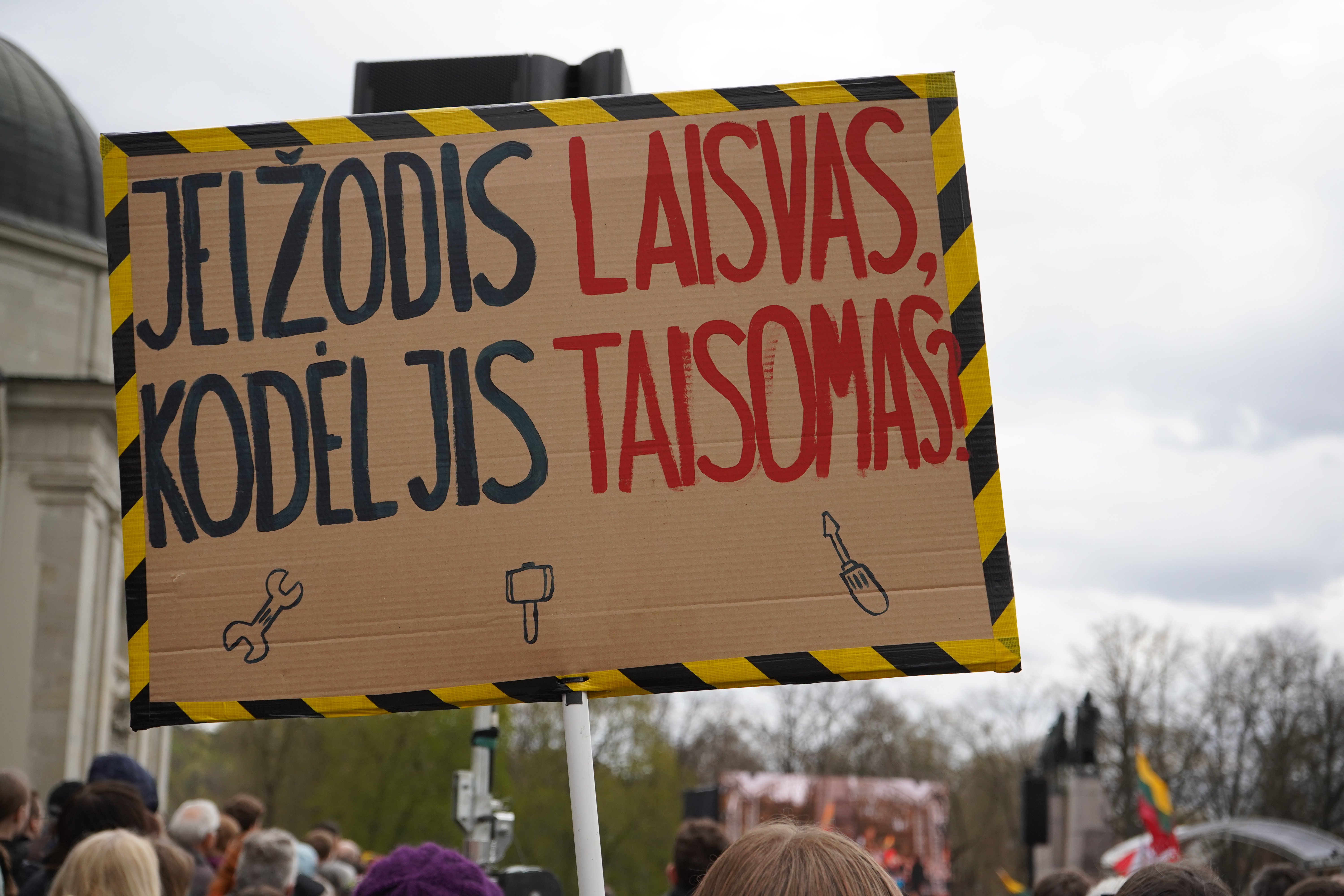
But why was this ‘bulldozer’ happening? As Birutė Davidonytė explained it, 19 May was the last time the current LRT council members were scheduled to hold a session before the end of the term of four council members. The new members were to be appointed by the Lithuanian Science Council, the Lithuanian Education Council, the Lithuanian Creative Artists Association and the Lithuanian Bishops’ Conference, meaning that the ruling coalition would have no way to impact what the LRT council would look like after the change. Thus, believing that in the former composition, there were enough members who would have supported the dismissal of the current director, Monika Garbačiauskaitė-Budrienė, in a closed ballot vote. The ruling coalition did everything to ensure that the amendment was passed before this date.

© Giedre Sapranauskaite, 2026
The deadline of 19 May has already passed. The draft went through ten Committee on Culture sessions, and the only reason it didn’t make it in time was thanks to the efforts from the opposition to delay the process.
On 2 June, the parliament members cast their votes. The law was passed. So what is the good news? The most critiqued provisions were discarded. The director won’t be dismissed by only half of the votes. The LRT council won’t be able to dictate the content created at LRT. And the journalists working at other organisations won’t be banned from working for LRT. However, the parliament increased the number of the LRT council members from 12 to 15, and changed the LRT director’s term rules - now the director cannot serve more than two terms in a row. One thing that received criticism from the Venice Commission was also passed: the new rules will already be applicable to the current director, who started her term in 2023. This again confirms that the ruling coalition was using this amendment to target her specifically.
Only a few days after the vote, the Social Democratic Party announced that they want to change its partners and kick the Nemunas Dawn Party out of the coalition. This means that in less than half of the current parliamentary term, Lithuania will already have a third coalition and government formation. There are still over two years left until the next elections. We can only guess what the future with this renewed leadership arrangement holds and hope that there won’t be another reason for people to gather in protests again.
Young Journalists in Europe - Meet the author
Giedrė Šapranauskaitė
“I have a master’s degree in media, but I am currently working as an educator at a public library. I am passionate about travelling and enjoy connecting with people from different backgrounds. I am excited to be part of the 2026 Pool of Young Journalists in Europe, and this time I hope to connect with young people across the EU through my articles.”
This article reflects the views of the author only. The European Commission and Eurodesk cannot be held responsible for it.