

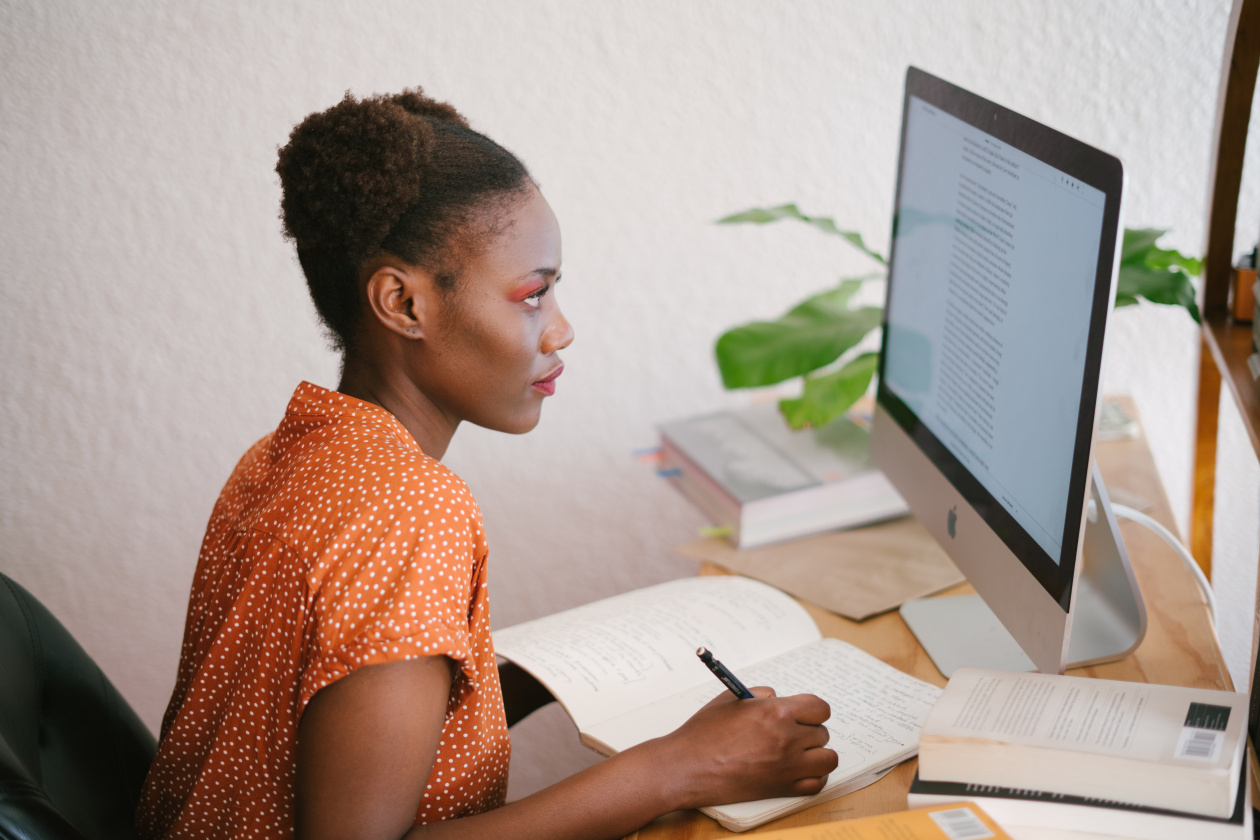
 © Pexels, 2023
How to study smarter, not harder
Zadnja sprememba Četrtek, 23/03/2023
One of the biggest problems students have to come across during their time at school is not knowing how to properly learn. During lessons, teachers give out tons and tons of information that teenagers have to put in their heads and preferably remember for a long period of time. But no one actually teaches pupils about the science of learning. It is quite saddening how one of the most important things is left for students to learn themselves.
Luckily, there are a lot of tools that show how to get a hang of studying in the most effective and productive way. From my point of view, the most easily accessible tool is visual content created by YouTubers. There is a huge variety of YouTube videos to choose from. Feel free to check out one of my favourite educational YouTube creators‘ channels: UnJaded Jade and Ali Abdaal. Their content is usually on the topics of productivity, effective studying, self-improvement, etc. I have learnt a bunch of valuable information from them.
Additionally, if you want to go deeper into this topic, you can read different types of books covering the theme of learning, which is what I did. In the next paragraphs, I will present my favourite techniques in the science of learning, that I read in Jade Bowler‘s book “The only study guide you will ever need“. It is an invaluable book because it made me understand the biggest mistake I had made and still sometimes catch myself doing. It is rereading notes. Although it feels like learning, it certainly is not! Instead, we should practice some active studying techniques. The ones I am going to talk about are flashcards and blurting.
It’s very helpful to use flashcards as a study tool. These cards usually contain a question on one side and an answer on another. However, one of the biggest mistakes that students make is writing long paragraphs on a flashcard. Text on this tool must be as short as possible and have just a few key phrases from the learning material on it. This way it truly helps you to memorise all of the bare content and only then add the details. If you use it incorrectly, it may reduce your motivation to study, since it is quite difficult to memorise long texts word by word. Although it takes quite a while to make the flashcards, for me it is totally worth it. You can make them on paper or online. The best apps to use are Quizlet and Anki.
Another study technique that I absolutely adore is called blurting. Usually, I use it while trying to put all of the notes from my biology course in my head. The main reason behind it is that there is a lot of study material and the most important step that leads to good grades in this subject is the number of things that you can learn by heart and write on a test later on. The whole principle of blurting is quite simple. Firstly, you write the names of the topics you are currently studying and a few key phrases on a piece of paper. Then you try to remember and write as much about that topic as possible. It forces you to actively remember information and later you find out what you actually need to work on more.
These are just a few study tips that work best for me. The whole science of learning consists of a huge variety of study and revision methods which work differently for every individual. It might be easier to pick out the best techniques by finding out what type of memory you have: visual, auditory or kinesthetic. Therefore, I encourage you to dive deeper into this topic, so you find the best methods for studying. Good luck!
_______________
Meet the author Agnė Jankauskaitė (Member of the pool of European young journalists – Edition 2022)
"I'm Agnė, a secondary-education student from Lithuania. And I would like to channel my next educational steps towards Journalism studies. I have also experience volunteering in a local library where I helped our local librarians to write reviews on the newest books and organise interactive events for young book lovers. My most loved ones decribe me as ambitious, energetic and positivite. I hope to spread similar energy through my work because writing articles, making videos and meeting people brings me happiness."
This article reflects the views of the authors only. The European Commission cannot be held responsible for it.