

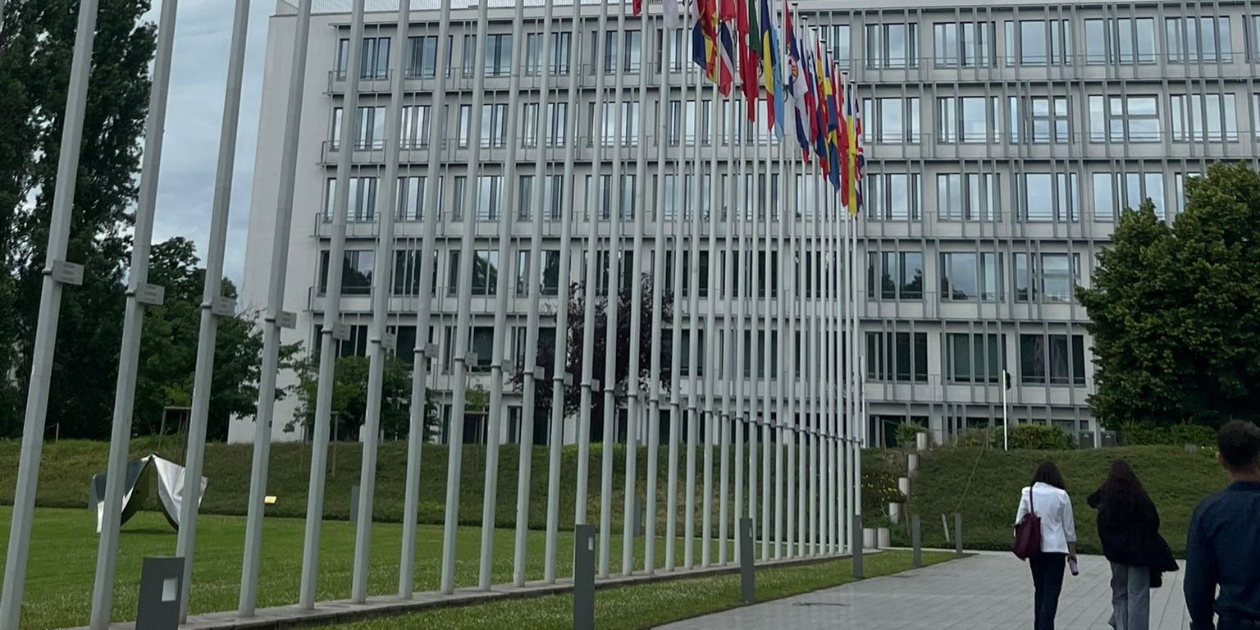
 © Hazel Mulkeen, 2026 - Council of Europe
“There’s someone out there who loves them”: The Uphill Battle Against the Death Penalty
Utolsó frissítés kedd, 20/01/2026
How best can a young person today advocate against the death penalty - especially when it’s still legal in over 50 countries? At the European Youth Centre in Strasbourg, young people passionate about human rights spoke to me about their experiences fighting for international justice.
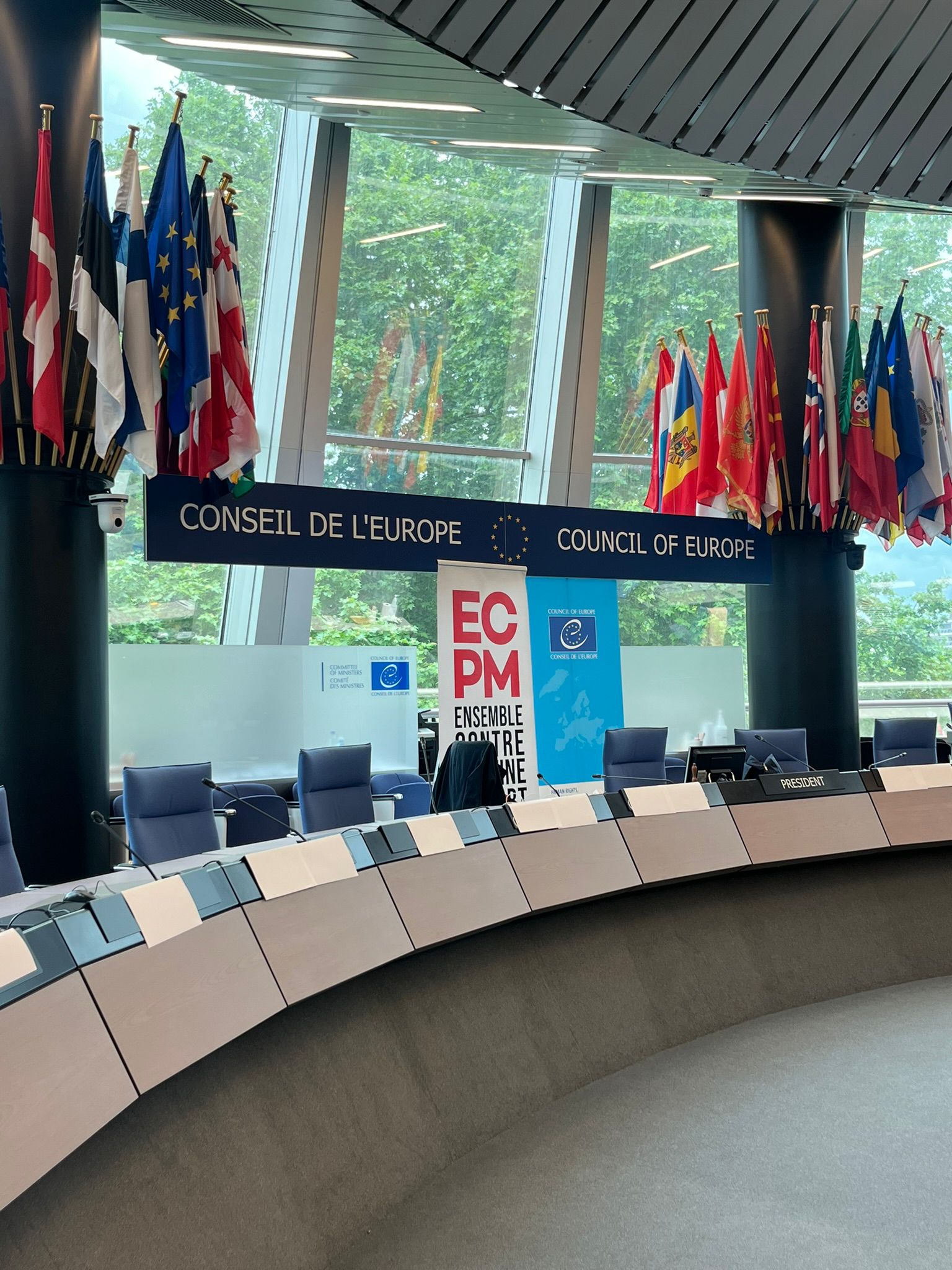
We are at the European Youth Centre in Strasbourg for a three-day residential workshop on the abolition of the death penalty. It might be raining constantly, but the atmosphere inside is electric: in just a few days, the European Youth Event is happening (took place on 13 and 14 June 2025), and there’s a sense that this is where young people call the shots. There are fifty men and women in their late teens and early twenties here in Strasbourg for the workshop- students, young professionals, and full-time activists - attending daily lectures on human rights law and workshopping advocacy methods in an intensive training programme, co-led by the Council of Europe and humanitarian NGO Ensemble Contre la Peine de Mort (as well as other national and international organisations). Not everyone here is a first-timer: one year on, Jessica Barboza and Taliana Zara McIlwrath, two graduates of last year’s four-day training, have returned to Strasbourg for the third annual edition of the workshop.
The Council of Europe has long been a global leader in abolition efforts: no country can join the Council without first abolishing the death penalty. Since 1983, peacetime use of the death penalty has been banned in all member states; since 2002, its use during wartime has been forbidden by Protocol 13, ratified by all member states but Azerbaijan.
The Council continues to promote this principle worldwide through youth initiatives like this one, designed to build up a network - growing every year - of young people who are educated about the harms of the death penalty and ready to advocate against its use.
Last year, Taliana, or Tali, came to the workshop for the first time. She was only 19, in her second year of law school. “It was an eye-opener to me,” she said. “I came here terrified. I thought I wouldn’t be able to contribute, but I found myself putting my hand up in a lot of sessions. You’re not just here for a level of cold bureaucracy; you’re interacting with human beings. I realised, this is a place I belong. I deserve to be here just as much as anyone else. So it was quite an affirming experience.”
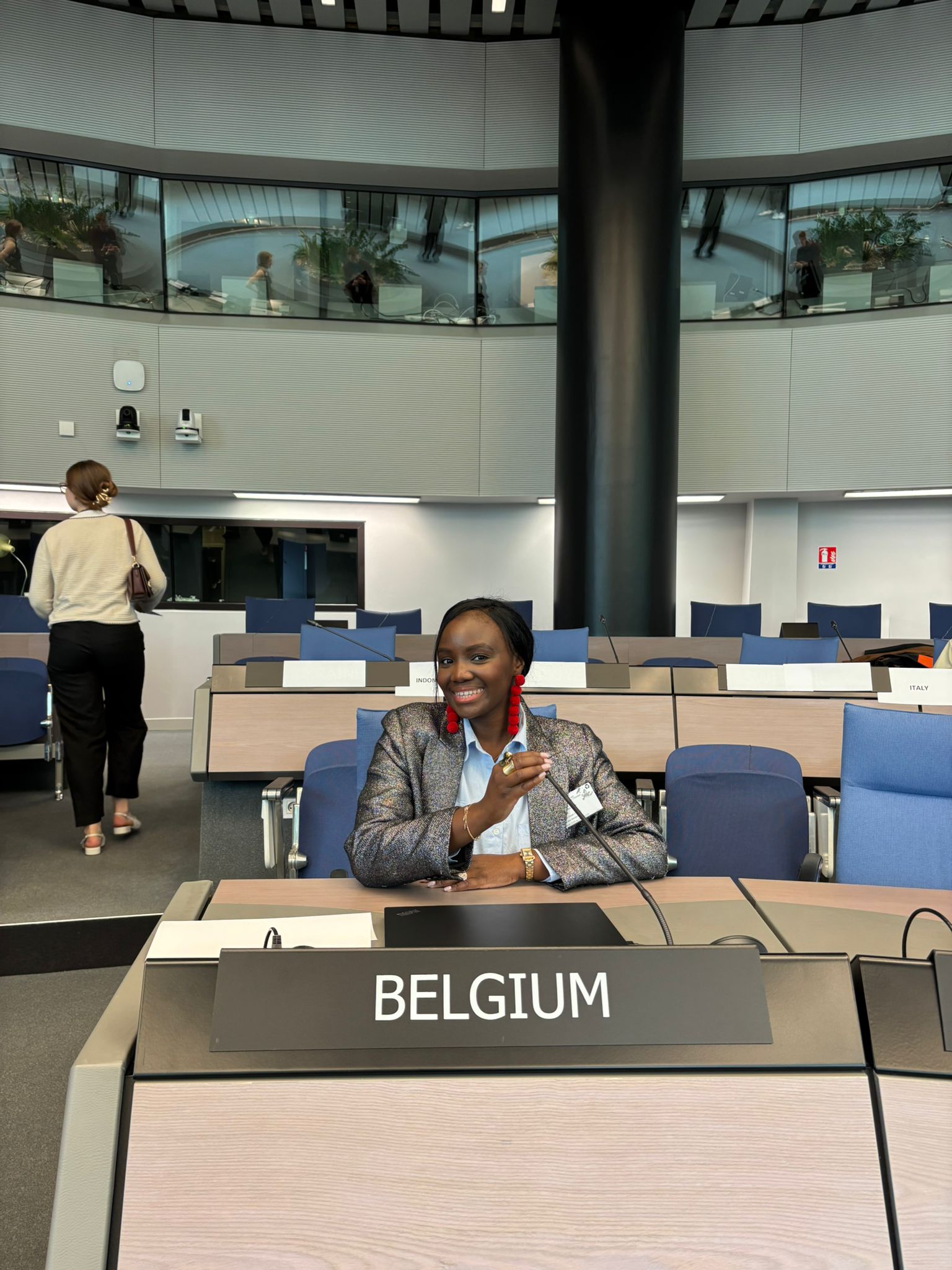
Jessica Barboza at the Palace of Europe
Each participant I've spoken to joined the workshop with a shared conviction: they believe they can change the world through their advocacy. Although Tali is aware of her privilege of being born in the UK, “growing up as a second-generation immigrant, you have a bit of a different sense of identity”. Her family often experienced poverty; her father, who grew up in the middle of the Troubles in Northern Ireland, had been sent to prison on a number of occasions. She saw the consequences of abstracted, unfettered power. “I see how it had that effect on my father; it took away the life he could have had.” She had seen how the justice system devalues life and dehumanises vulnerable people. She could have felt hopeless - or she could decide she didn’t want other families to be subject to the same suffering. “You can address these systems,” she told me, “and try to make the world a better place.”
“People might look at my dad and think he’s a bit of dirt on the bottom of a shoe - but I love this man. People who are on death row, people who are condemned for the worst of crimes - there’s someone out there who loves them too. I had always seen it as symbolic of the most abhorrent form of carceral punishment, because you’re waiting in a prison cell until you’re not, and you’re gone. I think the prospect of being so helpless and not being able to stop the people who are supposed to protect you from killing you… It’s a horrifying prospect."
"It’s also part of why I’m pursuing law,” she told me. (Tali is a law student at Bristol University in the United Kingdom.) “Our legal system is inherently biased, but we can strive for flexibility and understanding. Our world has never been and will never be black and white; our legal system should reflect that.”
For Jessica, last year’s workshop left a profound impression, particularly the testimony of a woman who had once been sentenced to death in her home country and was invited as a guest by the coordinators to share her story of survival. “Everybody was crying - it struck me so, so hard. These are real people, they have families, they have their own stories.” She went away from last year’s workshop full of ambition, but she says, the plans they made together - to raise awareness through their own workshops, in their local communities - didn’t get implemented. “Maybe the projects were too ambitious”, she told me, or maybe last year her team just didn’t know where to start. “But this year, everyone is much more interested, more implicated.”
Although Jessica now works full-time in Belgium, she still came back to this workshop in France because she “wanted to learn even more. I wanted to see how I could change myself, maybe… to give the ones who do not have a voice, their own voice.”
It can be tough, though, to amplify those voices across oceans. Although the number of known executions last year went up by 32% compared to 2023, the number of countries using the death penalty has gone down steadily, as more nations choose abolition. The shrinking minority of retentionist countries - those that still use the death penalty - include Somalia, Iran, Saudi Arabia, and China. These states aren’t seen as receptive to Western norms. So how can young people living in Europe hope to influence them?
Jessica’s answer to that question was “do as much (as I could) in international relations, and everything that has to do with human rights.” As a student in 2023, she interned at the Embassy of Belgium to Malaysia - a country which still retains the death penalty in law - in Kuala Lumpur. She got the chance to start her advocacy work when she was invited to contribute to Malaysia’s Universal Periodic Review, or UPR: this is a review process in which all UN Member States must participate, where the nation itself submits a report to the Human Rights Council, and other stakeholders offer recommendations to that country. She went to meetings with the EU delegation to Malaysia; she went to the Asian Human Rights Forum. It was a lot of reading and research from other coalitions, Jessica says, but “that’s how I drafted the UPR, along with the (Belgian) ambassador and the deputy head of the mission, for Malaysia.” Since that experience, she hasn’t stopped working to raise awareness among young people about the harms of the death penalty, despite the challenges she’s faced.
Around the world, the death penalty is often imposed after unfair trials: confessions extracted under torture, with inadequate or absent legal representation, are common. It still disproportionately affects the poor, ethnic minorities, and people with disabilities, according to research conducted by Amnesty International this year. Being on death row means prolonged isolation, uncertainty, and psychological distress. In fact, it was on those very grounds - that knowing you might be executed causes prolonged mental suffering, and therefore deserves to be considered “inhuman or degrading treatment” - that human rights lawyers won the landmark case Soering v. the United Kingdom (1989). They proved that extraditing a person to a country where they might face the death penalty, without guaranteeing their safety, would violate the European Convention on Human Rights, setting a precedent that continues to protect people today.
Jessica wanted to hold a workshop at the European Youth Event to promote the abolition of the death penalty, harnessing the soft power of Europe to shape young people’s values. Even if the majority of attendees lived in abolitionist countries, she hoped to inspire advocates who might influence neighbouring regions or drive change through the global community of the Internet. In her vision for the workshop, “we would give information (about the death penalty), and after that we would have a debate.” She found it hard to get support from the European Youth Event and her peers to make that vision come true. “I ended up drafting the whole application [to secure a spot at the EYE, where booths are in high demand] myself; it did not get chosen, unfortunately. The questions were like, ‘can you invite an MP from the parliament?’ And we didn’t have those connections.”
What’s next for these young advocates? For Jessica, it’s time to seek change closer to home. “Since last year, I’ve been a member of the Diaspora Advisory Board of IOM Belgium. What we do is try to reach out to mostly African people living in Belgium to see how we can help them. Climate migrants, also. I want to create a group within the DAB with refugees coming from states where they had to flee because of the death penalty. I’m trying to see how I can build that up.”
Meanwhile, Tali’s advocacy work focuses on the penal system. At Bristol University, she “had the luck and pleasure of meeting Clive Stafford Smith”, a visiting lecturer and lawyer who worked on “hundreds and hundreds of death penalty cases in the US”. Clive introduced her to the Post Mortem Project, which seeks to create a repository of public-access information based on judgments, case files, and legal documents concerning death penalty cases. The aim is to show that the justice system makes mistakes, and those mistakes can end people’s lives.
She’s spending the summer on the ground in the US for the Post Mortem Project, working on the case of Johnny Garrett. Johnny Frank Garrett’s trial in 1981 was politically flammable: the story, a Catholic nun killed on Halloween, was tabloid catnip; the District Attorney was a new Democrat who wanted to prove he was tough on crime. “He sentenced an intellectually disabled man with schizophrenia to execution,” Tali says. “His case is a textbook study in injustice”.
When it came to Garrett’s case, there was a mountain of evidence of misconduct; Tali and her friend, whom she met in law school (in Stafford Smith’s class), are going to Amarillo, Texas, to interview everyone involved in Garrett’s case. There’s a wide gully in between the abstracted legal documents and the story of injustice that will get people up on their feet: “I guess I’m serving as a medium,” Tali says: researching and collating the hard facts, and finding artists and creatives ready to make those facts into a compelling story, using “art, podcasts, film, anything”. Even if the court and the system are failing Garrett and his family, even if the police refuse to reopen the case, Tali believes we can still clear Garrett’s name in the eyes of the public. “We can have the court of public opinion recognise that this was an injustice.”
Young Journalists in Europe - Meet the author
Hazel Mulkeen
“I’m a student at Trinity College Dublin, currently pursuing a bachelor’s in French and German. As a competitive debater with a particular interest in public affairs and economics, I’m fascinated by how each citizen’s rights interact with governmental policies. I’m honoured to be a Young Journalist this year, and I hope to find and share stories that resonate with young Europeans".
This article reflects the views of the authors only. The European Commission and Eurodesk cannot be held responsible for it.