

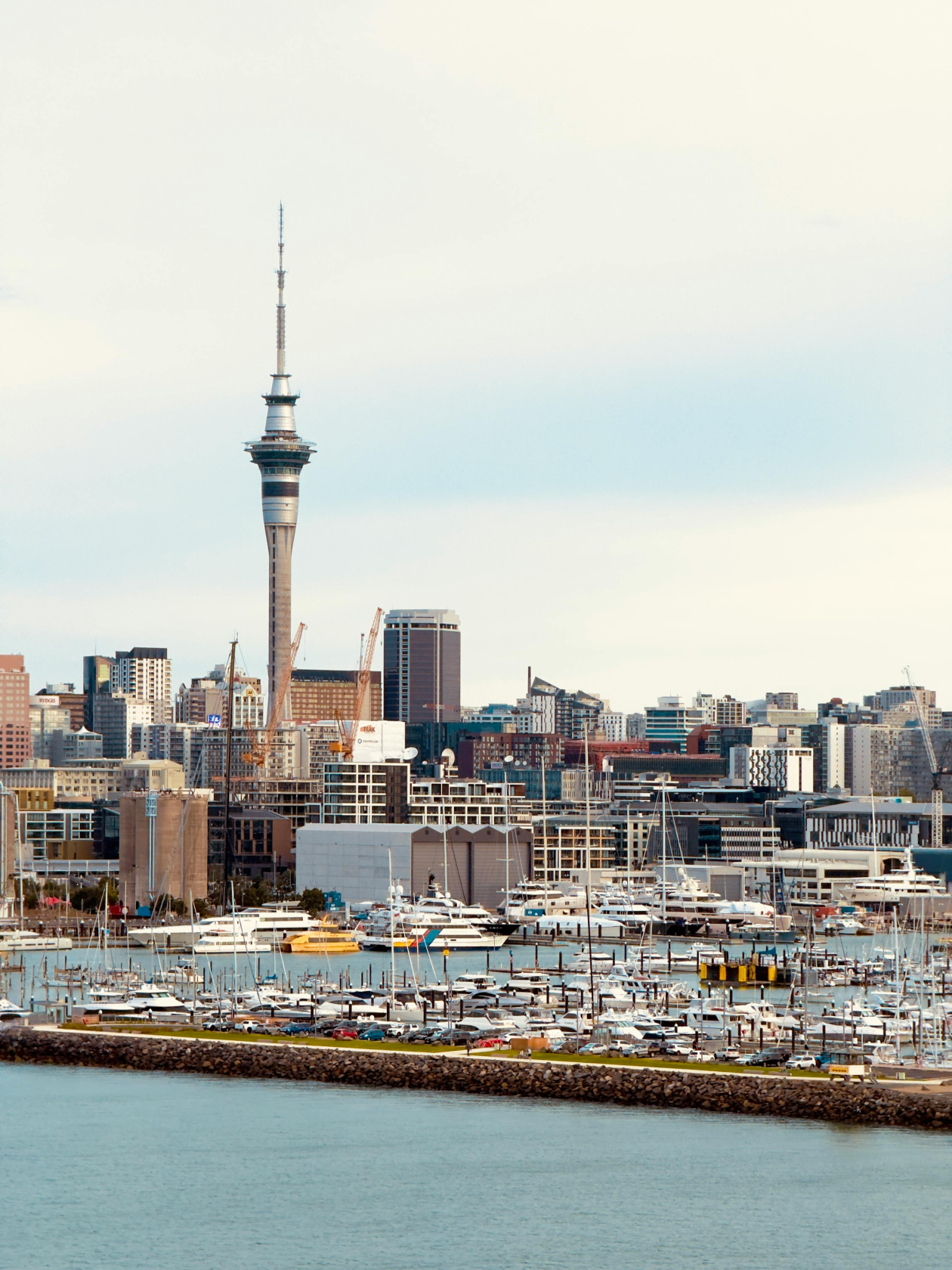
 Photo by Kwin M/Pexels
They Left Because They Had To. I Returned Because I Could.
Utolsó frissítés szerda, 03/06/2026
In the 1960s, my grandad hopped on a boat leaving Croatia. He left the tiny island of Hvar and began a three-month journey across the world to a recently established nation called New Zealand, a country so far away that most people back home could barely picture it.
My grandad worked for months, saving every bit he could, and eventually sent for his newlywed wife to join him. They didn’t speak a word of English. They stayed with relatives at first, worked whatever jobs they could find, and slowly built a life there. A couple of years later, my father was born, raised between two languages, speaking Croatian at home and learning English at school. It was a common story at the time. One person would leave, make money abroad, and eventually bring the rest of the family out.
My mum’s story was similar in spirit but very different in experience. She was born and raised in Croatia, and one day her parents put her on a plane at the age of eight and took her to New Zealand. She didn’t speak English. She didn’t know where in the world she was going. Like my father’s family, they stayed with relatives until they found their footing. That was the generation that left because they had to. War, political instability, famine, and limited opportunity pushed thousands of families abroad. Many offshore Croatian communities were built exactly this way, through sacrifice, separation, and hope.
The most popular places for my family to go in the 1960’s were Argentina, America, Australia and New Zealand. Every time I make the 32-hour flight journey from New Zealand to Croatia, I quietly wish they had chosen some place closer!
I grew up surrounded by a Croatian community in Auckland. We had the Croatian cultural club where we danced kolo, celebrated weddings and football matches, and shared stories that had travelled across oceans with the people. It was completely normal to me at the time, but as I got older, I realised how unusual it actually was. None of my friends had anything like that. I was the only kid at school who spoke a second language, the only one who belonged to a cultural community that existed outside of school. Only when I got older did I start to see how much that shaped me.
The first time I came back to Croatia on my own was when I was nineteen. I stayed for three months, and something shifted in me. Walking along the coast, hearing the language around me, watching people who reminded me of my grandparents, aunties and cousins, I felt a connection I had never been able to fully explain. This country was no longer a holiday destination for me. It was recognition. Something inside me understood this place instinctively.
I went back to New Zealand to finish university, but the feeling of Croatia never left me. Once COVID ended and borders opened again, I booked a one-way ticket and came back. By that point, I was old enough to understand myself, to understand identity in a deeper way, and I knew that coming here was more than a romantic idea. I wanted to belong. I wanted to live in the country my grandparents were forced to leave, now that returning was finally possible.
And I quickly learned that I wasn’t the only one who felt this way. In the last few years,s I’ve met people in their twenties and thirties doing exactly the same thing. Some were born abroad, some moved away as children and returned as adults. Some work remotely because local job opportunities in certain fields are still limited. Some split their time between countries. But the motivation is similar. A pull towards something familiar and rooted. A desire to rebuild connections that were broken by history.
It isn’t easy. Croatia is a very small country with a population of around 3.9 million, and reintegration is challenging. Even if your parents are from here, you may still be seen as the one who comes from somewhere else. There are cultural nuances that take time to adjust to. The job market is tough in certain sectors. People who grew up here face those same challenges, and many still leave because of them. But the feeling of returning, of choosing Croatia despite those difficulties, is an earnest, powerful feeling.
And it is happening more than many people realise. According to the Croatian Bureau of Statistics, more people moved into Croatia in 2024 than left. Around 70,400 immigrated and around 39,000 emigrated, creating a positive net migration of over 31,000 people. Government data also suggests that roughly 10,000 Croatian citizens return to live in Croatia each year. Estimates from diaspora research show that about 3.2 million Croatians and their descendants live outside the country, nearly as many as the 3.9 million who live here.
When I read those numbers, I realised that my story is not just an individual experience. It is part of a much bigger pattern. A quiet movement of people returning, reconnecting, trying to build a life in the place their families left. Some return for culture. Some for family. Some because they want their children to grow up with a sense of identity they missed themselves.
I’ve started reaching out to others who share this experience because I want to understand it better. One of them is Matea, whose perspective is different from mine because she moved back here as a child, growing up between two worlds. I actually first came across her on social media. Her videos kept popping up on my feed, and they made me laugh because they capture a very specific kind of humour only returnees really understand. The jokes about identity, language, and the awkward in-between moments felt so familiar that I instantly recognised myself in them.
I reached out to Matea, and she was genuinely excited to be part of this article and share how her connection to Croatia has changed over the years, what she loves about living here now, the challenges she’s faced in balancing different parts of her identity, and what she would say to other young people thinking about reconnecting with their heritage.
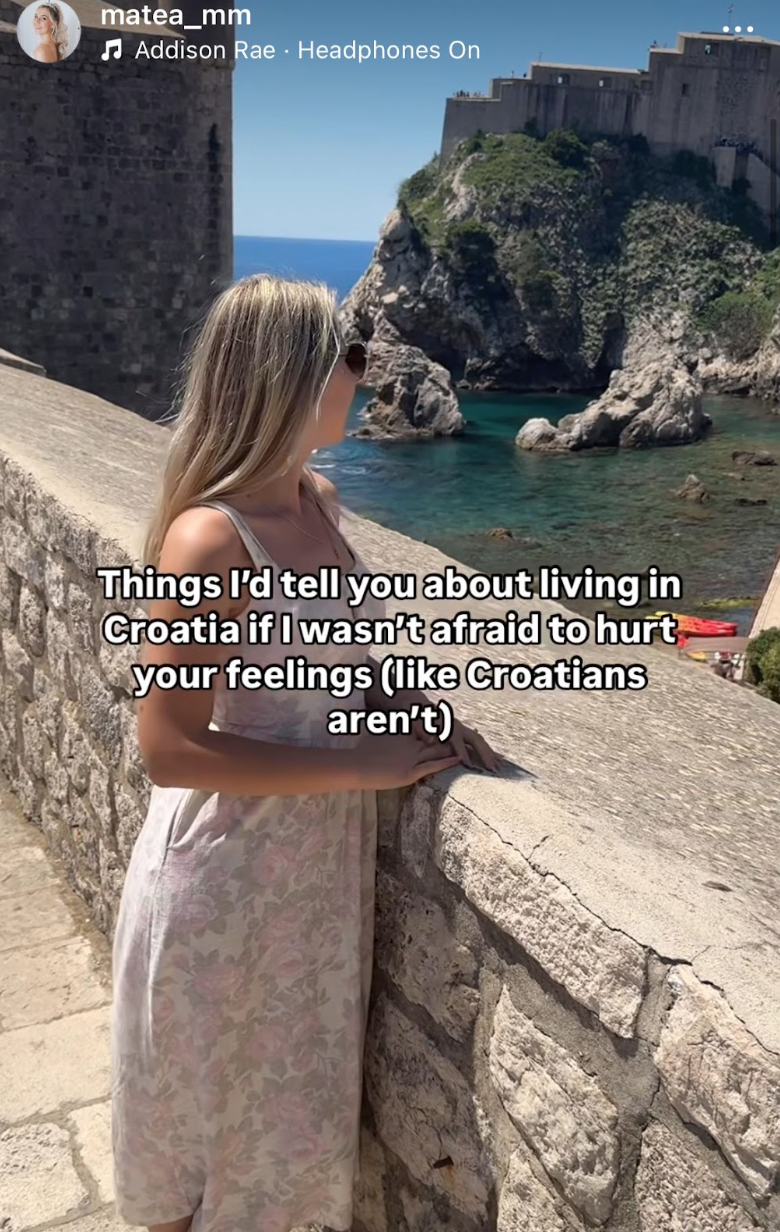
What has it been like growing up between two cultures?
Honestly, I really didn’t realise I was growing up between two cultures until I actually moved to Croatia and started living here. Then I started to realise how my two cultures varied (Canada vs. Croatia).
When I was living in Canada, Croatia was my culture. It was my background; the community were “my people,” but again, we were all Canadian too, so I didn’t realise there was a difference in culture. Then, I moved to Croatia, and WOW, did I notice a difference. In the lifestyle, people, language, parenting styles, traditions, everything. It was all a real culture shock to me because it wasn’t the “Croatia” I grew up learning about.
I’m not going to lie, it was a struggle to adapt, and I constantly felt like I was torn between two worlds. Trying to fit in while also sticking out like a sore thumb. In the beginning, I tried to hide the fact that I was Canadian, which also led me to feel disconnected from both cultures. Mostly because it always felt like a tug-of-war trying to figure out which culture I belong to. Especially with comments from people who tried to prove how here is better than there, or there is better than here.
Fast forward many years. I realised it’s not so black & white, and while it was not easy, it was a necessary experience for me to truly embrace who I am today.
How do you feel your connection to Croatia has changed or evolved over the years?
I feel like I’ve gone through waves of being very connected and very disconnected. When I first moved here, I would say it was a shocking disconnect because the Croatia I grew up knowing simply wasn’t the reality; it was vastly different. Nevertheless, every year that passes, it evolves in a positive sense. However, I would say in recent years, especially recent months, I feel more and more connected by speaking my truth and experience about life in Croatia. Which isn’t always perfect, but it gives me not only new perspectives but also a community of people who understand where I am coming from.
What do you love most about living here now?
There is a lot to love about Croatia, but what I love most is the lifestyle. People here work to live, not live to work. Even though I myself have a very entrepreneurial mindset and keep myself busy, I learned to understand the value of going for a midday walk or coffee break, and to be honest, I feel like it makes me more productive. “Slowing down” here isn’t automatically considered lazy; it’s just how things function here. You get to enjoy life and put effort into more important things, such as family, instead of working 25/7.
Is there anything you’ve found challenging about balancing your roots with other parts of your identity?
Ufff, most definitely. I believe this is a never-ending battle. For a while, mostly the first 6 or so years (before I went to university), I tried SO hard to hide my Canadian roots. I wanted people to know I was a true Croatian, to the point where I would talk down on Canada regularly just to “fit in” and completely disregard the Canadian side of me. As I grew up, I realised this was the completely wrong approach and started to slowly “bring back” parts of me and open up about the fact that I was raised differently and am different. Whether it was certain traditions, the way I behaved, my manners, or how I talked, it all became something I didn’t need to hide. But of course, I always need to find balance because I am living in Croatia and have to respect the traditions and life here as well.
What would you say to other young people who are reconnecting with their family’s homeland or heritage?
I’d say it won’t be easy, but it’s worth pushing yourself to take those steps. Even if you’re not ready to make a big move yet, you can still begin by doing your research, learning more about your family history, and gradually bringing meaningful traditions into your household. These small actions build a foundation. I truly believe it’s incredibly important to pass things on to future generations—stories, values, and customs—so they can grow up with a strong sense of where they come from. Having that rich, grounded part of your identity, filled with history and connection, is something that can guide and strengthen you throughout life.
Speaking with Matea and with others on similar paths has made me realise how layered this return truly is. It isn’t just about moving countries, or reconnecting with a language, or chasing a romantic idea of a homeland. It’s about piecing together something that was interrupted generations ago and finding a place for ourselves within it. Our grandparents left because they had no choice. We return because, for the first time, we do. And somewhere between those two realities, a new story is unfolding: one shaped by identity, heritage, and a quiet but growing sense of homecoming.
Young Journalists in Europe - Meet the author
Sasha Curin
“I love capturing everyday moments and turning them into stories that matter.”
The article reflects the views of the authors only. The European Commission and Eurodesk cannot be held responsible for it.