

 © TVORY!,2025
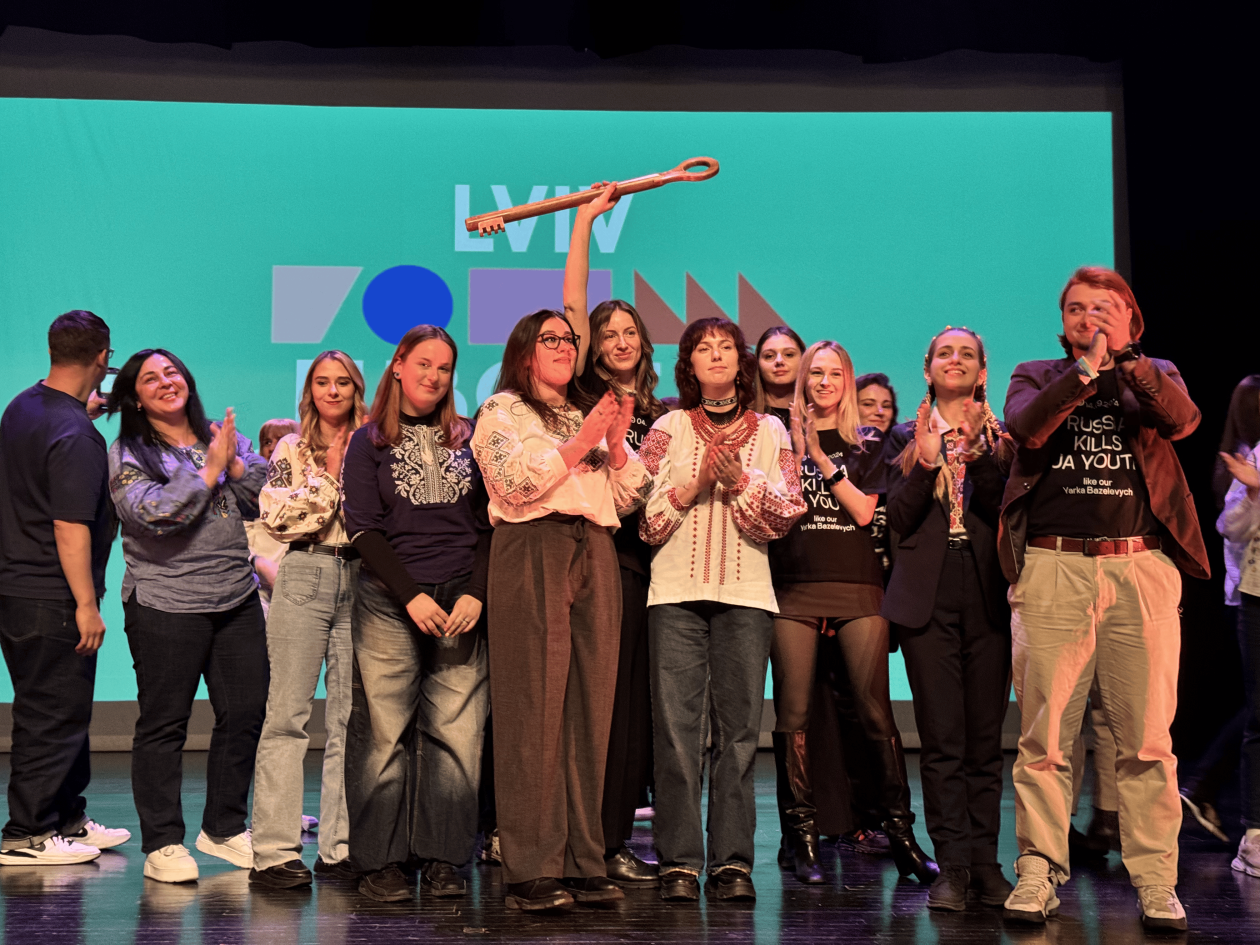
"We define the European Youth Capital title as a tool to be heard, as it is the first time that the youth capital of a country in war has won such a competition"
Utolsó frissítés péntek, 27/02/2026
Yulia Martyniuk and Taras Chura are part of the team behind TVORY! - a youth network that grew out of Lviv’s first youth centre and later carried the city to the European Youth Capital 2025 title. In this interview, they speak about building youth spaces from scratch, responding to Russia’s full-scale invasion faster than institutions could, and why, for Ukrainian youth, this title is not about prestige but about the right to be heard.
Youth Network TVORY! - original story
Yulia:
The story of TVORY! Youth Network began back in 2018 when, for the first time, the competition for the title of Youth Capital of Ukraine was launched in Ukraine. The same year, we, as a team, won it for Lviv. Since the very beginning, we wanted this title because [in Lviv] there are a lot of universities, therefore, we have a lot of young people for whom we wanted to create a youth centre. Because at that time, there was no such space in Lviv. There were some places called youth centres, but none of them met the expectations of the youth in the city. We started discussions about creating one that would satisfy all in Lviv.
Then, we opened the youth centre in 2020, and we worked successfully for 52 days and then closed due to COVID. After that, we looked for different opportunities to work with young people, then we organised events on Zoom, like most people at that time, but we continued to work.
After our first successful project, a lot of NGOs approached us and said, “Wow, you guys did a great job opening a youth centre, let's collaborate somehow and move forward together”. And after that, we understood that our first centre won't be the last one, so we thought about creating some kind of network.
Russian full-scale invasion
Taras:
I started working for TVORY! network on 22 January 2022, a month before the full-scale invasion. When the invasion started, we, as proactive young people, in a proactive bubble, needed to do something. We needed to start moving as quickly as possible, because we perfectly understood that the city was in a big shock. And because of the red tape within the city government’s structure, we were able to organise ourselves more quickly.
The first thing we did was bring together everyone who wanted to help, friends, volunteers, just young people who were around. We took responsibility. In the first days of the war, we set up a coordination headquarters to handle all kinds of urgent needs, from logistics, like picking people up from the train station and finding them temporary accommodation, to collecting and sorting humanitarian aid. We communicated with international organisations because they started sending a lot of things, and we had to distribute them in Lviv.
I was in charge of logistics. I had more than 500 phone numbers of drivers on my contacts who were willing to volunteer to deliver things where they were needed.
For example, we had a funny story that time. Imagine the borders were already closed, we received a call with information that there was a truck with three tonnes of frozen sturgeon, and where that should be driven to?
Yulia:
It started with craziness; a little later, after a month or two, it became clear that the city had already settled down. There were already more automated processes on the part of the city authorities, and we realised that we needed to stick with our main ideas. We focused on helping youth who were forced to leave their homes for more dangerous parts of our country. That transformed to, I would call it, interactions between young people who came and lived here. It all turned into various collaborations and initiatives.
The European Youth Capital title
Yulia:
An organisation, “The European Youth Forum”, every year chooses the European Youth Capital for one year. This tradition has been held for 15 years in a row now.
We applied 4 times to be a European Youth Capital. Our first application was so small and poor, just one A4 page, but then we started to grow. In 2021, we were also in the final, but lost to Ghent, Belgium, which was the Youth Capital in 2024. And when we applied again, for the last time, it was literally a few days before the full-scale invasion.
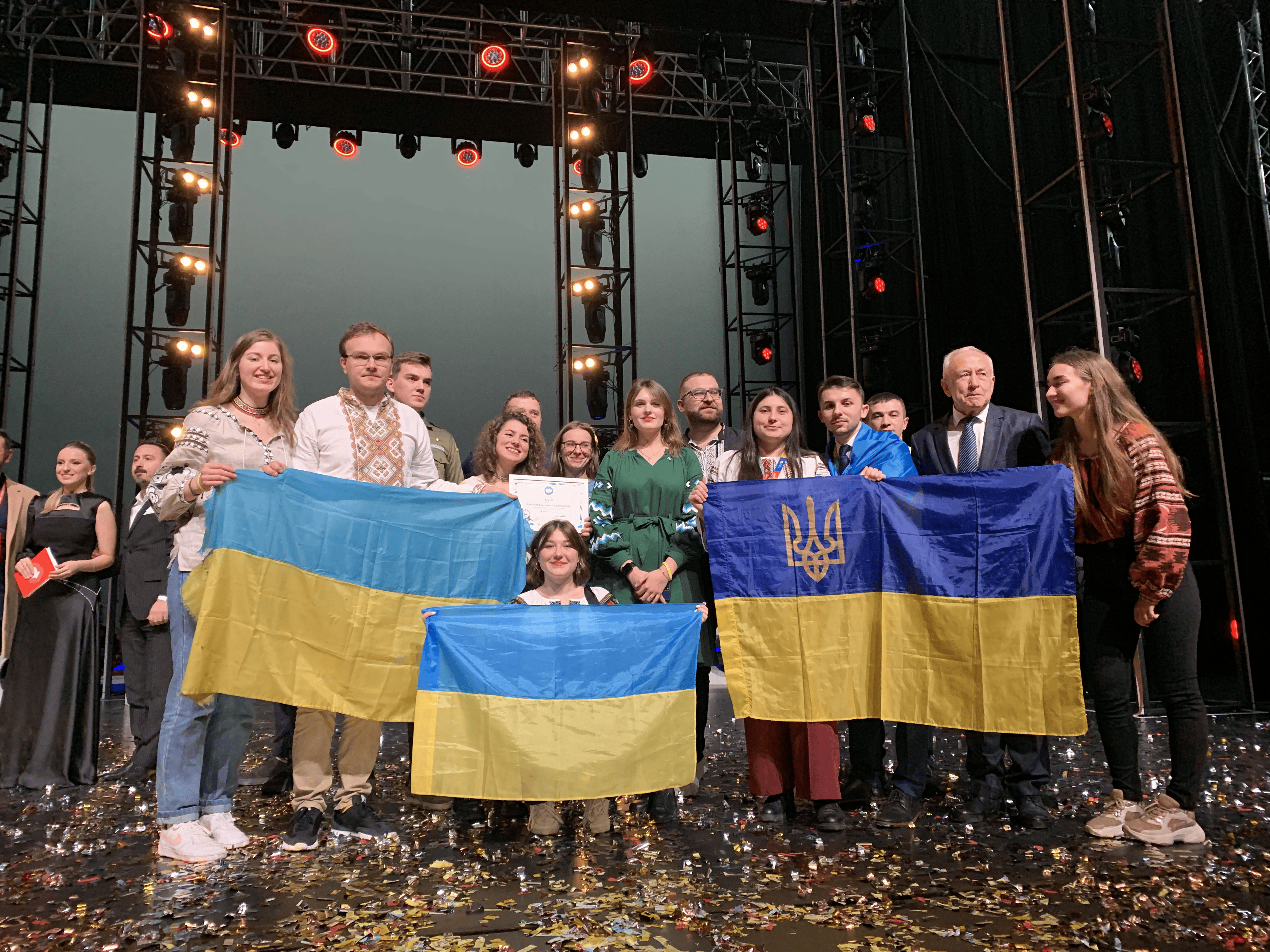
During that turbulent year of 2022, we, as a team, received news that Lviv will become the European Youth Capital in 2025. The main idea behind the three years between winning the title and actually becoming the capital is to have more time to prepare for a city to organise a winning year in general, to think about what this title could mean.
Taras:
Many could think that this title means millions of funds and endless opportunities. But reality was different. When we won in 2022, we were given a cool plaque that says ‘Lviv is the Youth Capital of Europe.’ And they wished us good luck.
Being the European Youth Capital is a big challenge. We took this victory as an opportunity to expand our ideas. They gave us a fishing rod, not a fish, and we have to work with it.
When we applied in 2022, although we applied on behalf of Lviv, our idea was that every young person from all over Ukraine deserves to have their city, village or town with this title. And even in the context of the fact that there are now a lot of young people living in Lviv who were forced to leave their homes because of war, this title is for the whole of Ukraine. We have a project called ‘Sharing the Title of European Youth Capital’. We are currently providing our support to the communities of Mykolaiv, Zaporizhzhia and Poltava, where we share our best experience and we are spreading this title.
War-time European Youth Capital
Yulia:
This is our first experience with the Youth Forum, and it is also the first time that the youth capital of a country at war has won such a competition.
Initially, we planned to have many organisations visit us, but as far as we understand, most of them are not able to come due to security reasons - insurance coverage and other legal matters. The number of visitors we wanted has decreased significantly, but nevertheless, we used this opportunity. We initiated international exchanges where young people from
Ukraine travelled to other countries and was able to stay there. These were exchanges on a wide variety of topics; participants had the opportunity to hear about Ukraine, and Ukrainians could share what is happening right now. This was one of our main goals.
We also set ourselves the idea of telling the truth about the war in Ukraine through our projects, in particular. We worked with organisations such as UNICEF and the OSCE. We defined the youth capital title as a tool to be heard and to tell about Ukraine as much as we can.
The death of Yaryna Bazylevych
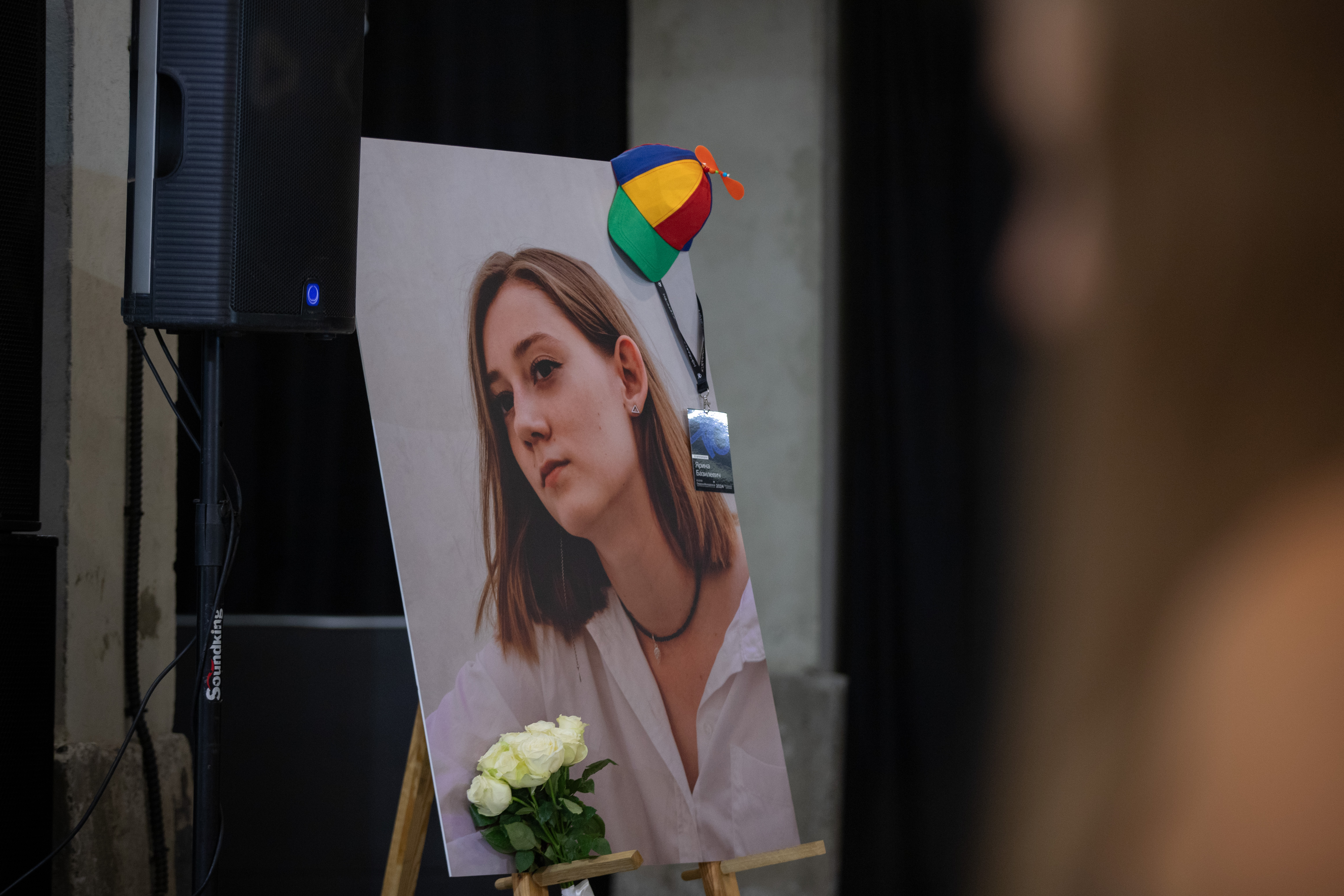
On 4 September 2024, one of TVORY’s employees was killed by a russian missile. Yaryna Bazylevych worked and also contributed to Lviv becoming the youth capital. Despite the tragedy, TVORY! continued to work.
Taras:
It is important to understand that the whole team had a vision that we must continue. On the day of her murder, we got together and unanimously decided that we had to continue because that is what Yaryna would have wanted. She had devoted so much time to it, so there was definitely no option but to continue.
Yuliia:
At the beginning, it was difficult, and the realisation that Yaryna was gone came to me personally much later. It happened right before a big event for youth, where she was part of the team, and it hit us really hard. And in essence, speaking for myself, it gives me motivation to go on now. Because there are people who gave their lives to this, so we do not have the right to just forget about it and leave it behind. And this applies to everyone who was killed. There are young people who worked hard on the future of Ukrainian youth, so we have no right to give up.
European youth on topics about Ukraine
Yuliia:
We understand that years go by, the agenda changes, and everyone lives their own lives; some things are forgotten, the war is far away, it's not their responsibility, and so on and so on.
Taras:
There were international organisations working with us before the full-scale invasion. There were a few of them, but they were there. However, after the start of the full-scale invasion, many people and organisations learned about Ukraine as such.
Then they learned that there are young people here as well, that it is not a third-world country, that the issue here is not lack of water, hospitals or schools, but a broader issue. Therefore, attention to Ukraine increased after the start of the full-scale war, and even more after we won the title in 2022.
A message to Europe
Yuliia:
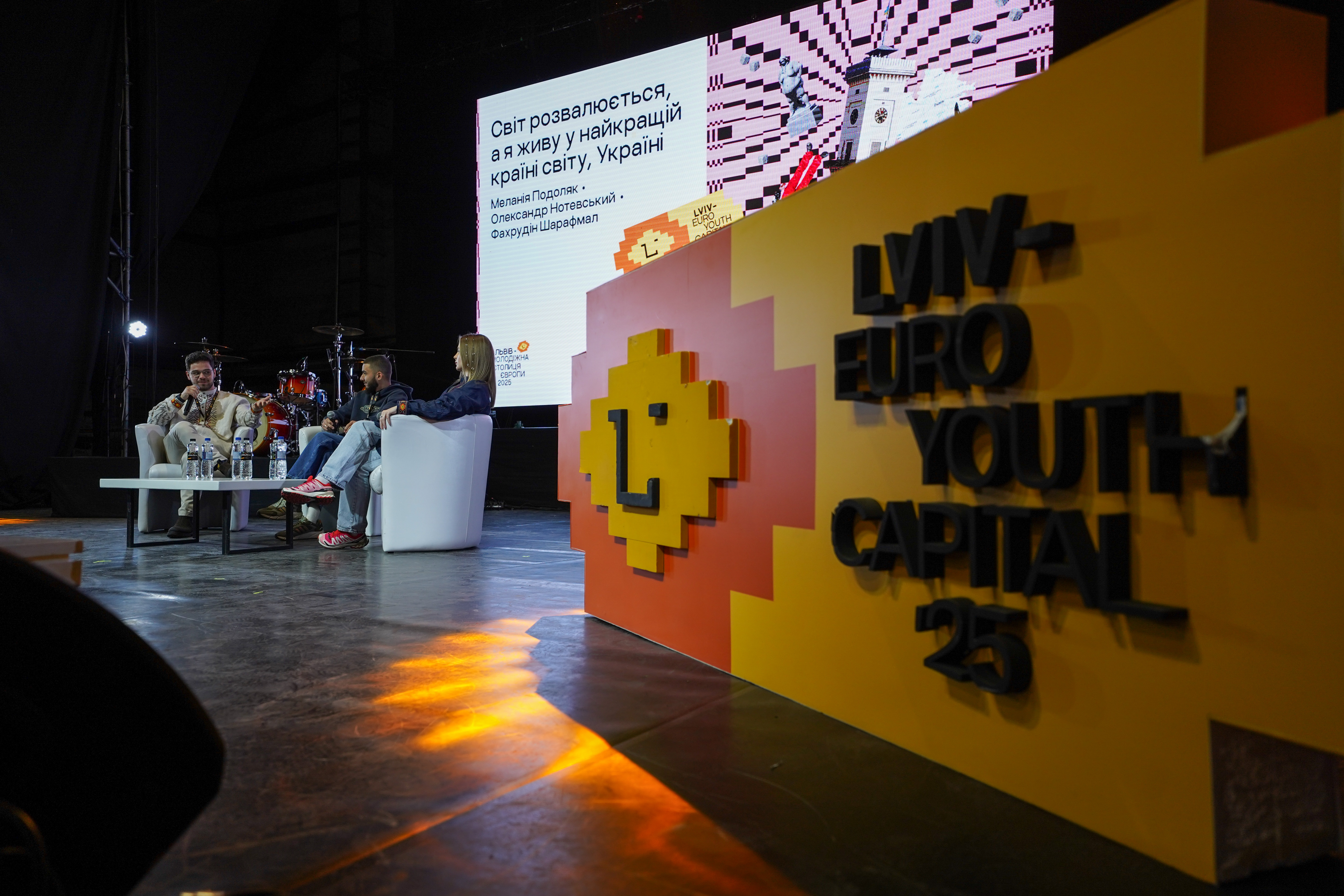
Every time we are speaking with a representative from the EU, there is a feeling that we are at different stages of perception of the world, Ukrainian youth and European youth. Because they are going through a different experience than we are. And that's normal.
There is a feeling that every time, for example, when I go on a business trip, I have the impression that this gap between us is getting bigger and bigger and bigger. There might be a lot of reasons why - we are tired of repeating the same things, they are tired of hearing the same things.
Everyone is so used to the war that everyday victims have simply become numbers, unfortunately.
We are not saying that Europeans should all come here and take part in combat operations or try to live without electricity, in the conditions we have to endure, even for a short time. But, in general, we want understanding from their side that everything is moving as fast as possible for us, that our agenda is super accelerated.
When we communicate with Europeans, they plan for a long time; they postpone everything for a long time. We cannot do this simply because we do not know what will happen tomorrow. And this also gives a feeling of slight irritation.
Experience at the European Youth Event in Strasbourg
Yuliia:
Based on our experience this year, I would also like Europeans to understand that there is no such thing as a Russian opposition. We had a negative experience in Strasbourg, where the European Youth Event, one of the largest events, was held. Our delegation was there, too.
They invited Navalny's daughter, who gave a keynote speech at the end of the forum. We were not warned anywhere in the programme that she would be speaking. We couldn't be prepared for her to be present at this forum, while the Ukrainian delegation was also invited to this event.
Taras:
We did not have any particular expectations for this event, as such, but we were forced to listen to Daria Navalnaya, who came and told us how great it is to be young in Europe. And that is not okay. We want some basic, elementary understanding in this situation that it is not okay to bring together representatives of Russia at the same event with Ukrainians. Especially since the organisers know our history, that we lost our colleague because of Russia.
And I don't think it's okay to tolerate such things.
Russia had the opportunity to speak at the largest youth event in Europe, but no Ukrainian voice was represented in the programme. This shows how Europe keeps tolerating Russians with an opportunity to speak, but we, Ukrainian youth, weren't given that opportunity.
This is about who we should be friends with.
Note by the author: In Europe, Alexei Navalny was widely seen as a symbol of hope. He was a liberal, democratic alternative to Putin. In Ukraine, he was never seen as such. Navalny opposed corruption and authoritarianism, but he did not oppose Russia’s imperial policy toward Ukraine. He supported the illegal annexation of Crimea and never clearly recognised Ukraine’s right to regain its occupied territories. For Ukrainians, this meant that even a “post-Putin” Russia imagined by Navalny would still come at their expense. Opposing Putin is not the same as standing with Ukraine.
Young Journalists in Europe - Meet the author
Anna Kalenichenko
“I’m a Ukrainian living abroad. Politics and diplomacy guide me in making choices that actually matter right now. Through honest conversations and meaningful actions, I want to be sure we’re building a story we can be proud of and not one we’ll regret.”
This article reflects the views of the authors only. The European Commission and Eurodesk cannot be held responsible for it.