

 @ Juliana Zammit, 2024
Where is a Woman’s Seat at The European Table?
Pēdējās atjaunināšanas datums ceturtdiena, 05/12/2024
As opposed to men who prevail in politics, women continue to be underrepresented. People are aware of this issue as it has been studied by various institutions. Although the first wave of feminism back in the 19th century paved the way for women to engage in politics, the assumption that women lack political dominance remains. This sends the message that women must overcome their ‘lack of confidence and skills’ to overtake men in politics.
Girls just want to have fun
The first wave of feminism took place in the late nineteenth century. In the early stages, feminism gave voice to famous activists like Sojourner Truth (d. 1883), an African American abolitionist, who demanded: "Ain't I a woman?" The Victorian Era in the United States saw women acting in very "un-ladylike" ways (public speaking, demonstrating, stunts in jail), which challenged the "cult of domesticity."
Discussions about voting and women's participation in politics led to an examination of differences between men and women as they were perceived back then. Some claimed that women were morally superior to men, and therefore their presence in the civic sphere would improve public interactions and the political process.
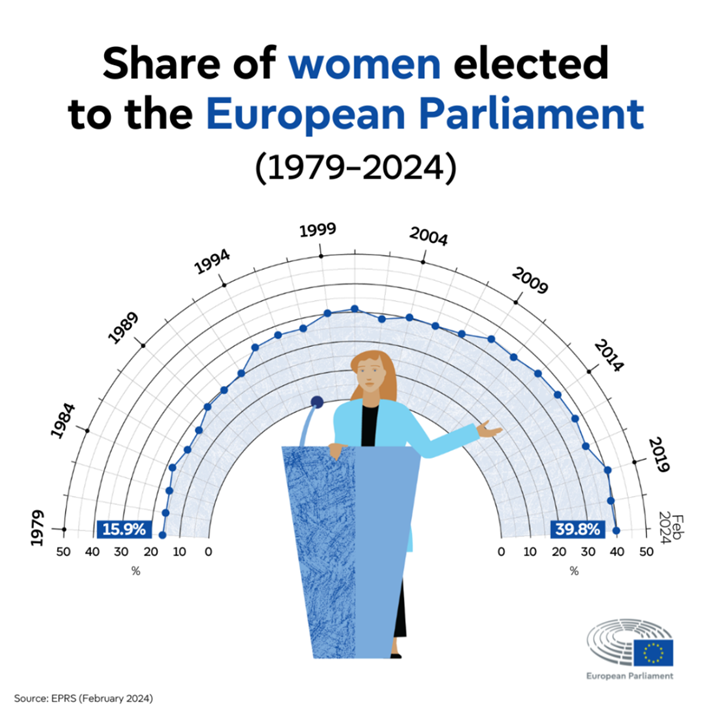
Share of women elected to the European Parliament. Source: EPRS (February 2024)
Over the years, the percentage of female Members of the European Parliament (MEPs) has increased. Nonetheless, only 31 women were members of the European Parliament from 1952 until the first elections took place in 1979. In 2019, female candidates at the European Commission and the European Central Bank “broke the glass ceiling” and became their first-ever female presidents. Ursula von der Leyen was elected President of the EC whilst Christine Lagarde became President of the European Central Bank.
Current state of affairs
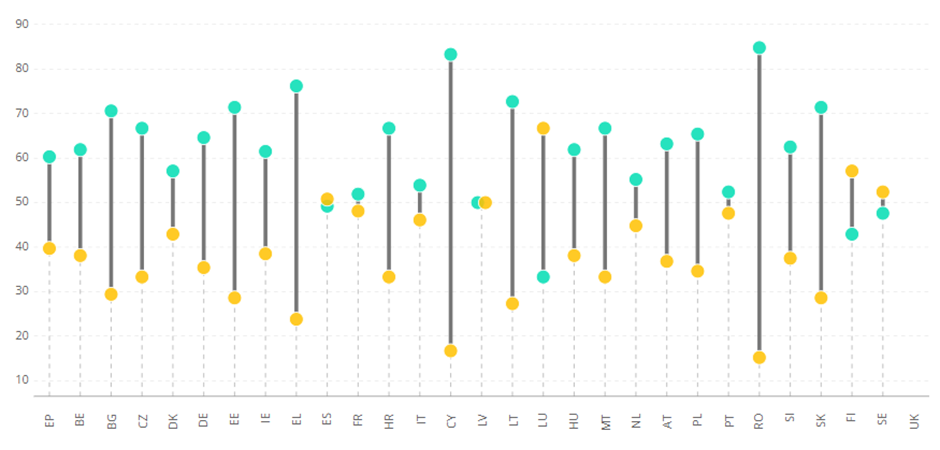
Percentage of women in European Parliament / President and Members. Source: EIGE, Gender Statistics Database, 2024.
The European Union has made great efforts when it comes to promoting gender equality but there is more than meets the eye as a gender gap in politics remains a pressing issue. Women continue to be underrepresented in various political bodies. According to the European Parliament, women currently hold 39.9% of the seats in February 2024. This percentage is higher than the score of national parliaments in Member States (31.6%). In some Member States, such as Spain (63.6%), Belgium (57.14%), and Finland (47%), women hold a significant proportion of government positions, but in others, like Greece (21%), Romania (19.5%), and Hungary (12.6%), the representation of women is much lower. The College of Commissioners (2019-2024) was made up of 13 women which is equivalent to 48.1% and 14 men whilst being chaired by a woman president.
1 out of the 6 elected MEPs is a woman
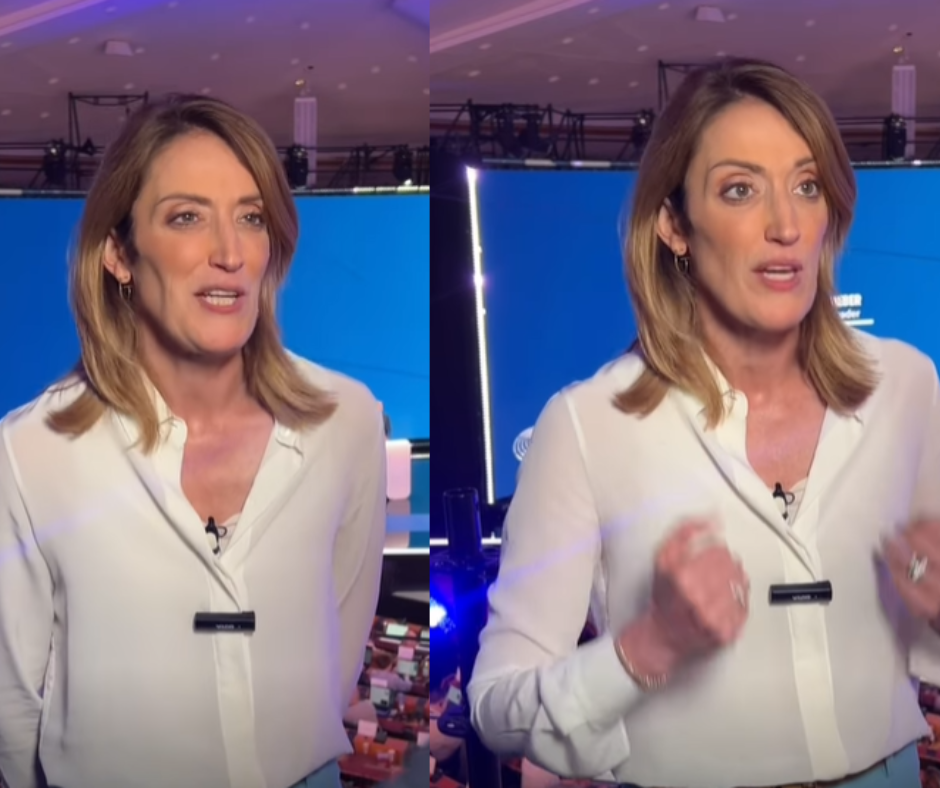
Stills via Lovin Malta/ Instagram
Luckily, as a local journalist in Malta, I got to experience going to the polling station, observing votes being counted and lastly, witnessing the six MEPs getting elected to represent Malta at a European level. Both the S&D (Socialists & Democrats) and EPP (European People’s Party) – two political groups in the European Parliament – managed to gain three seats each. However, out of the six elected candidates, only one is a woman. Roberta Metsola managed to gather twice the quota at 87,473 first-count votes. Her reaction once interviewed was: ‘It is a pity that we only have one woman out of six Maltese members of the European Parliament.’
Politics remains dominated by men
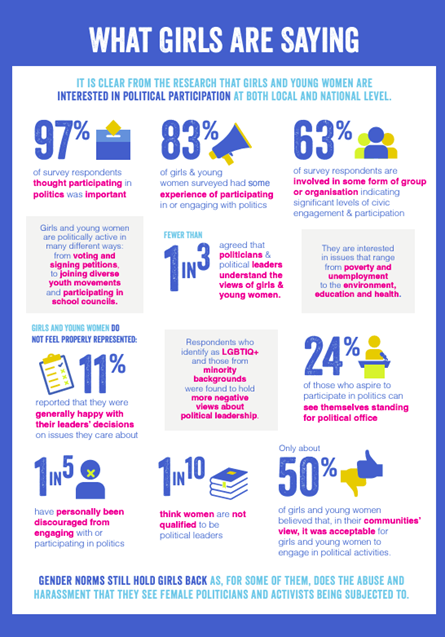
Girls surveyed on politics. Source: Plan International, Equal Power Now: Girls, Young Women, and Political Participation, 2022
A report curated by Plan International, which is a development and humanitarian organisation that works together with children, young people, supporters and partners to strive for an equal world, entitled Equal Power Now: Girls, Young Women, and Political Participation, was released on the International Day of the Girl back in 2022. The survey focused on young women from 18 different countries such as Kenya, the US, and Brazil.
The survey revealed a significant discrepancy between the importance of political participation and engagement in the political process in practice. While 97% of respondents agreed that participating in politics is important and 83% have participated in the political process, one in five of the respondents has been personally discouraged from participating in politics. This phenomenon was even stronger among ethnic minorities, LGBTQ+ individuals, and those with disabilities. Lastly, only about 50% of girls and young women believed that, in their communities' view, it was acceptable for girls and young women to participate in political activities.
The report concluded that: “It is clear from the findings that gender norms, what society and girls themselves see as appropriate for girls and young women, have a strong impact on their participation in politics. It is also clear from the findings that girls and young women are not a homogenous group. Their opinions diverge according to location, income, sexual identity, religion, ethnicity, and a host of other intersecting factors. Girls and young women have the right, at local, national, and international levels, to take part in the decisions that affect their lives.”
Not all is lost in a male-dominated world
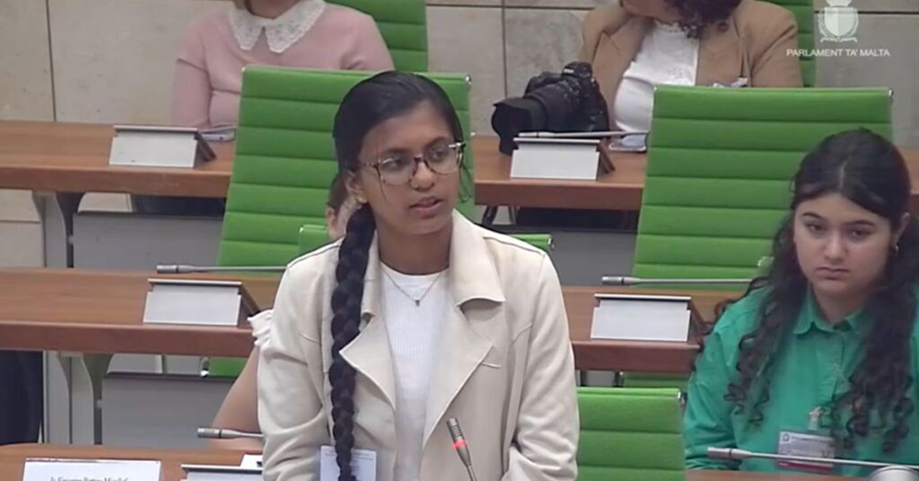
Rhythm Garg addressing the Maltese Parliament (Photo Via Parliament of Malta Livestream)
15-year-old Rhythm Garg addressed the Maltese Parliament earlier in May 2024 in a special climate change session, where she spoke out about how Malta’s air quality has declined over the past decade. Speaking with her, she shared her experiences in the political realm, emphasizing the role of young females in politics. She recalled receiving the invitation through the Malta Foundation for the Wellbeing of Society's, Children's and Young Persons' Council, “I still remember opening the email and being lost for words when I read it“, she said.
Garg's speech in Parliament was met with curiosity and attentiveness. She noted,"Everyone wanted to find out more about me, and hear what I had to say, and thus, they listened to my speech quite intently."
Her opening words, "Do you know why I came to Malta 10 years ago?" immediately grabbed the audience's attention, making her message more impactful. Garg aimed to highlight the urgency of addressing climate change, stating, "I hoped to convey the message that we are not doing enough and that the time to act is now."
"Her Excellency President Emeritus Marie-Louise Coleiro Preca congratulated me and praised me for my speech. I will always treasure that 'well done' from her." This support reinforced Garg's belief in the importance of young voices in politics.
Garg emphasized the potential of young voices to influence political decisions, citing the lowering of the voting age to 16 in many countries, including Malta, as a recognition of youth contributions. She stressed the crucial role of youth in addressing climate change, stating: "We are the leaders of the future, and we are the ones who can make a difference. When younger people raise their voices, more people will see our value."
Despite facing challenges as a young activist, including being dismissed due to her age and non-native status, Garg remains optimistic about the increasing acceptance of young people in politics. She pointed out that "2 out of the 6 Maltese Members of the European Parliament are youths themselves," reflecting this shift in perception.
So... where is a woman’s seat at the European table?
Women are at the center of global movements for indigenous rights, climate justice, gender equality, and civil rights. Girls have always been excluded from most political institutions and movements because of both their age and their gender. Girls and young women have to deal with the obstacle that politics is still seen by many as a "men's game."
Girls' rights or feminist clubs are set up in schools where girls take action on issues they consider important, even though they often experience stigmatization for doing so. And, of course, girls take part in and even lead global political movements. To name a few examples, educational activist Malala Yousafzai was awarded the Nobel Peace Prize at 17 whilst Greta Thunberg, who began a series of school strikes when she was 15, has inspired millions to campaign for climate action.
As Thunberg said in a 2019 appearance at the UN: ‘‘You all come to us young people for hope? How dare you?’’ So, we’ve got young women wanting to run politics, yet only four out of ten MEPs are women.
As a young woman involved in Maltese journalism, I’ve noticed that women’s voices are often missing in our country. This leads to men speaking on our behalf when it comes to our rights. The mindset that women do not naturally belong to the realm of politics is still prevalent and, therefore, people are quick to criticize female politicians for their mistakes. In contrast, men often get a free pass, with their errors overlooked or excused. Apart from this, I have always been discouraged from engaging with journalism due to how the country has treated other journalists like Daphne Caruana Galizia.
Why should I be scared to follow what I’m passionate about? Is it because I’ll be targeted by men? And the question still remains, where Is A Woman’s Seat At The European Table?
_______________
Young Journalists in Europe - Meet the author
Juliana Zammit
Hello, I'm Juliana Zammit, a 20-year-old journalism student. I have loved writing and telling stories since I was little. Over time, I've grown to enjoy learning and researching new things. I also studied photography for two years, which taught me to see the world differently and find beauty in ordinary things. I hope to tell many stories through words and pictures.
This article reflects the views of the authors only. The European Commission and Eurodesk cannot be held responsible for it.