

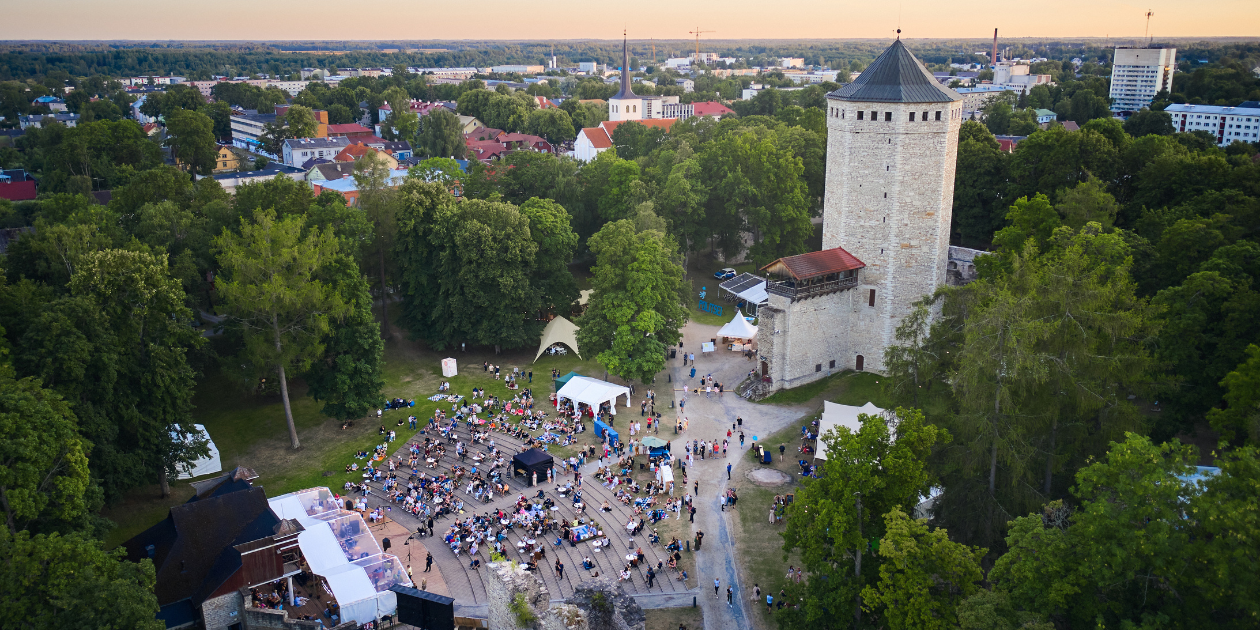
 © Kaspar Tammist,2025
Why the voices of youth matter more than ever in Europe
Ultima actualizare Duminică, 01/03/2026
Kaspar Tammist is an Estonian activist dedicated to advancing a culture of public debate. The founders of Estonian Opinion Festival are Maiko Kesküla and Kristi Liivat, but Kaspar has been connected in different roles with the festival since the beginning. One of the different roles is the head organiser of a festival that brings more than 10,000 people each summer to the town of Paide.
The first Estonian Opinion Festival took place in 2013. In the interview with Eurodesk, Tammist explained that at that time Estonian society was fragmented due to the political scandals, so the timing for the festival seemed perfect. Tammist and his team dreamed about uniting the society. Paide was chosen as the capital of Estonian opinion culture because the founders, Kaspar Tammist and Maiko Kesküla, believed in an open environment where people could sit on the grass and talk openly and meaningfully.
I sat down with Kaspar Tammist to learn more about the current state of freedom of speech and expression in Europe. We also spoke at length about what young people can do to make their voices and opinions heard.
The original interview was conducted in Estonian, and this is a translated version.
What are the goals of opinion festivals, using Estonia as an example?
Today's opinion festivals should exist to connect societies, and by following similar models, such festivals can also help unite Europe as a whole. Unfortunately, the growing popularity of radicalism undermines this goal, as radicals often refuse to attend or come with other intentions.
At that time, when we started our festival, right-wing radicalism wasn’t as widespread, so it seemed realistic that bringing people together to discuss divisive topics could help unite society. So at first it was our main goal. We thought that after a few years, things would improve, but for comparison, Sweden’s similar festival has been running for over 50 years, and its society still isn’t “fixed.”
The festival’s goal was never to make decisions on the spot, but for participants to take ideas and knowledge home and spread them responsibly. It’s perfectly normal to disagree, but we must learn to coexist peacefully with different opinions — that was and is one of our main focuses.
How popular are similar events, and have you helped other countries build their own?
The biggest is Sweden’s Almedalen Week, lasting five days and drawing over 100,000 visitors. Clearly, such festivals are quite popular.
We helped establish similar festivals in both Latvia and Lithuania and were directly involved in their creation. Their organisers came to learn from us. We’ve also cooperated with Georgia’s festival, and Ukraine’s organising team has visited us for training.
This kind of collaboration is very important in a European context because festivals across the continent should move together and share similar principles.
What do the terms “freedom of opinion” and “freedom of speech” mean to you?
It’s a bit easier to put ‘freedom of opinion’ into words: we are free to think whatever we want. But when it comes to freedom of expression, it’s much harder to give it a universal definition. The digital age has created two extremes in this regard.
The first extreme can be seen in countries where freedom of speech is restricted because people are not allowed to say anything freely. In such places, state media and, in fact, the entire media landscape are under government control.
The second extreme exists in highly liberal countries, where opinions are sometimes expressed excessively. For example, the incident in Sweden where someone decided to burn the Quran. Clearly, this is freedom of speech, but do we really need to go to such extremes?
For me, the most important aspect of freedom of speech is responsibility. We can think whatever we want, but we don’t have to express or display everything.
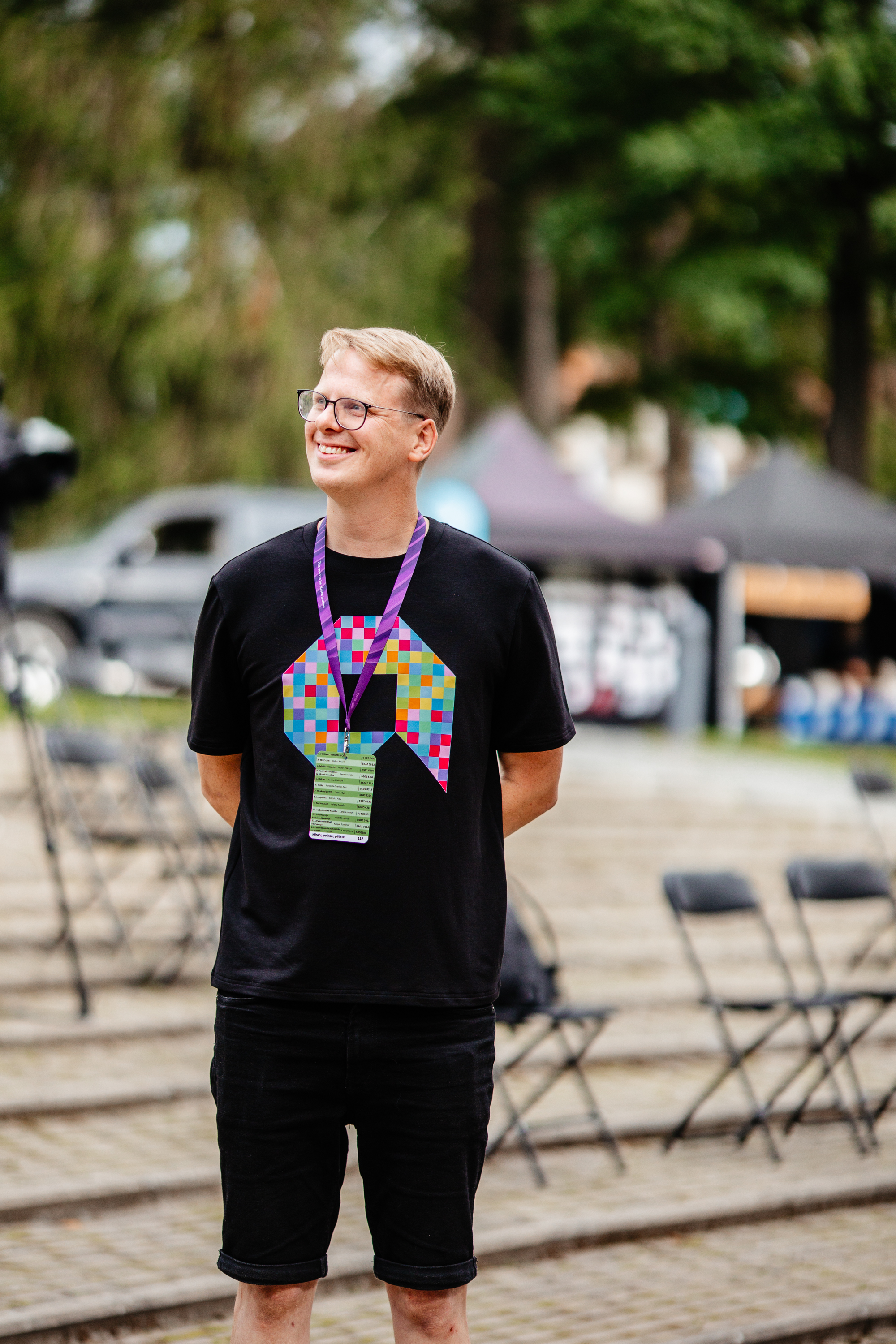
Kaspar Tammist
Freedom of speech and opinion are also core values of the European Union. Is freedom of speech currently strengthening or weakening in Europe?
When a state restricts freedom of speech and opinion or tells people what they should think, it’s like putting blinders on society. Such a society cannot be sustainable. These freedoms must exist so that we can live as we were meant to.
Unfortunately, the situation has gotten worse, both in Estonia and in Europe more broadly. Radicalisation and “shouting” have become trendy.
The aggressive rise of radicalism in European culture has dealt a serious blow to freedom of speech. The biggest problem is that a healthy discussion culture allows different opinions to coexist respectfully, but radicals interpret differing views as personal attacks. They behave one way, but when treated the same way in return, they start complaining that that’s a major flaw. This is why I believe the situation is actually bad
The digital world adds another layer: when we think about online bullying or the misuse of freedom of speech, there are countless examples. Governments can pass laws on freedom of speech, but digital platforms are not states, and they can do whatever they like. If someone reports hate speech, maybe an admin or AI moderator reviews it and removes it, maybe not. This only reinforces shouting and worsens the culture of debate.
In short, freedom of speech and opinion are among the EU’s fundamental values, but citizens must take responsibility for what they say and understand where and when it is appropriate to say something.
With algorithms and other tools influencing online spaces, misinformation also spreads faster than ever. Are we powerless against it?
That’s actually a huge problem. Take phone scams in Estonia as an example. Few want to admit it publicly, but statistics show the opposite. These people live in narrow information bubbles and don’t realise that when they get a text saying their phone bill is unpaid, they shouldn’t click the link.
Instead of “powerless,” I’d prefer to use the term critical thinking. There are many information spaces and a lot of misinformation, but critical thinking is the key. Unfortunately, I don’t see it being properly taught in Estonian schools.
How could we contribute towards a healthy digital space?
People are bold and say whatever comes to mind without thinking. I wish that, just as journalism has slow journalism, based on deep research, social media could have a slow commenting model.
For example, before posting a comment, the platform could give users five minutes to think it over or rephrase it. Maybe then people would start realising that not everything needs to be said aloud.
Could teaching critical thinking also help strengthen freedom of opinion and democracy?
Absolutely. If we don’t teach people to think, they’ll only learn to repeat. We have to start with the youth. If they don’t learn to question and verify, they’ll become the kind of people who believe the first Facebook post they see.
Critical thinking is like a vaccine against misinformation. If it’s not taught, society will stay sick.
What should EU countries do to improve the freedom of speech and opinion culture?
We must start with young people. Teachers should be trained to teach responsibly and verify information. Youth need better media literacy, and most importantly, critical thinking must be taught early.
Unfortunately, it gets too little attention, and many young people no longer see it as important.
Teaching methods must evolve so that teachers remain neutral and avoid pushing agendas. When discussing divisive topics, teachers should guide students in researching together, doing group work, and presenting findings. That’s how meaningful dialogue and critical thinking develop.
Do young people’s voices even matter, and why should they make themselves heard?
Decision-making circles mostly consist of older people who don’t want to give up their positions or share opportunities with the youth. These older leaders are often more radical, and young people are afraid to associate with them.
Young people often stay silent because older decision-makers say things like, “What do you know about life? Come back when you’re my age.” It’s easier to turn away than to face public backlash.
Young people’s voices must be heard because they’re shaping their own future. Older politicians will eventually leave the stage, and new ones will take over. It’s everyone’s responsibility, including the youth’s, to ensure society moves toward progress.
Young people are Europe’s future. They must understand that if they don’t take responsibility, the radicals will, and we’ll just have to wait for another generational reset.
How can young people make their voices heard?
First, young people should find like-minded peers. You can make changes alone, but it’s easier together.
Second, start projects, take initiative, and drive change. Don’t underestimate small victories; even influencing a small group of people is a major achievement. Opinions don’t spread instantly, but those few who do listen will carry them further.
What should our discussion culture look like in 10 years?
I’d like Europe to be like the banking system. Many banks coexist while respecting one another’s presence. It should be the same with opinions. There are many different ones, but we must learn to respect, agree, and sit down together.
In ten years, I hope Europe becomes a place where diverse voices understand each other and can coexist politely within the same environment.
Young Journalists in Europe - Meet the author
Egert Ninep
“I am a 19-year-old first-year journalism student Egert Ninep. I am from Estonia and currently, I study at the Baltic Film, Media and Arts School of Tallinn University. In addition to journalism, I am really into singing. Currently, we are singing with our Estonian pop-rock band Exitum.”
This article reflects the views of the authors only. The European Commission and Eurodesk cannot be held responsible for it.