

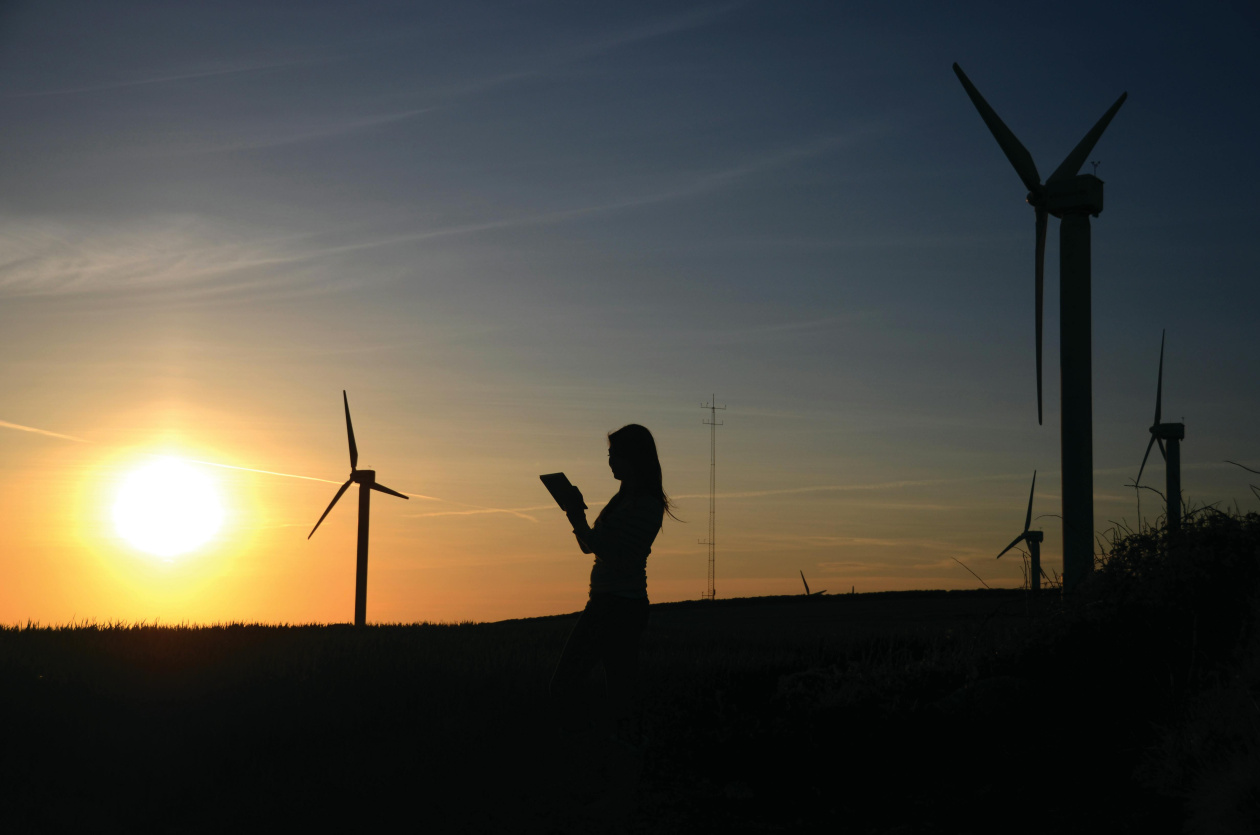
 © Richard Dacker, 2024
A Win-Win for a Sustainable Future, but is it possible?
Seneste opdateret den Tirsdag, 02/06/2026
Is it possible for low-income countries in the Global South to achieve economic growth without compromising ecological sustainability? What innovative solutions and opportunities could pave the way for green prosperity, and what complex challenges might stand as obstacles on this path?
As the climate crisis looms as one of the most pressing threats to humanity’s future, the urgency of addressing it cannot be overstated. Yet, as we confront this global challenge, we face another critical issue: the persistent reality of multidimensional poverty. For low-income countries in the Global South, where economic growth is crucial for alleviating poverty, the need to integrate ecological sustainability into economic development presents a complex dilemma. So, how can these nations master the art of juggling economic progress with environmental care? Can they keep both balls in the air without letting one hit the ground?
This article and the interviews featured here are drawn from my thesis, completed this spring at the University of Gothenburg. In that work, I used qualitative methods, focusing on informant interviews, to gather insights from individuals deeply involved in sustainable development projects in the Global South. These interviews reveal that while the integration of ecological and economic sustainability is theoretically possible, it is fraught with practical challenges that are not easily identified through literature alone.
Interviewed people:
- Ida Hellmark, Project Manager/Senior Advisor på Norad (the Norwegian Agency for Development Cooperation)
- Jan Wärnbäck, Methodology and subject matter expert for climate and environment at Sida (the Swedish International Development Cooperation Agency).
- Louise Felldin, Co-founder of From One to Another, an organization dedicated to empowering women through education and health initiatives in Kenya.
- Dorcus Adongo, Senior Monitoring, Evaluation, Accountability & Learning Manager at Hand in Hand. An international organization dedicated to combating poverty by empowering people through entrepreneurship.
Challenges
One of the most prominent challenges identified in the interviews is the issue of food production. Jan Wärnbäck from Sida highlights this as a critical concern, noting that current agricultural practices in the Global South are neither economically nor environmentally sustainable. Unlike farmers in the industrialised West, those in the Global South often lack the financial resources to invest in sustainable farming practices, despite the long-term economic benefits. The immediate need to feed their families takes precedence over the adoption of more sustainable but costly methods.
"Food production faces a dual challenge: tackling malnutrition and supporting economic stability, while also addressing the environmental impact of current agricultural practices. The real test lies in finding a sustainable way to balance ecological health with economic needs." Jan Wärnbäck, Sida
This issue is intensified by practices in the global economy, where Western corporations often prioritize profit over fair practices. For example, some large companies source cheap labor and resources from small-scale farmers in the Global South, often paying below-market prices for crops like coffee, cocoa, and palm oil. These low prices make it nearly impossible for local farmers to invest in sustainable farming methods, locking them into environmentally harmful practices to survive economically. This tension reveals how theories of global justice fall short when Western profit motives clash with the sustainability and growth goals of developing countries, hindering progress toward a greener, more equitable future.
Ida Hellmark from Norad echoes these concerns. She points out that while solutions proposed in academic literature or political decisions may seem viable on paper, they often face significant obstacles in practice due to the complex realities on the ground. For example, political solutions are frequently short-term, driven by the need to secure votes through quick, noticeable changes. However, ecological solutions typically require long-term investments of time and energy, making them difficult to implement in environments where immediate economic survival is at stake.
"The measures and strategies discussed in the research literature or arising from political decisions often face significant obstacles when it comes to implementation in practice due to the complex nature of reality." Ida Hellmark, Norad
Opportunities
Despite these challenges, the interviews also reveal significant opportunities for aligning ecological and economic sustainability. Education emerges as a powerful catalyst for change. Louise Felldin from the organization From One to Another and Dorcus Adongo from Hand in Hand both emphasize the transformative potential of education, particularly in empowering women and youth. In Kenya, educational initiatives targeting women and girls have proven effective in integrating sustainability into economic practices. Similarly, in Tanzania, Hand in Hand's Youth Empowerment project equips young people with digital skills and knowledge in sustainable farming practices, enabling them to contribute to their country's development while promoting ecological sustainability.
"If people don't even have the knowledge about sustainability and the alarming consequences of climate change, how can they then act and make decisions from a sustainability perspective?" Louise Felldin, From One to Another
“Through entrepreneurial training, improving their digital skills, gaining insights into sustainable business practices and farming, young people in Tanzania will be equipped with the necessary tools to contribute to the advancement of their country and elevate their standard of living.” Dorcus Adongo, Hand In Hand
Hellmark also emphasises the need to highlight the economic benefits of environmental sustainability. In a world where financial incentives often guide decisions, especially in resource-limited areas like the Global South, showing the financial advantages of sustainable practices can be a convincing argument for policymakers, farmers, and businesses. By clearly explaining the economic losses that come from neglecting environmental sustainability, stakeholders can be encouraged to invest in long-term ecological solutions.
The Theory of Ecological Modernisation
The theory of ecological modernization suggests that economic growth can be reconciled with environmental sustainability. However, the practical application of this theory in the Global South presents significant challenges. Wärnbäck argues that current economic systems, which prioritize growth often at the expense of increased consumption and resource use, need to be rethought. He advocates for a circular economy that optimizes benefits across multiple systems, not just the economic one.
"For countries in the Global South to achieve economic development without becoming trapped in the same destructive dependence on fossil fuels as the industrialized Western nations, a new approach to global justice and resource distribution is required. At the same time, these countries must be provided with the necessary tools to succeed in sustainable development." Jan Wärnbäck, Sida
A critical aspect of this discussion is the global responsibility for sustainable development. Wärnbäck points out that while the Global South is often expected to adopt sustainable practices, it is the industrialised West that has historically set a development model based on unsustainable resource consumption and fossil fuel dependency. Therefore, he argues, the West must take responsibility by reducing its global footprint and actively supporting the Global South through investments in sustainable energy, technology transfer, and financial assistance.
"A reassessment of global resource distribution systems and a collective effort to build a future where economic and ecological sustainability can coexist are required. The Western world must invest in ensuring that development in the Global South occurs sustainably, without forcing these countries to bear a disproportionately large environmental responsibility, especially when it is we in the industrialized nations who are overwhelmingly responsible for the greatest environmental damage." Jan Wärnbäck, Sida
"This perspective challenges the traditional view of development, where the Western world has historically been the leading actor. Instead of following in the footsteps of industrialized countries, nations in the Global South can lead the way with innovative, sustainable solutions that not only promote economic growth but also ensure environmental sustainability." Jan Wärnbäck, Sida
A Path Forward
Combining ecological sustainability with economic growth in the Global South is both possible and crucial for a fair and sustainable global future. However, it demands a rethink of how global resources are distributed and a joint effort to create a future where economic and ecological sustainability can be combined. This isn't just a challenge for the Global South; it's a shared responsibility for the whole world.
Education plays a crucial role in this transition, as knowledge is the foundation of change and when people know better, they do better. Investing in education, particularly in sustainability, can create a positive ripple effect that benefits entire nations. Moreover, by aligning economic incentives with ecological goals, stakeholders can be encouraged to adopt sustainable practices that do not come at the expense of those in the Global South.
In conclusion, while there are still some hurdles to overcome, the potential to merge ecological sustainability with economic growth in the Global South is immense. By fostering a fairer global partnership and tapping into the power of education and economic incentives, we can chart a future where economic development and environmental care walk side by side. This vision doesn't just challenge the old-school development model - it flips the script, offering a new, more sustainable, and more just path forward. The road might have a few twists and turns, but the destination promises to be a win-win for everyone.
_______________
Young Journalists in Europe - Meet the author
Emma Örjas
Hello, or as we say in Swedish, Hej!
I am a twenty-two-year-old girl from a small town near Gothenburg. Currently engaged in Social and Environmental Studies, I serve as the Head of Marketing on the board of my university. Additionally, I work in management consulting and contribute to the NGO Hand in Hand, alternating between paid and voluntary roles. Beyond my academic and professional pursuits, I have a keen interest in sports, sustainability, and writing. By joining the Pool of young journalists in Europe, I aspire to integrate my passion for storytelling with global issues.
This article reflects the views of the authors only. The European Commission and Eurodesk cannot be held responsible for it.