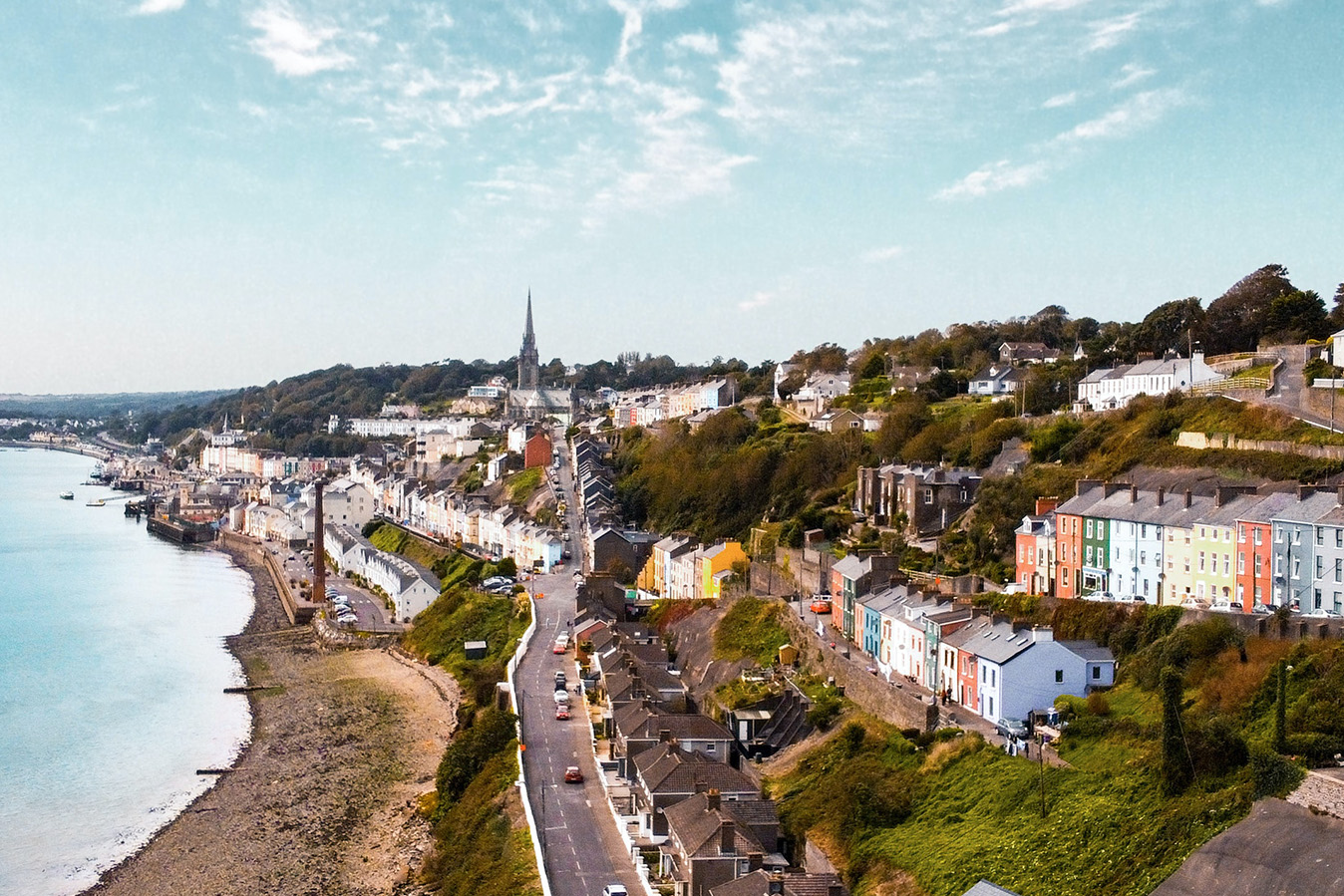

With its colourful and dynamic architecture, the Portuguese coastal city of Porto will give you the most intriguing and heart-warming welcome. Home to innovation and inclusivity, the city has recently been awarded a European Institute of Innovation and Technology grant for its Porto Think Tank project.
Porto is also home to the Socio-Environmental Inclusion project, which aims to gather, spread, and pass on to future generations precious knowledge about medicinal plant species.
Dive into Porto’s medieval atmosphere by strolling around the vibrant Ribeira neighbourhood. Listed as a UNESCO World Heritage site, it offers numerous waterfront spots to sit and enjoy the atmosphere and sample local delicacies. While you’re there, embrace the unique contemporary twist that the city’s vibrant street art gives the area, and let its stunning and colourful murals inspire you.
Discover the ultra-modern Casa da Música – a geometric building spread over nine floors that houses a futuristic concert hall. And if you can’t get enough of contemporary architecture, make sure you don’t miss the spiral-shaped Cruise Terminal in the Port of Leixões.
Some Porto-based projects were nominated for the 2021 New European Bauhaus (NEB) Prizes. The multidisciplinary design studio Theform, focusing on immersive customising experiences, co-creation, and digital manufacturing, was a Rising Star finalist.
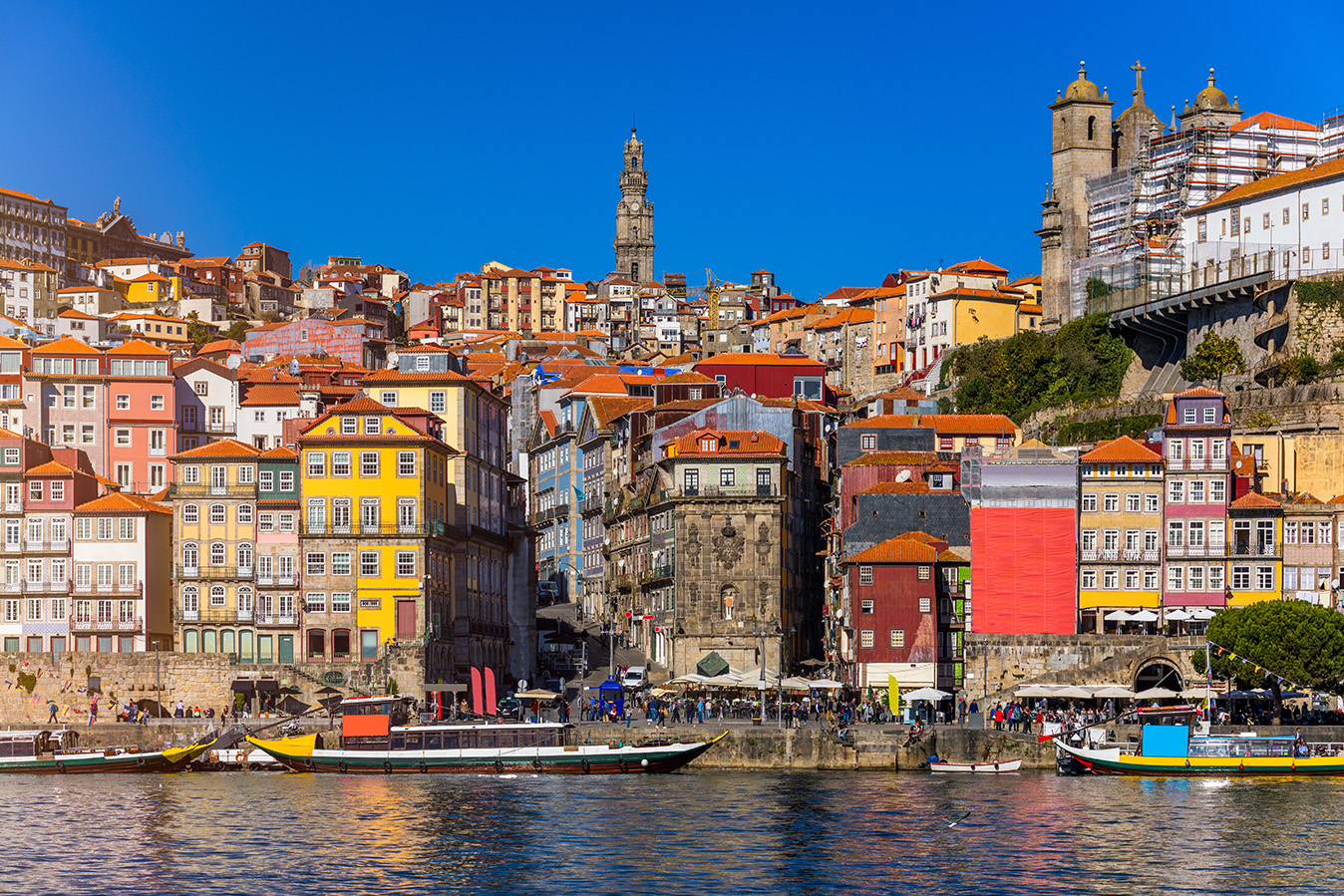
Home of the inspiring and inclusive Umbrella Sky Project that lines some of the city’s streets with colourful umbrellas, Águeda’s doors are open to anyone who is drawn to its vibrant atmosphere. Visit this lively Portuguese city and you’ll see how colour influences not only the city’s aesthetic, but your own emotions as well.
Fully representing the spirit of the New European Bauhaus (NEB), Águeda’s innovative approach also enriches the tourist experience through initiatives such as mobile apps that help you plan your tour of the city, and bike-sharing hotspots that enable you to enjoy a ride through its colourful streets.
But be sure to connect with Águeda's medieval side too. Visit Lamas do Vouga to look at the Ponte Medieval do Rio Marnel – a picturesque bridge built over the Marnel river in 1200 – and enjoy a restful picnic by the river. The city’s AgitÁgueda Art Festival is another popular attraction, which greatly contributes to its cultural landscape. It attracts various music artists and promotes urban art by creating various art installations in the city and on the buildings.
Not far from the city, in Aveiro, you can drift through the canals on a traditional wooden moliceiro boat, and visit Princess Joana’s tomb – a multicoloured, baroque, marble landmark.

A hidden gem in the Spanish region of Extremadura, Badajoz embodies the values of the New European Bauhaus (NEB) through its consistent investment in renovating and revitalising former industrial sites. For example, the local project LaFábrika detodalavida was awarded a New European Bauhaus Prize in the category ‘Regenerated urban and rural spaces’ for its sustainable and inclusive approaches.
Badajoz offers its visitors some inviting urban and natural landscapes. Take in all the city’s extraordinary colour on a tour of its impressive squares and well-preserved historical buildings. Stroll around the Plaza de San Francisco, sit on a bench hand-decorated with majolica tiles, and walk all the way to Puerta de Palmas and back to the Renaissance, crossing the Puente de Palmas bridge on the Guadiana River.
And make sure you don’t miss Badajoz’s urban masterpiece – the elegant Plaza Alta, a rectangular square lined with arches decorated in traditional and colourful Mudéjar motifs.
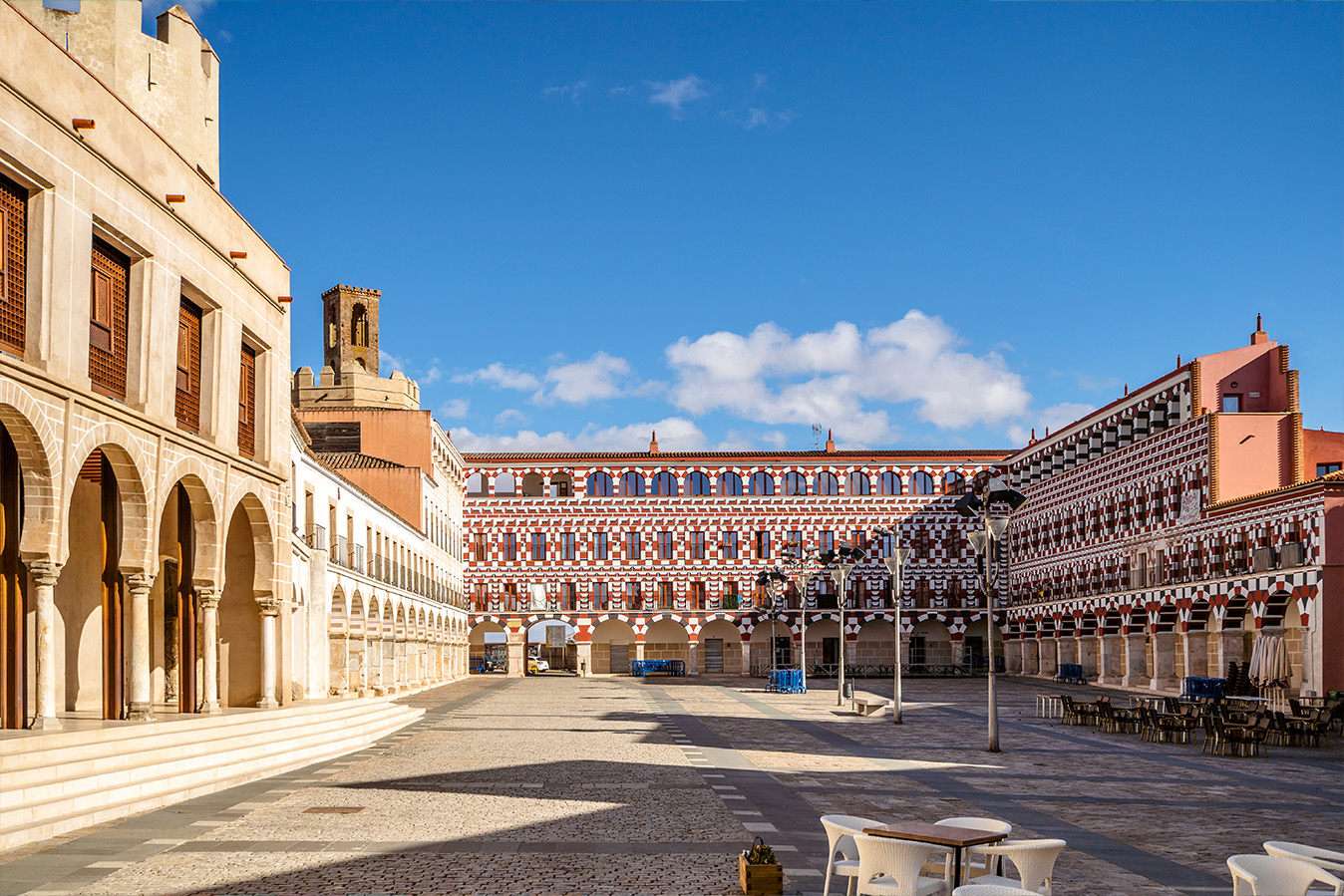
The vibrant and timeless aura of Spain’s capital city will inspire anyone who visits. An emblem of modernity rooted in a long history, Madrid thrives on the renovation of urban landmarks. A prime example is the CaixaForum Madrid, a former power station now hosting exciting and interactive contemporary art exhibitions.
Madrid City Council has recently agreed to join EIT Climate-KIC in its Sustainable and Healthy Cities Demonstrator programme, making Madrid one of the cities aiming to reduce emissions by 65% by 2030.
Not far from the red buildings of the city’s lively Plaza Mayor, in the residential area of Carabanchel you will find stunning architecture that plays with colour and form. While one 18-apartment building looks like a giant colourful cube of pixels, another one reminds you of Tetris. A public housing project in Carabanchel shows more bold use of colours and the true spirit of New European Bauhaus (NEB) values. The architects painted simple public housing dwellings with different bright colours, following the idea that colours can positively impact our mood. You can’t help but be inspired by the artistic, playful minds of Spanish architects and experience the essence of the New European Bauhaus.
For fans of green urban spots, make sure you get to the Sorolla Museum, where you can enjoy both the vibrant artworks of Joaquín Sorolla and the quiet of the museum’s gardens. Take a stroll around the lively Madrid Río Park, filled with historic monuments, leisure and culture facilities in harmony with the biodiversity of the space. And if you’re an artist yourself, take the opportunity to visit the not-for-profit organisation Concomitentes, which has been promoting the creation and dissemination of artworks since 2018.
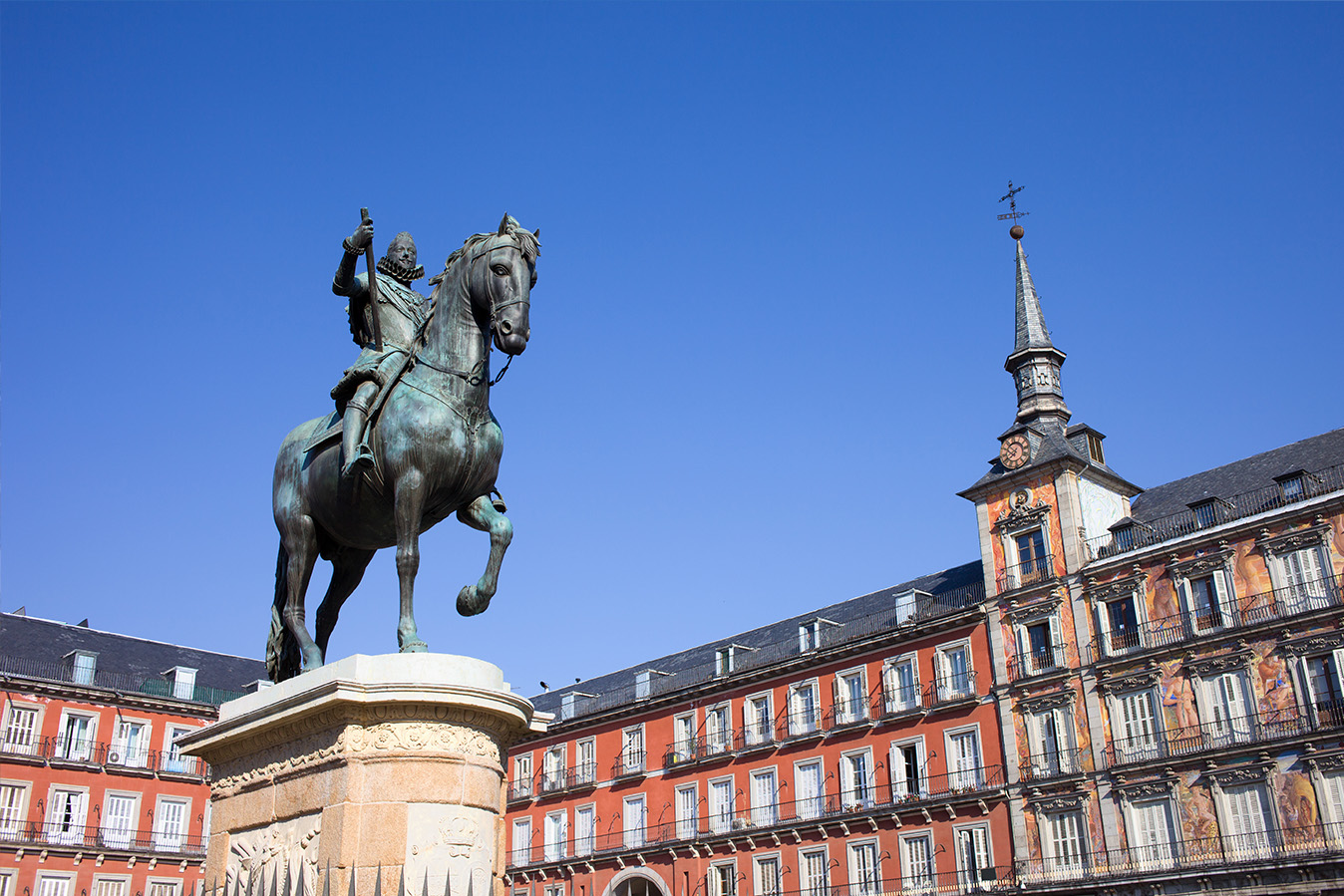
Fully embracing the spirit of the New European Bauhaus (NEB), the Spanish coastal city of Barcelona is rich in the sustainable transformation of urban landmarks. With multiple projects awarded at the 2021 New European Bauhaus Awards, Barcelona is lighting the way for a new wave of sustainable urban architecture. One great project is Xfire’s Roof: ‘Floating’ Wild Garden, based on architectural rejuvenation and harmony with the environment.
Barcelona also hosts the 2022 winner of the European Prize for Contemporary Architecture – Mies van der Rohe Award Mies Van der Rohe: La Borda – cooperative housing by Lacol. This project is influenced by political and urban change and is based on socially and economically sustainable choices.
The city’s vibrant and inclusive spirit is fully reflected in a series of impressive buildings that fiercely embrace both colour and accessibility. Parc Güell’s warm atmosphere and colours will inspire you as you notice the melding together of Gaudi’s works with both nature and the city’s urban heart.
Barcelona has also embraced modernity with a number of energy-efficient buildings. One of these is the unmistakable Torre Glòries – the city’s tallest skyscraper – which changes colour during the day as the sun moves across its reflective surface.

The second largest city in Ireland, Cork has bloomed in the past few years. After several projects revolving around urban sustainability, accessibility and development, Cork is now thriving on the fundamental values of the New European Bauhaus. Thanks to its unprecedented concern for the well-being of people and the environment, the city has received multiple awards for projects such as the Cavanagh Bridge, and the modernist, wood-panelled exterior of The Glucksman art gallery.
Explore the historic side of the city and visit the impressive Saint Fin Barre’s Cathedral, a gothic landmark that has stood in a wonderfully green landscape since the 12th century. Or let the sights of the nearby city of Kinsale, described as the most colourful town in Ireland, brighten your day. And if that’s not quite enough for you, a 25-minute drive south-east of Cork will take you to Cobh, where you can enjoy a walk toward Saint Colman’s Cathedral, among yet more colourful houses and vibrant streets.