

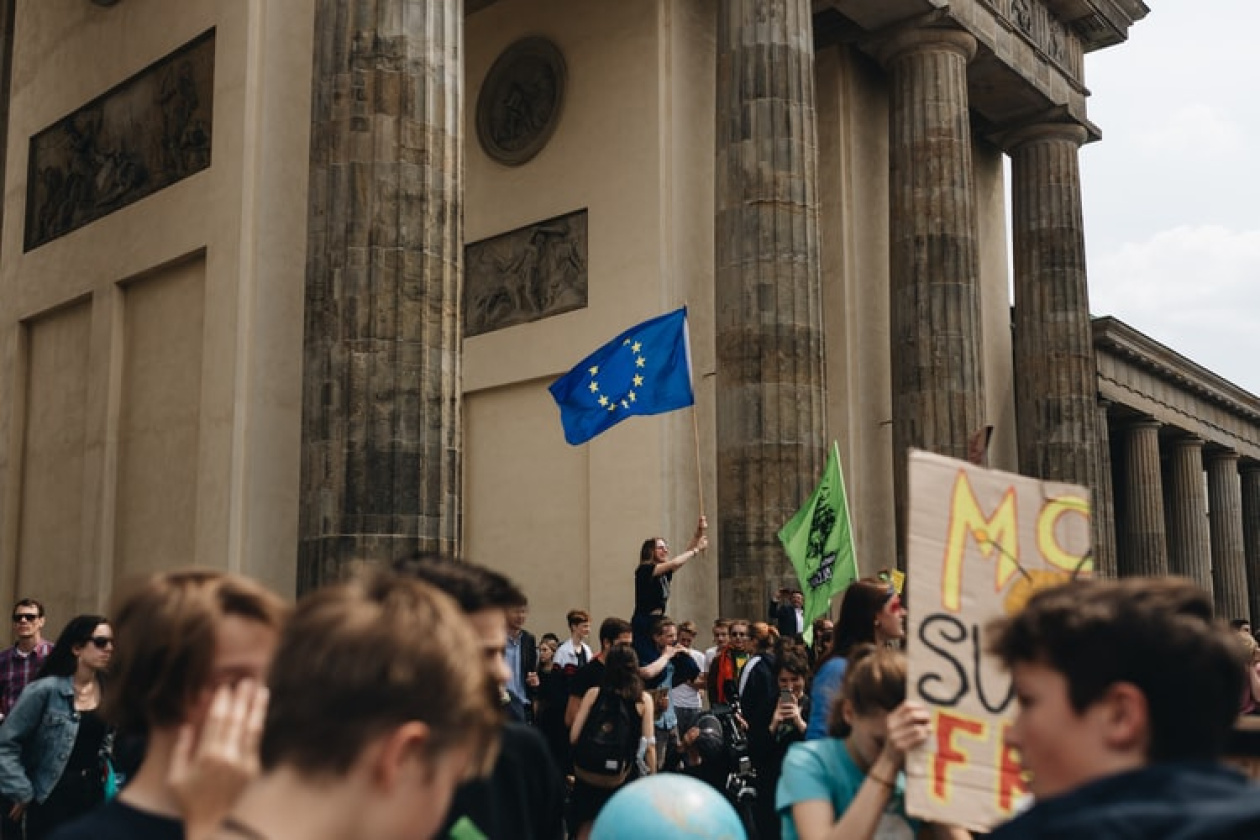
 © Nico Roicke - Unsplash
Where can you share an opinion on European and international affairs?
Last updated on Monday, 10/08/2026
There are different ways of getting your ideas across, the most obvious one being participating in elections and joining political groups.
If it’s not election time or if your issue is not exactly related to politics, there are other ways you can be heard by the EU and international institutions.
Your voice can be heard on various policy issues whether it’s about youth-related issues, social, environment or health issues, transport or human rights and much more. On the spot or without leaving your room, just take a look at all these places where your voice can be heard.
The EU and international organisations usually have specific channels to consult citizens, and in some cases, young people specifically. Here are some examples:
- EU Youth Dialogue is a dialogue mechanism between young people and decision-makers taking place in the framework of the EU Youth Strategy. To join the process, you can contact the national working group of your country or the European Youth Forum if your country is not listed.
- Council of Europe: In the Council of Europe, the Advisory Council on Youth comprises 30 representatives of non-governmental youth organisations and networks. It provides opinions and input from youth NGOs on all youth sector activities and ensures that young people are involved in the Council’s other activities.
- Contribute to law-making allows you to contribute to the European Commission's policy-making process by giving your input to public consultations and forums. The Commission wants to listen to your ideas, face up to your criticism, and learn from your experience.
- Public consultations offers a platform where you can debate the issues you care about with European politicians and experts.
- European Youth Ideas aims to be a link between you and the European Parliament. It works as an opportunity for you to participate actively in European democratic life. You can suggest your own ideas on the issues that Europe is facing today and your ideas for the Europe of tomorrow.
- UNESCO Youth Forum brings together every two years young delegates from all over the world to exchange views, share experience, reflect and find common concerns and problems. You can join the online community to keep updated on the upcoming Forums.
- UNESCO MGIEP supports a global community of youth who are committed to eradicate violent extremism, transform education systems and develop more peaceful and sustainable societies.
- UNICEF Voices of Youth is the online place for young people to learn more about issues that affect their world. On this platform, young people from around the world can express their views, explore, discuss and take action on global problems.
Of course, alongside those organised channels of dialogue, you can join local, national and international youth movements to defend a cause, sign petitions and organise youth projects.
The European Youth Forum for instance and its international members represent millions of young people across Europe. They are involved in the EU Youth Dialogue, an EU participatory process enabling young people to engage with decision-makers, experts, researchers and other relevant civil society actors by putting forward their ideas and proposals on youth policy related topics in the EU.
For more information, check our article on joining youth movements (internal link to be added).
Finally, you can be part of a community of journalists and bloggers who are active in voicing young people’s views on societal, cultural and economic issues.
Global Voices Online, for example, works as an international, multilingual community of bloggers, journalists, translators, academics and human rights activists from all over the world. The idea is to help people around the world access and publish information about their community. You can join in by submitting ideas or becoming an author.
For more information on online ways to get involved, check our article on digital activism and online journalism.