

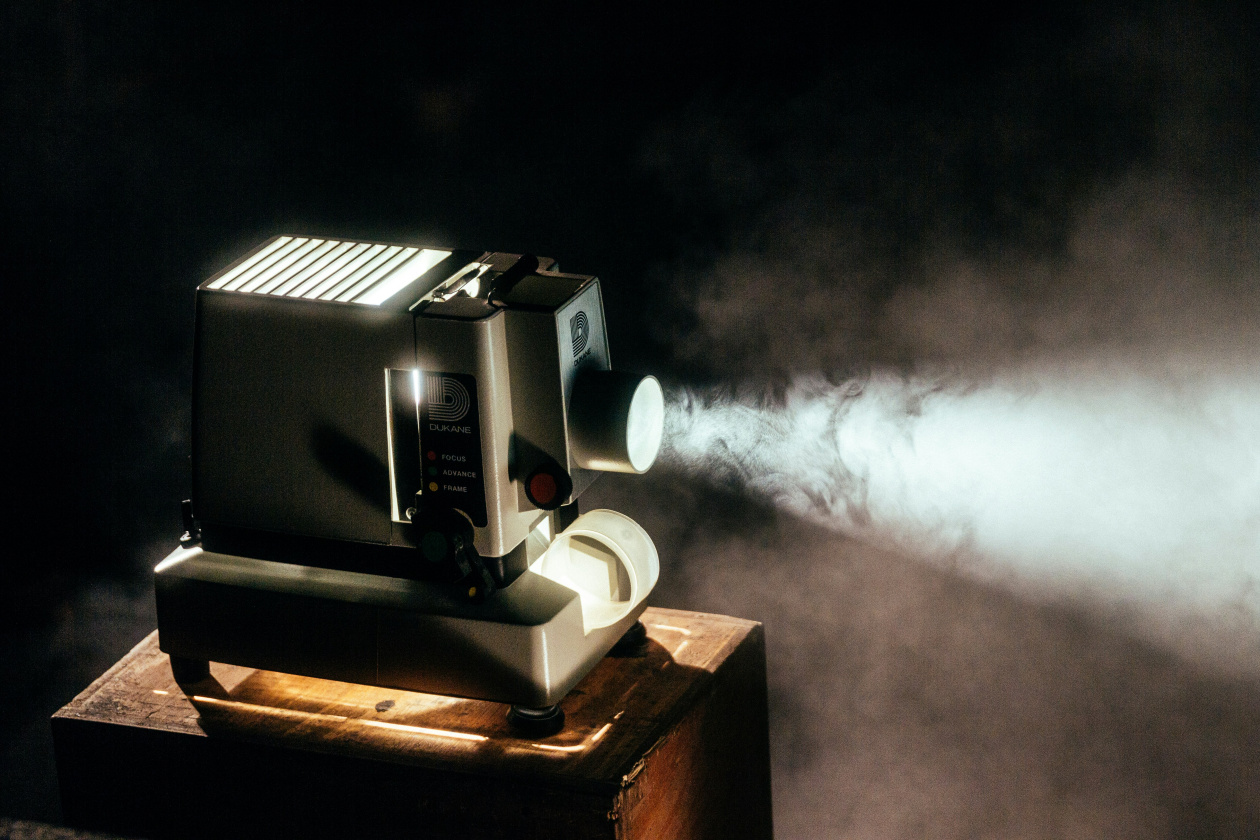
 Photo by Jeremy Yap on Unsplash
Is cinema the most complete art form? Interview with film director Murat Firatoglu
poslední aktualizace středa, 03/06/2026
Cinema is a complex world filled with geniuses, with people who challenge the form, break the rules, reinvent the medium again and again. And yet most viewers have never wandered beyond the familiar, never touched the films of Aronofsky, Asghar Farhadi, François Ozon, Haneke, Almodóvar, Jarmusch, Ceylan, Herzog, the Dardenne brothers, Wenders… not to mention Kubrick, Fellini, Antonioni, Tarkovsky, Mihalkov, Godard, and I could go on.
“In my opinion, cinema is an art form that encompasses almost all other art forms.” - Murat Firatoglu
“You know, one of the things about cinema that I just find very moving and why it's my favourite art form is, when you go to a movie, and you see a certain sequenc,e and if there is real cinematic power and there's cinematic flair, there are certain filmmakers out there that you feel were touched by God to make movies. And it would be a combination of editing and sound. Usually, it's like visual images connected with music or something. But when those things work, and they really connect, it's just like you forget to breathe. You are really transported to a different place. And music doesn't quite do that on its own. And novels don't quite do it. And a painting doesn't quite do it. They do it their way. But in cinema, especially if you're in a theatre and you're sharing the experience with a bunch of other people so it's this mass thing going on. It's just truly, truly thrilling.” - Quentin Tarantino
This article is a conversation between two people who genuinely love cinema. We discuss why cinema matters, how it moves across continents, what stories we lose when we limit ourselves to mainstream productions, and why film still has the power to change people.
My intention with this interview is simple: to open a door for the reader into a world far richer than the movies we scroll past on Netflix or the endless superhero universes.
Murat Fıratoğlu is a Turkish filmmaker whose debut feature, “One of Those Days When Hemme Dies”, has earned international acclaim and the Turkish submission for Best International Feature Film in 2026. Moreover, this movie won the Special Jury Prize in the Orizzonti section at the 81st edition of the Venice International Film Festival. I’m honoured to have this interview with a valuable person who understands the art of cinematography.
At the time of this interview, Mr Fıratoğlu was at work on his second film, "What Is Love”. We met in New York City, in the middle of the fall, for this interview. He was magnetic and enigmatic, with seductive eyes and an infectious laugh, flirting with everyone in the room. But it wasn’t until I saw his first film that I understood what lay beneath the surface of his lighthearted yet evasive exterior. It was in this film that he reveals an acute sensibility forged in a household and through a lifetime of experience, a depth and emotional precision that quietly contrasts with his playful yet reserved presence, and that ultimately defines him as an artist.
Cinema as a universal language
Mr Murat, what is cinema for you?
In my opinion, cinema is an art form that encompasses almost all other art forms: painting and literature, theatre and music.
For what audiences do you make your films? Is it for the Turkish viewer, or is it for anyone?
I don't start a story as an end in itself or as a means of consumption. My knowledge of cinema, my experience, and my thoughts guide me. I follow them. I tell what I want to tell. One thing becomes clear immediately in our conversation: cinema is a universal language. And perhaps that is precisely why cinema travels. Because when it is honest, it becomes universal.
It doesn’t matter whether a film comes from Romania, Turkey, South Korea, Brazil or Iran, cinema travels. It speaks, it connects. And, crucially, it takes audiences into lives they’ve never experienced before.
Films from different countries often offer narratives that are bolder, more intimate, and more human than mainstream Hollywood productions, simply because they are not shaped by the same commercial pressures. They can take risks, they can be complicated, and they can be vulnerable.
People should have the culture to check the programs of film festivals and hear the voices coming from different corners of the world. A whole new universe of cinema will be discovered.
Are directors doing movies for the sake of their own ideas and art, or is it for a bigger mission?
I think this varies from person to person. I don't believe it's possible to know the specific purpose behind every artist's creation.
What kind of artist do you want to be?
Art is a long and arduous process, so like living, as I experience life and create works, my curiosity and what I want to do will surface.
Cinema as a mirror of society
Our conversation shifts to something deeper, the relationship between cinema and society.
Do you see filmmaking mostly as a way to express your own ideas and artistic vision, or as something that also speaks to society?
I think if you're sharing a work of art with people, it means you subconsciously desire both of them.
Films reflect who we are, and sometimes who we are afraid to be. They mirror our fears, our politics, our emotional contradictions. And even when filmmakers don’t intend to make a commentary, the world slips into their frames anyway.
Do you think filmmakers, directors, writers, and actors are aware when they reflect the problems of society in their work, or does it happen unconsciously? Do you think artists choose to talk about social issues in their films, or do those themes naturally find their way in without them realising?
This varies from artist to artist. Some design the story in a more planned and purposeful way, while others may approach it from a more individualistic, romantic perspective. It's entirely up to the artist; some may be socially realistic, depicting societal problems, while others may tell more introspective, spiritual stories.
Since the rise of cinema in the 1920s, films have shaped and reshaped entire generations. Each era had films that transformed pop culture, imagination, fashion, and the way we view the world. But filmmakers haven’t only shaped pop culture, they’ve shaped societies.
Do movies play a role in shaping and moulding the opinions of people? Or rather, they exist as visual books for the purpose of enjoyment. And if it's like that, whydo some movies change our minds, hearts, souls?
I think sometimes it can play a role. A film can influence your perspective on life, on people. The viewer's situation is also very influential. Viewers who watch a film at different times may find different meanings in it. I think this is a field for sociology, and I wish such an experiment could be conducted.
Do you think movies can actually bring positive change in society, or do they mostly reflect what already exists?
I believe all art forms bring beauty. Therefore, art has always brought beauty to every society. Of course, there have also been those who have been negatively affected by works of art. However, I am of the opinion that art, for the most part, always brings beauty and goodness.
Historically, cinema has been used to highlight major social, ethical, and political issues. As Tom Sherak, former President of the Academy, once said: “Film is a reflection of society, both present and past. I think the film and its innovations sometimes have to catch up to society, but sometimes it leads society too.”
Films have this impact because of something powerful and often invisible: pathos.
Cinema forms emotional connections that can soften people, open their minds, or make them see a problem they’ve ignored. But it remains the filmmaker’s responsibility to shape that message with honesty.
How are young adults influenced by movies?
This is truly a subject for scientific study, and one that interests me as well. However, we can only learn something about this if we have sufficient research and experimentation.
In Romania, author movies tend to be received better abroad than at home. How do you feel about that, is it the same in Turkey?
Yes, the situation is similar in Türkiye.
In the end, the influence of film on our everyday lives is impossibly large.
Whether it’s through representation, storytelling, or documentary truth-telling, films illuminate the issues we struggle with. Identity, race, justice, loneliness, and they push viewers toward reflection, empathy, and sometimes even action. Cinema can be a warning. A confession. A memory. A protest. A hope. A love.
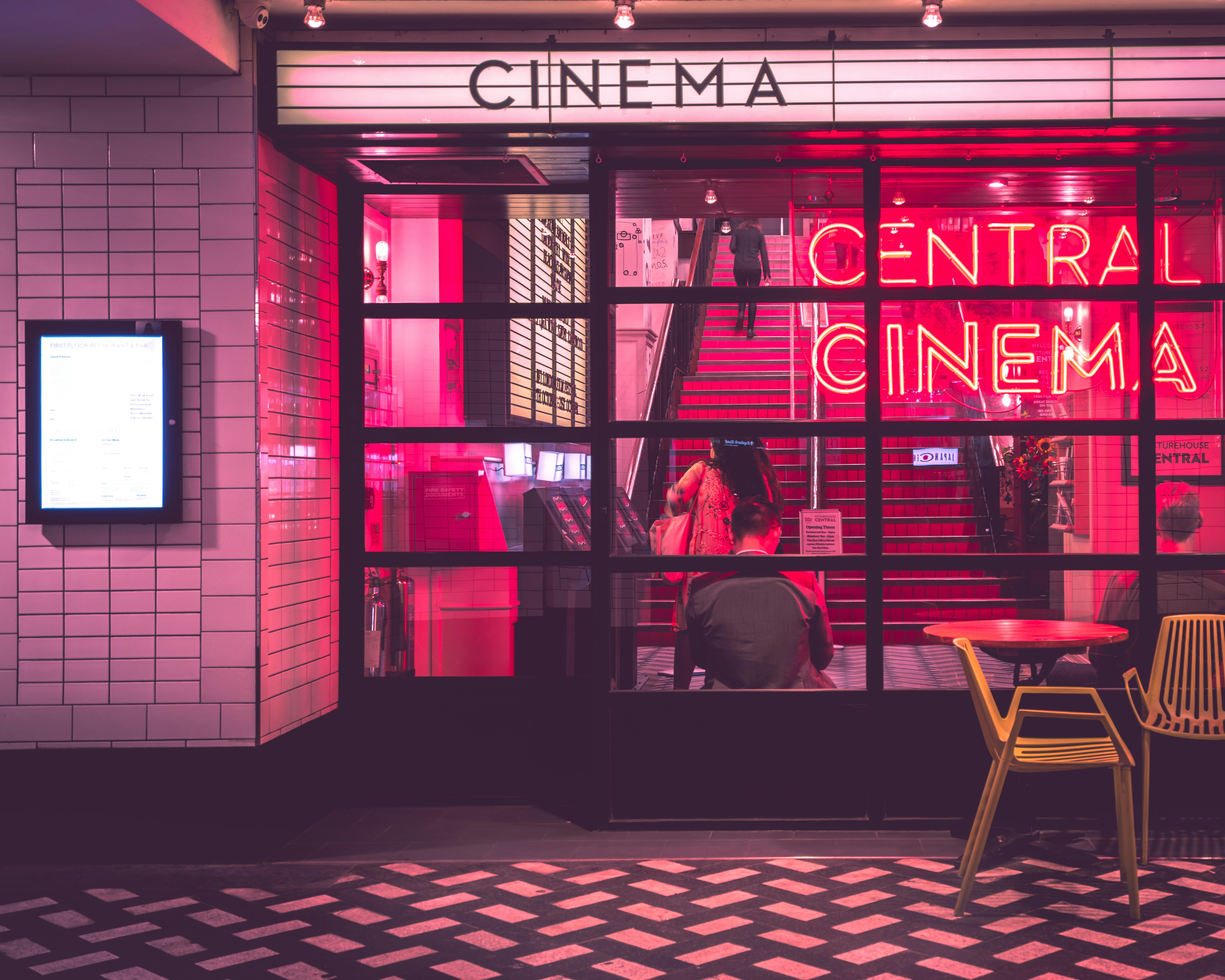
Photo by Myke Simon on Unsplash
Looking ahead - the future of cinema
Toward the end of our talk, the mood shifts again, toward the future.
Where do you see the film industry going in the next few years?
I guess artists will always exist. And those artists will bring about change and transformation.
What is your main goal when making movies?
I don't set out with a specific goal. My professional experience and what I've learned guide me. Thanks to this guidance, the story exists as a visual and literary design. And I transfer that visual and literary design to the screen.
Maybe that is the answer to the anxiety around AI, franchises, algorithms, and platforms. As long as artists exist, cinema will continue to evolve
Our entire conversation proves one thing: cinema is expanding, travelling, and transforming itself with every filmmaker brave enough to push it forward.
If this piece of text does anything, I hope it inspires you to explore further, to discover the movies that don’t appear on the front page of streaming apps, to hear new voices, to let cinema expand our world.
The same goes for reading, art galleries, travel; things you cannot always explain, but you can feel deeply.
_______________
Young Journalists in Europe - Meet the author
Luiza Elena Zob
“With a love for people and all forms of art and creation, writing is one of my ways of connecting with people and ideas, and I’m honoured to join this team of young European journalists.”
This article reflects the views of the authors only. The European Commission and Eurodesk cannot be held responsible for it.