

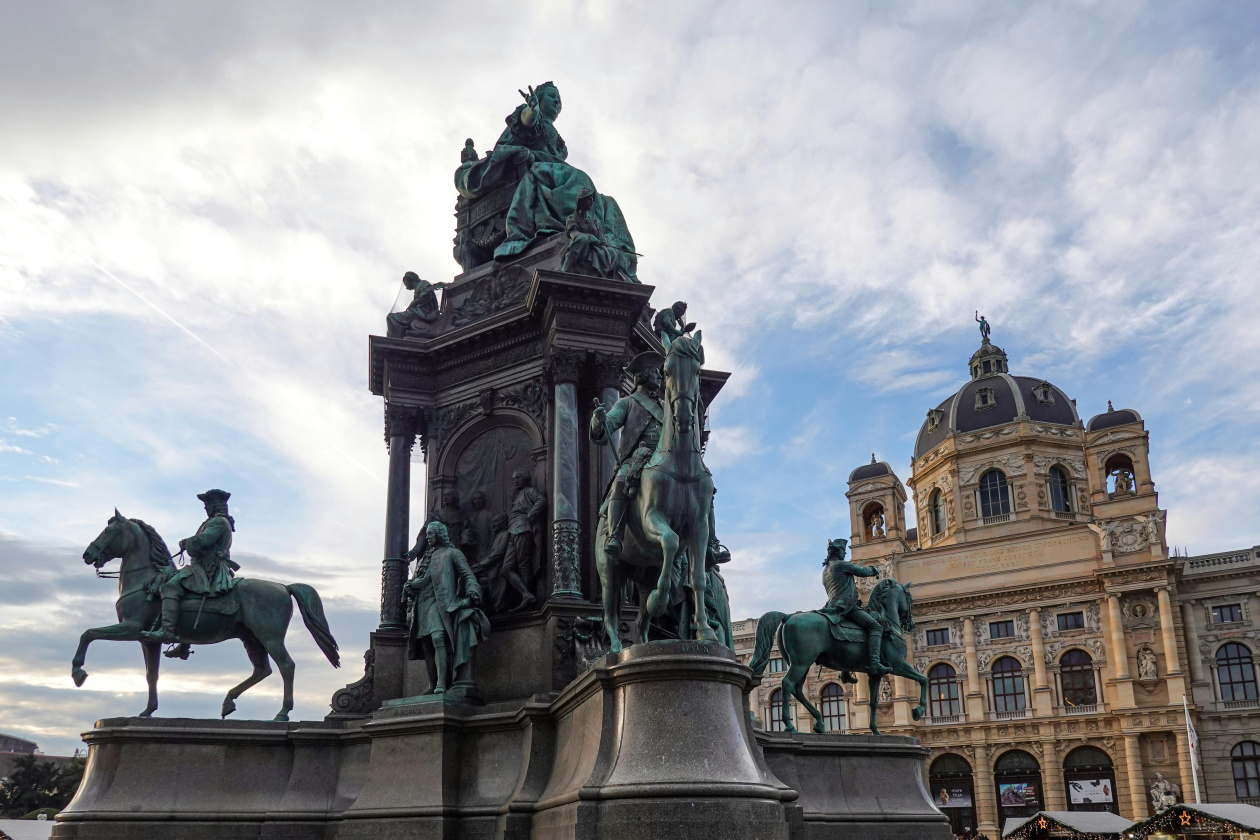
 © Photo by Magda Ehlers/pexels
The fashion trend of being turquerie in Europe
Posljednje ažuriranje ponedjeljak, 17/11/2025
As Europe grapples with questions of identity and belonging, I found myself inspired by Maria Theresa of Austria, an 18th-century empress who used fashion as a powerful form of diplomacy. Her choice to wear Ottoman-inspired garments spoke volumes about inclusion and leadership, reminding me that diplomacy isn’t just about words, but about how we connect and express ourselves across cultures.
Why her story still matters to me
I didn’t expect to be fascinated by an 18th-century empress. But the more I read about Maria Theresa, the more her story challenged my assumptions about leadership, diplomacy and even fashion. It's astonishing. I come from a generation raised on the idea that expressing who you are can be political.
When I discovered that Maria Theresa used garments not just for beauty but also as a tool for cross-cultural dialogue, it clicked, really. Maria Theresa’s embrace of Ottoman aesthetics wasn’t just a matter of taste; it carried meaning. It reminded me that fashion, even today, can hold layers of history, identity, and silent power. It’s a huge bridge. What she wore reflected how she saw the world, and that made me think about how many young Europeans today turn to clothing, music, and storytelling to express where they come from and who they are becoming (Clothing in political groups) - very iconic language.
That connection, across time and tradition, is what drew me to Maria Theresa’s story. That’s why I felt drawn to her. Writing this piece became a way for me to explore how something as overlooked as a velvet caftan could shape the way we think about inclusion, then and now.
An Empress beyond her era
Crowned Holy Roman Empress in 1745, Maria Theresa's reign was far from ordinary. The long history of military conflicts and uneasy peace between the Habsburg and Ottoman empires made her fashion choices especially daring. In this political climate, at that time also adopting Ottoman-inspired fashion was more than a style choice; it was a daring gesture of diplomacy, signalling openness and dialogue rather than hostility.
Since far back in history, Maria Theresa was more than a ruler in name; she was a frankly sharp strategist who broke through deep-rooted scepticism about women in power, marvellous. While she pushed through military and political reforms, she also understood that real influence often lies in the quiet details. Through what her court wore, the fabrics, the colours, the cuts, she built a visual message of strength and obviously modernity. Her eye for elegance was not confined to Vienna.
Maria Theresa first encountered the sumptuous artistry of Ottoman fashion through diplomatic encounters and trade routes. The rich silks and intricate brocades she saw were unlike anything common in Vienna, bold in colour, luxurious in texture, and impossible to ignore. For sure, splendid.
While much of European high society viewed Ottoman fashion as exotic or even suspicious, Maria Theresa embraced it, seeing in its elegance a deeper symbolism.
Europe’s unexpected muse
Unlike passing fashion trends, Maria Theresa’s adoption of Ottoman styles had lasting significance. At the time, the Ottoman Empire was seen as both a powerful rival and a key trading partner, and with it came a rich visual culture. The geometric patterns, flowing script, and luxurious fabrics caught the eye of Europe’s enormously elite, and Maria Theresa was no exception. Maria Theresa didn’t just admire this beauty, but she recognised its deeper meaning and wove it into the fabric of her leadership. Maria Theresa didn’t just admire this beauty, but she recognised its deeper meaning and wove it into the fabric of her leadership.
To her, these garments were not merely decorative; they actually became tools of influence, a phenomenon. Their detailed craftsmanship and symbolic designs gave her a new, silent language to express diplomacy and strength, one that didn’t rely on words but still spoke volumes.
Her court became a canvas of cross-cultural expression. Rich velvets, jewel-toned silks, and hand-embroidered threads of gold adorned her gatherings, reshaping Viennese style into something boldly cosmopolitan, stylish actually. Kaftans, fezzes, and silk sashes at Habsburg banquets weren’t just trends; in my view, they were revolutionary statements. Where Europe once wore rigidity once upon a time, it now draped itself in fluid, Eastern grace.
A form of foreign policy
At a time when Europe often bristled at Eastern influence, she chose engagement over alienation. Her wardrobe was a deliberate, strategic way to communicate.
The French, Russians, and even the British aristocracy noticed, and gradually, oriental motifs started appearing in salons, ballrooms, and royal portraits. Turkish textiles weren’t just imported; they were widely imitated, showing how fashion became a subtle form of diplomacy and influence.
Legacy in silk and spirit
Maria Theresa’s political influence is widely known, but her cultural legacy, especially through fashion, deserves far more attention, I think. While reading about her, what struck me most was how she used clothing not just to impress, but to communicate. She deliberately chose Ottoman-inspired textiles at a time when many in Europe were suspicious of anything foreign. That kind of bravery, expressed silently through fabric and detail, fascinated me in the end. Her influence still echoes today.
We don’t usually link fashion runways with historical royalty, but in some ways, young European designers are picking up where the Empress left off, blending East and West in bold new ways. Creatives like Marine Serre, Priya Ahluwalia, and Supriya Lele are blending heritage, politics, and sustainability into fashion that tells deeper stories. These designers, like Maria Theresa, actually use fashion as a way to bridge cultures. By mixing traditional textiles with contemporary ideas about identity and sustainability, they continue the conversation she began, proving that clothing can be a powerful tool for cultural connection and change. You also see this spirit in independent designers on platforms like Instagram or TikTok, who explore identity through textile traditions, often inspired by both their roots and global aesthetics.
They may not name Maria Theresa directly, but the way they combine cultures, shapes, and symbols feels like a modern version of what she did in the 18th century. That’s what makes her story feel so personal and relevant to me. She didn't just wear clothes, she wore ideas. In 2025, when fashion is often how young people express identity, protest, or even connect across borders, her approach reminds us how powerful style can be, by the way. I guess what struck me was how her clothes weren’t just beautiful, they had something to say. About power, about difference, even about who gets included.
And maybe that’s why, centuries later, she still inspires.
A lesson for a globalised generation
For many young Europeans today, raised on Erasmus exchanges, interrail tickets, and a shared digital space, Maria Theresa’s legacy isn’t just a curious footnote in a textbook. It’s a reminder that cultural openness is a form of strength. Her story urges us to look beyond borders, not just geographically, but in the end, creatively. It encourages us to see identity not as something fixed, but as something shaped by the traditions we embrace, reinterpret, and pass on.
Back in the 18th century, Maria Theresa redefined what power could look like, not by resisting the unfamiliar, but by welcoming it into the court. In 2025, that same spirit lives on in a generation of artists, journalists, and everyday citizens who are rewriting what it means to be European. You can see it in youth-led projects sparked by initiatives like the European Cultural Heritage Year, or in exhibitions such as Threads of Identity at Berlin’s Museum of European Cultures. These projects feel like more than just cultural events. They automatically show a shift in how young people see Europe as something shaped by exchange, not just borders.
Although we don’t have many letters or official records to confirm it, many historians believe that Maria Theresa’s clothing choices were no coincidence. Through her wardrobe, she sent quiet but powerful messages, using fabric and style as tools to express openness and create connections between cultures.
Young Journalists in Europe - Meet the author
Efe Yalabikoglu
“My mission is to create content that informs and empowers, fostering unity and sparking meaningful conversations.”
Article collaborator: Efe Yalabikoglu, Friederike Kroeger
This article reflects the views of the authors only. The European Commission and Eurodesk cannot be held responsible for it.