


The 815km-long ViaRhôna cycle path runs through Lyon, offering DiscoverEU travellers the chance to explore the south of France sustainably on two wheels. The cycle path follows the winding Rhône river through valleys and olive tree orchards from Lake Geneva to Lyon and, eventually, to France’s Mediterranean beaches. If you have a spare afternoon, why not use the path to discover the beauty of the region?


Turin welcomes its guests with a unique and impressive blend of architecture, art, history and food – what’s not to love? As a finalist of the European Green Capital Award 2022, the city features lots of eco-friendly things to see and do. The Parco Naturale della Collina di Superga is an EU-protected Natura 2000 park which offers an unparalleled view of the city and the Alps beyond it. Not only is the park home to plants and animals unique to this region of Italy – more of which can be seen at the Regional Museum of Natural Science in the city centre – it also features the Basilica of Superga, a unique Baroque church which acts as the final resting place of many royal members of the House of Savoy. Several hiking trails lead from the city to the Basilica, including the Sentiero 28, 29 and 61, or you can use the inclined railway that leads straight to the top. Choose your route, take a picnic and enjoy the views!


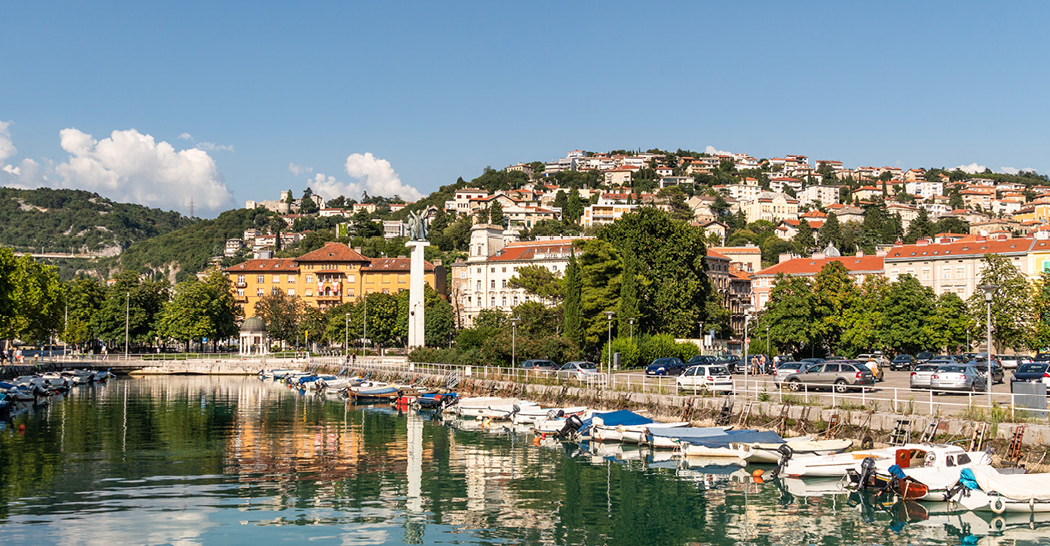
As the 2020 European Capital of Culture – a title shared with Galway in Ireland – this Croatian coastal city has lots to see and do for travellers exploring the Southeast Europe. The region to the north of the city is Gorski Kotar – also known as ‘the green lungs of Croatia’ – populated with wild forests, gentle mountains and serene lakes. As a designated Natura 2000 site, the area’s wildlife is protected by the EU. DiscoverEU travellers can explore the canyon of the Kupa River or take a peaceful boat ride across one of the region’s lakes.

The Slovenian capital of Ljubljana describes itself as “a city with a green soul.” Awarded the title of European Green Capital in 2016, Ljubljana has transformed into an eco-hotspot over the past decade, reducing its emphasis on car travel and promoting pedestrianisation and cycling instead. Three quarters of the city are devoted to parks, gardens and other green areas – be sure to hike to the top of the castle hill to get the best view of the city’s greenery. The city has also planted over 2,000 trees in 10 years, and assigned part of a local forest to absorb excess carbon dioxide.


From its gilded palaces to its famous residents (which have included musical maestro Mozart, drum and bass duo Camo & Krooked, and Hollywood star Christoph Waltz), the Austrian capital of Vienna is a must-visit for any traveller exploring Europe. The city has over 2,000 parks and gardens, which can be visited at your leisure by using any of the city’s 1,400km of cycle paths. For more adventurous travellers, the Wienerwald, an area of woodland protected by the EU as a Natura 2000 site, is also right on the doorstep.


The town of Znojmo is situated in the foothills of the stunning Podyjí National Park. The park spans 63 square kilometres and is home to 77 species of plant and 152 species of bird. Adventurous DiscoverEU travellers may be interested to learn that the park is also home to a number of ruins, including the well-preserved Nový Hrádek castle. As a designated Natura 2000 site, the EU has protected the area to ensure that generations of explorers can enjoy walking along the park’s rocky paths.
