

The capital of Liechtenstein, Vaduz, is an idyllic city that is home to the Liechtenstein princely family. Its most prominent landmark is the Vaduz Castle, which towers over the city on a rock terrace. Though the castle is not open to public, the serene trek up the hill is a reward in itself. Kunstmuseum Liechtenstein is the state museum of modern and contemporary art. Completed in 2000, the monolithic building displays structural complexity and discreet simplicity, taking the form of an imposing ‘black box’ of tinted concrete and dark basalt stone.

Right on the border of Germany and with spectacular views of the Eastern Alps is Salzburg, a city of classic Austrian culture. It is the birthplace of Wolfgang Amadeus Mozart, whose house at 9 Getreidegasse is now a museum depicting his life and career. Salzburg has also been home to a variety of different painters – from Hans Makart, one of Gustav Klimt’s main influences, to Tina Blondell, a pioneering contemporary artist. From guidance systems for blind people to free access to parking for drivers with disabilities, the city works with persons with disabilities to ensure that it is as inclusive as possible – an initiative that resulted in Salzburg winning first place in the Access City Award 2012. When in town, prepare your hiking shoes and trek up the Festungsberg mountain to visit Hohensalzburg, Central Europe’s largest intact fortress.

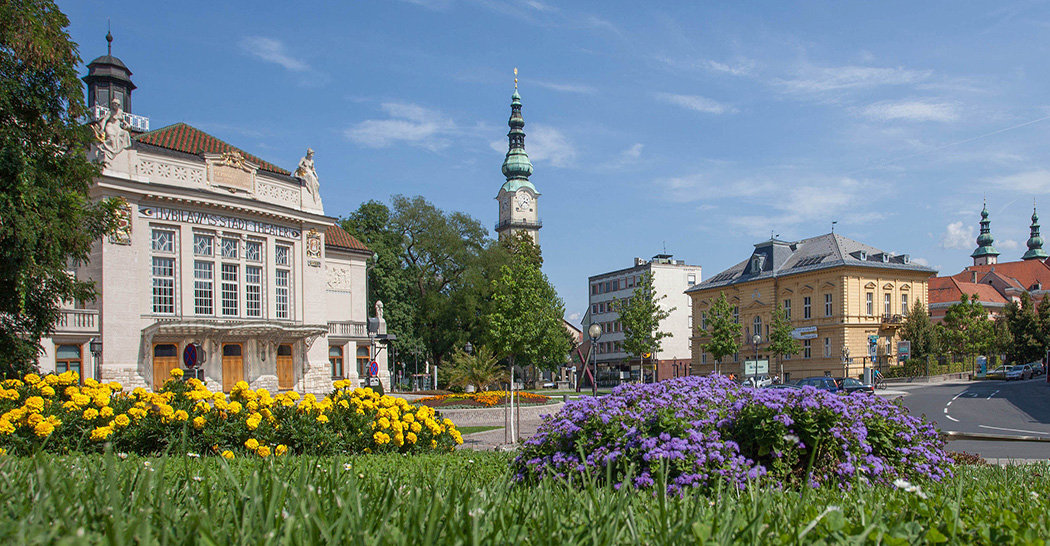
Located at the foot of the Kreuzbergl mountain is Klagenfurt, a city with a vibrant, diverse cultural life. Museums like the Stadtgalerie Klagenfurt and the Museum of Modern Art are complemented by a large number of private galleries and art spaces. For fine art lovers, the Emblem Hall at the Landhaus Gallery, with its 665 precisely painted emblems, is definitely worth a visit! Take a one hour train ride west of Klagenfurt and you’ll find the Pyramidenkogel Tower, the highest wooden viewing tower in the world, from which you can admire the picturesque alpine surroundings. Not keen to take the stairs all the way back down? You can skip them and instead hop on the 120-metre-long slide for a faster route to
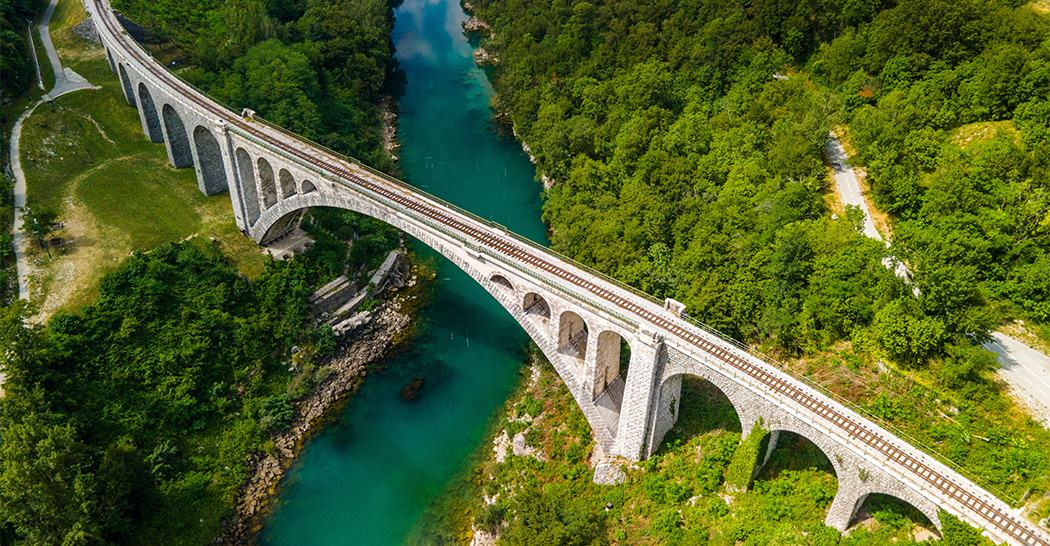
When you arrive at the train station of Nova Gorica, you may inadvertently cross the border into Italy, since the Slovenian city is barely five minutes on foot from Gorizia, its Italian counterpart. Built in the early 1950s, Nova Gorica is a young town – but its City Gallery has grown into one of the most high-profile contemporary art spaces in the Goriška region. The Slovenian city will be the 2025 European Capital of Culture and involve its sister city Gorizia across the border in Italy in the title-year’s celebrations. Roaming the streets, you will see prime examples of modernist architecture, which you can compare with a historical view of the region if you visit the Goriška Museum. Don’t forget to catch a train across the Sokan Bridge – one of the world’s longest stone railway bridges – for impressive views of the surroundings.
The Slovenian capital has transformed into an eco-hotspot in the past decade, with pedestrianised streets that make the city centre a joy to explore on foot. Slovenia’s largest visual arts collection can be found at the National Gallery, while the Museum of Modern Art houses Slovenian art from the 19th and 20th centuries. Ljubljana is supporting those with disabilities or mobility issues with their action plan ‘Ljubljana. Accessible to all.’ As a result, the city has been recognised in the Access City Award several times; with a special mention in 2012, with third place in 2015 and second place in 2018. Don’t miss a trip to the iconic castle perched on the hill in the middle of the city – you will be treated to a bird’s eye view of most of Ljubljana, as well as its surrounding mountains. The Slovenian poem Zdravljica, the Message of the European Spring of Nations (1848), was awarded the European Heritage Label in 2019 for its contribution to Slovenian identity and humanistic message about the importance of an integrated and peaceful Europe.
