
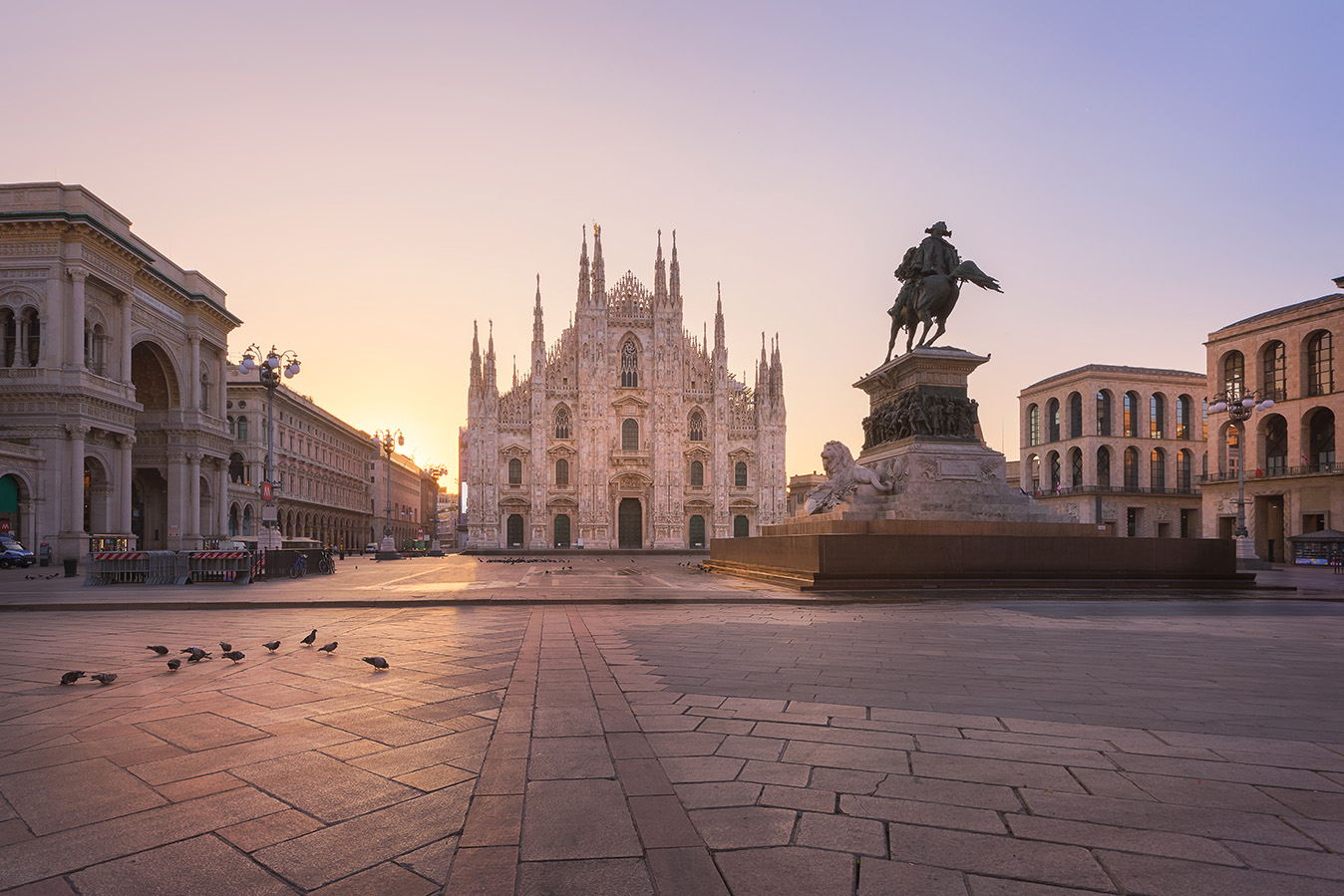
With its progressive spirit and urban flair, not only is Milan a city that can boast truly sustainable urban innovation, but it also strongly reflects the values of the New European Bauhaus (NEB).
Milan is home to the impressive Vertical Forest – the first building in the world that fully integrates living spaces and housing with nature, helping to combat rising temperatures.
A city with a natural drive for inclusiveness and development, Milan promotes cultural initiatives and projects through its many spaces dedicated to creativity and art. Don’t miss the chance to visit the Pirelli HangarBicocca, a former industrial site now hosting stunning contemporary art exhibitions. Also take the opportunity to visit the Mare Culturale Urbano, a cultural centre that revolves around collective art creation, ideas and the sharing of food.
Take a stroll through the Porto di Mare Eco-District, an area of the city that has undergone significant urban regeneration, which led to it winning the 2021 New European Bauhaus Rising Star Award. And look out for the effects of the Piazze Aperte programme across the city, which has transformed former streets and parking areas into new public spaces such as pedestrianised areas, pop-up cycle lanes and social spaces.
Milan’s food markets are also worth a visit, not only to appreciate Italian produce and cuisine, but because they aim to support sustainability by transitioning to a circular food system.
Salzburg – an Austrian city gazing over to Germany and the eastern Alps – thrives on art, culture and history and is constantly improving its sustainable initiatives in harmony with the New European Bauhaus (NEB). Defined as a place of outstanding value to humanity, Salzburg’s historical district has been a UNESCO World Heritage site since 1997.
Discover the city’s landmarks and travel through the Baroque era. Surrounded by colourful gardens, the Dreifaltigkeitskirche (Holy Trinity Church) is a baroque masterpiece by Fischer von Erlach that is well worth a visit. And the Hagenauer Haus is where Salzburg’s artistic soul really emerges: it’s the birthplace of Wolfgang Amadeus Mozart and one of the most visited museums in Austria. Thriving on artistic performances that meld perfectly with the urban landscape, Salzburg is also home to the Landestheater, which hosts hundreds of performances each season.
The Salzburg Global Seminar is a not-for-profit organisation challenging leaders to shape a better world. Salzburg is also an Access City Award winner (2012) and has several buildings noted by the European Union Prize for Contemporary Architecture – Mies van Der Rohe award, including the Flower Market (by Wimmer Zaic Architects), Municipal After-School Club (by maria flockner and hermann schnoll architects) and the Panzerhalle.

Slovenia’s capital, Ljubljana, is highly committed to the New European Bauhaus (NEB) principle of sustainable and inclusive urban development and is bustling with redevelopment and urban regeneration projects. The community-led production space KRATER, with its variety of stations from a papermaking workshop to the sanctuary for abandoned potted plants, is a striking example. Located near the city centre, the centre sprouted from a crater-like construction site to offer eco-social practitioners a space for their workshops and to foster the production of environmentally conscious materials, practices, and alliances.
At the very heart of the city, in the triangular Prešeren Square, Ljubljana’s spirit comes to life through events and artistic performances. And Tivoli Park, Ljubljana’s largest and most beautiful park, is a favourite green urban space. Spanning an area of 5 km2 that includes the Jakopič Promenade, it is a renowned outdoor venue for photography exhibitions and is open throughout the year.
Alongside a host of other positive initiatives that granted Ljubljana the nomination for the Access City Award 2023, the city is also committed to protecting and enhancing urban green spaces and has created a bee path to promote rewilding.
Visit the Cyanometer which matches its colour to the blueness of the sky while also measuring air quality. Then, take the opportunity to discover one of the most bizarre and interesting spots in the city: the Metelkova Mesto, an alternative cultural centre with walls covered in colourful graffiti and murals.

Slovenia’s fourth largest city, Celje, is one of the country’s Green Destinations – places recognised for their sustainability. In complete harmony with the New European Bauhaus (NEB) objectives, it is home to different urban renovation initiatives. At the interactive Tehnopark, a former department store transformed into a science centre, you can dive into innovation and the artistic side of science.
There’s also the modernised market, with its open structure allowing in plenty of light and air. While you’re here, there are lots of other interesting buildings and spaces to explore, such as Josip Pelikan’s Skylight Photo Studio – an official cultural monument showcasing the work of this master photographer. There, you can learn about the life cycle of a photo: each floor is dedicated to a stage of photo production.
For more adventurous travellers, Celje’s Adventure Park is a great eco-friendly spot for outdoor exercise and fun.

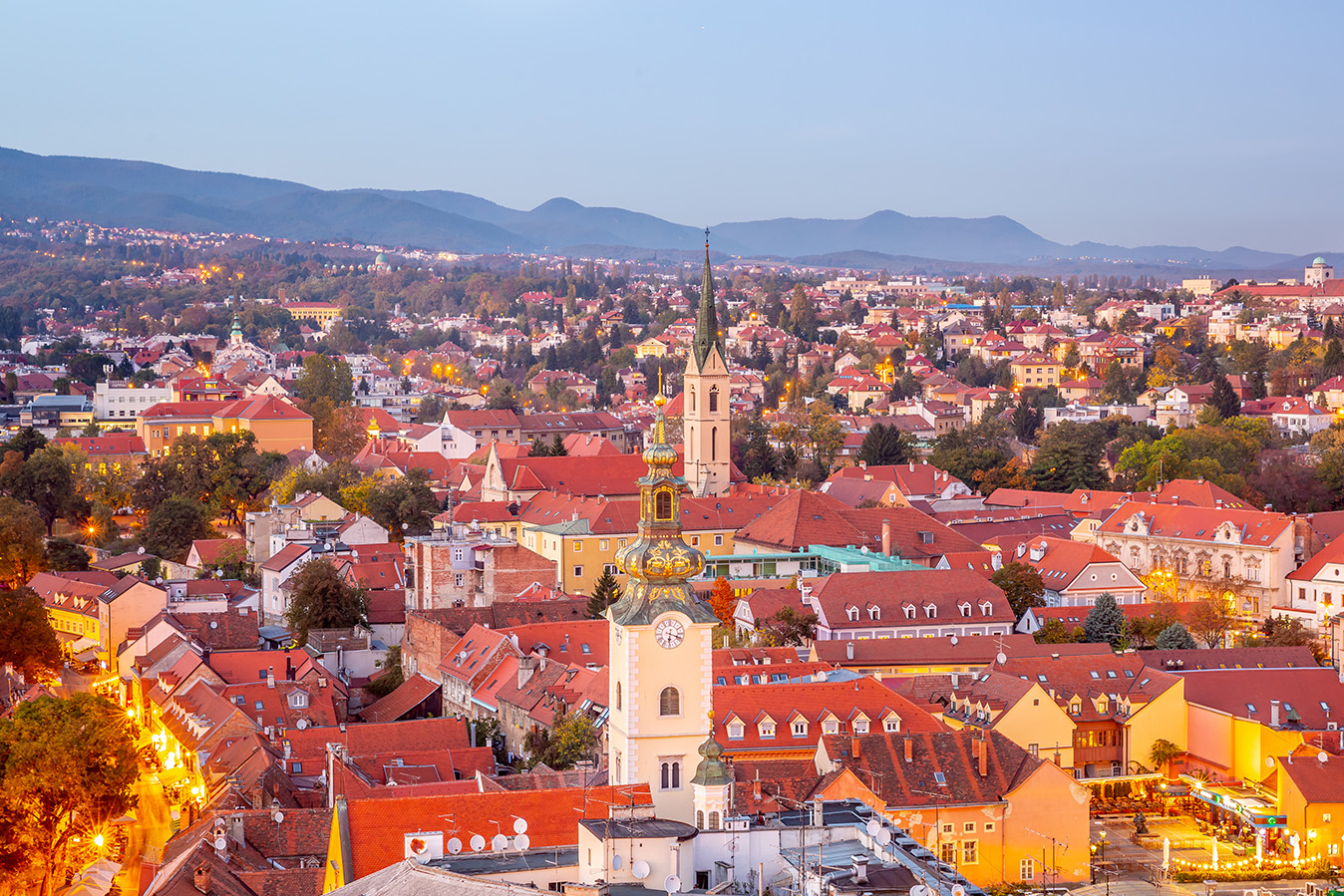
Croatia’s capital, Zagreb, in the north-west of the country, is a European gem packed with historical architecture and contemporary urban designs in a mix that makes it the perfect embodiment of the New European Bauhaus (NEB). At the heart of the city, the Lower Town is home to incredibly well-preserved architectural masterpieces from the time of the Habsburg Empire.
Zagreb is also renowned for its numerous parks, forests and lakes, and was European Green Capital in 2016. Discover Botanicki Vrt, a nineteenth-century botanical garden and museum run by the University’s Faculty of Science to better understand the beauty of our natural world.
Wandering around the city, you’ll find the Trg bana Josipa Jelačića, a central square with a hexagonal fountain. There, you can visit the Art Pavillon, which is south-eastern Europe’s first prestigious exhibition venue.
The capital also has some unusual museums and exhibitions to offer, including the Museum of Broken Relationships, designed to help us explore and learn from human love and loss. And don’t forget the Croatian Museum of Naive Art, founded in the 1950s and still overflowing with works by artists from very different backgrounds.