

 © EEAS 2019
The Sahel’s young people make their voices heard
Last updated on Tuesday, 29/09/2020
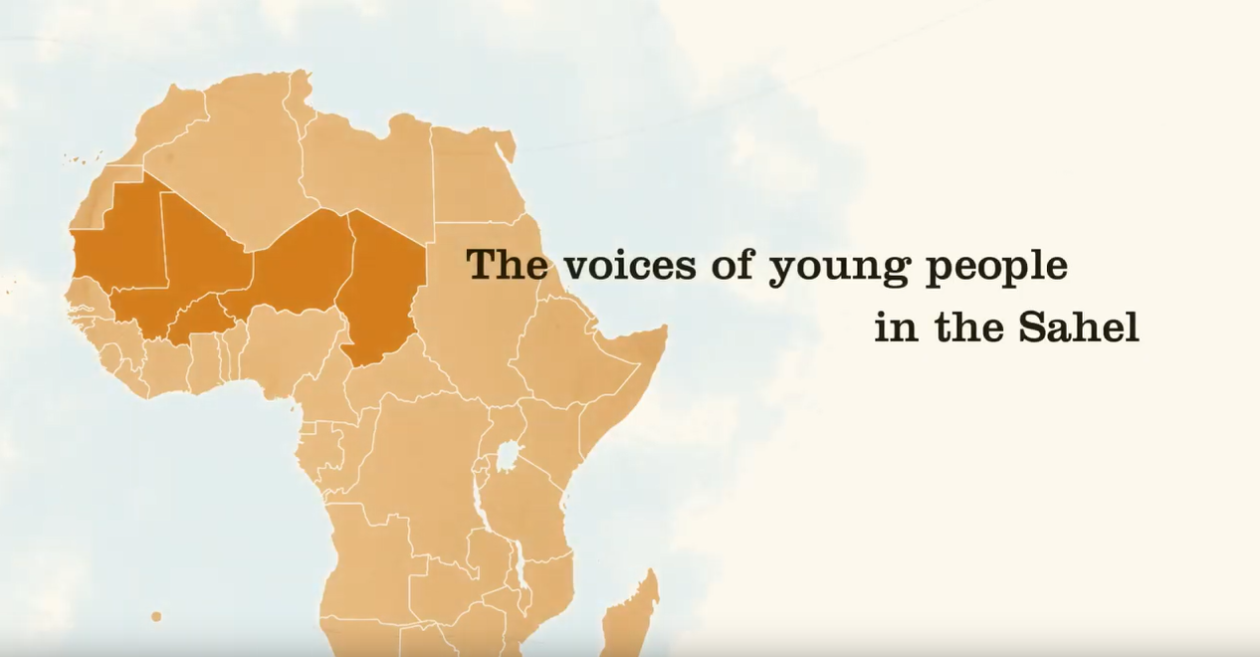
The EU-backed Voices of the Sahel’s Youth programme helps young people in G5 Sahel countries communicate with institutions in their countries. The goal: work together to create development policies that impact them.
The younger generation in the Sahel region represents the future of their countries. Whether from Mauritania, Chad, Mali, Burkina Faso or Niger, these are talented women and men who want to shake things up.
However, they face enormous challenges. For many, access to jobs, education and healthcare is difficult. Many are unemployed, making them vulnerable. Sometimes, they are tempted by irregular migration or threatened by insecurity, violence or even radicalisation.
While everyone agrees that young people are essential to the development of Sahelian societies, it is important to acknowledge that they are still rarely included in the political debate.
‘In addition to the challenges related to insecurity, employment and education, there’s a fourth very big challenge – civic engagement,’ stresses Moumouni Dialla, president of Burkina Faso’s National Youth Council.
Learning how to be heard
Amid this backdrop, the Voices of the Sahel’s Youth programme – financed by the EU Emergency Trust Fund for Africa and Denmark – offers young people a chance to communicate with policymakers. Specifically, it facilitates and strengthens dialogue between youth organisations and institutions. It calls upon young people to express their hopes and dreams, spearhead proposals and become the driving force for socio-economic integration of up-and-coming generations.
‘The project provided technical support by assisting young people. It strengthened our ability to organise advocacy campaigns,’ explains Douksia Hamlha, coordinator for the Collective of Youth Associations and Movements of Chad.
For young women, the stakes are even higher. It is a matter of being heard in societies where women are often still relegated to the margins of public life.
‘I’d like all women to feel confident, unafraid, and able to express themselves,’ says programme participant Anissa Ibrahim, a student from Niamey, Niger.
In each of the G5 Sahel countries, mentoring and meetings have increased due to the initiative.
During working visits to Brussels in October 2019 and June 2016, around 40 representatives of participating Sahel youth organisations had the opportunity to share their experiences – including with EU High Representative and European Commission Vice President Federica Mogherini.
Young Europeans of the diaspora
The connection between Sahelian youth and young Europeans, especially those with roots in countries of the Sahel, is clear.
Yacoub Hamza, another programme participant who studied in France and returned to Mauritania to work, highlights the extent to which members of the diaspora are looking for ways to help local populations in the Sahel.
Fellow participant Fatoumata Traoré is part of this young diaspora. She was born and works in France, and is very active in the French Association of Malian Graduates and Students. She believes it is important to leverage the skills of the African diaspora in Europe through mentoring, distance learning and feedback, for example.
‘A new mind set is necessary to collaborate and succeed together,’ she says.