

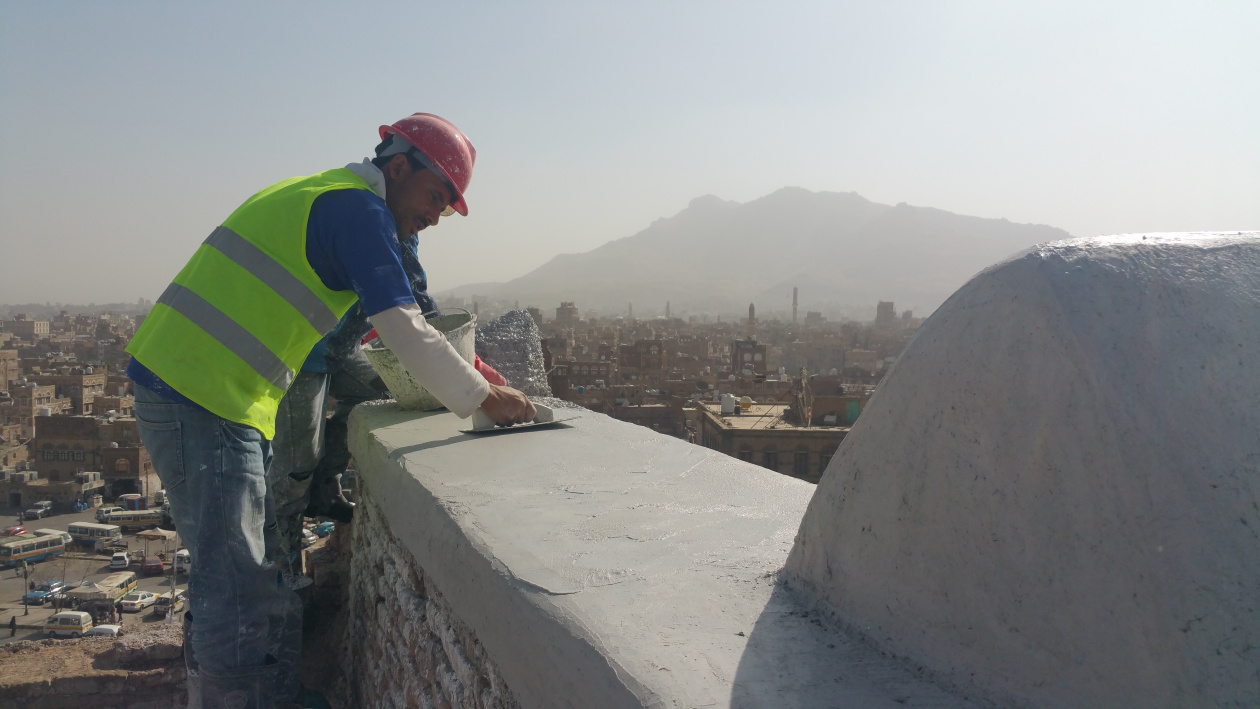
 © UNESCO
Tapping youth to safeguard cultural heritage – and peace – in Yemen
Last updated on Tuesday, 29/09/2020
An EU-funded UNESCO project is generating jobs and empowering young Yemenis to protect their cultural heritage by restoring historical sites ravaged by war. It’s hoping to create a sense of unity and, brick by brick, build peace.
Yemen has been mired in conflict since 2015, resulting in a massive humanitarian crisis affecting millions. With 70 % of the population under the age of 25, young people have been hit particularly hard. Half can’t find work and poverty is rampant.
At the same time, the country’s cultural heritage – which the EU considers a crucial component for peacebuilding – has suffered substantial damage.
Striving to make a difference on both fronts, the EU and UNESCO joined forces and came up with an innovative idea – a EUR 10 million ‘cash-for-work’ project that trains and pays urban youth to safeguard historical sites, some of which are relics of an ancient civilisation.
The goal? Help young Yemenis make ends meet, pick up valuable skills and create a sense of purpose in tough circumstances by getting them to rally around cultural heritage as a common cause.
‘This initiative for youth employment and culture is crucial for building resilience in Yemen and supporting peacebuilding,’ Mohammed Jumeh, Yemen’s permanent delegate to UNESCO, said at a March 2020 event in Brussels showcasing the project.
In a nutshell, the three-year initiative that runs through August 2021 aims to employ 4 000 young people – including at least 500 women – for a total of 500 000 days. Participants make USD 8 to 12 (EUR 7-10.75) per day.
The work focuses on the UNESCO World Heritage Sites of Sana’a, Shibam and Zabid, as well as the historic city of Aden. It can include everything from fixing facades, to repairing roofs and restoring intricate architectural details.
Supporting solidarity
The initiative has also united young Yemeni artists, filmmakers, musicians and other creatives who now live abroad, empowering them to support their peers back home who lack the means, tools and educational resources to pursue their craft.
At an October 2019 UNESCO Yemeni Youth Cultural Diaspora Forum in Doha organised as part of the project, members of this group came up with recommendations to foster youth-led creativity and cultural expression as the conflict continues.
Participant Mariam Al-Dhubhani, a filmmaker currently based in Qatar, stressed how cinema could help Yemenis live in peace.
‘Cinema helps with coexistence,’ the 29-year-old told the European Youth Portal. ‘As
Yemenis, we’ve been divided and divided and over-divided until it seems there is no way to reconcile. But there is, there always is. At the end, we have a shared history, we have a shared land.’
Focus away from war
Also as part of the project, civil society organisations in Yemen are awarded small-scale grants to foster social cohesion among young people and contribute to creative industries and cultural development.
Osama Khaled, another forum participant and Yemeni filmmaker now based in Berlin, said the project – and a focus on culture more broadly –provide hope and are important outlets for young people amid all the negativity of war.
‘It’s really important to offer another perspective to youth,’ Khaled, 26, told the European Youth Portal.
Through 2019, the EU has provided EUR 440 million in humanitarian aid funding to Yemen.
Get involved
Cash-for-work: Promoting Livelihood Opportunities for Urban Youth in Yemen