
Erasmus+ student posing on the city square

Paris through Erasmus+: a journey that changes your view of the world

Gabrijela, Croatia, Age 23

Money comes and goes, but experiences and memories remain a lasting value.

I applied for the Erasmus+ mobility programme because I had dreamed of studying abroad since childhood. Although many people thought it was just a passing idea, I decided to take advantage of the opportunity offered during my studies. I see mobility as an important part of my educational journey, as it enriches me as a person. Through travelling, we encounter different cultures, values, and perspectives, which makes this experience truly unique.

Arriving in France was filled with excitement, but also a sense of uncertainty. Although I had often heard warnings about Paris being a challenging and unsafe city, I quickly realised that every place has its own challenges as well as its beauty. My journey began with my departure from Zagreb, and I especially remember the breathtaking view of the Alps during the flight. After arriving in Bagneux, the first moments of independence brought a slight feeling of unease, but within a few days, and with the help of new acquaintances, I quickly adapted. In a short time, I got to know the city, its transport system, and its way of life, and I began to feel at home.
During my stay in Paris, I met many people from all over the world. Different cultures, languages, and stories came together to create an unforgettable experience, and these friendships truly defined my time there. I did not see cultural differences as obstacles, but rather as opportunities for learning and personal growth.

France impressed me with its strong appreciation for culture and a lifestyle that emphasises a balance between work and leisure. Paris, in particular, inspired me—with its energy, art, and atmosphere, encouraging me to become a better version of myself every day. Although I did not have the chance to explore the entire country as much as I would have liked, the city gave me countless unforgettable moments and many reasons to return.

Some of my most memorable experiences include events such as Paris Fashion Week, visits to the Louvre, trips to places connected with famous artists, and everyday walks and gatherings with friends. Simple moments, like picnics or evening conversations, turned out to be the most valuable. Every day was different and special in its own way.

My daily life in Paris was a combination of academic responsibilities and exploring the city. My days usually started with working on assignments, followed by classes and time spent at the university, along with inevitable visits to Parisian bakeries. I used my free time for walks, finding inspiration, and socialising, while evenings were often reserved for shared moments with my housemates.
This experience had a significant impact on both my personal and academic development. I learned how to live independently, manage my time and finances, and adapt to new situations. I also had the opportunity to experience a different educational system and develop creative thinking through project-based work. Although it was challenging to balance responsibilities at two institutions, the support of professors and colleagues was extremely important.

Overall, I would rate this experience very positively, with some room for minor improvements in organisation. However, my independence and persistence played a key role in making the experience successful and fulfilling.

To students considering the Erasmus+ program, I would advise them to gather information in advance, stay organised, and be brave and open to new experiences. It is important to stay true to yourself and believe in your abilities, because with good preparation, everything becomes easier.

I believe that everyone should experience mobility at least once during their studies. It is a unique opportunity for personal growth, exploring the world, and creating memories that last a lifetime. Although it may seem financially demanding, what you gain in return far outweighs the cost. Money comes and goes, but experiences and memories remain a lasting value.
 

Updated on Thursday, 07/05/2026
Portrait of Gilles

Changing a habit means changing your life

Gilles, France

We are the ones who benefit most from our commitments

Let me introduce myself: I’m Gilles. I’ve always dreamed of going abroad, without really knowing what it actually meant. That desire probably came from my family and friends, or even from friends I hadn’t met yet.

When I heard about the Erasmus+ programme, it was a revelation: how had I managed to miss out on such opportunities all these years? Without wasting any time, I plucked up my courage and decided to embrace the adventure... And so I set off for two weeks in Hungary, then in Spain, surrounded by strangers who quickly became acquaintances and, for some, true friends.

These trips and encounters have allowed me to discover myself. I have often heard, particularly from the people I met in Spain, that every person we come across is a piece of the puzzle that makes up who we are. Today, I am convinced of this. Every experience, every interaction, every thought helps to shape the person I am...

I sometimes think back to the 18-year-old Gilles, who’s dreams were limited by what he thought was possible for him. Those trips shattered my filter bubble and made me realise that many things are far more accessible than we think, if we have the right information and support. Today, I realise that the environment I grew up in gave me access to these opportunities. My sincerest hope is that they might also reach those who, like me in the past, could not even have imagined that such opportunities existed.

I have learnt a lot. I had the opportunity to practise several languages, such as English, Spanish and Portuguese. Furthermore, I discovered the value of international friendships and the challenges faced by young people across Europe. I came to understand the differences between our societies, but above all, what deeply unites us as human beings.

Today, the map of Europe has become, for me, a map of memories and friendships, where every country is linked to a story, an anecdote and a person.

It’s not just a change of perspective; it’s much more than that. But you have to experience it to understand it. Now it’s your turn.
 

Updated on Thursday, 07/05/2026
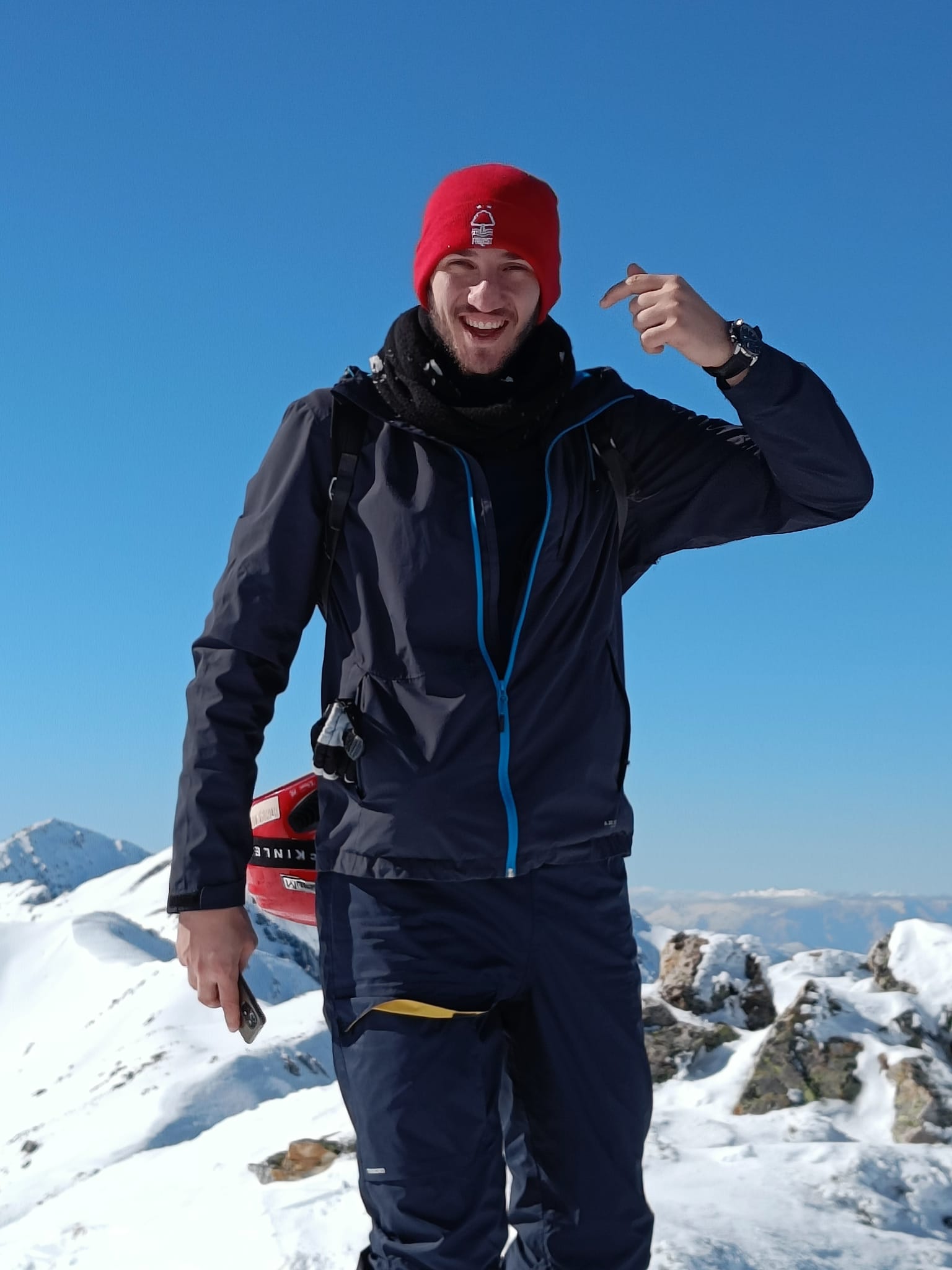
Erasmus+ participant

My Erasmus Experience in the Netherlands

Zrinka, Croatia, Age 19

You gain new knowledge, meet amazing people, and create unforgettable memories that will stay with you for a lifetime.

I had the opportunity to participate in an Erasmus+ program from July 25th to August 8th, 2025, in a small village called Orvelte in the Netherlands. The project was called Back2Basics (B2B), and it focused on simple living, cultural exchange, and teamwork through various daily activities.

During my stay, I took part in many different activities, learned about other cultures, and experienced camping in a completely new way. Life and culture in the Netherlands really impressed me. Everything is very organized, clean, and well-structured. People are relaxed, friendly, open-minded, and always willing to help. One of the most interesting things I noticed is how everyone rides bicycles—almost every person owns one, and the entire traffic system is adapted to cyclists. There are bike paths everywhere, which makes transportation very easy and safe. I also admired how well-maintained the houses and gardens are, and I was amazed by the many beautiful windmills.
The most interesting and memorable experience for me was a four-day camping challenge. We were divided into groups of four or five people from different countries and had to manage without money or phones, while finding our own food along the way. We went from house to house asking for food and accommodation, and fortunately, we were successful every day. We always had something to eat and slept in comfortable beds thanks to the kindness and generosity of the Dutch people. During those days, we also traveled by bike from place to place and covered a total of 120 kilometers. After the camping challenge, we spent four hours paddling canoes back to the village, which was both challenging and unforgettable. However, the most beautiful moments were the evenings spent with other Erasmus participants, sitting around the fire, talking, and bonding.

I met many new people from different countries and built wonderful friendships. I am still in contact with some of them, which makes this experience even more special.

Through this Erasmus project, I learned many valuable skills. I improved my communication and teamwork abilities through group activities. The camping experience taught me resourcefulness, effort, and perseverance. I also gained a deeper understanding of different cultures, which is extremely valuable in today’s world.

I would definitely recommend this Erasmus experience to others. It is the kind of program that makes you want to come back again. You gain new knowledge, meet amazing people, and create unforgettable memories that will stay with you for a lifetime. For me, this was truly a unique and special experience.

Food and activities were also an important part of the program. Every evening, participants from a different country prepared traditional dishes, so we had the chance to taste a variety of international cuisines. This was a great way to learn about different cultures through food. One of my favorite Dutch treats was stroopwafels, which we ate almost every day—they were absolutely delicious! Each day was filled with diverse and engaging activities, so there was never a dull moment.

Updated on Tuesday, 05/05/2026

Young woman with long brown hair, wearing a pink top and a lanyard, stands and smiles in front of science posters at a conference or academic event.

How Erasmus+ Rewrote My Medical Future

Nadja, Romania

Beyond the hospital walls, Erasmus+ taught me the value of a European mindset.

Erasmus+ is much more than a study program abroad; it is a launchpad that transforms your identity and gives you the confidence to compete at a global level.

When I applied for my mobility at the University of Ulm, it felt like a symbolic homecoming. Having been born in Switzerland and raised in Germany and Australia before moving to Romania for medical school, my life was a collection of different cultures.

Returning to Germany through Erasmus+ allowed me to finally connect these pieces. It was a journey of self-discovery that helped me turn my multicultural background into a professional strength.

During my two years in Ulm, I was privileged to undertake internships at both the Ulm University Hospital and the Ulm Military Hospital. These environments challenged me to grow in ways I never expected. I had to find my place within a highly structured system that demanded both rigorous discipline and a high degree of autonomy. One of my greatest lessons was mastering what I call "linguistic gymnastics", the humble art of switching between complex German medical terminology and simple, kind words to ensure my patients felt truly heard. Earning my Goethe C1 certificate during this time was a proud milestone, but the real reward was the trust I built with the people I treated.

Beyond the hospital walls, Erasmus+ taught me the value of a European mindset. Whether I was hiking through the Alps with international friends or walking along the Danube, which felt like a physical link to my family in Romania, I realized how much we can achieve when we bridge our differences.

The skills I gained through this experience gave me the courage to take my research to the global stage. It was an honour to present my teams work in the United States and having received the G. M. Jager Memorial Travel Grant for the 2025 Association for Research in Vision and Ophthalmology 2025 Conference, to begin a PhD partnership between Romania and Australia in October 2025 as well as commencing my doctoral studies at the University of Ulm in October 2024. I am deeply grateful for the mentors and the program that supported me every step of the way.

Today, as a Neurosurgery Resident in Târgu Mureș, I am proud to bring the best practices I learned in Germany back to my patients in Romania. I would encourage any student to take this leap. It reminded me that borders are just lines on a map and prepared me to be a doctor with a global vision, ready to serve my community with a broader perspective.

Updated on Wednesday, 29/04/2026

Aleksandar Milošević_EMJM

Steps by STEPS

Aleksandar Milošević, Serbia

Suddenly you have the whole world around you, just waiting for you to extend your hand and say: ‘Hi, I’m Aleksandar from Serbia.’

“Where did you study your master’s abroad?”

“Everywhere a bit.”

This conversation has happened to me countless times, and I always like to respond this way, with a smile. It’s not a lie. I was part of the Erasmus Mundus STEPS (Sustainable Transport and Electrical Power Systems) program, a joint master’s degree organized by several European universities, which naturally means that you don’t spend your studies in just one place. In our case, those were the universities in Coimbra in Portugal, Nottingham in England, and Gijón in Spain — cities that I am proud to say became my cities.

It feels like I could write an entire novel about each of them instead of trying to squeeze them into a few paragraphs. How can I mention Coimbra without talking about students walking around in long academic robes like they belong at Hogwarts and eating pastéis de nata with a view of the Mondego River? How can I mention Nottingham without talking about the English passion for football felt in every pub, the legendary Nottingham Forest by the River Trent and the even more legendary English breakfast? And how can I mention Gijón without talking about San Lorenzo beach, which disappears and reappears twice a day with the tides, about fiestas, siestas, and the famous sidra — the local apple cider that must be poured from a height before you can drink it?

So instead of talking about these cities in detail — because I would easily get lost in memories of them, just like I actually got lost in their streets during my first days there — I will talk about the people and the experiences.

One of the best things about the Erasmus Mundus program is that, as the name suggests, it is a global project, not just for Europeans. Our small world included people from Argentina, Venezuela, the United States, Spain, Montenegro, Serbia, Eritrea, Lebanon, India, Vietnam, and the Philippines — quite a diverse group, as you can imagine. And that’s not all. Add to that all the people who came to those cities on a “regular” Erasmus exchange, and suddenly you have the whole world around you, just waiting for you to extend your hand and say: “Hi, I’m Aleksandar from Serbia.”

Aleksandar Milošević_EMJM

Every beginning is slow and filled with uncertainties — especially if you are a procrastinator like me who applied for a visa too late and ended up arriving a week after the semester had already started. But then you begin meeting people, and you quickly forget why you were ever worried in the first place. Because people are what make this experience so meaningful and unforgettable.

Looking back now, those first contacts seem almost absurdly awkward and clumsy — shy greetings to people who would soon become a very important part of my life. People with whom I would go to lectures, prepare for exams, and work on projects, but also share sunsets, celebrate Thanksgiving with dishes from all around the world, run into the ocean in January, and share both the happiest and the hardest moments in the following two years. In one word — friends. Perhaps even more than that, when you are so far away from your previous life, these friendships carry even greater significance. I still find it incredible how people from completely different parts of the world, cultures, languages, and traditions can fit together so naturally, as if they were always meant to end up in the same place.

Studying within different educational systems was also a unique and challenging experience. These systems were completely different from the one in my home country, and also very different from one another. In Portugal, the focus was on homework assignments; in England, on writing academic papers; and in Spain, on projects and laboratory work. Each city contributed in its own way not only to my education but also to the way I think and approach problems. It would be a lie to say that it was always easy, but when you go through everything together with your friends, and along the way someone brings freshly baked chocolate chip cookies or a slice of jamón serrano appears at just the right moment, everything seems manageable.

After that, the only real limit was how much free time we had. And we really tried our best to spend every free moment traveling, socializing, and just enjoying life. Whether it was crazy trips, tables full of food, drinks and people, crazy nights out until sunrise, or simply sitting in beach chairs like retirees — all those pictures still hang on my wall. It’s impossible for me to look at them without a smile on my face (and an occasional tear in my eye)

If you’ve heard how much a single Erasmus semester can mean to someone, imagine what four Erasmus semesters can do to a person. Four times as many adventures, four times as many fond memories, four times as many people…

It is often said that the only bad thing about Erasmus is that it eventually comes to an end, but I tend to disagree with that.

How can we speak of an ending when we are still in touch regularly, when we still organize reunions, when I know I have a place to sleep in almost every major city in Europe (and beyond), and when I am a proud host in my city for so many people?

Oooh no, my Erasmus didn’t end.

My Erasmus has only just begun…

Aleksandar Milošević_EMJM                     Aleksandar Milošević_EMJM

Updated on Thursday, 16/04/2026

Lan Batič

From DiscoverEU to finding new calling

Lan, Slovenia

"This experience showed me that with the right support and a strong team, young people can turn their ideas into real change."

My name is Lan Batič, a student at the Faculty of Mathematics and Physics and a member of a team currently running our second solidarity project. I first heard about this opportunity during a DiscoverEU trip, where I immediately recognised it as a chance to broaden my horizons and step outside my comfort zone. The more I looked into it, the more I realised it was a truly unique experience for young people — one that offers a glimpse into a world that might otherwise remain distant or unfamiliar.

The opportunity gave me and my team the support we needed to turn our idea of improving young people's lives into something real. Along the way, we developed our organisational skills and got to grips with the financial side of running a project like this. That part was the biggest challenge for me personally, as it was the least familiar territory at the start. Being faced with a large amount of information and responsibility taught me just how important teamwork really is. It was precisely our collaboration and mutual support that helped us navigate the challenges more easily.

To any young person considering getting involved, my advice is simple: just try it. It is an incredible opportunity for personal growth, gaining hands-on experience, and making a genuine contribution to your community. Looking back now, I am proud of what our team has achieved. We successfully completed one project and are wrapping up a second just as successfully — and I truly believe we have brought something valuable to our local community. Something that would simply not have been possible without this experience.

There was also plenty of fun and enthusiasm from the young participants at our events. As a little anecdote — at two of our board game evenings, we introduced a game called Root. It was an instant hit, with participants immediately diving into its complex rules. At the very next session, everyone at the table was stunned when one of the young participants arrived completely prepared. He had written down the best strategies, knew all the rules inside out, and had mapped the optimal path to victory. Naturally, he won in just a few moves — which was all the motivation the others needed to come better prepared next time. On the day of that second event, in the spirit of fair play and by complete mutual agreement, we temporarily banned the tactic he had used, giving the other players a fair chance to first understand the game and learn how to counter that strategy.

Updated on Wednesday, 15/04/2026

Portrait of Makbule

Assisting visually impaired people in their daily activities

Makbule, Austria

In every volunteering moment – whether supporting someone with a disability, guiding a young volunteer through a challenge, or creating art side by side with children in my solidarity project – I’ve seen how solidarity can transform lives in small but powerful ways. Volunteering allows people to grow, to be courageous, to discover what they are capable of. It strengthens communities, builds empathy and reminds us that we all have something meaningful to give.

During her volunteering project in Spain, Makbule assisted blind people in their daily activities and participated in many trainings. Back home she supported volunteers who came to Austria first as a mentor, later as a European Solidarity Corps project coordinator for four years. 

In 2025 she started the solidarity project 'Töpfern auf Rädern - ClayConnects'. It offered free pottery workshops for young people with fewer opportunities and from marginalised groups. These workshops provided new means of self-expression and a tool for non-violent communication. 

  • 20 February 2026
    European Youth Week Exhibition Makbule.pdf
    English (414.09 KB – PDF)


Updated on Tuesday, 14/04/2026

Portrait of Tania

Accompanying and supporting people with disabilities in their daily life

Tania, Austria

Voluntary service was my first experience of living independently, without my parents, and my first long stay in a foreign country. Thanks to this experience, I found my career path and, what's more, I found a new home here.

Tania came from Italy to volunteer in Austria when she was 18. During almost a year, she supported and accompanied people with disabilities in their everyday lives with Evangelisches Diakoniewerk Gallneukirchen Austria.


🎤 What type of impact did your engagement have on the local community where you were active?

"During my voluntary service, I supported the residential group team as best I could. I accompanied and supported people with disabilities in their everyday lives. I believe that working with me has made my colleagues more open-minded to working with EU volunteers."


🎤 How has volunteering contributed to your personal growth, professional development, or overall outlook on life?

"Voluntary service was my first experience of living independently, without my parents, and my first long stay in a foreign country. Thanks to this experience, I found my career path and, what's more, I found a new home here. After my voluntary service, I completed my training as a certified social worker for people with disabilities in Gallneukirchen and continued to work in the same residential group alongside my training. That’s where I’m still working."


🎤 Why do you believe volunteering is important?

"I believe that voluntary service is an important opportunity for (young) people to try something new and learn about new things. It offers the chance to immerse yourself in a perhaps unfamiliar field, take on a challenge, find new friends and build a network. And sometimes it might be the place where you will stay, find a job/your passion and start a family."


Updated on Tuesday, 14/04/2026

Portrait of Laura-Elise

Replanting trees after a forest fire

Laura-Elise, Belgium

This volunteering experience confirmed for me that the European Solidarity Corps truly meets young people’s need to come together, especially after Covid. Even after just two weeks, you feel part of a new family, and the friendships last: people I visited again, volunteers who stayed with me, places where I will always be welcome.

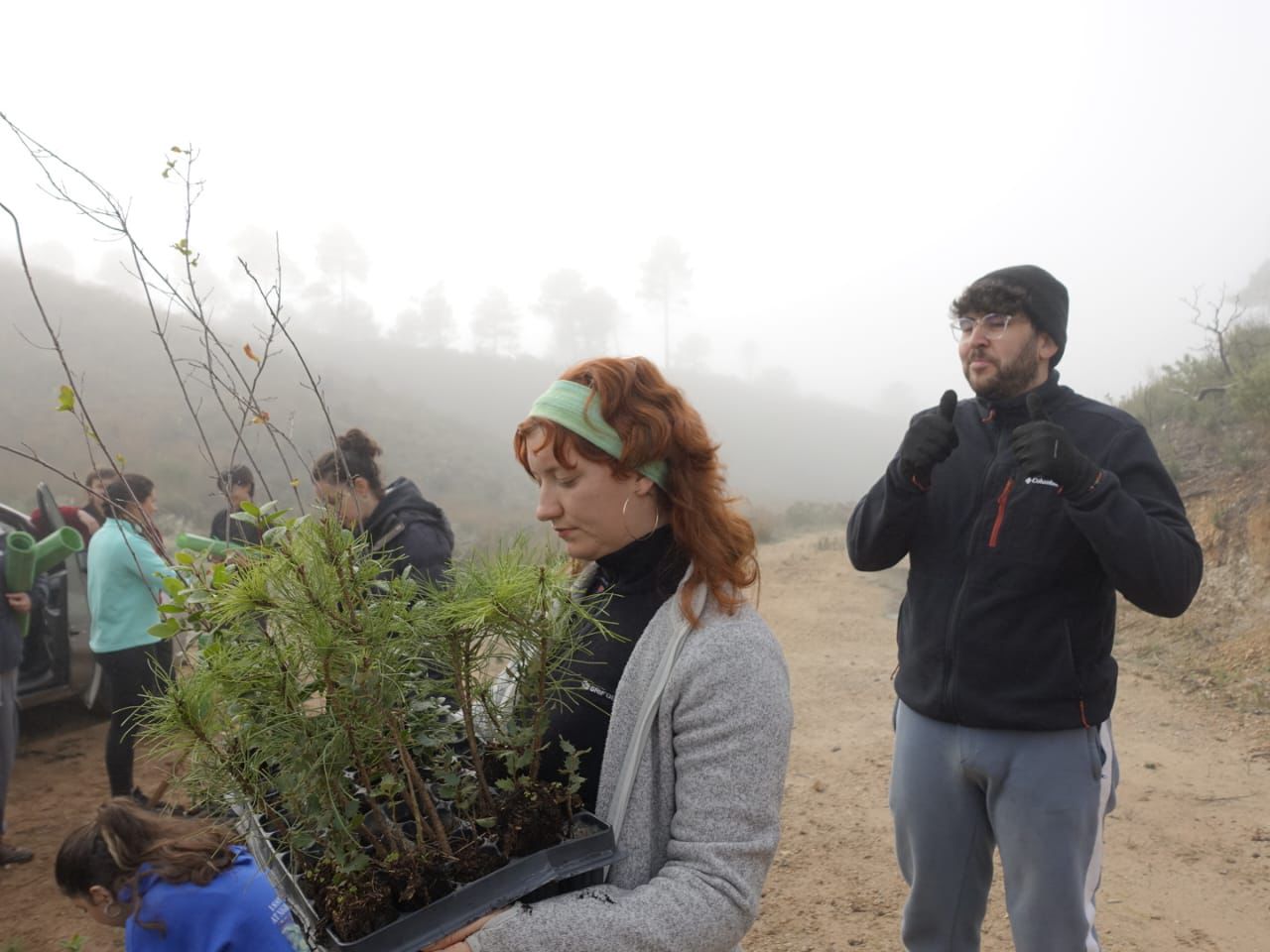
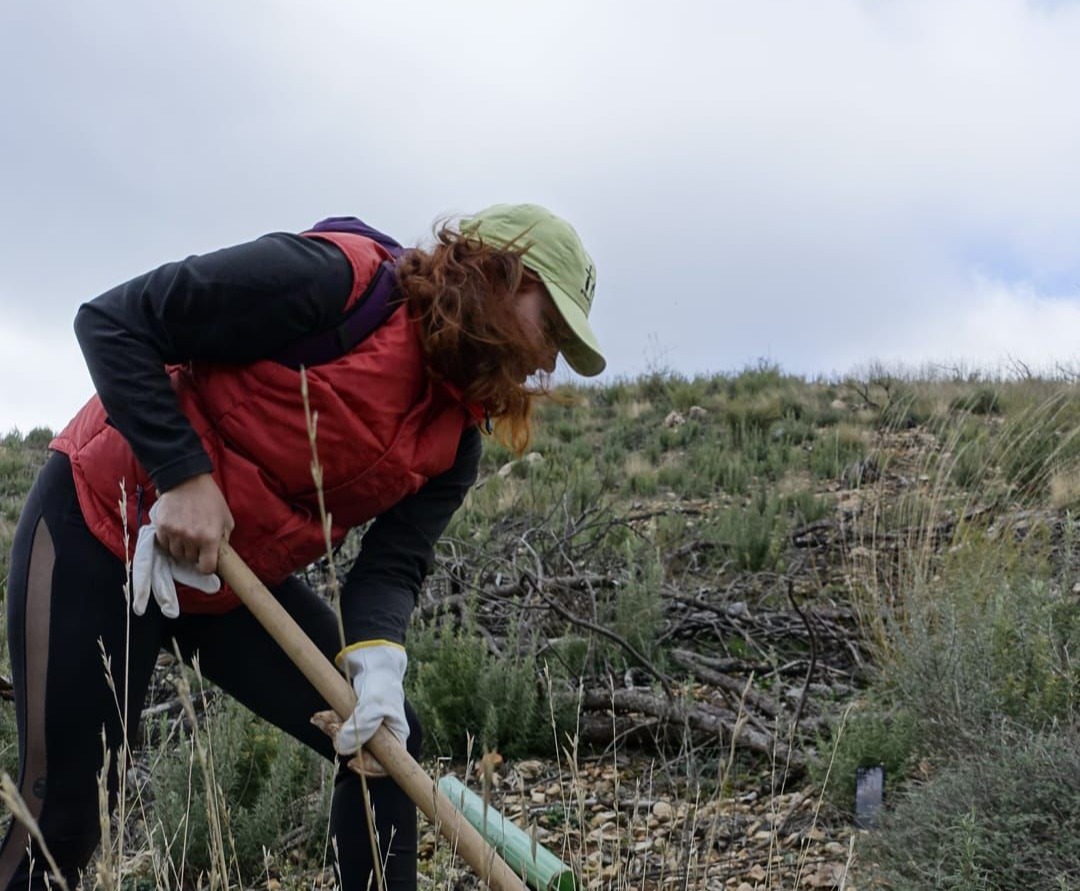
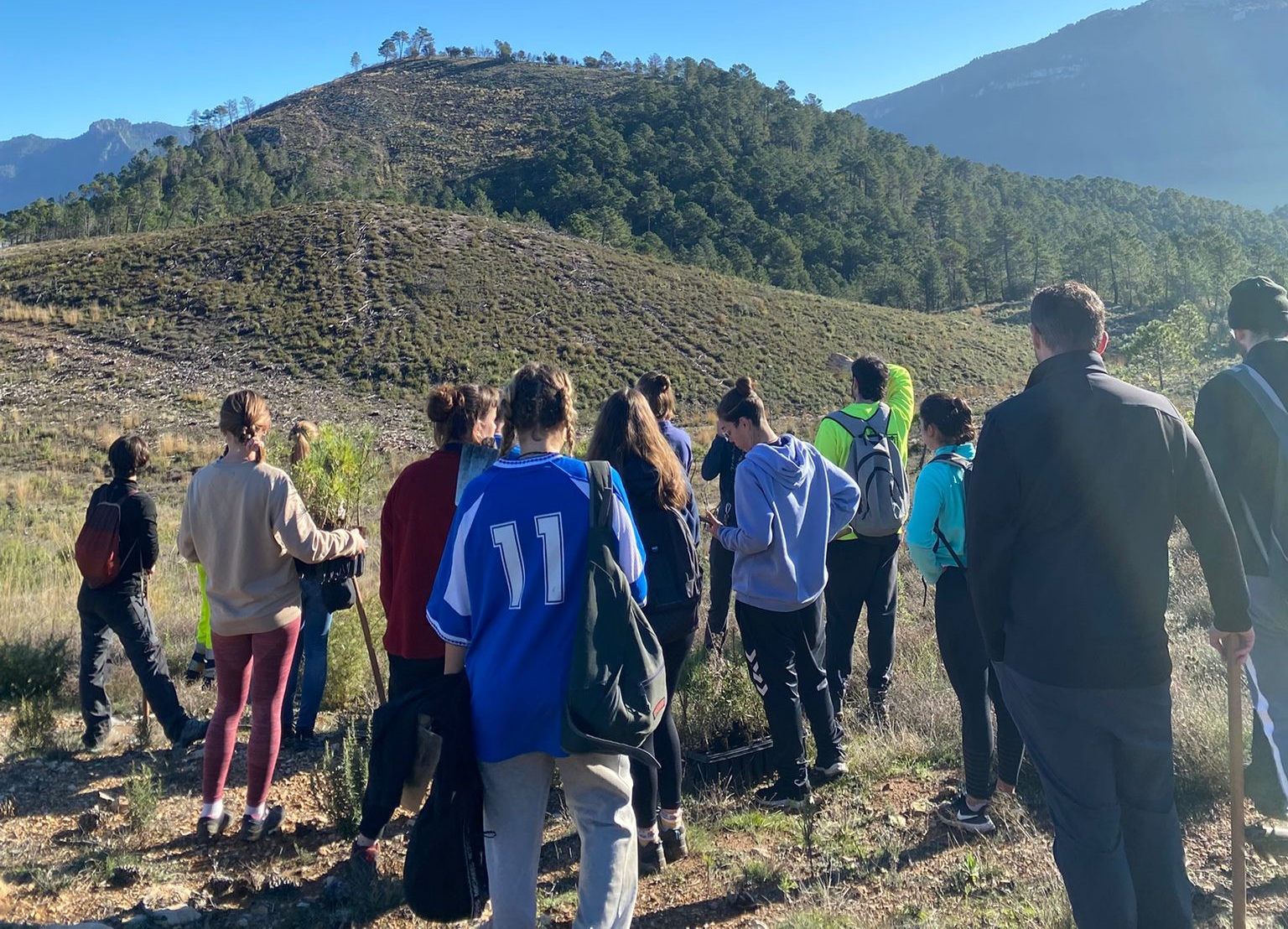
Laura-Elise volunteered in Spain in 2024, where a forest-fire had destroyed a large part of the forest. She helped to replant trees with other volunteers from around Europe.


🎤 What has been the most memorable or impactful moment from your volunteering experience — something you will never forget?

"The most memorable part of my volunteering wasn’t a big event, but the small, everyday moments in our shared house. We had one big living room where, despite speaking different languages, some only Spanish, others only English, everyone gathered each evening. Someone would be knitting, someone singing, the dog resting by the fireplace, and yet no one ever felt alone. I built a special bond with two eighteen-year-olds from France and Greek Cyprus; at 26 I sometimes felt like the big sister. We worked and hung out together, and I later visited one of them during a project in Cyprus. It felt like we’d created a mini-family where everyone could be themselves. We also had team-building moments with documentaries and group discussions, developed a walking route about the region, and were interviewed for short videos at the end."


🎤 What type of impact did your engagement have on the local community where you were active?

"Our engagement had both direct and long-term impact. We joined a project that welcomes volunteers every year in short two-week teams, and the local community now immediately recognises European Solidarity Corps (ESC) volunteers, remarkable in a village where almost no one passes through except bike tourists. We worked on reforestation, knowing a new forest will grow there in a few years, which gives a strong sense of sustainability. We also lived with local Spanish youngsters participating through youth centres, often in vulnerable situations. They spoke little English, so communication was sometimes creative, we couldn’t even wake them calmly because we didn’ t know the Spanish word for it. But they were part of the same warm, home-like atmosphere, and for them too the living room became a safe mini-community. The experience strengthened my belief that ESC meets young people’s need to reconnect after Covid. The friendships last: volunteers who later came to stay with me, and people I visited again."


🎤 How has volunteering contributed to your personal growth, professional development, or overall outlook on life?

"Volunteering has truly given direction to my life. I did my first Erasmus+ exchange at 17-18 and never really stopped. European Solidarity Corps (ESC) became a consistent thread, and now I even support ESC volunteers myself, turning my passion into my job. Professionally, it shaped how I work with young people, challenge stereotypes, and create safe spaces. I pay close attention to project structure: introductions, exploring the local area, step-by-step activities, and a clear ending, which I now apply myself. 

Personally, ESC made me more open and empathetic. I learned to listen to people from different cultures and developed calm confidence with new groups. That helps when young people feel lonely, as I actively create ways for them to connect, for example, a list of “things you still want to do before you leave.” ESC shaped me as a professional and a person: curious, patient, and always ready to make others feel welcome."


Updated on Tuesday, 14/04/2026

Portrait of Alice today

Supporting adults with mental disabilities in daily life

Alice, Belgium

I discovered a unique approach to supporting people with intellectual disabilities. I met people who devote their time to those who are more vulnerable, always with respect. I try to apply this kindness and respect for everyone in my everyday life.

Alice volunteered in Germany from September 2003 until July 2004 with Lebensgemeinschaft Sassen und Richthof. She learned to speak German and discovered anthroposophy, a spiritual philosophy and a tool helping to support people with intellectual disabilities.


🎤How has volunteering contributed to your personal growth, professional development, or overall outlook on life?

"Volunteering gave me confidence, helped me get to know myself better, introduced me to Germany, and taught me German, which I still use in my work from time to time. It also introduced me to anthroposophy. I discovered a unique approach to supporting people with intellectual disabilities. I met people who devote themselves to those who are more vulnerable, always with respect. I try to carry this kindness and respect for everyone into my everyday life."

🎤 Why do you believe volunteering is important?

"Volunteering matters because it shows us that we can thrive by helping others. It broadens our horizons. It allows us to discover another country and another culture. It helps us take a step back from our own lives, our country, our studies, and our future profession."

🎤 What is your birthday wish for the 30th anniversary of EU supported volunteering — and for the next 30 years to come?

"I hope this volunteering programme continues for many years to come and enables young people from all social backgrounds to have an experience abroad and make friends for life."


Updated on Tuesday, 14/04/2026

Subscribe to