
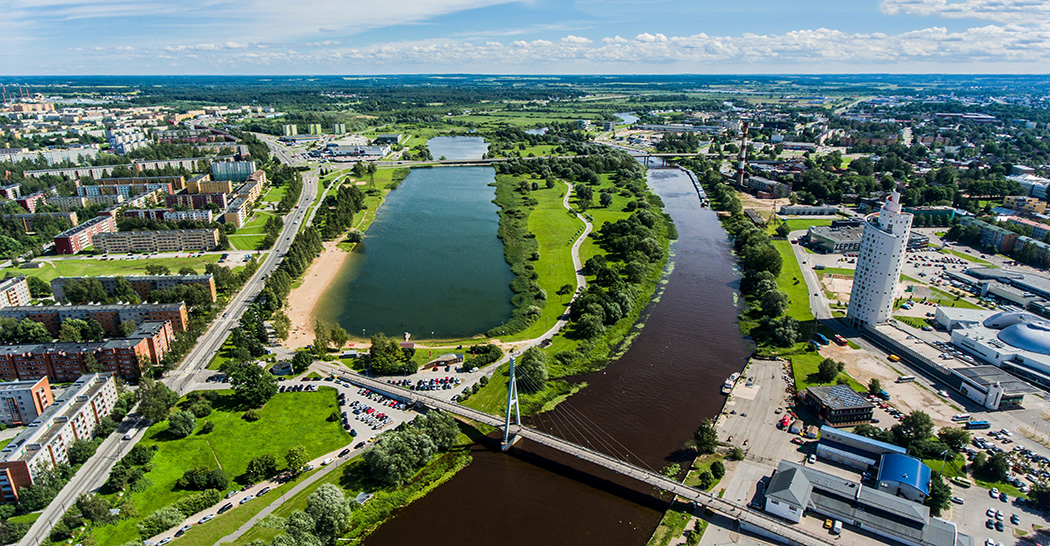
Between 1927 and 1933, Turku became the birthplace of the Functionalist movement of architecture. Its leading figure, Alvar Aalto, who designed 3 buildings in Turku that are considered prime examples of this style: the Maalaistentalo, the Turun Sanomat, and the Seurahuone. Turku made a commitment to ensuring that the city could be enjoyed by everyone, and this resulted in it being designated as the runner up in the Access City Award in 2011.
Turku is also known as Finland’s food capital because of its vibrant restaurant culture and its historically famous fish market.

Helsinki is a gem for architecture enthusiasts. The city houses one of the largest collections of Art Nouveau buildings in northern Europe, alongside a wide range of architectural styles like Modernist and Functionalism. Must-see locations include the Temppeliaukio Church with its underground structure excavated directly from solid rock and the Senate Square with its collection of 4 Neoclassical buildings designed by the German architect Carl Ludvig Engel. The city is easy for everyone to explore, as reflected in its status as a runner-up in the 2022 Access City Award.
On the coast of Helsinki sits the Suomenlinna Sea Fortress, a UNESCO World Heritage Site that is a prime example of European military architecture. Across the water lies the Seurasaari Open-Air Museum, that provides a snapshot of traditional Finnish life. The Kalevala, a deeply influential epic based on Karelian, Finnish and Ingrian folk poetry and rooted in European intellectual history, was awarded the European Heritage Label in 2023. The tale, compiled by Elias Lönnrot in 1849, contributed to Finnish nation-building and remains a symbol of national unity as well as the multi-layered identities of Europe.

Estonia’s second largest city, Tartu is known for its bohemian vibe and for being the key driver of Estonian scientific progress. Its architecture, particularly in the heritage-protected Old Town, is primarily designed in a classical style. In 2015, the Historic Ensemble of the University of Tartu was awarded the European Heritage Label for its impressive 19th-century architecture that reflects the European tradition in education. The city will hold the European Capital of Culture title in 2024, and its efforts to find practical solutions for residents and visitors with mobility and accessibility problems earned it the title of runner up in the Access City Award 2020. Don’t miss the Aparaaditehas (the Widget Factory), an old factory complex transformed since 2014 into a cultural hub, or the Estonian National Museum.The Historical Ensemble of the University of Tartu is uniquely situated both in the city and in the park, making it the perfect spot for a relaxing stroll. The campus was awarded the European Heritage Label in 2015 in recognition of its status as a beacon of progressive ideas and the European tradition in education.
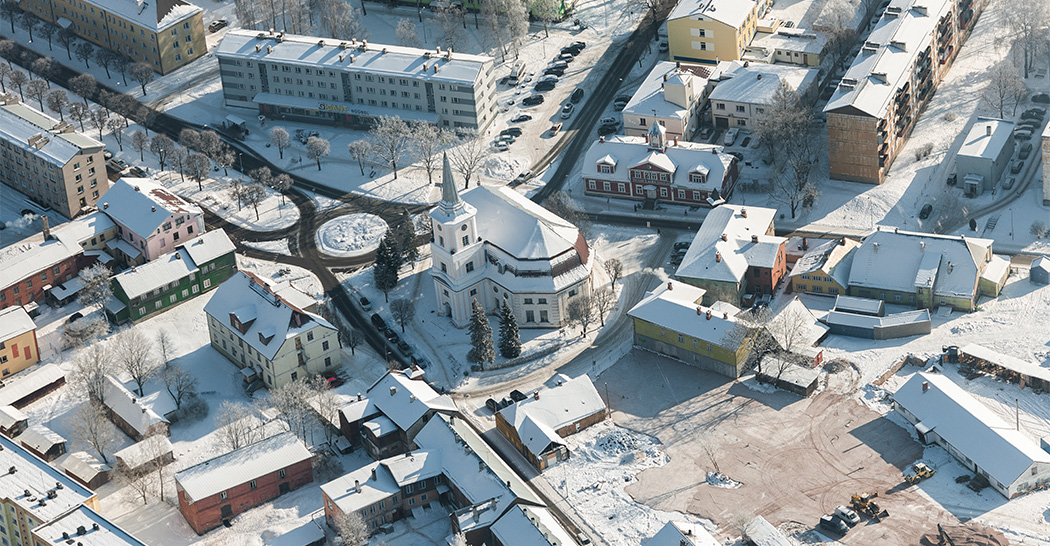
Valga is a town in southern Estonia, on the border with Latvia. The city’s Town Hall, built between 1864 and 1866, is one of the most outstanding examples of Late Classicism wooden architecture in Estonia. While here, visit the Valga Museum; its building dates to 1911 and it’s an example of late Art Nouveau. Its impressive façade is protected under heritage conservation.
From the top of Väike Munamägi Hill you can see the central square which is shared between Valga in Estonia and Valka in Latvia – half in one country and half in the other.
Riga boasts a collection of around 800 Art Nouveau buildings, making it the city with the highest concentration of Art Nouveau architecture in the world. Of particular interest are its historic centre, a UNESCO World Heritage Site since 1997, and The Three Brothers, the oldest housing complex in Riga and good example of Latvian historical preservation, a philosophy that began in Latvia during the inter-war period. Today, the Three Brothers are so culturally significant in the city that they have been awarded a European Heritage Label. Feeling peckish? Stop by the Central Market – one of the largest in Europe – and try some local delicacies such as smoked fish. In the old town, visit the quirky Bremen Town Musicians sculpture of 4 animals, based on the legendary fairy tale by the Brothers Grimm.

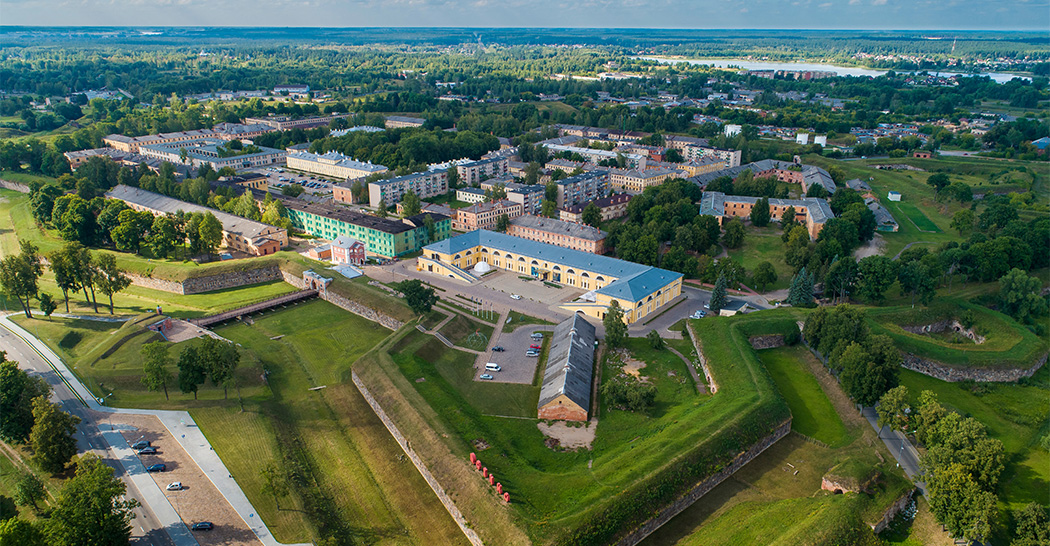
Daugavpils’ architectural landscape is distinct because of its abundance of red brick buildings, many of them designed by the city’s chief architect Willem Neumann. On Church Hill, you will find 4 churches standing side by side, each representing the 4 main religious denominations in the Latgale region of Latvia. Together they form an impressive architectural ensemble.
Located in the historic arsenal of Daugavpils Fortress, the Mark Rothko Art Centre is the only museum in Eastern Europe where you can find the painter’s original works.
Rich in culture, Kaunas won the European Heritage Label in 2014 for the 44 buildings that represent its 1919-1940 interwar architecture. It has also received a European Heritage Award for the restoration of its Former Ministers’ Cabinet and the title of UNESCO City of Design 2017. Kaunas is also one of the three European Capitals of Culture 2022.
Historically, the city has been one of the centres of Jewish heritage in Europe with Jewish people accounting for up to 40% of the city’s population in 1908. Today, this legacy can be seen in the Kaunas Synagogue, the Kaunas City Museum and the Vilna Gaon Museum of Jewish History. After a tour of the reservoir, head to the Naujamiestis (New Town) and Žaliakalnis districts to admire stunning modernist architecture and trace Kaunas’ transformation into a vibrant European capital. In 2014, Kaunas 1919-1940 was awarded the European Heritage Label in recognition of the city’s cultural significance. If you’re looking for a one-of-a-kind museum, you’re in the right place. Visit the Devil’s Museum, which contains more than 2,000 depictions of the devil from all over the world.

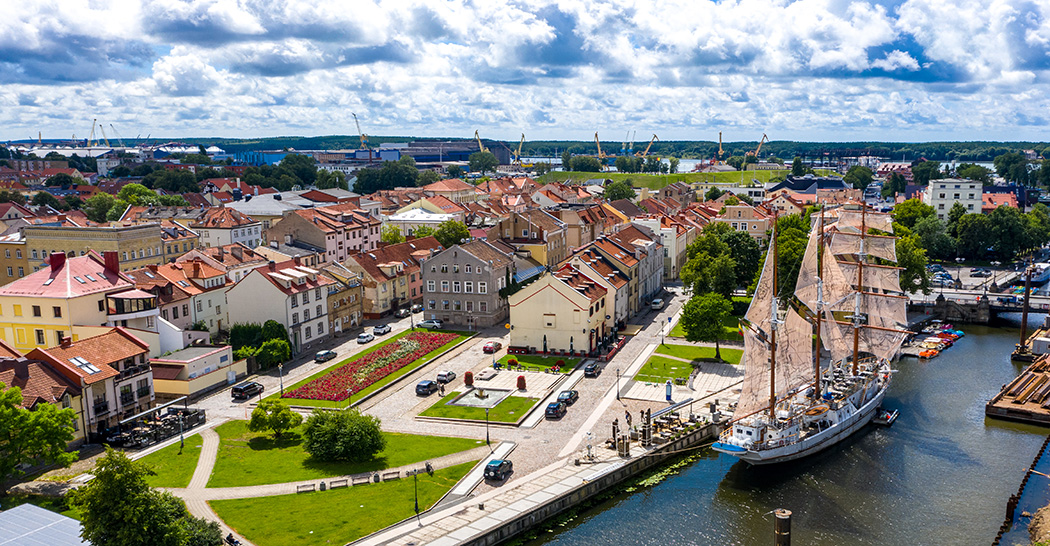
A visit to Klaipėda is never boring, with annual events such as the Klaipėda Music Spring, the Klaipėda Castle Jazz Festival and the International Festival of Street Theatre. Due to its German history, it has a distinct architectural style characterised by timber-framed buildings.
Klaipėda is a coastal city and Lithuania’s only major seaport. To soak up the maritime atmosphere, try some Kepta Duona, a Baltic fried black bread, aboard the Meridianas ship.