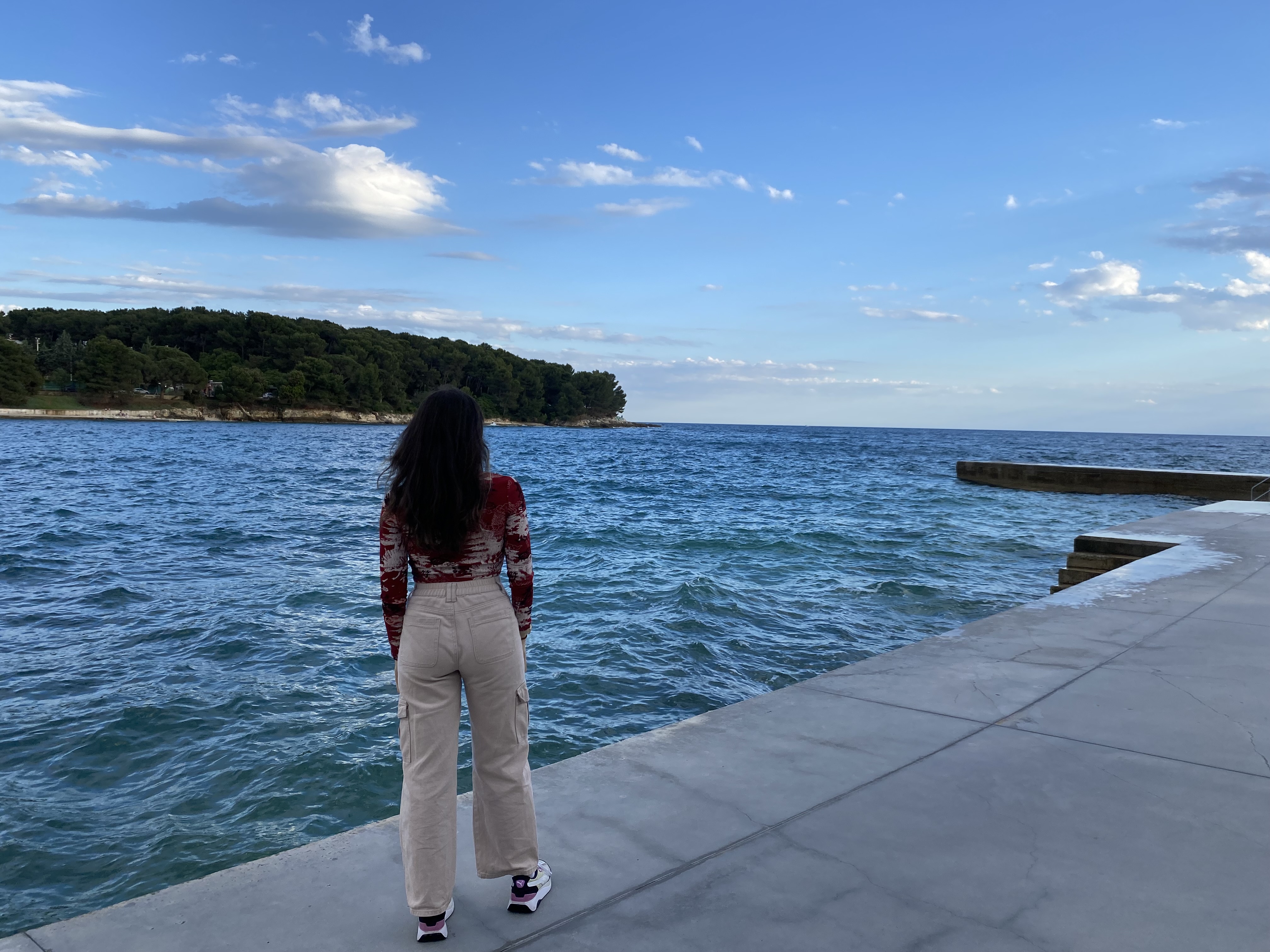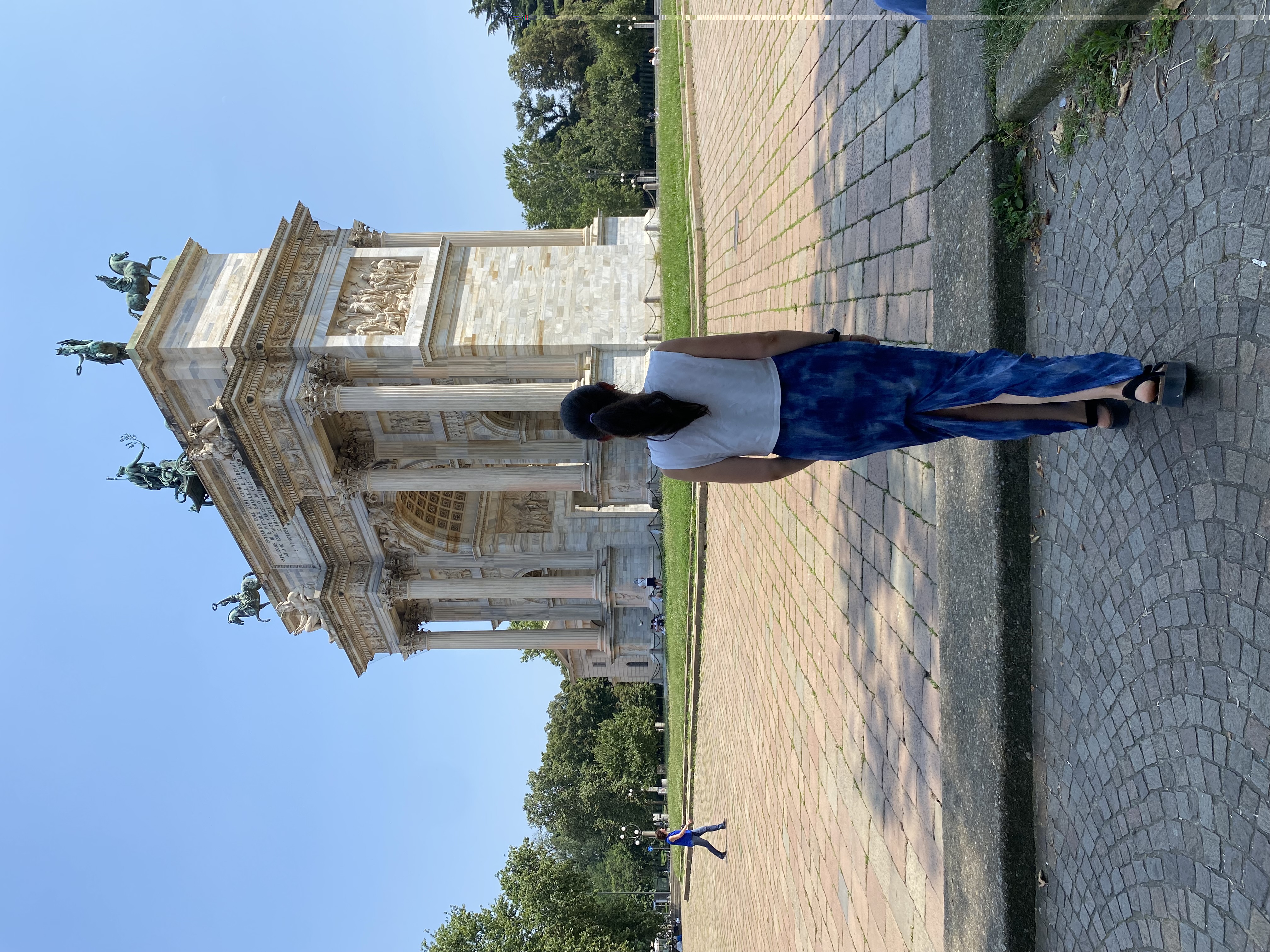

Adrian Cobo Garcia

Out of your comfort zone, you realize who you really are

Adrián, Croatia

Volunteering is not only a way to get out of your comfort zone, but also a way to acquire patience and empathy with yourself and others.

Hello to all of you who are reading this letter, first of all.

My experience as a volunteer stems from a particular aspiration: to give the best of myself to the community. Not only out of a sense that the world can be a better place where we are all integrated, with a better quality of life, addressing global and local challenges with a closer approach, but also to create a feeling of togetherness among the people we cohabit.

What often happens - at least what happened to me - is that one day you decide that your time is not just for money in your account but for you and your community. In a globalised world, your community is no longer just, what surrounds you in your neighbourhood or city but what happens globally. In addition, on a closer scale, what happens within the European Union is relevant to everything else.

You have to look for opportunities; they do not just appear out of nowhere. Thanks to the European body of solidarity, you can find the opportunities that are available to you. In my case, the search was not very long (relatively speaking, as I was on a three-month search), but it demanded dedication and seriousness in the process.

Luckily, for me, I found a project that matched what I was looking for to be able to do journalistic work in community projects. I also wanted to get out of my "habitat" and see other parts of the world, experience other cultures and get to know new realities. In doing so, I want to appreciate my culture and my way of being in a perspective that is less pigeonholed in what I have always lived. To sum it up, to see with different eyes the reality of Spain and of the community in which I live.

Since Mreža udruga Zagor I have had that opportunity because I have been able to get out of my comfort zone and my daily horizon by having the opportunity to live in Zabok. In the first days, everything was wonderful, strange and scary at the same time. This mixture of emotions is normal; they will be explained to you in the on-arrival training if you decide to join this adventure.

My search for volunteering was closely linked to the project and it was something I could relate to my working life. In my previous jobs, I have done radio, podcasts, online and print publications as well as office work. The volunteering project I am involved in encompasses all of these. Still, the adaptation is not so easy. It would be best if you always had time. To adapt to the organisation, the timetable, the way of working, the workload, the organisation chart or the social relations.

Volunteering is not only a way of getting out of your comfort zone, but also a way of acquiring patience and empathy with yourself and others.

In addition to the work and organisation, you have to adapt to living in a new location. By Spanish standards, Zabok is an average - in some places maybe even a big - village. In Croatia, it is a city and this has many positive aspects such as the fact that you have access to a multitude of services because you are in a city and have a direct connection to Zagreb. At the same time, it has its complications, because although it is a city, there are only 8,000 inhabitants, which limits the leisure options.

Even so, it is a very quiet place where people are very welcoming and have a very peaceful life and where you have plenty of options for trips and activities. Everyone - and you too if you decide to join the volunteer programme - will have moments of maximum integration and minimums. All complications are solved with time.
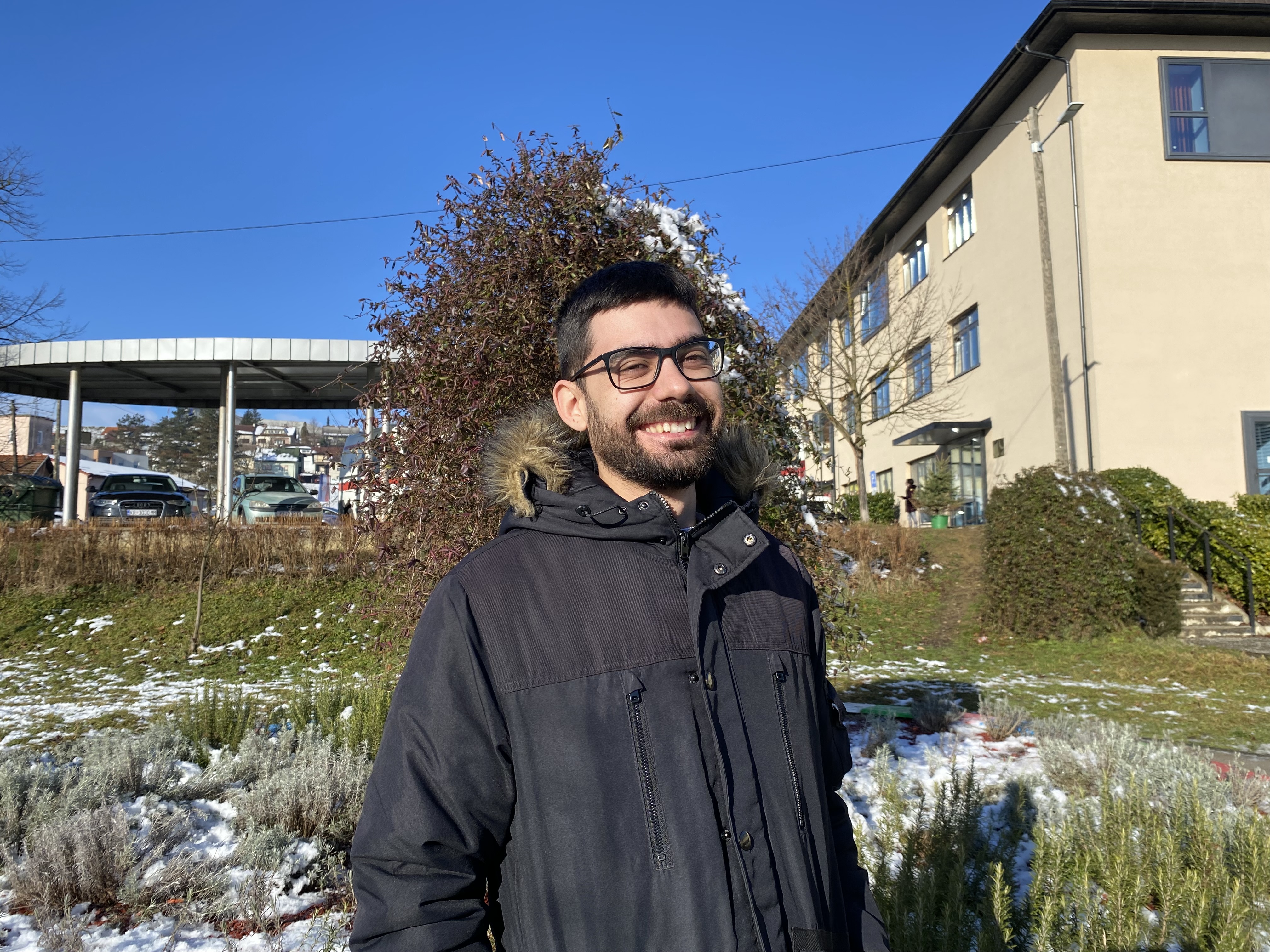
During the experience, you will experience all kinds of moments in which you will have to be prepared for everything. There will be situations that you will be able to solve on your own, and others you will not. That has happened to all of us, but you will have the people in your organisation, your mentor and your sending organisation. There is a support group around you, do not close in on yourself.

Leaving your country is an enriching experience. In these months, I have had the opportunity to get to know Croatia and other surrounding countries. It has also allowed me to meet people from other parts of the world, talk to them, and compare lifestyles and open perspectives and horizons.

Taking the step towards volunteering is a decision that requires meditation, but once you are sure - that moment will come eventually, with its difficulties, but it will come - you will see that it has been a decision that will change you. In my case, it has done so in many ways: I have tried new foods, I have seen other places, and other realities that have made me see my land from a different perspective, I have had to take risks with some things and they have helped me a lot with others. All this is a very superficial view of the experience, but people’s experience fills them in different ways.

What is clear to me is that I am not the same person who left Spain before starting the adventure and I will not be the same as when the adventure ends. During the process, you will tend to idealize the positive things that you experience or that happen to you and then be very hard on the negative.  With time you learn - or at least in my case - I have learned to be more balanced in my experience. Some things don't fit my lifestyle and others that do. However, this kind of dissonance has helped me to better understand the context of other cultures. It has also helped me to embrace the positive things in my culture better and criticize the negative aspects.

If you are thinking of joining the volunteer life, join. You will not regret it, but as the Croatians says: "Polako".

Adrian Cobo Garcia

Updated on Tuesday, 17/02/2026
Carmen Silvia Sanz Navas

The year of my metamorphosis

Carmen, Croatia

This year has made me recover my ambition and gain self-confidence, without a doubt it has changed my life and if I could go back, I would do it all over again in a heartbeat.

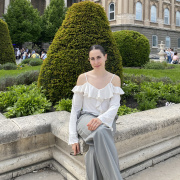
I am Carmen, a Spaniard with a degree in Audiovisual Communication who is still looking for her place in the world. From the point of view of more or less half of my volunteering, my experience has changed over time. It all starts from the moment you are accepted. In my case I was ecstatic, because I had been wanting a change in my life for a long time, and finally, all the efforts I put into looking for a volunteering materialized into the right opportunity for me. I left behind a job that was consuming me, I made an express move and it was one of the strangest and most stressful Christmas holidays of my life, but at all times the predominant feeling was joy and desire. I started to learn some Croatian basics and to research as much as possible the context I was going to find myself in, to make me aware that it was going to be something shocking and different from what I was used to, but in spite of this, the shock came all the same. I was lucky that my boyfriend, Adrian, would be my partner in this adventure. 

At the beginning I was in the honeymoon phase, where you go through when you move to another place, everything seemed better than in my country and I didn't notice what I found shocking in a negative way. I should also mention that I had a certain amount of tension and stress because of the fear of having any kind of confrontation or problem and not knowing Croatian and not being able to solve it. Without going any further, as a small anecdote, a dog bit me in the first few weeks; it didn't even pierce my shoe with its teeth, but the anxiety I suffered from all that is worth mentioning, because even to this day I am afraid of the dogs I meet running loose in Zabok and of walking through areas I haven't been to before or where there might be dogs. It was a time of emotional duality, when I was very sensitive, but I had a lot of support and understanding. Anyway, everything was exciting and challenging. About the volunteer work, we started with the creation of the magazine that we publish monthly and making a video presentation, I have to say that I reconnected with the audiovisual world, as in my previous job I didn't do anything related and I had forgotten how much I like writing and being creative. In February we went to the “On arrival training”, where we met other volunteers with whom we had a lot of connection. 

Gradually, there is a process of coming back to reality, in which you see the shocks clearly and you idealize your country of origin, nostalgia took hold of me a little. At the same time, I learned more Croatian and I lost my fear, I was adapting.  Also, the tasks in the organization became more diverse and numerous. Some of them involved going out of my comfort zone, which I am glad about with hindsight as they have been very useful for my learning and self-knowledge, not to mention the curriculum.

Nowadays, I can say that I am happy with my decision to come to this volunteering, I am getting to know a culture different from my own, travelling a lot and exploring many fields of work and meeting wonderful people from all over the world. I consider that I am adapted, I see objectively and simply accept what I used to compare with my previous context, either for better or for worse. It is probably one of the best years of my life and one that will undoubtedly mark a before and after in who I am, in fact I know myself better and I am starting to get clear on what I want and do not. How will this year end? What comes next? I have no idea, if it continues along the same lines, then I'm very excited about it and curious to find out. Obviously, the uncertainty of what I will do with my life after this period gives me some headaches, but I am learning to live today and worry less about what is to come, because the future does not exist and it is not worth it to stop enjoying the present, which is the only real thing. 

Carmen Silvia Sanz Navas

Updated on Tuesday, 17/02/2026
A woman in a light blue top and white skirt smiles with a shopping bag on a rooftop terrace. People are sitting at tables and the Acropolis is visible in the background under a clear sky.

A recipe for an unforgettable adventure

Inga, Iceland, Age 18

I've become very fond of trains, they definitely beat airplanes as a way of travelling.

If there's one thing I recommend, it's to broaden your horizons and go travelling in Europe. I had no idea what a big impact the sudden decision to apply for DiscoverEU would have on the following year. It wasn't until we were selected and suddenly the decision was made, my friends and I would all do a gap year after graduation and head to the mainland in September!

We decided to fly out to Athens and then home from Munich, and then the rest was to be pieced together as it got closer. A few weeks later, we went over our plans and then things got a bit complicated... There were almost no trains leaving Greece. But we were resourceful 18-year-old ladies, so we soon had a new plan: we were going to sail over to Italy! In retrospect, I think the sailing was the biggest challenge of the trip, and the 10-hour Superfast ferry was very cold! I would recommend people to bring a warm sleeping bag for that!

The entire trip was great fun and we have certainly added to our memory bank. We stayed in hostels and were able to use Airbnb (absolute genius if it comes with a washing machine) and managed to set foot in 12 cities in 23 days! We are undeniably more experienced after this trip, we got to know a diverse culture, new people and great food. I've also become very fond of trains; they definitely beat aeroplanes as a way of travelling.

Regardless of which cities are chosen and whether people choose to travel alone or in a group, I can confirm that DiscoverEU is in every way a recipe for an unforgettable adventure.

Updated on Tuesday, 17/02/2026
Portrait Virgil

A youth exchange in Czech nature

Virgil, Netherlands

I got a different perspective on life

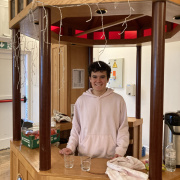
During this youth exchange we learned why and how to give young people more self-confidence by being in nature. Since I love walking in nature and volunteer for young people who need help, the theme of this exchange suited me well. The group consisted of 25 young people from Romania, the Czech Republic, Spain and the Netherlands, among others. 

Every day we practiced meditation and mindfulness, we did energizers and teambuilding assignments and went hiking in nature. We also prepared assignments for each other in groups. For example, we built a house with natural materials and then watched how the group interacted with each other and how people adapted to the group dynamics.

I still think about the hikes a lot. As we hiked through nature, you could talk to each other. For example, I talked to a Muslim boy. Through the conversations I learned a lot about his culture and got a different perspective on life.

Through this youth exchange, I also learned a lot about myself. That I can calm down and deal better with a group by giving people more space. After all, I am someone who likes to take charge, but I have now learned that sometimes I have too much influence. It is not necessary to take space to contribute something to the group.

Other young people should definitely go on youth exchange, because you learn a lot about yourself as well as about people from other countries. People may live in an environment where everything is different, but they are the same as you. It's just really worth doing a youth exchange.

Updated on Tuesday, 17/02/2026
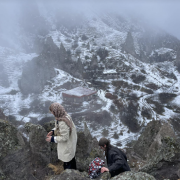
Thea in the mountains in Armenia

Thea in Armenia

Thea, Denmark

I was shown the definition of humanity

In April 2023, I traveled to Armenia to work as a volunteer for a humanitarian relief organization, the Diaconia Charitable Fund. It was a project I found through the European Solidarity Corps. Armenia was very unfamiliar to me, and I chose not to have any expectations about the country.

It turned out that I would completely fall in love with the country, the people, and my project as well.

My tasks involved packing relief packages with food and other necessities, distributing them in the villages, taking photos, writing reports on the living conditions of the poor, and teaching English and art.

It was always exciting to go to the villages to visit those we help. People are very poor in Armenia, so they were always very grateful when we brought them packages. I experienced that most people, despite their circumstances, are still very happy, grateful for what they have, and loving toward each other. It was always very life-affirming. The Armenian people are very hospitable, so there was always coffee and chocolate for us when we came. They may not have enough, but they always have enough for their guests. This is something I have taken to heart as well.

Diaconia Charitable Fund has built a village with around 65 houses where families can live for free. The village is called the Village of Hope, and it was there where I taught English and art. It was so fun being with my students, and they always taught me some words in Armenian. It became a bit of a language exchange. The children liked to touch my long blonde hair. It was a very loving workplace, and I really learned how important it is for us to help each other. I was shown the definition of humanity.

Along with 15 other volunteers from Europe, I lived in a kind of dormitory. It was incredibly fun and social. We often cooked together, enjoying meals in each other's company. During the weekdays, we played Monopoly and Catan or sat and chatted on our sofa. On Fridays, we went out together and danced on the Armenian dance floors until morning. We always had plans. It was my first time celebrating Christmas without my family, but it was still very cozy. We decorated our living room, prepared some gifts, and everyone made a bit of Christmas food from their home country. I made rice pudding. It was very special because we celebrate Christmas on December 24, but in Armenia, they celebrate Christmas on January 6. For their Christmas, I went to church and participated in the church's event. In the evening, I was invited to dinner at a colleague’s house. That’s the beauty of living in another country—you get to know their culture and traditions. It is important to participate in their traditions and to observe their culture rather than to judge it, even if there may be things that seem strange or different.

On weekends, I almost always went on trips around the country. Armenia has a mountainous landscape, so I often went hiking with some of my friends. The nature is breathtaking, and I never get tired of the sight of the mountains. Many have picnics there, and often, I’ve experienced people inviting us to join them. New friendships and good conversations arose from this. They are so open and hospitable. In the summer, we swam in waterfalls and by the lovely Lake Sevan. I have been to national parks and centuries-old churches. There is so much to see. Armenia truly is a hidden gem.

Sitting here in Denmark, writing about my amazing experience, fills me with nostalgia. It was a huge gift for me to be able to live in Armenia for an entire year and meet all the wonderful people who are now my friends. Armenia became my second home.

Updated on Tuesday, 17/02/2026

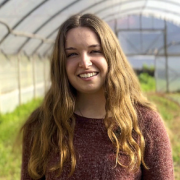
Smiling young woman with long hair in a maroon sweater stands in a greenhouse filled with plants.

Learning about life before university

Ida, Portugal, Age 19

Basically, I wanted to do something different after my school education. And I wanted to spend a year outside Germany without formally studying.

Ida Vogel is German, and at the age of 19, she moved to Portugal for six months to volunteer at an institution that cared for people with profound disabilities. “I left my country, my friends, and my family for half a year, and that represents a big change in my life, as I had never been alone,” she begins to explain to Blink. “Basically, I wanted to do something different after my school education. And I wanted to spend a year outside Germany without formally studying. Portugal came up because of the project involving care for people with disabilities.” The young German refers to the Association of Cerebral Palsy of Coimbra (APCC), explaining that “I wanted to be with people from whom I could learn something different and that school did not provide. But also because I want to study medicine, and I think this work is related, giving me skills that will be an advantage when I am in higher education.” Ida explains that life in Coimbra is very different from what she had in Germany, but that “after some time adapting, meeting people, and getting used to the language, I made friends, and everything became easier.” And she is not alone in this adventure, as, within the scope of the European Solidarity Corps, the institution received, along with the German, other young people from France and Turkey.

Updated on Tuesday, 17/02/2026

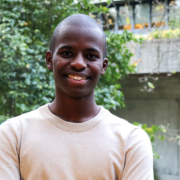
A person wearing a light-coloured sweater is smiling outdoors, with lush green trees and a building in the background.

Volunteering with Migrants in Norway

Rodrigo, Portugal, Age 18

First of all, I learned about Europe and European citizens and how we have so much in common, despite the various contrasts

Rodrigo is Portuguese, and at the age of 18, he travelled through Europe using a community programme called DiscoverEU, which covered his travel costs. In a few weeks, he visited Norway, England, France, Monaco, and Malta. Although the European Commission's idea is to provide train travel, flights are also available, especially to peripheral or ultraperipheral countries like Malta. “I started by flying to Malta and from Malta to Oslo, where I was involved in volunteer activities,” says Rodrigo, who attended the Mela Festivalen, a music festival focused on the culture brought by migrants living in the norwegian capital. “This allowed me to meet people from many countries, particularly migrants from Asia,” he says. This volunteer work experience turned out to be an opportunity for Non Formal Education for Rodrigo, who claims to have learned a lot. “First of all, I learned about Europe and European citizens and how we have so much in common, despite the various contrasts,” says the young man from Lisbon, for whom “the Scandinavian environment can be diverse, but the truth is that I realised that the European Union is a kind of de facto union, which made me feel at home.”

Updated on Tuesday, 17/02/2026

Roko Levar

DiscoverEU Green Route travel

Roko, Croatia, Age 24

You see, I'm not sure what the secret for happiness is, but I'm pretty sure it starts when you go outside. – Tom Rosenthal

After 30 days of continuous travel, my DiscoverEU Green Route has come to an end! I passed a total of eight countries and collected unforgettable moments in each of them!

My adventure began in the green city of Galway (Ireland), winner of the "European green leaf" award. The first part of the trip was extremely active, full of hiking, biking and foraging in the wild. However, by far my favorite memory of all is diving with seals!

From Brussels, I carry the memory of the European Youth Week and their strength as they advocate topics that matter to us in the European Parliament!

Both European green capitals I visited, Nijmegen and Essen, showed me the importance of community in making a city a green and healthy place to live.

I ended my trip by exploring the Natura 2000 area around the city of Brasov and learning the whole traditional process of making "amadou", an alternative leather material obtained from the Fomes fomentarius mushroom in a Romanian hamlet.

As a motivation to apply to DiscoverEU and expand your horizons, I would like to share a quote with you:
"You see, I'm not sure what the secret for happiness is, but I'm pretty sure it starts when you go outside." – Tom Rosenthal


Updated on Tuesday, 17/02/2026

Oskar from Germany

Exploring Ghent: Oskar’s Perspective on Youth Empowerment

Oskar, Germany, Age 19

What a difference from Stuttgart! There are hardly any cars here in the city centre, and you see bikes everywhere. I love it!

Oskar, a young and enthusiastic participant from Stuttgart, Germany, was thrilled to be a part of the youth exchange in Ghent. Organised by the Ghent European Youth Capital, this event brought together youth councils from Austria, Belgium, and Germany to share ideas, debate, and explore what Ghent has to offer.

For Oskar, the highlight was exploring the cultural and social landscape of Ghent, which left a lasting impression. “It was great to discover Ghent. There are so many cultural and social organizations here. So many different places for young people to just ‘be.’” The abundance of spaces dedicated to youth empowerment was unlike anything he had experienced in Stuttgart, where cars dominate the city landscape.

Particularly impressed by Broei, a youth hotspot in the city, Oskar admired how young people were the driving force behind the initiative. “If I were studying in Ghent, you’d find me there all the time!” His experience in Ghent has opened his eyes to the power of youth-driven social spaces, where culture, creativity, and connection flourish.

The international exchange was more than just a cultural immersion for Oskar—it inspired him to think deeply about the importance of youth participation and public space, showing how different countries foster unique environments for young people. 

Updated on Tuesday, 17/02/2026

Victoria from Austria

Victoria’s Journey Toward Political Empowerment in Ghent

Victoria, Austria, Age 23

Now I dare to think bigger and broader. Maybe join a political party? Thanks to this exchange, I definitely feel empowered to do more.

Victoria, a student of social work from Villach, Austria, found herself deeply inspired by the international youth exchange in Ghent. Passionate about human rights and social justice, she viewed this experience as an opportunity to connect with like-minded young people and explore new ways of making a difference.

Victoria was particularly fascinated by Belgium’s political system, something she knew little about before the exchange. “The conversations here motivate me to go home and pick up the political thread there,” she reflected. Having participated in demonstrations and served on her local youth council, Victoria was no stranger to activism. However, her time in Ghent broadened her horizons, sparking an interest in potentially joining a political party back home.

The highlight of her week was the exposure to Ghent’s approach to youth work, especially its efforts to empower young people with fewer opportunities. “The youth organisations here look for the people who are normally not so quick to participate in social or cultural activities and base the activities on their needs,” she said, deeply impressed by Ghent's inclusive approach.

Victoria left Ghent feeling more motivated than ever to take on a bigger role in her community, carrying the lessons learned back to Villach and hoping to inspire others to get involved in political and social change. 

Updated on Tuesday, 17/02/2026

Subscribe to