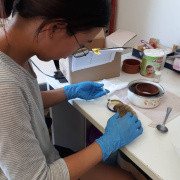
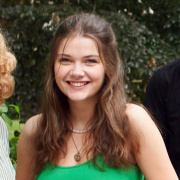
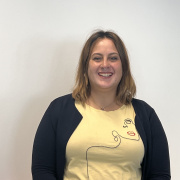
Portrait of Tereza Červeňová

Tereza Červeňová

Tereza, Slovakia, Age 30

Even in the moments of difficulty, there is somewhere a seed of life waiting to be grown.

Tereza Červeňová is a Slovakian artist based in London, working predominantly with analogue photography and film. (Co)creating on the intersection of personal, political, and poetic, she uses her work as a vessel to comprehend the world and honour those that guide her through it. She sees her practice as inherently collaborative as it engages with intimate, social, and civil relationships. Červeňová’s project June, conceived after the Brexit referendum in 2016, is a poignant commentary on the displacement of young people in Europe.  

You can have a look at her work on her website: www.terezacervenova.com and Instagram: @tereza_cervenova


Updated on Tuesday, 17/02/2026

DRASI

Volunteering in Action for Wildlife in Greece

Floor, Luxembourg, Age 20

When I finished High School in July 2021, I never thought that I would end up a year later in a wildlife care centre in Greece for two
months. But I did!! And let me tell you it was one of the most amazing experiences I ever had.

My project started in May 2021. I was on a plane heading to Thessaloniki, a city I was very curious about. I did some research on its history and I knew when I have a day-off I will be visiting the city. I went together with a girl named  Cheryl. We arrived late in the evening at the centre and went to bed. The next morning, we didn’t work yet as they wanted us to have some rest. In the afternoon, I had the chance to witness the release of a wild cat. For that, we had to drive quite a distance until we reached some mountains. It was a beautiful view. This whole experience was an adventure because the roads were not in a very good condition and the car I was in broke down right at the moment we were riding up a hill… It was my first taste of releasing an animal. We managed to get back to Drasi and the next day my first day of work started.


Working at the wildlife centre


My first working experience was the “outside shift”, cleaning the food bowls of the animals in the outside cages, preparing their food, and feeding them. Sofia the vet taught me how to enter cages carefully and how to put the food in the correct way. All the animals kept their distance and I was happy about that. Only the flamingo seemed to have no fears as it was waiting impatiently at the entry to be fed. It would even grab your shirt if you were taking too long in its opinion. I thought it was very funny as you could clearly see the character of an animal.


The first week I did the outside and the cleanings, which are very important to keep a certain workflow at Drasi. Something I had to get used to was the way the rooms inside were organized. At the beginning I called it “organized chaos” as I could not see any way of organisation of the stuff. But apparently there was and after some days I got hold of it. I am talking about the work bench, or the shelf with all the different plates and bowls. The longer you are there the better you will understand, trust me.


After a couple of weeks doing the outside shift, Sofia and Froso taught me gradually some stuff about the inside rooms as the big boxes and the hedgehogs. I really enjoyed doing them as they enable more contact with the animals. Especially crows seem to understand you. As you enter their box, they are waiting for you and there was one juvenile crow which, after you had put the newspaper in the box, would step on it. I had the impression it was trying to help me. But maybe this is my way of wishful thinking…


One day, Froso asked if I wanted to release a small bird. Of course I said yes! Holding such a small bird is quite frightening as I was afraid of squishing it. But Froso gave me good instructions. Everything went well and I was so happy to see the bird fly away.


Another thing I enjoyed so much was taking care of the hedgehogs. We had some babies and I was allowed to feed them with milk, afterwards with AD and then wet croquets and chicken. For me it was quite emotional to see how they grow so quickly. When they came in, they were smaller than my hand and after my two months stay, they were so big that it was nearly impossible to open the box without them trying to get out. Yes, I would definitely consider myself as a hedgehog fan now.


The work was inspiring in many ways and even though I am not going to study something in the medical field, I surely discovered my love for wildlife.


Living together with other volunteers


To speak frankly, this was the biggest challenge for me. Before Anastasia cleaned up the hallway the living space was a mess. Stuff everywhere… But now it looks nice after a great clean-up. The other thing I was shocked about was how other people keep the infrastructures clean. It took a while and some discussions until we set some clear boundaries of hygiene before I was at ease in the living space, and still, there are some things which bother me today. However, these things have nothing to do with how the Greek people approach them. It is up to the foreign volunteers to keep it clean and that seemed very difficult time by time…

The room I shared with others was always clean and after some redecorations I would say Cheryl and I had the best room. We even had a sofa and a nice wall painting.


The Greek people


I can just say one thing: they are so nice. Everyone I met greeted me with such kindness. Big thanks to everyone involved at Drasi: Penelope, Anastasia, Sofia the vet, Froso, Sofia the mentor, Vangelis, and many other volunteers I met during these 2 months.


I also want to thank my mentor for the Greek lessons. I learned that Greek is not the easiest language, but I must admit, the characters are so beautiful. I know some words and phrases, thus, enough to order a drink at a bar.


Especially the young volunteers I will remember forever. Even when the time was short, I would dare to say that I created some friendships at Drasi. Much love for Elena, Artemis, Pavlina, Ariana and of course Cheryl and Thomas.


Conclusion


My experience at Drasi enabled me to grow, to gain independence and changed for sure my outlook on life. It is something I will never forget. Certainly, I felt sometimes it was getting too much for me but then just close your eyes and go for it. In the end, everything will be fine. After two months, I am kind of a different person.


Drasi does an amazing job. We all know perfection doesn’t exist and of course there is always something to work on, but knowing how tight money always is, these people do an amazing job at taking care for wild animals which would die if nobody makes the effort of looking after them.

Updated on Tuesday, 17/02/2026

Picture of Nina

Taking part at the Youth Action Week in Strasbourg

Nina, Germany, Age 19

If the whole world would communicate and cooperate like we young people did during the Youth Action Week, we would be well on the best way to world peace.

I come from the beautiful capital Berlin and was a representative of the jugendBEIRAT (youth council) of the wannseeFORUM foundation at the Youth Action Week in Strasbourg at the Council of Europe. Together with young people from all member states of the Council of Europe, we discussed important topics such as human rights, youth participation and digitalisation. At the end of the week, in line with the 50th anniversary of the youth sector, the Council of Europe had 50 proposals for action on all 3 themes to revitalise democracy and youth participation.

I attended a workshop on the topic of "digitalisation". We addressed the issue of the extent to which society is aware of digital media and digital opportunities and that there is still a lot of room for improvement in this area, especially in Germany. We also talked about equal opportunities and which groups in society have access to digitalisation and which do not.

Besides the work in the workshops, a varied programme was offered by the Council of Europe. From cultural music evenings with a stage programme, artistic activities such as poetry slams, graffiti spraying, stamping and creative writing, to nice get-togethers in the Youth Centre and listening to ESC songs, to the big farewell dinner and the closing party, it was packed with everything.

I gained so much from this week: Through the exchange with members from other youth organisations, I was able to get good inspiration for my own organisation. Through the digitalisation workshop, I got many project ideas for the jugendBEIRAT, which we can hopefully implement in the future. But apart from a lot of new input regarding the understanding of democracy and youth participation, I especially take the interpersonal aspects back with me into my everyday life in Berlin! I met incredible people from all over Europe who gave me new perspectives on life and enabled me to think further than just the bubble I found myself in every day. And besides possible international cooperation organisations for the jugendBEIRAT, I have made friends for life.

If the whole world would communicate and cooperate like we young people did during the Youth Action Week, we would be on the best way to world peace.

It was a week I will never forget.

Updated on Tuesday, 17/02/2026

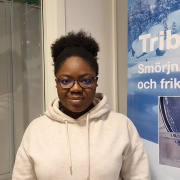
Seunnla Adelusi

Seunnla Adelusi

Seunnla, Sweden

Don't limit yourself, respective to what society tells you or the kind of restrictions they place around you. Don't limit your search for opportunities and pursuit them as strongly as you can.

Seunnla is a final year Master’s Student, under the TRIBOS Erasmus Programme. She holds a Bachelor's degree in Metallurgical & Materials Engineering, and she was awarded the Erasmus Scholarship in 2020. Seunnla is now rounding up her program in Sweden, studying and researching at the Luleå University of Technology. She is fascinated by sustainable engineering and hopes to pursue a career in R&D, creating solutions to environmental and energy problems using sustainable technology.

Updated on Tuesday, 17/02/2026

Senta Jevsenak

Senta Jevšenak

Senta, Slovenia

If you want to achieve your goals, you need to be confident, motivated and believe in yourself.

Senta is a youth worker at Youth Center Celje. She encouraged, mentored and supported young volunteers to develop and carry out their solidarity projects. During the Covid-19 lockdown, the Youth Center Celje provided daycare and learning assistance for children of parents working in the front lines of the epidemic. She was organising and mentoring the young volunteers working with children, and provided them with support. For her work with volunteers, she was awarded a national volunteering prize as the best mentor to volunteers in 2021.
 

Updated on Tuesday, 17/02/2026

Picture of Elisa.

My experiences on Erasmus+ and European Solidarity Corps

Elisa, Finland

I decided to get involved in international projects because I wanted to develop myself, get to know new cultures and improve my English.

Hi there! My name is Elisa. I am a student at the University of Helsinki. I study cultural research as my major subject and art history and French as my minors. I have been travelling with my family ever since I was very young, and this is why I have always been interested in travel and different cultures. However, I also wanted to travel independently and get to know other international young people. My friend introduced me to the Facebook account "Go international Villa Elba", through which I learned about the opportunities offered by EU youth programmes.

I recently turned 24, but I have been taking part in Erasmus+ youth exchanges across Europe since I was 15. On my first trip I travelled to Turin in Italy. I participated in a youth exchange with around twenty young people from other European countries, such as Poland and Spain. A youth exchange is a bit like an international camp, with the difference that young people are involved in planning it.

I decided to get involved in international projects because I wanted to develop myself, get to know new cultures and improve my English. Later as an adult I have participated in six-month Erasmus + exchanges through my university in Turkey and later in France. I believe that my experiences abroad have been useful to me in terms of my studies, future career and personal development.

In Italy, the camp's themes were recycling and the environment. We discussed these topics in groups and completed various exercises and workshops related to them. I must admit that I was not very familiar with recycling at the time, and I learned a lot about the importance of recycling and its consequences for the environment on this camp. In addition to the exercises, leisure activities were organised for us, and we toured the city of Turin. We visited museums and got to know each other. I travelled with two other Finns of my own age, and I still keep in touch with them.

My next international youth exchange of one week called 'Tower of Babylon' took place two years later in Belgium. On this exchange, too, I went out with four other Finns whom I did not know before the trip. In this project I was the team leader, which meant that I had to take care of various practical matters.  We lived in a camp centre in Oudenaarde, a municipality in the province of East Flanders. I shared a room with three other female participants.

The camp centre offered different outdoor activities, such as climbing, an obstacle course and paddling. One day, we spent an hour on an adventure trail that had various obstacles, and at the end we were all covered in mud. I will always remember the fun we had that time.

As part of the camp programme, we also paddled together to an island and built a tower with timber we had brought with us. If you did not want to or could not participate in the building work, you could negotiate a different job for yourself. You should remember that you will not be forced to do anything when you go on a youth exchange. You can always find some other task to do if necessary. In this situation, for example, some people did not want to go paddling, and they were given cleaning tasks or asked to help organise the following activities.

Another significant memory related to that trip was the 'international evening', which is usually part of every youth exchange. The idea of this event is that you bring some traditional foods from your country to it and share your culture with the others. It was my job as a team leader to make sure that each member of our group brought the agreed share of the food, such as salted liquorice and squeaky cheese. Before we went food shopping, we were given a budget for buying supplies. We also cooked together, for example Italian gnocchi. The camp focused on taking everyone into consideration, so we had vegan food on our shared meals. This is when I learned that vegan food can also be tasty.

About a year later, I volunteered for one month with the European Solidarity Corps in Greece. We worked in a small village called Krioneri one hour's drive from Athens. I remember how nervous I was about this trip because I had never lived on my own for such a long time before. But I am very pleased that I decided to go.

During the day, we worked outdoors at renovating a historical path and house, gardening and organising events. We also received a daily allowance that we used for travel and food during our leisure time. We got lunch and dinner every day, and we lived in a club house. We arranged an international evening here, too, and I made a traditional Finnish root vegetable salad for it. I prepared a talk on Finnish culture and history and gave it to the other project members and villagers.

I remember how nervous I was at first about living with strangers in a new environment. This project pushed me outside my comfort zone at times, which I felt was very good for me. Such experiences as cultural shocks as well as new environments and adapting to them are very much part of international exchanges. I also believe it was living together that helped me get to know the others very well and make lifelong friendships.

Video presentation on the voluntary project:

https://www.youtube.com/watch?v=9gnAtChQmys

The destination of my most recent, week-long youth exchange was a small city called Laguepie in France. The theme was groups belonging to sexual and gender minorities. The youth exchange also had participants from non-EU countries, such as Belarus, Turkey and Ukraine. In the club room, we talked about our personal experiences of LGBT people's rights in our countries and considered solutions to the problems faced by minorities.

During this youth exchange, we lived in a camp centre where I shared a room with a Ukrainian and Belarusian girl. We also chatted about our views of the camp’s themes in our free time. I had some very interesting discussions and made new friends.

In our free time we hitched lifts to nearby villages. It felt safe because the village community was very small and everyone knew each other. On this camp, I learned a lot about the experiences of minorities in different countries and also started to questioned my own views of minority issues in Finland. I also had a chance to use my French, which I had studied at school earlier.

I strongly believe that if you go on an exchange, you should enjoy travelling and everything new cultures have to offer as much as possible in your free time. I find that EU projects allow you to broaden your world view and, as you encounter cultural differences, understand your own culture better. I warmly recommend Erasmus+ and European Solidarity Corps projects to anyone who would like to learn about different cultures, make new friends and advance their personal development.

Updated on Tuesday, 17/02/2026

Isak vid utsikten

Volunteer in France

Isak, Sweden

I started browsing through old brochures, which I had collected throughout the years, and found one about an EU program for volunteers, called the European Solidarity Corps.

I started working at an elderly care home after high school, and even though I appreciated my work very much I knew that this was temporary work, while I searched for a way to get to a French-speaking country. Because there was no doubt I was going to go to such a country. I had studied French for six years and I was certainly not going to let this language be forgotten.

                           I started browsing through old brochures, which I had collected throughout the years, and found one about an EU program for volunteers, called the European Solidarity Corps. It said that all the costs would be covered: travel to and from the project, insurance, accommodation, money for food and even some pocket money. The idea was to enable young people at the age of 18-25 to go abroad and do voluntary work, without having to pay anything themselves. To me, it appeared to be too good to be true, but I went to the program’s website and realized that it was actually true.

                           The site itself was easy to use. I created a profile where I presented myself, uploaded a CV in English and then I could start applying for different projects. For each project I had to write a short motivation about why I wanted to volunteer in their project specifically. Normally I didn’t get any answer, but one day I got an email with an invitation to a digital interview from a small project in western France. At the time I had been home from work for several days, due to a covid infection and this email really cheered me up. We decided on a date and time for the interview and really tired, with high fever, I went to this interview, which later led to a 12 months stay in France.


Updated on Tuesday, 17/02/2026
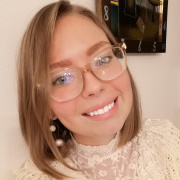
Portrait of Virginia

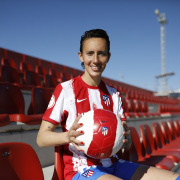
Virginia Torrecilla

Virginia, Spain, Age 27

Never give up, keep going. In the end that's what life is all about. Falling down, getting up, and looking up.

Virginia Torrecilla is a football player for the Atlético de Madrid Femenino. She is a midfielder and stands out for her quality with the ball at her feet and her tactical intelligence. She made her debut with the Spanish national team in 2013, participating in two European Championships and two World Cups. Virginia has become an example of self-improvement, having returned to the pitch on January 23, 2022 in the final of the Spanish Super Cup against Fútbol Club Barcelona. She has received numerous national and international distinctions and awards that certify her as a reference for all.


Updated on Tuesday, 17/02/2026
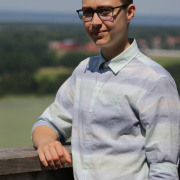
Portrait of Giuseppina

Giuseppina Tucci

Giuseppina, Belgium, Age 29

Europe gave me a chance to meet other powerful, incredible women. Other women leaders that helped me to feel more empowered to make a change and lead in a transformative way.

Giuseppina comes from Italy but is currently living in Brussels, where she works for the Organising Bureau of European School Student Unions (OBESSU), an organisation working to empower school students and defend students’ rights all over Europe. Giuseppina started being a school activist in her hometown when she was 14 and in 2009, through her first Erasmus youth exchange, got to learn about the power of European solidarity and Civil society thanks to the incredible women activists that she met and exchanged with.  


Updated on Tuesday, 17/02/2026
Subscribe to