
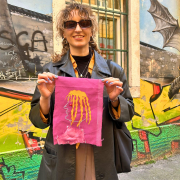
youth exchange participant with artistic canva

My experience on Erasmus + project Youth exchange „A Heart For Art“ in Rijeka, Croatia

Katarina, Croatia, Age 27

I strongly believe every young person should take part in Erasmus+ opportunities. These projects help overcome self-doubt, encourage openness and show that growth happens outside of comfort zones.

My name is Katarina and I come from Osijek, Croatia. I am a young creative person with a strong passion for art, design, and visual expression. My interests include fashion (especially vintage clothing), graphic and web design, photography, and astrology. Creativity is an important part of both my personal and professional life.
I applied for the Erasmus+ youth exchange “A Heart for Art” because I am strongly interested in how different art techniques can be used to boost creativity, self-expression, and the personal development of young people. The project’s focus on exploring various artistic methods and using art as a tool for learning and empowerment was especially relevant to me. I was also motivated by the opportunity to connect creativity with employability skills, such as communication, collaboration, and innovative thinking. I saw the project as a space where art is not only a form of expression, but also a way to develop competencies that are important for young people in their personal and professional lives.

The programme’s approach to using artistic activities as a bridge between youth work, creativity, and social connection was particularly inspiring and aligned with my interests. The most inspiring activities for me were portrait-making workshops and textile printing on T-shirts, as they helped me to explore different artistic techniques in a practical and creative way.

The project helped me develop new friendships and meaningful connections that I will continue to maintain. It also gave me the opportunity to explore Rijeka more deeply, especially its street art scene and cultural spaces. Through museum visits and artistic activities, I gained a new perspective on the city’s history and cultural development. The exchange also highlighted how art can be used as a powerful tool in youth work, encouraging creativity, expression, and intercultural learning among young people.

I will always remember the positive atmosphere, laughter, and creative energy during the workshops. The combination of humour, collaboration and artistic expression made the experience very inspiring and memorable.

Youth exchanges like this are important because they help young people develop confidence, especially in communication and foreign languages. They also encourage self-expression and allow participants to see how others perceive them through creativity, culture, and everyday interaction. Such experiences help build friendships, expand perspectives, and create opportunities to explore new cultures. Most importantly, they support personal growth and self-discovery.

I strongly believe every young person should take part in Erasmus+ opportunities, especially those who feel they lack space for creativity or self-expression in their daily lives. These projects help overcome self-doubt, encourage openness and show that growth happens outside of comfort zones.

Life is full of opportunities — and we should embrace them when they come.
 

Updated on Wednesday, 20/05/2026

volunteer playing sax

My experience on Erasumus + project Seminar Vibrant minds in Croatia

Ovidijus, Lithuania, Age 26

Projects like this are truly eye-opening. They offer young people the opportunity to experience different cultures and approaches while understanding that art is a universal language.

Hello! My name is Ovidijus Bacevičius, and I come from Panevėžys, Lithuania. After living abroad for seven years, I returned home with the goal of contributing to the development of local culture. I currently work in the nearby town of Kupiškis at the Culture Center as a cultural event organizer. I am particularly passionate about ethno-culture, playing the traditional instrument kanklės, and I am the founder and leader of the Ancient Baltic religious association “Romuva” in Panevėžys – “Skaistakalnio Romuva”.

As someone working in the cultural sector, I am constantly looking for innovative ways to engage young people. I applied for the Erasmus+ seminar “Vibrant Minds” to explore how art can be used as a transformative and educational tool in youth work. My goal was to gain new creative methods that I could later apply in my professional work in Kupiškis, as well as in my everyday life.
One of the most inspiring experiences for me was visiting the Dječja kuća cultural center and learning about their community-based projects. I was also deeply impressed by the Opera in Rijeka, which presented a unique combination of modern expression and traditional culture. It was a style I had never experienced before and showed the diversity of artistic approaches present in the city.
The seminar provided me with many practical tools and ideas, especially through visits to local organizations such as Vijeće mladih Benčić and Riperaj. I learned how sustainable practices, including upcycling, can be successfully integrated into artistic workshops for young people.

Additionally, meeting youth workers from across Europe gave me a strong boost of inspiration and motivation. The exchange of ideas, experiences, and perspectives was incredibly valuable for my personal and professional growth.
I will always remember the unique atmosphere of youth club Palach in Rijeka and the strong sense of community we created there. While Rijeka itself was inspiring, the most meaningful part of the experience was building genuine connections with other participants and realizing that we share common values, regardless of our different backgrounds.

Projects like this are truly eye-opening. They offer young people the opportunity to experience different cultures and approaches while understanding that art is a universal language. They also help build confidence, encourage creativity, and push participants beyond their comfort zones.

My advice to young people is simple: don’t hesitate – just apply. Take the opportunity to travel, explore, and learn. Most importantly, bring that energy and inspiration back to your own community. Your local environment can grow and evolve through your experiences.
 

Updated on Monday, 10/08/2026

Eva

Breaking Out of the Bubble: How an Erasmus+ Project Helped Me Grow

Eva, Latvia, Age 15

I was also inspired by the idea of shared experiences and building new connections. I enjoy being part of an active youth environment where people can exchange ideas, create something new together, and realise that we all have the power to influence what happens around us and suggest meaningful improvements

I was part of the team behind the Erasmus+ Youth participation project “Outside the Bubble”. During the project, my role was to create podcasts, and I recorded two out of the four podcast episodes we produced in total. Alongside that, I also worked on scripts, organised a team bonding event, and helped coordinate communication workshops.

This project gave me the opportunity to challenge myself, meet new people, and gain experience in a variety of situations. Through the project, we created podcasts designed to encourage participants to step outside their comfort zones. Our goal was to “burst” information bubbles and promote communication between young people and decision-makers in the Jelgava region through discussions and small icebreaker activities during the podcast recordings.

Throughout the activities, I learned a lot about adapting quickly to different situations and further developed my communication skills. I also realised how important it is to listen to different opinions and work effectively as a team, even when it initially seems like everyone has completely different experiences, beliefs, ideas, and perspectives. In the end, it is always possible to find a shared solution that works for everyone.

What motivated me to join the project was a visit to the Ozolnieki Youth Centre together with young people from Līvbērze, where I first learned that it was possible to write and submit project ideas ourselves — as long as we were willing to bring those ideas to life. We wanted to step outside our usual environment and meet new people with different perspectives on life. I realised this would not only be an opportunity to socialise, but also to test myself and my ability to adapt to changing activities and different ideas, while becoming more open to collaborating with a wide range of people.

Another important reason for joining was my wish to improve my communication skills and become more confident when speaking to strangers and expressing my thoughts. Before this project, I often felt that I lacked confidence when speaking in front of larger groups or taking part in discussions, especially with people who had different opinions or who were older and only saw me as “just a young person”. This project felt like a safe environment where I could finally try to overcome those fears, especially because everyone in the Jelgava region felt familiar and approachable.

I was also inspired by the idea of shared experiences and building new connections. I enjoy being part of an active youth environment where people can exchange ideas, create something new together, and realise that we all have the power to influence what happens around us and suggest meaningful improvements.

Of course, I also simply wanted to experience something new and step outside my comfort zone. Now I can confidently say that joining this project was one of the best decisions I have ever made, because the experience gave me far more than I had expected.

My favourite memory from the project is the moment when the whole team came together for the first time to discuss the ideas we wanted to include in the project. Another unforgettable moment was when we received the news that the project had been approved and gathered together again to celebrate. Those moments of coming together as a team are the memories that will stay with me the longest. There were also situations where we had to compromise and find common ground, and in its own way, that was exciting too.

To other young people, I would absolutely recommend trying to take part in a project. If you see an activity, opportunity, or poster looking for young participants — go for it! You never know what opportunities it may open up for you afterwards. Experiences like these help you discover yourself, develop new skills, and build valuable friendships. The real opportunities begin outside our own bubbles.

For more information about Erasmus+ the click here.

Updated on Wednesday, 20/05/2026
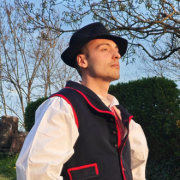
Evelina in Paris

DiscoverEU: Two Weeks, Countless Adventures, and a Journey Towards Independence

Evelīna, Latvia, Age 19

During DiscoverEU, I definitely became more independent and self-confident. It was the first trip where I had been away from home and abroad without my parents for such a long time. I had to learn to rely on myself and trust that I was making the right decisions.

I went on a DiscoverEU trip together with a friend of mine. We travelled around Europe by train, visited famous landmarks, and met lots of fellow travellers along the way. At first, we thought we would get to know more local people, but in reality we mostly connected with other travellers. We travelled for around two weeks, and it was an amazing experience overall.

In France, we saw the Eiffel Tower, admired the Louvre Museum from the outside, and also visited Disneyland, where the European Youth Card gave us a really good discount on the entrance fee. In Ireland, we went to see the famous cliffs and, although the weather was not on our side, we can still proudly say we have been there. Afterwards, we made our way to Dublin by taking a bit of a detour. In Italy, we arrived in Naples, stayed overnight near Sorrento, and visited Amalfi, which was absolutely beautiful. We then travelled to Rome to see the Colosseum, the Pantheon, the Trevi Fountain, and many other famous sights. I would definitely love to return to Rome one day because we did not have enough time to see and do everything — it is such a huge city. On our way back, we also visited the Leaning Tower of Pisa. I was surprised by how much smaller it was than I had expected.

One of the adventures I remember most happened in Paris after our trip to Disneyland. It was late, we were exhausted and not paying enough attention, so we boarded the wrong bus. When we reached the final stop, we realised we were on completely the wrong side of Paris. Although the bus number was correct, we had travelled in the opposite direction. The bus driver was incredibly kind and, using Google Translate to communicate with us, offered to drive us all the way across the city after finishing his shift — a journey of more than an hour.

During DiscoverEU, I definitely became more independent and self-confident. It was the first trip where I had been away from home and abroad without my parents for such a long time. I had to learn to rely on myself and trust that I was making the right decisions.

I also learned how to communicate more confidently with strangers because, when you are in a completely unfamiliar environment and do not know where to go or what to do, you naturally end up asking people for help or advice. I improved my planning and organisational skills too, as I had to create travel routes and daily plans, as well as manage my finances and resources both before and during the trip.

Even before this experience, I used to keep an eye on different opportunities for young people, such as Erasmus+ projects and similar programmes. That is how I discovered DiscoverEU and the chance to apply for travel passes. What motivated me to apply was the feeling that it could become a truly unique and unforgettable experience.

I have countless memories from the trip, but one of my favourites is our very first evening in Dublin. When we arrived at the hostel, we saw an announcement about a guided tour around different local entertainment spots and bars, where a guide would take participants around and tell stories about each place. We decided not to sign up for the tour and instead went to one of the bars on our own. There, we noticed lots of people wearing wristbands and realised they were actually the people from that same tour. They invited us to join them for free. So, instead of spending our first evening alone, we ended up surrounded by fun and friendly people, and I tried silent disco for the first time — which turned out to be much more enjoyable than I had expected. The following day, we spent a bit more time with some of the people we had met the night before and explored the city together. We stayed in Dublin for two days.

This trip was a huge adventure filled with challenges. Probably the biggest challenge was the language barrier because I travelled with a girl I had only known for a few months. We had met during another Erasmus+ project, and she was from Greece, so the trip became a real-life lesson in intercultural communication in an unfamiliar environment. At times, it was also difficult to navigate because the GPS did not always work properly. Our planned route was quite intense, so we could not slowly wander around the towns and cities as much as we would have liked. We often had to rush in order to catch the next train and make it to the next hostel on time. Throughout the journey, we developed our communication skills — both with each other and with other people — and greatly improved our practical navigation skills as well.

To other young people who are thinking about taking advantage of youth mobility opportunities, I would absolutely encourage them to go for it and make the most of what is available. It can be an incredible experience that helps you grow as a person and gives you the chance to meet so many wonderful people. I would also recommend taking part in any preparation sessions or activities if they are offered. Unfortunately, I could not attend them myself because we left before the training dates, but looking back now, I think they would have been very useful.

For more information about the DiscoverEU click here.

Updated on Wednesday, 20/05/2026
volunteer standing in front of a camera

How a Spaniard became a Zagorec?

Hugo, Croatia, Age 23

I never imagined that speaking Croatian would take me to television.

My name is Hugo Stokic Trkulja, I am 23 years old, I am from Spain, and I am an ESC volunteer in Zabok, Croatia. This whole adventure started with one clear idea: I wanted to live a different experience, improve my English, and discover more of the world. What better way to do it than by moving to a country I had already visited several times before? At first, I felt a bit scared because it was my first time living away from home, without my family, and having to become independent with the basics of everyday life. I only had one small advantage: the Croatian language, which I actually speak better than English. Why? Because my mother was born in Tuzla, and I have family both in Bosnia and Croatia. I spent part of my childhood here, and I have always remembered these places as the places where I felt happiest. That is why I wanted to come here, live a different experience, and learn new things. 

My volunteering project started in February 2026 and will finish in November of the same year. I share this experience with my Italian teammate, Daniele, whom I had never met before, but with whom I quickly built a great friendship. Honestly, I could not be happier with the team we have all created together. In our organisation, Mreža udruga Zagor, they take great care of us, and from the very first moment we never lacked anything. I truly believe we have built a very strong relationship. In our daily routine, we work during the mornings from Monday to Friday, which means we have afternoons and weekends free to do whatever we want. And honestly, we make great use of that time. We have travelled around Croatia, and our team has really made an effort to show us many beautiful places. In my free time, for example, I also go to the gym near my house. Even in such a short time, I already feel like I have built a home here. Of course, I miss my family a lot, my pets, and especially my mother, who is very happy that I am living this experience here — especially after all the things that have happened to us, things that had never happened before with volunteers. Honestly, I never imagined that speaking Croatian would take me to television. I still remember my arrival feeling very nervous. At the airport, late at night, Marija and Ivana were waiting for me, holding a small sign on a phone that said “Hugo.” The moment I saw it, together with the huge smiles on both of their faces, all my nerves disappeared.

During this time, many things have happened. I have learned a lot, both personally and professionally. We have taken part in activities, I have given talks, and I have shared part of my culture from Spain. But nobody told us that one day we would suddenly appear on the front page of the “Zagorski list” newspaper and across two full pages inside it. It had such a huge impact because the last thing people expected was for a Spanish guy and an Italian guy to speak Croatian. Yes — we both speak Croatian! And honestly, I never expected my teammate to speak it too, which makes things much easier for me because one of the reasons I came here was to improve my English. Just when we thought everything ended there, during our second month we were contacted to appear on television on “RTL Direkt”. More recently, we were contacted again by another very well-known Croatian TV show called “Kod nas doma” on HRT television.

 I am extremely happy with the way we have been welcomed here, and I would absolutely recommend everyone to live an experience like this. If you are reading this and thinking about doing a volunteering project related to something you enjoy, there are so many opportunities available, both short-term and long-term. Do it without fear, because life only happens once. It is better to live with a “remember when” than with a “what if.” I came here feeling scared, and without a doubt, now I could see myself living in Croatia permanently.
 

Updated on Monday, 10/08/2026

volunteer in traditional costume

What is an Italian doing in Zagorje?

Daniele, Croatia, Age 26

Does it make sense to leave the (apparently) prosperous and (relatively) cosmopolitan city of Bologna for Zabok, a small town of 8,5 thousand inhabitants in Krapina-Zagorje County, Croatia, to volunteer in a youth associations network? As counterintuitive as it might sound, it absolutely does.

Picture this: you are a 26-year-old Italian from Bologna, Italy. You have graduated from university almost two years ago but, as it is not too uncommon in the Italian post-university life, you are struggling to find a career path which a) bears some sort of relevance to your studies; b) allows you to get a roof over your head and food on the table; and c) feels at least somewhat rewarding and fulfilling. Does it make sense to leave the (apparently) prosperous and (relatively) cosmopolitan city of Bologna for Zabok, a small town of 8,5 thousand inhabitants in Krapina-Zagorje County, Croatia, to volunteer in a youth associations network? 
As counterintuitive as it might sound, it absolutely does. 


What started as just an idea to improve my Croatian-speaking skills for “professional purposes”, turned out to be an experience which not only is truly enjoyable and enriching, but it is also teaching me a good number of valuable skills which is making me reconsider my approach to creating a future for myself. The best part about this? I found out about this possibility just because a friend randomly sent me the link to the ESC project page on WhatsApp.


At Mreža udruga Zagor (that's the name of the association), I have been put in charge of the association's magazine, Mla-dost.dobro: as Editor in Chief, I write articles, edit and select contribution from other authors, and take care of layout and graphic design elements.
I am furthermore in charge of photographing the association's workshops and activities: photography has always been a huge passion of mine, which I had sadly put aside due to life circumstances, but now, thanks to the magazine and my documentation activities, I have been given a great chance to pick up my camera again and greatly improve my composition and editing skills. 


As for life outside of the office? Volunteering away from the big cities in a smaller, quasi-rural reality might for some seem discouraging, but certainly has its positives sides. Having already had my “big city experience“ in Zagreb during my Erasmus semester in university, coming to a smaller community like Zabok allowed me to get a more authentic Croatian experience. Gone are the long-tram journeys, the big events tailored for international audiences, the comfortable yet inauthentic “Erasmus bubble”: here, you get a real window into Croatial lifestyle, and get first-hand experience of the unfiltered beauty of its customs and traditions through your everyday interactions with people. And the nature? Just wonderful: there is a reason the hills here are known as the Zagorje Zelene (“Zagorje Greens“).


The experience does not, of course, come without its hardships.As my volunteering partner (Hugo, from Spain) does not speak English all that well but, much like me, speaks Croatian somewhat decently, I found myself in a situation in which both at home and at work I exclusively speak Croatian: misunderstandings are frequent, you kind of miss the capacity for self-expression you have in a language you are more comfortable with and, after a whole day of speaking in a language you are not particularly fluent in, your head hurts a bit. However, carrying on through the hardships of being in a culture you are not yet fully familiar instead of segregating yourself in an English-speaking bubble opens doors which would be inaccessible otherwise, and at least here in Croatia is reciprocated with great warmth and respect from the locals. 
Much to my amazement (or should I say: confusion?) I and Hugo have also been on national television twice in the first three months alone, basically for just existing and trying our best to speak Croatian in Zagorje. Imagine hearing the host of a very popular transmission announcing the show's very serious reports, ranging from fuel prices skyrocketing due to the conflict in Iran to alerts due to incoming storms, to then finish with “what are an Italian and a Spainard doing in Zagorje?“ 


Overall, I would truly recommend volunteering in a smaller reality such as Zabok to those who to get an authentic experience of life in a given country and are committed to learning its language and culture. I am extremely satisfied with mine, and, without specific expectations, I am looking forward to what the following months have in store for me.
 

Updated on Tuesday, 19/05/2026

Foto Matteo Vivenzi

My commitment to youth participation

Matteo, Italy, Age 23

As a young person, I wanted to give voice to my peers, creating meaningful opportunities for young people to be heard, involved, and represented within local institutions

Hi, I’m Matteo Vivenzi, Councillor for Youth Policies and project coordinator for the Municipality of Sarezzo, Italy, and I’d like to share the path that inspired my commitment to youth participation.

When I began my administrative mandate, I did so with a clear goal: as a young person, I wanted to give voice to my peers and fellow citizens, creating meaningful opportunities for young people to be heard, involved, and represented within local institutions. I strongly believe that young generations should play an active role in shaping the present and future of their communities.

Thanks to the Eurodesk centre present in my town, I became aware of valuable opportunities offered through the Erasmus+ programme, which opened the door for me to deepen my understanding of youth participation and active citizenship beyond the local context.

This is what led me to take part in the SNAC Democracy Reloading. SNAC, which stands for Strategic National Agencies Cooperation, is a form of strategic cooperation activity between European National Agencies within the Erasmus+ framework. These initiatives are created to encourage collaboration, exchange of best practices, and shared learning among participants from different countries on key topics such as youth participation, democratic engagement, and social inclusion.

Through Democracy Reloading, I had the opportunity to explore innovative approaches to democratic participation, exchange ideas with international professionals and young leaders, and reflect on how local institutions can better create authentic spaces for dialogue made by young people, for young people.

This experience further strengthened my commitment not only to promote youth discussion tables and participatory spaces in Sarezzo, where ideas, needs, and proposals from younger generations can become real actions for the community, but also to continue supporting the UNICEF accreditation process for Sarezzo as a Child Friendly City: a city that is truly committed to the rights, wellbeing, and active participation of children and adolescents.

Updated on Tuesday, 12/05/2026

Erasmus+ student posing on the city square

Paris through Erasmus+: a journey that changes your view of the world

Gabrijela, Croatia, Age 23

Money comes and goes, but experiences and memories remain a lasting value.

I applied for the Erasmus+ mobility programme because I had dreamed of studying abroad since childhood. Although many people thought it was just a passing idea, I decided to take advantage of the opportunity offered during my studies. I see mobility as an important part of my educational journey, as it enriches me as a person. Through travelling, we encounter different cultures, values, and perspectives, which makes this experience truly unique.

Arriving in France was filled with excitement, but also a sense of uncertainty. Although I had often heard warnings about Paris being a challenging and unsafe city, I quickly realised that every place has its own challenges as well as its beauty. My journey began with my departure from Zagreb, and I especially remember the breathtaking view of the Alps during the flight. After arriving in Bagneux, the first moments of independence brought a slight feeling of unease, but within a few days, and with the help of new acquaintances, I quickly adapted. In a short time, I got to know the city, its transport system, and its way of life, and I began to feel at home.
During my stay in Paris, I met many people from all over the world. Different cultures, languages, and stories came together to create an unforgettable experience, and these friendships truly defined my time there. I did not see cultural differences as obstacles, but rather as opportunities for learning and personal growth.

France impressed me with its strong appreciation for culture and a lifestyle that emphasises a balance between work and leisure. Paris, in particular, inspired me—with its energy, art, and atmosphere, encouraging me to become a better version of myself every day. Although I did not have the chance to explore the entire country as much as I would have liked, the city gave me countless unforgettable moments and many reasons to return.

Some of my most memorable experiences include events such as Paris Fashion Week, visits to the Louvre, trips to places connected with famous artists, and everyday walks and gatherings with friends. Simple moments, like picnics or evening conversations, turned out to be the most valuable. Every day was different and special in its own way.

My daily life in Paris was a combination of academic responsibilities and exploring the city. My days usually started with working on assignments, followed by classes and time spent at the university, along with inevitable visits to Parisian bakeries. I used my free time for walks, finding inspiration, and socialising, while evenings were often reserved for shared moments with my housemates.
This experience had a significant impact on both my personal and academic development. I learned how to live independently, manage my time and finances, and adapt to new situations. I also had the opportunity to experience a different educational system and develop creative thinking through project-based work. Although it was challenging to balance responsibilities at two institutions, the support of professors and colleagues was extremely important.

Overall, I would rate this experience very positively, with some room for minor improvements in organisation. However, my independence and persistence played a key role in making the experience successful and fulfilling.

To students considering the Erasmus+ program, I would advise them to gather information in advance, stay organised, and be brave and open to new experiences. It is important to stay true to yourself and believe in your abilities, because with good preparation, everything becomes easier.

I believe that everyone should experience mobility at least once during their studies. It is a unique opportunity for personal growth, exploring the world, and creating memories that last a lifetime. Although it may seem financially demanding, what you gain in return far outweighs the cost. Money comes and goes, but experiences and memories remain a lasting value.
 

Updated on Thursday, 07/05/2026

Portrait of Gilles

Changing a habit means changing your life

Gilles, France

We are the ones who benefit most from our commitments

Let me introduce myself: I’m Gilles. I’ve always dreamed of going abroad, without really knowing what it actually meant. That desire probably came from my family and friends, or even from friends I hadn’t met yet.

When I heard about the Erasmus+ programme, it was a revelation: how had I managed to miss out on such opportunities all these years? Without wasting any time, I plucked up my courage and decided to embrace the adventure... And so I set off for two weeks in Hungary, then in Spain, surrounded by strangers who quickly became acquaintances and, for some, true friends.

These trips and encounters have allowed me to discover myself. I have often heard, particularly from the people I met in Spain, that every person we come across is a piece of the puzzle that makes up who we are. Today, I am convinced of this. Every experience, every interaction, every thought helps to shape the person I am...

I sometimes think back to the 18-year-old Gilles, who’s dreams were limited by what he thought was possible for him. Those trips shattered my filter bubble and made me realise that many things are far more accessible than we think, if we have the right information and support. Today, I realise that the environment I grew up in gave me access to these opportunities. My sincerest hope is that they might also reach those who, like me in the past, could not even have imagined that such opportunities existed.

I have learnt a lot. I had the opportunity to practise several languages, such as English, Spanish and Portuguese. Furthermore, I discovered the value of international friendships and the challenges faced by young people across Europe. I came to understand the differences between our societies, but above all, what deeply unites us as human beings.

Today, the map of Europe has become, for me, a map of memories and friendships, where every country is linked to a story, an anecdote and a person.

It’s not just a change of perspective; it’s much more than that. But you have to experience it to understand it. Now it’s your turn.
 

Updated on Monday, 11/05/2026

Erasmus+ participant

My Erasmus Experience in the Netherlands

Zrinka, Croatia, Age 19

You gain new knowledge, meet amazing people, and create unforgettable memories that will stay with you for a lifetime.

I had the opportunity to participate in an Erasmus+ program from July 25th to August 8th, 2025, in a small village called Orvelte in the Netherlands. The project was called Back2Basics (B2B), and it focused on simple living, cultural exchange, and teamwork through various daily activities.

During my stay, I took part in many different activities, learned about other cultures, and experienced camping in a completely new way. Life and culture in the Netherlands really impressed me. Everything is very organized, clean, and well-structured. People are relaxed, friendly, open-minded, and always willing to help. One of the most interesting things I noticed is how everyone rides bicycles—almost every person owns one, and the entire traffic system is adapted to cyclists. There are bike paths everywhere, which makes transportation very easy and safe. I also admired how well-maintained the houses and gardens are, and I was amazed by the many beautiful windmills.
The most interesting and memorable experience for me was a four-day camping challenge. We were divided into groups of four or five people from different countries and had to manage without money or phones, while finding our own food along the way. We went from house to house asking for food and accommodation, and fortunately, we were successful every day. We always had something to eat and slept in comfortable beds thanks to the kindness and generosity of the Dutch people. During those days, we also traveled by bike from place to place and covered a total of 120 kilometers. After the camping challenge, we spent four hours paddling canoes back to the village, which was both challenging and unforgettable. However, the most beautiful moments were the evenings spent with other Erasmus participants, sitting around the fire, talking, and bonding.

I met many new people from different countries and built wonderful friendships. I am still in contact with some of them, which makes this experience even more special.

Through this Erasmus project, I learned many valuable skills. I improved my communication and teamwork abilities through group activities. The camping experience taught me resourcefulness, effort, and perseverance. I also gained a deeper understanding of different cultures, which is extremely valuable in today’s world.

I would definitely recommend this Erasmus experience to others. It is the kind of program that makes you want to come back again. You gain new knowledge, meet amazing people, and create unforgettable memories that will stay with you for a lifetime. For me, this was truly a unique and special experience.

Food and activities were also an important part of the program. Every evening, participants from a different country prepared traditional dishes, so we had the chance to taste a variety of international cuisines. This was a great way to learn about different cultures through food. One of my favorite Dutch treats was stroopwafels, which we ate almost every day—they were absolutely delicious! Each day was filled with diverse and engaging activities, so there was never a dull moment.

Updated on Tuesday, 05/05/2026

Subscribe to