

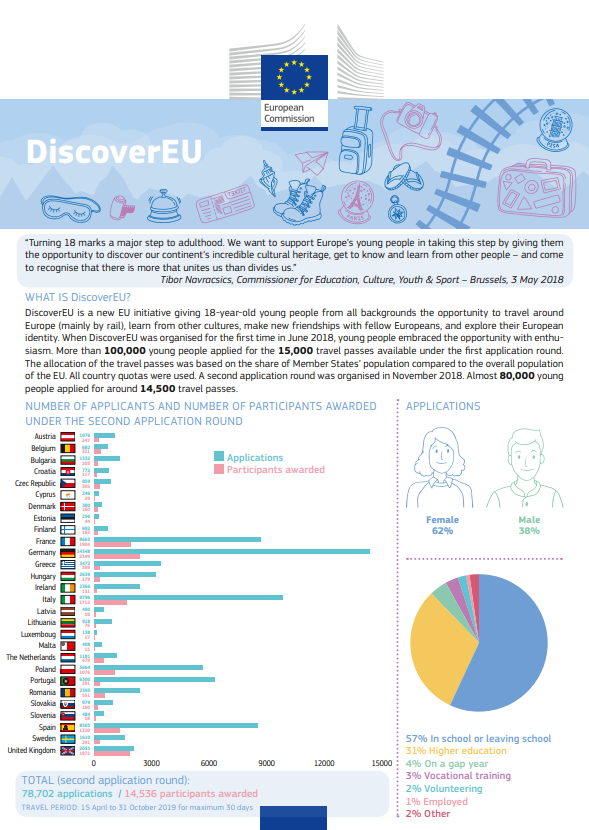
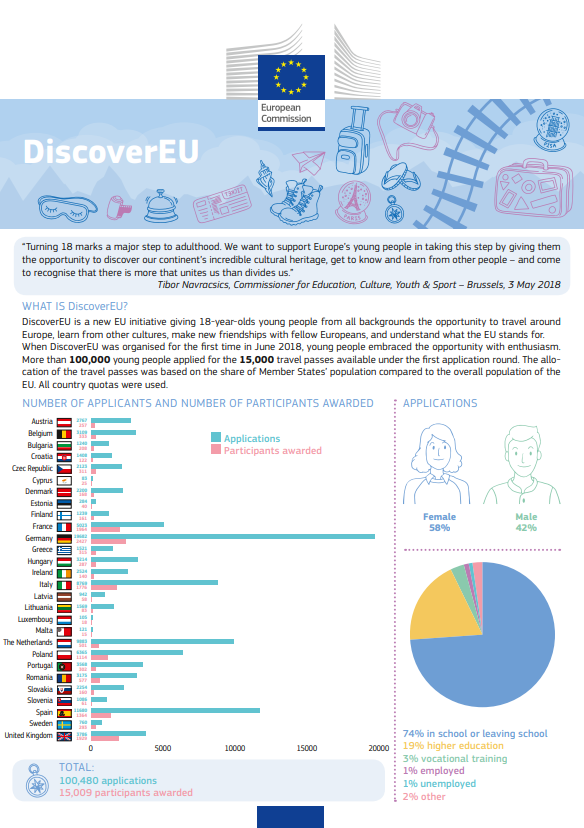
Factsheets


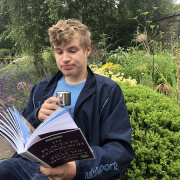
Portrait of Joel

“Don’t be fearful – be ready to take on Europe”

Joel, United Kingdom

Just embrace it. Take everything in your stride. Don’t be afraid to meet people, to speak to people, and definitely, definitely do it.

For many travellers, DiscoverEU is more than a journey of cultural or geographical discovery – it’s also a journey of self-discovery. This was certainly the case for British traveller Joel Baldwin, who, faced with the prospect of going to university a few months later, decided to apply for a pass in order to develop his confidence and become more independent.

“I thought that it would be a good setup before university, because a lot of people go afterwards in a gap year,” he said. “And I thought; ‘hang on, I could do this before and get the experience’”. Travelling across 6 countries, Joel found that the skills he learned on his journey made his transition to university smoother. “It was very enlightening for me. I’m at university now but it made it a lot easier. It was almost a precedent to it,” he said. “It gives you more faith in your social skills. People love to hear about it – it’s a great conversation starter.”

With his new-found self-confidence, Joel is already planning his next trip. “I might go to India, which is even further away,” he said. “But without DiscoverEU I wouldn’t have even had the courage to think about it.” Joel’s advice to prospective travellers is simple: “Just embrace it. Take everything in your stride. Don’t be afraid to meet people, to speak to people, and definitely, definitely do it.” 


Updated on Tuesday, 17/02/2026

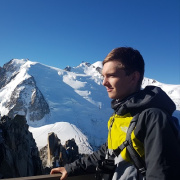
Portrait of Dan

Close to nature in the Alps

Dan, Czechia

My DiscoverEU trip changed my view on global warming

For Czech traveller Dan Voznak, DiscoverEU provided an opportunity to spend time in the great outdoors. Travelling to Mont Blanc in the Alps, Dan wanted to tick a key ambition off his bucket list. “I love mountains, so I wanted to see the highest mountain in the European Union,” he said.

Trekking through the mountains meant that Dan could experience the freedom that comes with sleeping under the stars. “It’s good when you have your own tent. You don’t have to sleep in hotels or hostels, so it’s more flexible,” he said. In the process, he learned some key practical skills. “I now know how pick a campsite and build a tent on my own. We also bought a lot of local food – in France there was a lot of cheese I liked. I think eating new food helps you discover the country.” 

But Dan’s trip also served as a stark reminder of the importance of protecting our environment. “We went hiking on a glacier in Chamonix,” he explained. “30 years ago it was all over the valley, but now it’s just on top of the mountain. I could see global warming in action.” 

“My DiscoverEU trip changed my view on global warming,” continued Dan. “We hear about this topic every day, but it is completely different to see it with your own eyes. I think everyone should visit areas with Alpine glaciers to see how serious this topic is.”
 

Updated on Tuesday, 17/02/2026

Portrait of Rosa

How DiscoverEU helped one traveller unleash her inner filmmaker

Rosa, Ireland

Europe is so much more than just a political or economic grouping of countries. People my age can really capitalise on getting to know Europe and becoming more integrated.

Prior to her DiscoverEU journey, Irish traveller Rosa Geoghegan hadn’t considered making videos to record her life. But in trying to find an authentic, fun and engaging way to document her trip, Rosa began filming her experiences abroad – gaining new skills along the way. “My friend suggested that instead of taking photos, why don’t I make something that people can watch and enjoy,” she explained. “I thought this would give a more realistic insight into what the trip was actually like.”

To successfully complete her film , Rosa needed to learn new digital skills – including how to edit the videos while on the go. “There was so much footage that it was hard to break it down, so I had to keep on top of it while I was travelling,” she said. “But it was actually really easy to do – there was an app I downloaded on my phone which made it 10 times easier.”

DiscoverEU ignited a passion for filmmaking that Rosa would like to pursue. “I hope to continue making videos – I’m looking into getting a nicer camera. I really enjoyed travelling and taking videos of it.”

Alongside her new digital skills, Rosa felt that her DiscoverEU journey gave her a better idea of what it means to live in Europe. “Being European means I can be Irish, but also part of something bigger,” she said. “Europe is so much more than just a political or economic grouping of countries. People my age can really capitalise on getting to know Europe and becoming more integrated.”
 

Updated on Tuesday, 17/02/2026

Portrait of Karolin

Down on the farm: How DiscoverEU gave one traveller the social confidence she needed

Karolin, Estonia

It taught me that when you find the right people, it doesn’t matter where you come from, living together and working towards the same cause will make you a family very quickly.

When Estonian traveller Karolin Eks found out she had been awarded a DiscoverEU pass, the thought of travelling across Europe terrified her. “I was so scared – even though I knew it would only be a month,” she said. But after volunteering to work on an Italian farm during her trip, Karolin’s nerves soon faded and she gained both confidence and valuable social skills.

“We mostly did forest clearing because they wanted to build a camping site there. When it was raining, we did some house chores,” explained Karolin. “For that, we got to eat 3 times per day, plus fresh snacks – fruit and veggies – because they grew as much food as they could.” 

Through her experience, Karolin found that she could relate to people more easily. “It taught me that when you find the right people, it doesn’t matter where you come from, living together and working towards the same cause will make you a family very quickly,” she said. “It was amazing for me to understand that I don’t have a barrier – I can connect with people closely.”

For Karolin, the experience has had a lasting impact. “I brought that confidence in myself back home. I feel like I can handle things now – every kind of situation.” She is currently planning to live and work in Australia and credits DiscoverEU for transforming her outlook. “I feel super confident – I’m at peace with everything. DiscoverEU helped me a lot.”
 

Updated on Tuesday, 17/02/2026

Portrait of Maja

Changing tune: How one traveller’s DiscoverEU experience transformed her view of music

Maja, Croatia

The world is your friend and you’re here to learn. Answers will lead to more questions, but that’s the beauty of it. There isn’t a more perfect time to start doing the things you love and the things you want to try.

As a music student, Croatian traveller Maja Milas thought she knew the great composers inside out. But after volunteering at the George Enescu classical music festival in Romania as part of her DiscoverEU journey, Maja learnt that music is about more than just markings on a page.

“I thought music was just sheet music – books that someone wrote and you have to stick to them. But if you’re just reading the music and reproducing it over and over again, what’s the point?” she said. “Music is supposed to be some kind of emotional outlet – something you can express yourself through. Going to this festival, it was a wonderful thing to see how music can impact an individual.” 

For Maja, volunteering at the festival allowed her to see a new side of the subject. “We got to see the whole process of a really good quality festival being put together. This was super exciting for me because I’ve never even been close to experiencing that.”

Maja’s time at the George Enescu festival encouraged her to be more inquisitive and make the most of similar opportunities. “The world is your friend and you’re here to learn. Answers will lead to more questions, but that’s the beauty of it. There isn’t a more perfect time to start doing the things you love and the things you want to try.”
 

Updated on Tuesday, 17/02/2026

Portrait of Ryan

"The more people you meet, the more you will enrich yourself"

Ryan, Malta

I think that’s the most striking thing – the idea of communication between European cultures.

Making friends with people from across Europe was a new experience for Maltese traveller Ryan Sammut. However, his DiscoverEU journey taught him that not only is communication between people important, but communication between nations too.

“The concept of being European nowadays encompasses meeting other Europeans, diversifying your cultural knowledge and seeing different ways of life around the continent,” said Ryan, who travelled through the UK, Belgium, Germany, Austria, Slovakia, Hungary, Poland and Czechia. “I think that’s the most striking thing – the idea of communication between European cultures.” 

A key stop on Ryan’s journey was Brussels, Belgium, where he learnt about the importance of his own country’s cooperation with other European Member States. “I visited the House of European History and saw the original letter from Malta to the European Coal and Steel Community asking to join the partnership. Seeing the Maltese flag along with the other nations – it was incredible to see the different pieces of Europe altogether under one roof.”

This feeling of European solidarity was confirmed during a visit to Auschwitz in Poland. “It really reminded me of why it’s so important to defend the communication aspect of the European Union,” he said. “It was a reminder of how things used to be and how we don’t want to return to that.”
 

Updated on Tuesday, 17/02/2026

Testimonials

Are you interested to know more about the experiences of our DiscoverEU travellers? Read some of the stories here below!

© European Union © European Union

European Solidarity Corps helps jobseekers climb the career ladder

Last updated on Wednesday, 30/09/2020

24-year-old Marta De Bonis from Lecce in Italy has just embarked upon an exciting new professional adventure with the help of the European Solidarity Corps.

This initiative provides volunteer and work opportunities for young people which benefit local communities in other EU Member States.

Marta obtained a master’s degree in International Economics and Politics of Eastern European Countries in 2016, but on completion she found herself in an extremely competitive job market. Having concentrated so hard on her studies, she had little professional experience to give her the edge she needed to get her first break.

Thankfully, she knew just where to go to get advice, and she got in contact with her local EURES office. Soon, Marta’s personal EURES Adviser had helped her secure a six-month internship at the European Parliament.

Several months down the line, as she approached the end of her internship, Marta knew she had to start preparing for her next step. She spent hours upon hours perfecting her CV and writing cover letters, tailoring them to the specifics of each vacancy.

Meanwhile, Marta’s adviser was providing details of all the existing opportunities within EURES, including targeted mobility schemes such as Your First EURES Job and the European Solidarity Corps, as well as other EU-funded opportunities like EU Aid Volunteers, Erasmus for Young Entrepreneurs and the Erasmus+ scheme.

Through her research, Marta found the professional path she wished to follow: development and cooperation. In this case, the European Solidarity Corps was the perfect tool for Marta to gain experience.

The next steps were to find paid training opportunities in the field for Marta to apply to, and then for her adviser to get in touch with the employers and explain the project and the benefits for both them and the applicant.

Soon her adviser had convinced an interested employer to sign up to the Corps and Marta went through the interview process. Marta’s application proved successful and she is now undertaking a six-month internship as an Advocacy Assistant for the Fair Trade Advocacy Office.

Speaking about her personal experience, Marta explained, “Without the support of EURES Lecce I wouldn’t have achieved my goal. They supported me, on almost a daily basis, with advice, info, suggestions, and encouraged me even in the darkest moments!”

No matter what field you are interested in, EURES is on hand to advise you on the wide range of opportunities and initiatives such as the European Solidarity Corps. If you are up for a challenge, and willing to dedicate yourself to helping other people, then join the Corps today!


Article written in partnership with EURES, the European Job Mobility Portal

Photo by LinkedIn Sales Navigator on Unsplash © Photo by LinkedIn Sales Navigator on Unsplash

Ten ways to stand out on LinkedIn

Last updated on Monday, 24/03/2025

Showcasing your strengths and being smart about what to highlight are key to an eye-catching LinkedIn profile. Here are ten tips to help you stand out:

  1. Add a profile picture. Your LinkedIn profile image should show you at your professional best. Keep your outfit relatively formal, include only your head and shoulders, and don’t forget to smile!
     
  2. Make your headline descriptive. Replace the default LinkedIn headline (which shows your current job title) with a more descriptive and aspirational one. For example, instead of “Marketing Manager,” try “Experienced marketing and communications professional”.
     
  3. Update your profile link. Give your profile a professional sheen by updating the URL for your personal LinkedIn profile – which normally includes a string of numbers and letters – to linkedin.com/in/yourname. You can find this option by clicking on the small picture of yourself in the menu bar at the top of page and going to View profile > Edit public profile and URL.
     
  4. Write a snappy summary. The next thing employers will read is your profile summary. Make sure that it includes the most important information you want to share, most likely your unique qualifications, key work experience, and a way to get in touch.
     
  5. Highlight your relevant skills. LinkedIn allows you to list up to 50 skills. Take a look at listings for the kind of job you’re interested in to see which skills they highlight, and then ensure you list those skills on your profile.
     
  6. Showcase career successes. When adding a description for each of your jobs, don’t just list your responsibilities. Focus instead on your accomplishments and successes in those jobs – did you get promoted? Did you run a successful campaign?
     
  7. Connect and network. Start building your professional network by adding your existing contacts and colleagues, then grow it by seeking out people who work in your industry. When you send someone a connection request, add a personal note.
     
  8. Gather recommendations. If you can, request one recommendation from a colleague or supervisor at each of your employers. If you have worked only at one or two companies, ask several colleagues to write a recommendation on your behalf.
     
  9. Engage with your professional networks. LinkedIn allows you to join groups that focus on just about any professional field. Engage with those groups by posting, commenting, and sharing their content. Groups are  also the perfect places to connect with more people and add them to your professional network.
     
  10. Add links and other media. If you were involved in a video campaign or are a published author, link to it from your profile. If you have a website or portfolio that shows your work online, link to that too, ideally within your headline or summary.
     

Looking for other ways to stand out from the crowd and boost your employment chances? Check out our top tips for writing a killer cover letter, streamlining your CV and acing your interview


Article written in partnership with EURES, the European Job Mobility Portal

Subscribe to