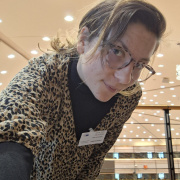
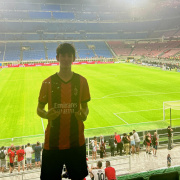
Peteris at the football stadion

Learning Independence Through DiscoverEU

Pēteris, Latvia, Age 19

We were so many kilometres away from home, just us without adults. We had planned everything ourselves. It was an amazing feeling.

I took part in the DiscoverEU initiative together with a group of peers, using the DiscoverEU Inclusion Project opportunities. In this project, my responsibilities were divided into two areas. The most demanding part was planning and organising the project, as well as solving problem situations. My other responsibility was gaining experience and fully enjoying everything that had been planned, which was also very important to me.

As part of the project, we spent 20 days abroad. We wanted to see many different places, so it was important to plan everything carefully and decide what was most important to see, for example in Rome, Budapest, and Vienna, and to prioritise accordingly. We often had to compromise within the group and learned to find common ground when everyone had different opinions.

In my opinion, it is impossible to plan everything in detail, but it is still important, as it helps the overall process.

I was motivated by the opportunity to experience different cultures, visit so many places, meet new people, and of course receive support for this adventure from Europe. I gained truly fantastic experience and made contacts with many people from abroad. I had not travelled much outside Latvia before, and being abroad felt completely new and different to me. It was very exciting.

We had to communicate a lot with local people and use various digital skills and apps to manage ourselves and the whole process, both for navigating the environment and making decisions. In short, the whole trip was one big lesson in adapting to different environments, reacting quickly, and finding solutions in all kinds of situations. We also significantly developed our problem-solving skills and way of thinking. I believe that in this way everyone can foster their own personal growth and learn to cooperate with others – both group members and strangers.

On the second day of the trip, we arrived in Budapest and were tired, so we did not walk around much. We simply ate and planned the next day, and bought the necessary transport tickets. Waking up the next day was already exciting, as many adventures were ahead. The weather was very good and the city itself was beautiful. It is now one of my favourite places.

We went on a night cruise along the river; all the illuminated buildings looked surreal, and I was there with my closest friends. We were so many kilometres away from home, just us without adults, having planned everything ourselves. It was an amazing feeling. I hope every young person will have at least once in their life a similar opportunity to go abroad, develop independence, and experience other cultures.

On the third day of the project, there was a football match in Milan, which I attended because I really enjoy football. I was surprised by what I saw, as football fans in Italy are much more passionate than in Latvia. After the match, I celebrated the result with local Italians, and although we did not understand each other linguistically, we were jumping with joy and I felt almost like a local. I experienced many positive emotions. After the match, I also met some French travellers who were travelling by car, and they took me back to my accommodation that day. In my opinion, the best part of the project is talking to other people, finding common ground, and making new friends.

We tried to plan as much as possible, and the biggest challenge was agreeing within the group on the route, places to visit, and everyday details such as food and accommodation. Sometimes we also had to replan during the project, for example if a hotel cancelled a reservation or no longer existed. That happened to us in Nice, where we had to find a new place to stay at the last minute. The solution was to stop in Milan and adjust the route.

My main advice to young people would be to actively look for and take advantage of different opportunities. I was lucky that a friend encouraged me to apply, as she knew about this opportunity. But it is also very important to search for opportunities yourself and take part in them. It helps you step out of your comfort zone and gives you the chance to learn many new things in a short period of time.


For more information about DiscoverEU, click here.


Updated on Friday, 12/06/2026

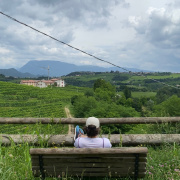
Luize sitting on the bench

One Ticket, Countless Adventures

Luīze, Latvia, Age 20

Life and opportunities like these should be embraced to the fullest – definitely go on adventures.

Thanks to the DiscoverEU project, I had the opportunity to travel across much of Europe. As part of this initiative, the European Union covers the cost of Interrail train tickets, and I was delighted to travel in an environmentally friendly way by train. I had to plan where I would go and what I would do myself, and as a result I visited friends and family, met many people from different nationalities, and made new friends along the way.

The main thing I learned during the journey was to trust people. Of course, not completely – you still need to take care of your own safety – but it is valuable not to be afraid, because people around you are helpful and willing to assist. It is important to trust the process and believe that everything will work out. People were very helpful in the streets and answered my questions whenever I needed directions, and many drivers stopped and agreed to take me where I needed to go when I was hitchhiking. I believe I became more independent and also developed my time and resource management skills by planning my trip and thinking carefully about how to make the most effective use of my budget.

I have always wanted to travel, and I believe it is one of the most important, if not the most important, ways to get to know yourself and other people, while also learning how to manage your time. The financial aspect is always the biggest challenge, as you need to work a lot to save money for travelling, so I was highly motivated by the opportunity to leave the cost of the train tickets to the European Union. For example, the UNESCO-listed train journey in Switzerland would normally cost around €200, yet it was included in the Interrail ticket.

My favourite memory from the trip was the moment when I met two other Latvian DiscoverEU travellers in Genoa, where my travel companion and I had rented a hotel room and invited them to stay with us. During the evening, we exchanged stories about our adventures, and it was incredibly inspiring to meet like-minded people. I gained valuable insights into what else would be worth planning and doing during the journey, as well as what might be better to avoid or be cautious about.

By the way, Genoa is a very beautiful city, although perhaps a little dangerous in certain areas. Afterwards, we travelled to Portugal, which, to me, felt like a country full of young people. Spain is quite similar, although its cuisine is more familiar internationally. In Spain, I stayed with a friend, which allowed me to save money and experience authentic local life through someone who lives there. After that, I travelled to Marseille, which I might not necessarily recommend to young people as a city, although with good company anywhere can be enjoyable. I also have family living in Switzerland, whom I had wanted to visit for a long time, so I included that country in my travel plan. Afterwards, I went to Italy to enjoy nature and the sea, travelled through Austria, and stopped in Prague, Czechia, which I also liked very much.

One of the adventures was connected to our wish to see the Dolomite Mountains. We had rented an apartment in a place where the Dolomites begin, but it turned out to be quite literally in the middle of nowhere. The apartment owners drove us there for a couple of hours by car. The village had only one shop, which is closed on Sundays, and when we started planning how to reach the mountains, we realised that travelling there by train would take 16 hours, making the whole plan impossible. Since the shop was closed, we walked for three hours until we reached the main road, where we hitchhiked into a town to look for food. It became one of the most memorable adventures of the trip and encouraged us to hitchhike more often, as the drivers were genuinely friendly and helpful.

The most challenging part of the project was the financial side. Halfway through the journey, I realised that I might run out of money. I was sitting in Madrid and created a financial plan, something I had not done beforehand, calculating how much money I could spend each day. It helped enormously and solved the problem. Of course, it would be much better to do this before the trip rather than halfway through it, and that is exactly what I recommend to others. If you only do it during the journey, you may feel less comfortable, although it will not be too late to work everything out.
I would also encourage others to take reasonable risks, to try stepping outside their comfort zone and do something a little crazy. Collect the things you have always wanted to do and actually do them. Life and opportunities like these should be embraced to the fullest – definitely go on adventures.

For more information about the DiscoverEU click here.


Updated on Friday, 12/06/2026

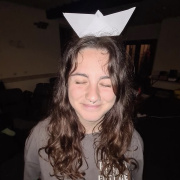
A young woman with long wavy brown hair smiles with her eyes closed while balancing a white paper boat on her head. She has a nose ring and a septum piercing and is wearing a grey sweatshirt. The photo appears to be taken indoors during a group activity or workshop, with dim lighting and chairs visible in the background. The paper boat and her relaxed expression create a playful and light-hearted atmosphere.

Natalia's Erasmus+ Adventures

Natalia, Greece

There is something beautiful about the feeling of belonging in a place you are seeing for the very first time.

There is something beautiful about the feeling of belonging in a place you are seeing for the very first time.
These are exactly my thoughts every time I participate in an Erasmus+ project. It is never easy to leave your everyday life behind, step out of your comfort zone, travel miles away from home, and spend hours changing between buses, trains, and planes. Yet somehow, it is always worth it.
What I did not expect was how much these projects would change the way I see the world.
Every project is different. Sometimes everything feels easy from the very beginning, while other times it takes a little longer to adapt. But every experience leaves something behind: a memory, a lesson, a friendship, or a story.

Imagine returning to a city years later and still remembering a conversation you had on a random bench, a shared meal with people who were strangers just a few days before, or a funny moment that still makes you smile. The places stay with you because of the people you met there. Some of those people become part of your everyday life long after the project ends, while others simply remain beautiful memories connected to a certain place.
That is what makes Erasmus+ so special. It is not only about travelling, learning, or discovering new cultures. It is about creating connections that make the world feel smaller. The difficult part of leaving your country often becomes the opportunity to find a friend on the other side of the world. And perhaps that is the most beautiful thing of all: realizing that home is not always a place. Sometimes, it is the people you meet along the way.
 

Updated on Friday, 12/06/2026

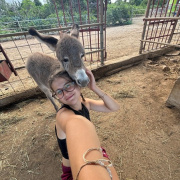
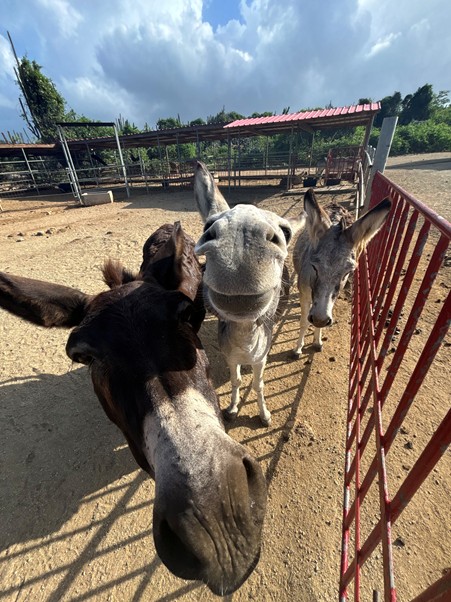
Photo of Marilou with a donkey

Volontariat dans un refuge pour animaux sur l'île d'Aruba !

Marilou, Luxembourg, Age 20

"Si j'avais la possibilité, j'y retournerais immédiatement. "

Je m'appelle Marilou, j'ai 20 ans et je viens du Luxembourg. J'ai fait un service volontaire de 3 mois sur l'île d'Aruba, au large du Venezuela, dans un refuge pour les ânes. 

Après mes études, je voulais faire une année sabbatique, ici, avec le but de faire des nouvelles connaissances, rencontrer des gens de différentes cultures et de sortir de ma zone de confort. Je voulais avoir un impact et faire quelque chose pour la communauté. Pour cela le volontariat était parfait pour moi. Je pouvais combiner mes passions avec l'aventure. Tout cela en ayant l'opportunité de vivre sur une petite île avec des gens magnifiques.

Clairement la meilleure chose de ce projet était les rencontres que je pouvais faire pendant mes trois mois sur l'île. Je me suis définitivement fait des amis pour la vie. J'ai beaucoup apprécié comment les volontaires étaient appréciés et accueillis si chaleureusement. J'adorais le travail quotidien avec les animaux. Je pourrais pas choisir un moment preferé précis mais l'expérience en totale est mon meilleur souvenir. Si j'avais la possibilité, j'y retournerais immédiatement.

Les conseils que je donnerais aux jeunes qui hésitent à partir ?

Just do it! 
Même si tu as quelques doutes et que tu es stressé de partir, je te conseille vivement de le faire. Après une semaine, tu vas te sentir à l'aise et à la fin, je te garantis que tu voudras plus rentrer. Le temps passe super vite, en profite le mieux possible.

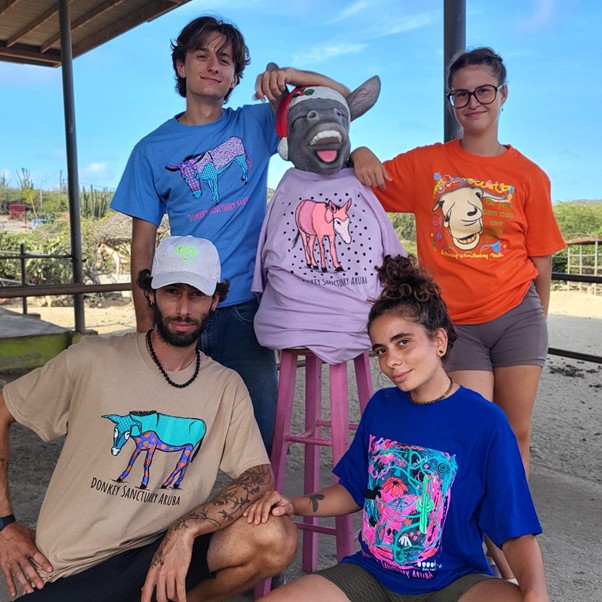
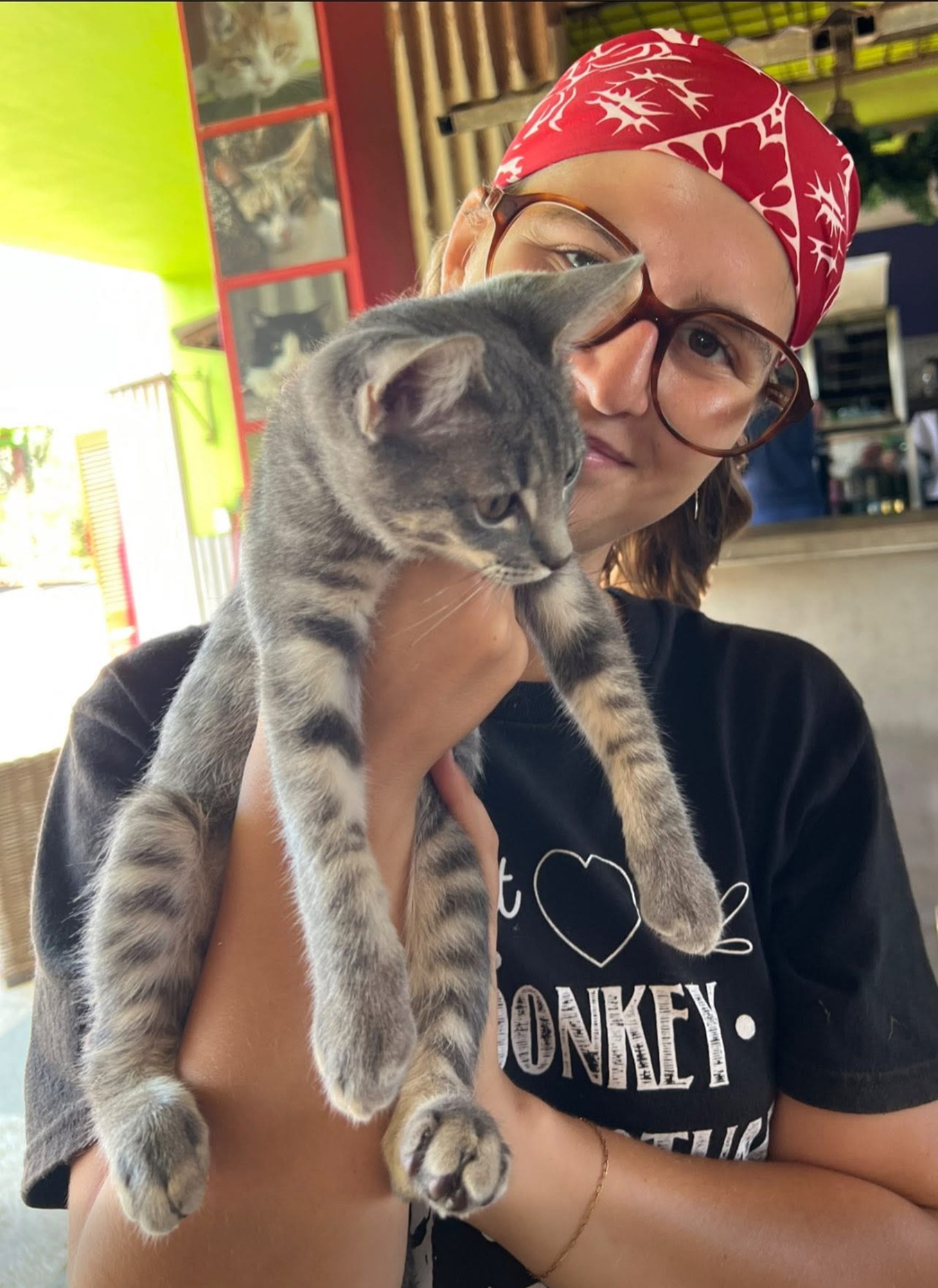
Marilou with other volunteers

Updated on Wednesday, 10/06/2026

Emili Kafetzi

The Erasmus Was the Beginning of the Rest of My Life

Emili, Cyprus, Age 29

The Erasmus Was the Beginning of the Rest of My Life

Participating in Erasmus+ youth projects completely changed my life and shaped the person and professional I am today. What started as a simple opportunity to travel and meet new people became the beginning of a journey full of learning, inspiration, and personal growth.


I was born and raised in Nicosia, Cyprus. As a student, I was always interested in social issues, youth participation, and meeting people from different cultures. My first real introduction to the world of youth work came when I participated in a Youth Exchange organised by Youth Dynamics. That experience opened my eyes to a completely new world of opportunities.


For the first time, I had the opportunity to meet young people from different European countries, exchange knowledge and experiences, and discuss common challenges that concern young people across Europe. Through workshops, group activities, and intercultural learning, I realised how powerful youth participation can be in creating positive change in society.


The experience inspired me deeply. I discovered how non-formal education and youth projects can help young people develop important skills such as communication, teamwork, leadership, creativity, and self-confidence. After returning to Cyprus, I wanted to continue being active and find ways to help other young people benefit from similar opportunities.


Step by step, I became more involved in organising local, national, and European youth projects. I participated in training courses, seminars, and Erasmus+ activities that helped me develop professionally and personally. Through these experiences, I learned how to design projects, coordinate activities, support young people, and create spaces where young people feel included and empowered.


Today, I work as a Project Manager, collaborating with several NGOs as a freelancer and actively contributing to youth projects at both local and European levels. At the same time, I serve as the legal representative of an Informal Youth Group called Youth Powerful Skills Community (Youth PSC).


Each project I take part in is an opportunity to support young people, foster active participation, and empower them to discover their own potential — just as I once discovered mine through the Erasmus+ programme.


How have youth opportunities contributed to your personal growth, professional development, or overall outlook on life?
“Erasmus+ projects helped me grow both personally and professionally. They gave me confidence, improved my communication and organisational skills, and helped me understand the importance of cooperation and intercultural dialogue. Most importantly, they helped me realise that youth work was not just something I enjoyed — it was something I wanted to dedicate my career to.”
 

Why do you believe youth participation and international projects are important?
“I believe youth participation is essential because it gives young people a voice and helps them become active members of society. International projects allow young people to learn from each other, challenge stereotypes, and understand different perspectives. They create friendships, solidarity, and opportunities that can truly change lives.”


What message would you like to share with young people considering participating in Erasmus+ projects?
“I would encourage every young person to take the opportunity to participate in Erasmus+ projects at least once in their life. These experiences can help you discover new passions, develop important life skills, and meet inspiring people from around the world. Sometimes one opportunity is enough to completely change your future — and for me, Erasmus+ was exactly that beginning.”

Updated on Wednesday, 10/06/2026

Yiannis Konstantinou

“From a Small Village to European Opportunities”

Yiannis, Cyprus, Age 26

From a Small Village to European Opportunities

Volunteering and youth participation completely changed my life and helped me discover opportunities that I never imagined were possible for a young person growing up in a rural area of Cyprus.


I was born and raised in Agros Village, a small rural community with limited access to educational activities and youth opportunities. As a young person, it was not always easy to find information or activities that could help me develop personally and professionally. Everything started to change when I became a member of the Agros Youth Club.


Through the Youth Club, I gained access to accurate information about youth programmes at both national and European level. This support helped me develop important soft skills such as communication, teamwork, leadership, and intercultural understanding. Most importantly, it gave me the confidence to become more active and involved in society.


One of the most valuable experiences for me was participating in several Youth Exchanges through the Erasmus+ and European Solidarity Corps programmes. These projects allowed me to travel abroad, meet young people from different countries, learn about new cultures, and exchange ideas and experiences. Every project helped me grow both personally and socially, while also motivating me to become a more active citizen.


A very important role in my development was played by the Youth Multicentre in Agros, which is a Eurodesk Multiplier. Through the centre, I discovered many opportunities for young people using the Opportunity Finder platform. The guidance and support I received encouraged me to participate in international activities and explore new possibilities for my future.


How have youth opportunities contributed to your personal growth, professional development, or overall outlook on life? 

“Participating in youth programmes completely changed my perspective on life. Growing up in a rural area sometimes made me feel that opportunities were limited, but through the Agros Youth Club and the Youth Multicentre, I realised that there are many possibilities for young people who are willing to participate and learn. Erasmus+ Youth Exchanges helped me improve my communication and teamwork skills, become more independent, and feel more confident speaking with people from different cultures. These experiences also motivated me to become more active in my local community and support other young people to discover similar opportunities.”


Why do you believe youth participation and volunteering are important? 

“I believe youth participation and volunteering are extremely important because they help young people develop skills that cannot always be learned in school. They also encourage solidarity, active citizenship, and cooperation between people from different backgrounds and cultures. Young people gain experiences that help them both personally and professionally, while communities also benefit from their energy, ideas, and involvement.”
What message would you like to share with other young people from rural areas? 

“I would like to encourage young people from rural areas not to be afraid to explore opportunities beyond their village or community. Even if access to information can sometimes be difficult, organisations such as Youth Clubs, Eurodesk centres, and youth organisations can open many doors. Participating in youth projects can truly change your life, help you grow, and show you that your background does not limit your future.”

Updated on Wednesday, 10/06/2026

the girl, the author of this article looking at the camera, wearing glasses and has a long hair

I've got the floor in the European Parliament — and I still can't believe it

Rita, Hungary

This spring a weekend in Brussels, filled with new people, ideas, and unexpected moments. Rita attended the opening event of European Youth Week 2026 as a member of the Eurodesk delegation. Spoiler: she even got to speak into a microphone at the European Parliament.

It already seemed unbelievable that I was there. Then suddenly I found myself in Brussels, at the opening event of European Youth Week 2026, as a member of the Eurodesk delegation—and from that point everything happened a little faster than I could process.
This year’s theme was “Solidarity and Fairness,” but for me, it wasn’t just a catchy slogan. I took part in workshops where what we thought really mattered. We talked about democracy, what it means to be young and a European citizen today, and what’s missing from education that prevents us from being truly active in these processes.


There was a moment when we were brainstorming in a small group, and I found myself sharing my own experiences completely naturally—not as a “participant,” but as someone who has something to say and is no longer just an expert on my own life, but also represents others wholeheartedly. Suddenly, there I was, sitting in the European Parliament with the microphone on, and I spoke up. 
 

The program also covered how to better reach young people with EU content, as well as how young researchers are supported in Europe. It was especially important to me to choose topics that I could bring back home—because at Let’s CEE I work with these every day: community, innovation, and mental well-being.

And of course, the one thing that can’t be left out of an event like this: the people. I met inspiring young people, including some from the Eurodesk delegation, but there was one particularly great moment—I met a girl who lives in Cologne. This suddenly became extra exciting because… I’m actually writing this on the bus, on my way to a new adventure: I’m moving to Bremen for a one-year ESC volunteer program. So it feels pretty good to already have some connections.


The whole three days felt a bit like when the world suddenly expands. You’re walking through the corridors of the European Parliament, chatting, brainstorming, laughing, and in the process you realize: this isn’t some distant thing. This is our space, too. You can check out a young Italian’s experiences in this video. I’m so grateful that this year I was the one who got to experience this. And perhaps that was the most important realization: I wasn’t just there—I was truly a part of it. I liked what I saw in Brussels, but I definitely need to go back to explore it further.

Updated on Tuesday, 02/06/2026

Photo of Lukas, Siiri & Maija

Young people from Puumala on the right track in Europe – and sometimes a little off-track too

Lukas & Maija, Finland

It reinforced exactly what these projects are perhaps trying to reinforce: the idea of EU citizenship.

Classmates Lukas Ranta and Maija Tuovinen took a month-long train trip to Central Europe in a trusted group of friends, thanks to project funding from the DiscoverEU Inclusion Action. The rail journey of the young people from Puumala, Finland, was full of churches, mishaps and even a visit to a Hungarian trotting track. 


A dream of a European tour 

The young people from Puumala would not have been able to go on their June rail journey to Central Europe without the security afforded by travelling in a familiar group. However, a couple of days before the start of the trip, Maija received a hesitant message from her childhood friend Siiri. 

“I got a message from her saying that ‘I can't, it's not going to work, maybe I won't go’. It was the first trip during which we would be completely on our own, so she was understandably a bit nervous,” Maija explains. “However, we managed to turn the situation around and concluded that we weren’t going to start cancelling anything at this stage!” 

Lukas, Maija and Siiri had shared a dream of travelling together since eighth grade. Completing youth exchanges in Iceland and Malta had left them with the feeling that it would be nice to travel more – and more independently. 

“The idea was that there was no need to follow a plan or a set schedule. Instead, you could just do what you want, when you want,” says Lukas. 

The trio was held back by a lack of travel funds until a concrete opportunity presented itself in the form of an open call by the Municipality of Puumala Youth Services and the DiscoverEU Inclusion Action. 

“We wouldn’t have had any chance of going without this funding,” Maija emphasises. “Of course, the youth services also offered to send someone with us, but we were a bit like, ‘No need – we'll manage’.” 


Freedom accompanied by a handful of mishaps 

The free-spirited trio’s flexible travel style had its occasional downside too. 
For example, their accommodation in Brussels, which they hastily booked at the last minute, was located in a rather restless area, as Maija puts it. 

“I've never really encountered such a big difference between areas, walking 500 metres and seeing the environment change quite dramatically,” Maija says. “There were areas that we did not dare to go to when it got dark, but on the other hand, I’m glad we got to see that side of it too. It made me feel grateful for the way things are in Finland and gave me a new perspective.” 

Even Lukas’s family's former hometown of Vienna, where he served as a tour guide for the group, had some surprises in store for them. 

“In Austria, the holidays were indeed holy! Nothing was open, nothing at all,” Maija recalls about arriving on Sunday in the closed city. 

Lukas's gluten-free diet also added an extra challenge to meals. In Berlin, an enquiry about ‘gluten-free’ pizza was interpreted as lactose-free, and on the train, the gluten intolerant Lukas’s breakfast was reduced to crispbread with seeds while the others sipped coffee and selected toppings for rolls. 

“I guess there was wheat in the coffee on the train,” jokes Lukas, who missed his morning coffee. 

“You could write a guide for other gluten intolerant interrailers!” Maija quips. 

The journey, which lasted almost a month, also had a few other twists and turns. 

The trio’s climb to Gellért Hill in Budapest on a hot day was an ordeal that ended in the realisation that the viewing platform was closed. At times, the trio had to sit on the floor of a fully booked train or doze off on a stool in a bookshop after a sleepless night spent on an overnight train. Arguments could not always be avoided, and at the end of the journey several of the travellers ended up catching a cold. 

Lukas sums up a simple recipe for overcoming adversity: 

“I guess you just need to maintain a sense of humour.” 

“We didn’t need to deal with anything alone,” Maija adds. “Looking back on the trip, there were no terrible disasters, certainly nothing insurmountable. We didn’t even lose anything, except for a single cap!” she laughs. 


Shared adventures and personal space 

After a flight to Krakow, the party first criss-crossed between Austria and Hungary and then travelled across Germany to visit Belgium and the Netherlands before their return flight from Berlin. In Cologne, the trio were joined by Kayleigh, a Maltese friend from the youth exchange. 

The group’s trip was enriched by trying things that they would not even have thought of on their own. In the planning stage of the project, each person had been allowed to choose a country that they were most interested in. 

“For example, Siiri knows a lot about horses, so we went to a horse race in Budapest,” Maija recalls her unique experience of going to a Hungarian harness race. 

On the other hand, the group members did not need to get excited about the same things. 

The others did not mind if someone chose to stay in to watch a streaming service from time to time. On one occasion, the group also split in two to visit two different museums, so that everyone could choose between an afternoon spent learning about the evolution of the automobile or exploring dinosaur bones. 

Having grown up in a town of only a few thousand inhabitants and being from the same class of only 12 students, the trio were already close when they started their journey but only grew more so during it. It was easy to rely on the support of familiar faces. 

“For example, when Siiri was terribly ill, Lukas and I went to the shop to buy handkerchiefs and food. We shared tasks and supported each other,” Maija sums up. 


On the rails, borders were blurred and what it means to be European crystallised 

For Lukas, who has lived with his family not only in Austria but also in China, the rail journey to Central Europe did not feel like such a big deal. 

However, Maija says that for her and Siiri, the trip brought Europe much closer. Travelling by rail as EU citizens made them realise how ephemeral country borders are. 

“It reinforced exactly what these projects are perhaps trying to reinforce: the idea of EU citizenship. It was easy to go from one country to another, and no one really asked any questions. People crossed borders to work or even to go grocery shopping in another country,” Maija says in wonder. 

She would like to travel overland in the future as well, also for climate reasons. Lukas does not rule out the possibility either, but dreams of the even greater freedom afforded by a car. 

Maija is surprised at how few DiscoverEU Inclusion Action projects have been carried out in Finland so far. 

This type of project is intended for young people who need additional support to participate in the action. Maija notes that going on a trip does not require any special skills, but the experience can give you a lot: for example, Siiri, who was initially nervous about the trip, applied for a job as a horse groom in Slovakia after it. 

“We gained so much courage that Siiri would not have hesitated to go and live abroad on her own,” Maija says. “Unfortunately, she did not end up getting the job, but just applying for it is an indication of what a huge impact the trip had on us.”


Text: Laura Mettälä


Lukas, 19, Joensuu, Finland 
● Lives between Puumala and his hometown Joensuu, where he is studying at Karelia University of Applied Sciences' English-language Industrial Management programme. 
● Plays badminton and jogs in his spare time. Was a member of the Puumala Youth Council for a long time, where the best part was getting concrete initiatives approved, such as the construction of a skate park. 
● The most important thing in life is being able to enjoy some peace and quiet on your own when you need it, dreams of graduating and getting a job. 
● Would make the world fairer through peace in the Middle East, for example. 
● Project: DiscoverEU Inclusion Action project “Puumalan nuoret Eurooppaan” (“Young people from Puumala to Europe”). Three young people, together with the Youth Services of the Municipality of Puumala, planned and carried out a nearly four-week-long rail trip to Europe.

Maija, 19, Turku, Finland 
● Originally from Puumala, currently studying biotechnology at the University of Turku. 
● Cooks, spends time with her 8-year-old Shetland Sheepdog and volunteers at an animal shelter in her spare time. Was a member of the Puumala Youth Council for a long time, currently interested in issues such as EU regulation in her field. 
● The most important thing in life is a relaxed and good everyday life and the opportunity to pursue higher education, dreams of graduating on time and going on a hiking trip to Lapland with her boyfriend and dog. 
● Would make the world fairer by increasing empathy and understanding of the reasons behind people's difficult life situations: “It seems that we are losing this kind of thinking.” 
● Project: Same as above.

This interview is part of the European Youth Week, which takes place from 24 April to 1 May 2026 and is aimed at promoting youth engagement, participation and active citizenship by making the voices of young people heard. This year, the European Youth Week is dedicated to ‘Solidarity and Fairness’ and celebrates 30 years of volunteering in Europe.
 

Updated on Monday, 01/06/2026

Photo of Eeva

“Sometimes a thing that you know nothing about can end up being your turning point”

Eeva, Finland

I realised that the less I had known, the more closed off and prejudiced I had been. It was a lot to digest. When you don't know or understand, you also can't take an interest.

Eeva Kurikkala thought for years that she would go volunteering in France, but ended up in Slovakia. The volunteering period shattered her preconceptions, deepened her understanding of the importance of community help – and quietly changed the direction of her whole life. 


Long-standing dream of France dashed 

For many years, Eeva, who grew up in Kalajoki, Finland, imagined herself in France. She wanted to get into a real language environment to speak French, which she had been studying since fifth grade. 

Eeva recalls that she was always interested in “all the international buzz” and credits her small hometown for making it possible to participate in it. During her school years, she went on group trips and had exchange students from Kalajoki’s Japanese twin town stay at her home. 

The international studies offered by Kalajoki General Upper Secondary School led Eeva to take part in Rieska-Leader’s activities and eventually to hear about the possibility of a volunteer period in Europe. 

During the interview phase for the French volunteering positions, the language requirements ultimately proved to be too high for her. As a result, Eeva’s dream of France was dashed. 


A wild card that took some digesting 

Instead of France, Eeva ended up selecting as her destination, somewhat by chance, what she calls a ‘wild card’: Slovakia. Being an ice hockey fan, Eeva was only familiar with the capital Bratislava from Finland's 2011 World Championships win. 

“Yes, I was nervous. Of course I was nervous! But the nervousness was the kind of passion typical to young people. I wasn’t terribly aware of where I was going,” Eeva recalls from more than seven years ago. 

She is amused how, for example, the fact that the hosting organisation was a Catholic community centre only dawned on her from the pictures on the map service when she noticed a large cross on the wall of the building. In her twenties, she was more focused on being nervous about sharing a room with another volunteer. 

Once there, the initial nervousness gave way to initial awkwardness. During her first few months with a private Slovak teacher, Eeva was so unmotivated that she felt ashamed of her own contrariness. 

She was frustrated: why do the verbs have to be gendered too? Of course her fellow volunteer had an easier time learning it because they knew Russian! 

Then it dawned on Eeva that Slovak is part of a large family of Slavic languages. As she watched her volunteer working partner serving customers in Slovak in a café, she began to wonder what avenues broader language skills would have opened up into people's minds. 

“I started getting annoyed! I realised that the less I had known, the more closed off and prejudiced I had been. It was a lot to digest. When you don't know or understand, you also can't take an interest,” Eeva reflects. 


The hardest thing was to stand up for your rights, the most important thing was to witness solidarity 

In the beginning, the volunteers were assigned so many cleaning tasks that Eeva and her working partner decided to consult the European Voluntary Service’s Programme Guide and negotiate a more productive job description for themselves. 

“The hardest part was recognising your own limits and setting boundaries,” Eeva says. “I wouldn't have even dared to speak up on my own, but this friend of mine had a strong will. They even got a tattoo that said ‘no’. It was a symbol of that setting of boundaries.” 

In the end, her main duties included working in a volunteer-run, ‘pay what you can’ café. This involved carrying Ikea bags full of milk from the shop and grating chestnut paste. 

The café was frequented by a large number of people with low incomes and socially marginalised people. 

“I had the feeling that I was seeing a pretty wide range of human fates there. As a result, I became more open to meeting really different people, and I learned some extra gentleness and patience. Before that, I was a more prejudiced person,” Eeva says. “I've thought afterwards that it was important at that point in my life to have that kind of reality check.” 

Her second big insight had to do with what solidarity looked like in the everyday life of the community. 

“It was interesting to see how they thought of each other as a family and were willing to include us volunteers in it as well,” Eeva says, recalling how her boss took them on a roadtrip and a colleague invited her to their wedding. “Helping was 
the keyword. I learned that you can often rely on other people: you have to have the courage to ask for help, and even a little help can mean a lot to someone else.” 
 

Disappointment turned into a transformative experience 

Immediately after returning from her volunteering period, Eeva surfed to a website listing radio stations around the world and tuned into a Slovakian frequency. 

After a few years of listening to the radio, it was time for a rematch: Eeva applied for a student exchange – not to France, but to neighbouring Prague for lack of a destination in Bratislava. 

During her exchange year, she travelled around the country, speaking Czech as frequently as she could. 

Upon returning home, she had a firm grasp of the basics of Czech and an idea of a traineeship at the Finnish embassy in Prague in the back of her mind. 

Then, when the embassy's traineeship advertisement mentioned Czech or Slovak language skills as an advantage, she began to think about path dependence. 

“Your previous choices lead to the next ones in interesting ways,” Eeva sums up. “That project in Slovakia changed my direction a lot. I feel that it has to a large extent defined who I am now as an adult. Sometimes a thing that you know nothing about can end up being your turning point.” 

Eeva feels that her university traineeship in the Czech Republic was a culmination of her previous experiences. Working on a photography project for the Finnish embassy's Independence Day celebrations summed up for her how meaningful moving abroad at different stages of life can be. 

In the project, Eeva photographed and interviewed Finns living in the Czech Republic about their experiences of expatriation and home. 

“In the end, I did it perhaps to look at my own experiences through the eyes of others,” Eeva admits. “I got all emotional about the fact that other people have also had these experiences of living elsewhere and in some way searching for yourself.”


Text: Laura Mettälä


Eeva, 27, Turku, Finland 
● Originally from Kalajoki, Finland, currently studying geography in Turku and starting her master's thesis on the themes of cultural flexibility. 
● A student organisation activist and a ‘humanist through and through’ who attends a Czech language club and enjoys creative hobbies. 
● For her, the most important thing in life is the freedom to dream, and her dream is to end up doing something she can honestly stand behind. 
● If Eeva could correct any one thing to make the world fairer, she would provide children and young people with the means to grow up as carefree as possible into healthy adults. 
● Project: Long-term volunteering project of the European Voluntary Service (EVS), the predecessor of the European Solidarity Corps, in Slovakia in 2018–2019. Sent by Rieska-Leader.

This interview is part of the European Youth Week, which takes place from 24 April to 1 May 2026 and is aimed at promoting youth engagement, participation and active citizenship by making the voices of young people heard. This year, the European Youth Week is dedicated to ‘Solidarity and Fairness’ and celebrates 30 years of volunteering in Europe.
 

Updated on Monday, 01/06/2026

Photo of Janni

Volunteering “gives you the most precious experience in the world practically for free”

Janni, Finland

We are all unique personalities after all, no matter where we come from. Friendships can be built across many kinds of bridges.

Spending a year as a volunteer in Wrocław, Poland, made Janni Turpeinen from Pudasjärvi, Finland, reflect on the meaning of work and her place in the community. At the same time, she gained an understanding of multicultural everyday life and a clearer sense of her own direction.

When Wrocław became Janni's home for ten months, she found a sense of home in small everyday similarities with the locals. 
“I thought it was the most wonderful thing in the world when I took the tram in Poland during rush hour and it was completely quiet 90% of the time! They have a sense of personal space very similar to Finns there,” Janni recalls. 

Janni had been led to the tranquillity of the Polish tram by a promise that stuck in her mind from a visit to Maailmanvaihto, an NGO that sends out and hosts international volunteers: the European Solidarity Corps offers you the chance to live abroad – ‘for free’.


Meaningful work – but for whom? 

“Applying for volunteer work made me think about whom I would be working for,” Janni says. “There’s no pay, so what’s my motivation?” 

The Polish NGO Foundation of Social Integration Prom's work for low-income families with children, Roma families and Ukrainian war refugees struck Janni as meaningful. The job description, which involved social media, video recording, photography and event planning, was also appealing to her. 

Still, talking about the meaningfulness of work makes Janni quite reflective. 

Spending much of her time in front of a screen or in the company of other volunteers made the perceptive young person question the direct impact of her efforts on the local community. 

“At no point did I...” Janni starts, but then corrects herself: “Hmm, I was about to say that I didn't feel like I was making an impact on the local community. Then I began to think that maybe I was after all, because I saw how happy those children became at the events we organised.” 

Janni recalls in particular an event on the last week of her volunteering period, during which a daycare-age child came back after having already left – just to say “hyvää päivää” (“have a nice day”) to Janni. 

“My heart melted then and there! The child had looked up in some translator app how to greet me in Finnish. It was such a sympathetic thing.” 


Friendship and loneliness in a multicultural environment 

In the beginning, Janni felt that the other volunteers warmed up to new acquaintances more quickly. She cannot say whether it was a ‘Finnish culture thing’ or a ‘me thing’. 

Many of the volunteers also had other people from the same country there, while Janni was the only Nordic person in the volunteer circles. It made her feel lonely at times, as Janni recognised in herself a longing to share her own culture. 

However, during the second half of the volunteering period, some of the friendships that she established deepened, and in the end, culture was just one thing among others when it came to them. 

“We are all unique personalities after all, no matter where we come from. Friendships can be built across many kinds of bridges,” Janni reflects, and gives an example: “One of my best friends spoke practically no English when they arrived, but somehow we still learned to communicate and have fun together!” 

In a multicultural group of roommates and friends, learning took place not only through discussions but also through observing practical situations. 

“We got used to not always immediately understanding each other's ways. Many would benefit from learning such tolerance.” 


A journey into the self far from home 

In retrospect, Janni sees the volunteering period as having clarified her values. Her openness to new experiences was strengthened. And on the other hand: being far away from her loved ones taught her to appreciate them in a new way. 

In addition to clarifying her values, the experience also guided Janni’s choice of study field. Working with social media sparked an interest in marketing in Janni, and her passion for internationalism led her specifically to a degree programme in international business. 

The hardships of the volunteering period, in turn, accelerated Janni's independence. Now she is confident that she can cope with any situation. In retrospect, being nervous about e.g. her language skills has felt to her like a “really stupid fear.”

When asked to whom she would recommend European volunteering activities, the 30th anniversary of which is celebrated this year, Janni exclaims: 

“Oh, I wish I could say ‘to everyone and for all possible reasons!’ On the other hand, I'd like people for whom it is not an obvious choice to see this opportunity. Volunteering is not just free work, but also an investment in yourself. It gives you the most precious experience in the world practically for free!” 


A future full of hope – and uncertainty 

In the near future, Janni will be moving to the Helsinki Metropolitan Area when Aalto University's Mikkeli campus moves to Otaniemi in Espoo. Having grown up in a small town, she admits that she has reservations about Helsinki. 

“After all, Helsinki is quite a multicultural place. There are international cultures and people from all over Finland. Maybe I'll blend in just fine,” Janni ponders, her voice calm. 

However, her calmness is somewhat shaken when the discussion turns to broader issues. Although Janni is optimistic about her own future, the state of the world evokes some very different emotions in her. 

Janni is concerned about wars, climate change and polarisation. Frankly, the world does not seem like a very fair place to her, let alone one where many people in power are fit for their positions. 

“And even if all the dictators and the Trumps and the monster billionaires were somehow deleted, someone else would rise to take their place. People in high places often become somehow blinded,” Janni sighs. “I would like the most powerful and richest people in the world to see what life is like at the other extreme.” 

Janni is upset about the uncertainty of the future, not only for herself, but for all children and young people. And not without reason: according to the latest Youth Barometer, as many as half of young Finns are pessimistic about the future of the world. 

“But perhaps many young people also think that we can change things, because we are the generation of the future.”


Text: Laura Mettälä


Janni Turpeinen, 21, Mikkeli, Finland 
● Originally from Pudasjärvi, Finland, currently studying economics and business administration in an International Business programme in Mikkeli and working shifts as a cashier. 
● Enjoys the outdoors, music, podcasts and “really random” books: currently reading The Unknown Soldier and listening to The Hunger Games trilogy as audiobooks. 
● Hopes to live and work abroad at some point in the future. 
● Would make the world fairer by making the most powerful people understand what life is like for the most disadvantaged. 
● Project: Long-term European Solidarity Corps volunteer project in a Polish NGO in 2024–2025. Sent by Maailmanvaihto ry.

This interview is part of the European Youth Week, which takes place from 24 April to 1 May 2026 and is aimed at promoting youth engagement, participation and active citizenship by making the voices of young people heard. This year, the European Youth Week is dedicated to ‘Solidarity and Fairness’ and celebrates 30 years of volunteering in Europe.
 

Updated on Monday, 01/06/2026
Subscribe to