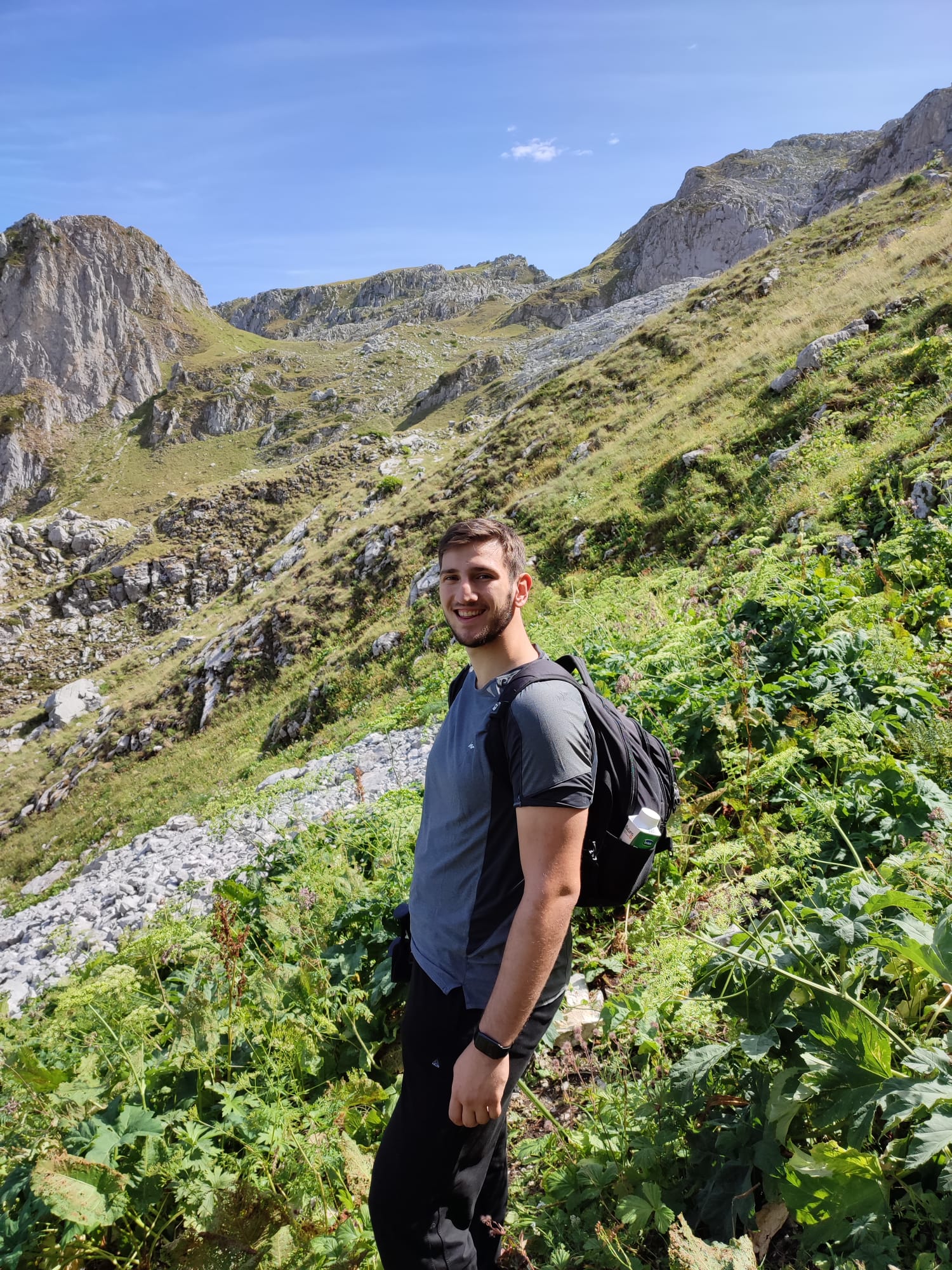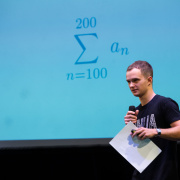

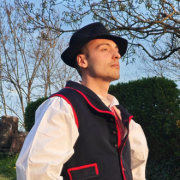
volunteer in traditional costume

What is an Italian doing in Zagorje?

Daniele, Croatia, Age 26

Does it make sense to leave the (apparently) prosperous and (relatively) cosmopolitan city of Bologna for Zabok, a small town of 8,5 thousand inhabitants in Krapina-Zagorje County, Croatia, to volunteer in a youth associations network? As counterintuitive as it might sound, it absolutely does.

Picture this: you are a 26-year-old Italian from Bologna, Italy. You have graduated from university almost two years ago but, as it is not too uncommon in the Italian post-university life, you are struggling to find a career path which a) bears some sort of relevance to your studies; b) allows you to get a roof over your head and food on the table; and c) feels at least somewhat rewarding and fulfilling. Does it make sense to leave the (apparently) prosperous and (relatively) cosmopolitan city of Bologna for Zabok, a small town of 8,5 thousand inhabitants in Krapina-Zagorje County, Croatia, to volunteer in a youth associations network? 
As counterintuitive as it might sound, it absolutely does. 


What started as just an idea to improve my Croatian-speaking skills for “professional purposes”, turned out to be an experience which not only is truly enjoyable and enriching, but it is also teaching me a good number of valuable skills which is making me reconsider my approach to creating a future for myself. The best part about this? I found out about this possibility just because a friend randomly sent me the link to the ESC project page on WhatsApp.


At Mreža udruga Zagor (that's the name of the association), I have been put in charge of the association's magazine, Mla-dost.dobro: as Editor in Chief, I write articles, edit and select contribution from other authors, and take care of layout and graphic design elements.
I am furthermore in charge of photographing the association's workshops and activities: photography has always been a huge passion of mine, which I had sadly put aside due to life circumstances, but now, thanks to the magazine and my documentation activities, I have been given a great chance to pick up my camera again and greatly improve my composition and editing skills. 


As for life outside of the office? Volunteering away from the big cities in a smaller, quasi-rural reality might for some seem discouraging, but certainly has its positives sides. Having already had my “big city experience“ in Zagreb during my Erasmus semester in university, coming to a smaller community like Zabok allowed me to get a more authentic Croatian experience. Gone are the long-tram journeys, the big events tailored for international audiences, the comfortable yet inauthentic “Erasmus bubble”: here, you get a real window into Croatial lifestyle, and get first-hand experience of the unfiltered beauty of its customs and traditions through your everyday interactions with people. And the nature? Just wonderful: there is a reason the hills here are known as the Zagorje Zelene (“Zagorje Greens“).


The experience does not, of course, come without its hardships.As my volunteering partner (Hugo, from Spain) does not speak English all that well but, much like me, speaks Croatian somewhat decently, I found myself in a situation in which both at home and at work I exclusively speak Croatian: misunderstandings are frequent, you kind of miss the capacity for self-expression you have in a language you are more comfortable with and, after a whole day of speaking in a language you are not particularly fluent in, your head hurts a bit. However, carrying on through the hardships of being in a culture you are not yet fully familiar instead of segregating yourself in an English-speaking bubble opens doors which would be inaccessible otherwise, and at least here in Croatia is reciprocated with great warmth and respect from the locals. 
Much to my amazement (or should I say: confusion?) I and Hugo have also been on national television twice in the first three months alone, basically for just existing and trying our best to speak Croatian in Zagorje. Imagine hearing the host of a very popular transmission announcing the show's very serious reports, ranging from fuel prices skyrocketing due to the conflict in Iran to alerts due to incoming storms, to then finish with “what are an Italian and a Spainard doing in Zagorje?“ 


Overall, I would truly recommend volunteering in a smaller reality such as Zabok to those who to get an authentic experience of life in a given country and are committed to learning its language and culture. I am extremely satisfied with mine, and, without specific expectations, I am looking forward to what the following months have in store for me.
 

Updated on Tuesday, 19/05/2026
Foto Matteo Vivenzi

My commitment to youth participation

Matteo, Italy, Age 23

As a young person, I wanted to give voice to my peers, creating meaningful opportunities for young people to be heard, involved, and represented within local institutions

Hi, I’m Matteo Vivenzi, Councillor for Youth Policies and project coordinator for the Municipality of Sarezzo, Italy, and I’d like to share the path that inspired my commitment to youth participation.

When I began my administrative mandate, I did so with a clear goal: as a young person, I wanted to give voice to my peers and fellow citizens, creating meaningful opportunities for young people to be heard, involved, and represented within local institutions. I strongly believe that young generations should play an active role in shaping the present and future of their communities.

Thanks to the Eurodesk centre present in my town, I became aware of valuable opportunities offered through the Erasmus+ programme, which opened the door for me to deepen my understanding of youth participation and active citizenship beyond the local context.

This is what led me to take part in the SNAC Democracy Reloading. SNAC, which stands for Strategic National Agencies Cooperation, is a form of strategic cooperation activity between European National Agencies within the Erasmus+ framework. These initiatives are created to encourage collaboration, exchange of best practices, and shared learning among participants from different countries on key topics such as youth participation, democratic engagement, and social inclusion.

Through Democracy Reloading, I had the opportunity to explore innovative approaches to democratic participation, exchange ideas with international professionals and young leaders, and reflect on how local institutions can better create authentic spaces for dialogue made by young people, for young people.

This experience further strengthened my commitment not only to promote youth discussion tables and participatory spaces in Sarezzo, where ideas, needs, and proposals from younger generations can become real actions for the community, but also to continue supporting the UNICEF accreditation process for Sarezzo as a Child Friendly City: a city that is truly committed to the rights, wellbeing, and active participation of children and adolescents.

Updated on Tuesday, 12/05/2026

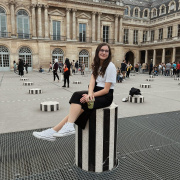
Erasmus+ student posing on the city square

Paris through Erasmus+: a journey that changes your view of the world

Gabrijela, Croatia, Age 23

Money comes and goes, but experiences and memories remain a lasting value.

I applied for the Erasmus+ mobility programme because I had dreamed of studying abroad since childhood. Although many people thought it was just a passing idea, I decided to take advantage of the opportunity offered during my studies. I see mobility as an important part of my educational journey, as it enriches me as a person. Through travelling, we encounter different cultures, values, and perspectives, which makes this experience truly unique.

Arriving in France was filled with excitement, but also a sense of uncertainty. Although I had often heard warnings about Paris being a challenging and unsafe city, I quickly realised that every place has its own challenges as well as its beauty. My journey began with my departure from Zagreb, and I especially remember the breathtaking view of the Alps during the flight. After arriving in Bagneux, the first moments of independence brought a slight feeling of unease, but within a few days, and with the help of new acquaintances, I quickly adapted. In a short time, I got to know the city, its transport system, and its way of life, and I began to feel at home.
During my stay in Paris, I met many people from all over the world. Different cultures, languages, and stories came together to create an unforgettable experience, and these friendships truly defined my time there. I did not see cultural differences as obstacles, but rather as opportunities for learning and personal growth.

France impressed me with its strong appreciation for culture and a lifestyle that emphasises a balance between work and leisure. Paris, in particular, inspired me—with its energy, art, and atmosphere, encouraging me to become a better version of myself every day. Although I did not have the chance to explore the entire country as much as I would have liked, the city gave me countless unforgettable moments and many reasons to return.

Some of my most memorable experiences include events such as Paris Fashion Week, visits to the Louvre, trips to places connected with famous artists, and everyday walks and gatherings with friends. Simple moments, like picnics or evening conversations, turned out to be the most valuable. Every day was different and special in its own way.

My daily life in Paris was a combination of academic responsibilities and exploring the city. My days usually started with working on assignments, followed by classes and time spent at the university, along with inevitable visits to Parisian bakeries. I used my free time for walks, finding inspiration, and socialising, while evenings were often reserved for shared moments with my housemates.
This experience had a significant impact on both my personal and academic development. I learned how to live independently, manage my time and finances, and adapt to new situations. I also had the opportunity to experience a different educational system and develop creative thinking through project-based work. Although it was challenging to balance responsibilities at two institutions, the support of professors and colleagues was extremely important.

Overall, I would rate this experience very positively, with some room for minor improvements in organisation. However, my independence and persistence played a key role in making the experience successful and fulfilling.

To students considering the Erasmus+ program, I would advise them to gather information in advance, stay organised, and be brave and open to new experiences. It is important to stay true to yourself and believe in your abilities, because with good preparation, everything becomes easier.

I believe that everyone should experience mobility at least once during their studies. It is a unique opportunity for personal growth, exploring the world, and creating memories that last a lifetime. Although it may seem financially demanding, what you gain in return far outweighs the cost. Money comes and goes, but experiences and memories remain a lasting value.
 

Updated on Thursday, 07/05/2026

Portrait of Gilles

Changing a habit means changing your life

Gilles, France

We are the ones who benefit most from our commitments

Let me introduce myself: I’m Gilles. I’ve always dreamed of going abroad, without really knowing what it actually meant. That desire probably came from my family and friends, or even from friends I hadn’t met yet.

When I heard about the Erasmus+ programme, it was a revelation: how had I managed to miss out on such opportunities all these years? Without wasting any time, I plucked up my courage and decided to embrace the adventure... And so I set off for two weeks in Hungary, then in Spain, surrounded by strangers who quickly became acquaintances and, for some, true friends.

These trips and encounters have allowed me to discover myself. I have often heard, particularly from the people I met in Spain, that every person we come across is a piece of the puzzle that makes up who we are. Today, I am convinced of this. Every experience, every interaction, every thought helps to shape the person I am...

I sometimes think back to the 18-year-old Gilles, who’s dreams were limited by what he thought was possible for him. Those trips shattered my filter bubble and made me realise that many things are far more accessible than we think, if we have the right information and support. Today, I realise that the environment I grew up in gave me access to these opportunities. My sincerest hope is that they might also reach those who, like me in the past, could not even have imagined that such opportunities existed.

I have learnt a lot. I had the opportunity to practise several languages, such as English, Spanish and Portuguese. Furthermore, I discovered the value of international friendships and the challenges faced by young people across Europe. I came to understand the differences between our societies, but above all, what deeply unites us as human beings.

Today, the map of Europe has become, for me, a map of memories and friendships, where every country is linked to a story, an anecdote and a person.

It’s not just a change of perspective; it’s much more than that. But you have to experience it to understand it. Now it’s your turn.
 

Updated on Monday, 11/05/2026

Erasmus+ participant

My Erasmus Experience in the Netherlands

Zrinka, Croatia, Age 19

You gain new knowledge, meet amazing people, and create unforgettable memories that will stay with you for a lifetime.

I had the opportunity to participate in an Erasmus+ program from July 25th to August 8th, 2025, in a small village called Orvelte in the Netherlands. The project was called Back2Basics (B2B), and it focused on simple living, cultural exchange, and teamwork through various daily activities.

During my stay, I took part in many different activities, learned about other cultures, and experienced camping in a completely new way. Life and culture in the Netherlands really impressed me. Everything is very organized, clean, and well-structured. People are relaxed, friendly, open-minded, and always willing to help. One of the most interesting things I noticed is how everyone rides bicycles—almost every person owns one, and the entire traffic system is adapted to cyclists. There are bike paths everywhere, which makes transportation very easy and safe. I also admired how well-maintained the houses and gardens are, and I was amazed by the many beautiful windmills.
The most interesting and memorable experience for me was a four-day camping challenge. We were divided into groups of four or five people from different countries and had to manage without money or phones, while finding our own food along the way. We went from house to house asking for food and accommodation, and fortunately, we were successful every day. We always had something to eat and slept in comfortable beds thanks to the kindness and generosity of the Dutch people. During those days, we also traveled by bike from place to place and covered a total of 120 kilometers. After the camping challenge, we spent four hours paddling canoes back to the village, which was both challenging and unforgettable. However, the most beautiful moments were the evenings spent with other Erasmus participants, sitting around the fire, talking, and bonding.

I met many new people from different countries and built wonderful friendships. I am still in contact with some of them, which makes this experience even more special.

Through this Erasmus project, I learned many valuable skills. I improved my communication and teamwork abilities through group activities. The camping experience taught me resourcefulness, effort, and perseverance. I also gained a deeper understanding of different cultures, which is extremely valuable in today’s world.

I would definitely recommend this Erasmus experience to others. It is the kind of program that makes you want to come back again. You gain new knowledge, meet amazing people, and create unforgettable memories that will stay with you for a lifetime. For me, this was truly a unique and special experience.

Food and activities were also an important part of the program. Every evening, participants from a different country prepared traditional dishes, so we had the chance to taste a variety of international cuisines. This was a great way to learn about different cultures through food. One of my favorite Dutch treats was stroopwafels, which we ate almost every day—they were absolutely delicious! Each day was filled with diverse and engaging activities, so there was never a dull moment.

Updated on Tuesday, 05/05/2026

Young woman with long brown hair, wearing a pink top and a lanyard, stands and smiles in front of science posters at a conference or academic event.

How Erasmus+ Rewrote My Medical Future

Nadja, Romania

Beyond the hospital walls, Erasmus+ taught me the value of a European mindset.

Erasmus+ is much more than a study program abroad; it is a launchpad that transforms your identity and gives you the confidence to compete at a global level.

When I applied for my mobility at the University of Ulm, it felt like a symbolic homecoming. Having been born in Switzerland and raised in Germany and Australia before moving to Romania for medical school, my life was a collection of different cultures.

Returning to Germany through Erasmus+ allowed me to finally connect these pieces. It was a journey of self-discovery that helped me turn my multicultural background into a professional strength.

During my two years in Ulm, I was privileged to undertake internships at both the Ulm University Hospital and the Ulm Military Hospital. These environments challenged me to grow in ways I never expected. I had to find my place within a highly structured system that demanded both rigorous discipline and a high degree of autonomy. One of my greatest lessons was mastering what I call "linguistic gymnastics", the humble art of switching between complex German medical terminology and simple, kind words to ensure my patients felt truly heard. Earning my Goethe C1 certificate during this time was a proud milestone, but the real reward was the trust I built with the people I treated.

Beyond the hospital walls, Erasmus+ taught me the value of a European mindset. Whether I was hiking through the Alps with international friends or walking along the Danube, which felt like a physical link to my family in Romania, I realized how much we can achieve when we bridge our differences.

The skills I gained through this experience gave me the courage to take my research to the global stage. It was an honour to present my teams work in the United States and having received the G. M. Jager Memorial Travel Grant for the 2025 Association for Research in Vision and Ophthalmology 2025 Conference, to begin a PhD partnership between Romania and Australia in October 2025 as well as commencing my doctoral studies at the University of Ulm in October 2024. I am deeply grateful for the mentors and the program that supported me every step of the way.

Today, as a Neurosurgery Resident in Târgu Mureș, I am proud to bring the best practices I learned in Germany back to my patients in Romania. I would encourage any student to take this leap. It reminded me that borders are just lines on a map and prepared me to be a doctor with a global vision, ready to serve my community with a broader perspective.

Updated on Wednesday, 29/04/2026

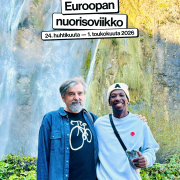
Kuvassa Clovis ja Pedja

“You can't know what a person has been through until you talk to them”

Clovis, Finland

I would give young people an upbringing that would make them feel accepted, cared for and loved, good hobbies and the opportunity to go to school.

Clovis Irafasha from Lahti, Finland, was encouraged by the trusted adults in his life at crucial moments. Shy as a child, he grew up on the football pitch and in international European Solidarity Corps volunteer projects to become an open, sociable and skilled people person.
 

Welcomed by a Croatian village community with open arms 

A short-term volunteer period made Clovis fall in love with Croatia. 

He became part of the Vrginmost village community: the children wanted to talk to him non-stop, the villagers would pick him up for futsal practice on Saturdays and it became a habit of his to sit down for coffee with a man from the village. On his birthday, Clovis was surprised by the villagers with a cake, congratulatory songs and a visit to an adventure park. 

Clovis also became close to Pedja and Maja from the hosting organisation, and even started jokingly referring to Pedja as ‘Papa Pedja’. The nickname came about when Clovis found it difficult to explain because of the language barrier that his own father had passed away. So he suggested that he could write down ‘papa Pedja’ on the form. 

“So I had a dad for a while,” Clovis laughs warmly. “Pedja and Maja were such lovely people – and they loved me!” 
Clovis reiterates that he feels compelled to return to Croatia – and he promised to do so to the young people of the village when he left. 
 

Helping others and getting to know yourself 

In Croatia, Clovis met all kinds of people, from babies to the elderly, while working in a daycare centre, a youth centre and a service home. Particularly memorable were an elderly woman who needed help chopping firewood and a more withdrawn youngster whom Clovis always tried to chat with. 

“Even today, Pedja and Maja thank me for gradually encouraging the youngster. It really stuck in my mind,” he says. “The grandma was always like, ‘Can I get you a drink, can I get you a Coke, can I get you a bun?’ You could tell that she was happy when we helped her. We were happy too. The help went exactly where it was needed.” 

The experience reinforced Clovis’s feeling that meeting people and working with young people is his thing. 
“It's simply the best! To talk to a person, to get to hear what their opinions and thoughts are, or if they have any concerns,” Clovis sums up. “You can't know what a person has been through until you talk to them.” 

As a counterbalance to all the socialising, Clovis also appreciated the serene village lifestyle. 

It calmed him down and helped him realise that he becomes overwhelmed if he keeps doing too many things at once. It is better to focus on a few of the most important things at a time. 

That being said, Clovis had almost too much time for contemplation for a while when his working partner had to cut their volunteer period short, as a result of which there was suddenly no one to keep him company at the apartment, apart from an attention-seeking cat. 

“I always end up missing Finland. Wherever I am, it's enough to be there for 2–3 weeks to make me miss it – my friends and everything,” Clovis admits. 

Fortunately, he was able to discuss these thoughts as well with Pedja and Maja. 


Delicious khachapuri and the splendour of Sámi clothing 

It was already six o'clock on a January morning, and Clovis was waiting in vain in front of his home for a friend who had promised to give him a ride to the train station. 

With the clock ticking and no sign of his friend, Clovis calculated that he had to jump in a taxi. He had more than a thousand kilometres of travel ahead of him towards Inari in Finnish Lapland and a team project at Youth Centre Vasatokka. 

“The Vasatokka project had quite a start, let me tell you! I almost missed my train. That was the most stressful part,” Clovis grins. 
He remembers the confused looks on the faces of passers-by as he lifted his suitcase onto his head and sprinted to the train just before it left the platform. From there began a two-week immersion into Sámi culture – with a little bit of Georgian culture mixed in too. 

In Inari, Clovis, together with other volunteers, organised an event culminating in a snow football match at Youth Centre Vasatokka. 
The team worked well together. Clovis got on particularly well with a Georgian volunteer with whom he still exchanges news on a weekly basis. 

“The Georgian bread with eggs was really good,” Clovis says, recalling the khachapuri made by his friend. “They also taught me Georgian folk dancing, and I even got compliments for my dancing from their mother!” 

The volunteers were also involved in organising the Skábmagovat Indigenous Peoples' Film Festival, selling tickets, building snow lanterns and cushioning seats with reindeer skins. The festival attracted visitors from as far away as China. 

Clovis did not know much about the Sámi before the project and a visit to the Sámi Museum Siida. 

“It was a wonderful culture! I loved those Sámi outfits,” he enthuses. “The way they spoke Finnish in Inari was also wonderful, the dialect is like another language.” 


Pushed forward by important adults 

Even as a young boy in his native Rwanda, younger children were always asking Clovis to play with them. His big sister would shoo the children away, only for them to return a few minutes later to ask again. 

However, the change in environment and culture was massive when Clovis and his family moved from Rwanda to Lahti, Finland, when he was 10. There he joined a football team, where he only dared to talk to three friends until the under-15 national team qualifiers were approaching. 

“The coach kept telling me ‘Clovis, you're going to get picked soon, so you have to socialise, otherwise you won't make it,’” Clovis recalls. 

Another encouraging adult was Irene from Lahti’s outreach youth work, who saw the potential in Clovis, who she had known for years, and got the 16-year-old excited about a volunteer team project in Portugal. 

Since then, Clovis has participated in three short-term European Solidarity Corps volunteer projects and two team projects in Piispala, in addition to the Vasatokka project. 

When asked about how he got involved in all these projects, Clovis’s answer is always the same: 

“It’s all Irene. She’s my agent!” Clovis jokes. 


Finland looks different when you look at it from Rwanda 

Clovis's perspective is broadened by his own Congolese family's background as war refugees and regular family visits to his native Rwanda. 
“I love how things are so easy in Finland. Many people don't see how easy it is to go to school, to get food, to find a summer job at the age of 15, to earn some money of your own here. There are no opportunities like that in our home country, which sometimes makes me sad – sometimes really makes me think,” Clovis says in a more subdued voice. 

If Clovis could fix anything in the world, it would be the future of young people. 

“I would give young people an upbringing that would make them feel accepted, cared for and loved, good hobbies and the opportunity to go to school.” 

When it comes to his own future, there is one idea that Clovis has been holding on to for some time: 

“Next year, while I’m still under the age limit, we’ll see about me doing a longer period of volunteer work.”


Text: Laura Mettälä


Clovis, 28, Lahti, Finland 
● Originally from Rwanda, lived in Lahti, Finland, since the age of 10. An educational and community counsellor who has worked with children and young people in a variety of settings: in a daycare centre, a youth centre, as a football coach and in a group home for orphans and refugee youth. Did DJ gigs in his younger days and continues to do occasional music promotional work. 
● Currently focusing on playing for the Finnish national street soccer team and preparing for the year's international tournaments in the Nordic countries and Mexico. 
● Dreams of continuing to work with young people and having children of his own. 
● Would make the world fairer by ensuring that all young people feel loved and have good recreational and educational opportunities – alongside ending wars, famine and water shortages. 
● Projects: European Solidarity Corps short-term volunteer project in Croatia in 2024. Sent by Lahti Youth Services. Team project at Youth Centre Vasatokka in 2024.
 

This interview is part of the European Youth Week, which takes place from 24 April to 1 May 2026 and is aimed at promoting youth engagement, participation and active citizenship by making the voices of young people heard. This year, the European Youth Week is dedicated to ‘Solidarity and Fairness’ and celebrates 30 years of volunteering in Europe.
 

Updated on Monday, 01/06/2026

Aleksandar Milošević_EMJM

Steps by STEPS

Aleksandar Milošević, Serbia

Suddenly you have the whole world around you, just waiting for you to extend your hand and say: ‘Hi, I’m Aleksandar from Serbia.’

“Where did you study your master’s abroad?”

“Everywhere a bit.”

This conversation has happened to me countless times, and I always like to respond this way, with a smile. It’s not a lie. I was part of the Erasmus Mundus STEPS (Sustainable Transport and Electrical Power Systems) program, a joint master’s degree organized by several European universities, which naturally means that you don’t spend your studies in just one place. In our case, those were the universities in Coimbra in Portugal, Nottingham in England, and Gijón in Spain — cities that I am proud to say became my cities.

It feels like I could write an entire novel about each of them instead of trying to squeeze them into a few paragraphs. How can I mention Coimbra without talking about students walking around in long academic robes like they belong at Hogwarts and eating pastéis de nata with a view of the Mondego River? How can I mention Nottingham without talking about the English passion for football felt in every pub, the legendary Nottingham Forest by the River Trent and the even more legendary English breakfast? And how can I mention Gijón without talking about San Lorenzo beach, which disappears and reappears twice a day with the tides, about fiestas, siestas, and the famous sidra — the local apple cider that must be poured from a height before you can drink it?

So instead of talking about these cities in detail — because I would easily get lost in memories of them, just like I actually got lost in their streets during my first days there — I will talk about the people and the experiences.

One of the best things about the Erasmus Mundus program is that, as the name suggests, it is a global project, not just for Europeans. Our small world included people from Argentina, Venezuela, the United States, Spain, Montenegro, Serbia, Eritrea, Lebanon, India, Vietnam, and the Philippines — quite a diverse group, as you can imagine. And that’s not all. Add to that all the people who came to those cities on a “regular” Erasmus exchange, and suddenly you have the whole world around you, just waiting for you to extend your hand and say: “Hi, I’m Aleksandar from Serbia.”

Aleksandar Milošević_EMJM

Every beginning is slow and filled with uncertainties — especially if you are a procrastinator like me who applied for a visa too late and ended up arriving a week after the semester had already started. But then you begin meeting people, and you quickly forget why you were ever worried in the first place. Because people are what make this experience so meaningful and unforgettable.

Looking back now, those first contacts seem almost absurdly awkward and clumsy — shy greetings to people who would soon become a very important part of my life. People with whom I would go to lectures, prepare for exams, and work on projects, but also share sunsets, celebrate Thanksgiving with dishes from all around the world, run into the ocean in January, and share both the happiest and the hardest moments in the following two years. In one word — friends. Perhaps even more than that, when you are so far away from your previous life, these friendships carry even greater significance. I still find it incredible how people from completely different parts of the world, cultures, languages, and traditions can fit together so naturally, as if they were always meant to end up in the same place.

Studying within different educational systems was also a unique and challenging experience. These systems were completely different from the one in my home country, and also very different from one another. In Portugal, the focus was on homework assignments; in England, on writing academic papers; and in Spain, on projects and laboratory work. Each city contributed in its own way not only to my education but also to the way I think and approach problems. It would be a lie to say that it was always easy, but when you go through everything together with your friends, and along the way someone brings freshly baked chocolate chip cookies or a slice of jamón serrano appears at just the right moment, everything seems manageable.

After that, the only real limit was how much free time we had. And we really tried our best to spend every free moment traveling, socializing, and just enjoying life. Whether it was crazy trips, tables full of food, drinks and people, crazy nights out until sunrise, or simply sitting in beach chairs like retirees — all those pictures still hang on my wall. It’s impossible for me to look at them without a smile on my face (and an occasional tear in my eye)

If you’ve heard how much a single Erasmus semester can mean to someone, imagine what four Erasmus semesters can do to a person. Four times as many adventures, four times as many fond memories, four times as many people…

It is often said that the only bad thing about Erasmus is that it eventually comes to an end, but I tend to disagree with that.

How can we speak of an ending when we are still in touch regularly, when we still organize reunions, when I know I have a place to sleep in almost every major city in Europe (and beyond), and when I am a proud host in my city for so many people?

Oooh no, my Erasmus didn’t end.

My Erasmus has only just begun…

Aleksandar Milošević_EMJM                     Aleksandar Milošević_EMJM

Updated on Thursday, 16/04/2026

Lan Batič

From DiscoverEU to finding new calling

Lan, Slovenia

This experience showed me that with the right support and a strong team, young people can turn their ideas into real change.

My name is Lan Batič, a student at the Faculty of Mathematics and Physics and a member of a team currently running our second solidarity project. I first heard about this opportunity during a DiscoverEU trip, where I immediately recognised it as a chance to broaden my horizons and step outside my comfort zone. The more I looked into it, the more I realised it was a truly unique experience for young people — one that offers a glimpse into a world that might otherwise remain distant or unfamiliar.

The opportunity gave me and my team the support we needed to turn our idea of improving young people's lives into something real. Along the way, we developed our organisational skills and got to grips with the financial side of running a project like this. That part was the biggest challenge for me personally, as it was the least familiar territory at the start. Being faced with a large amount of information and responsibility taught me just how important teamwork really is. It was precisely our collaboration and mutual support that helped us navigate the challenges more easily.

To any young person considering getting involved, my advice is simple: just try it. It is an incredible opportunity for personal growth, gaining hands-on experience, and making a genuine contribution to your community. Looking back now, I am proud of what our team has achieved. We successfully completed one project and are wrapping up a second just as successfully — and I truly believe we have brought something valuable to our local community. Something that would simply not have been possible without this experience.

There was also plenty of fun and enthusiasm from the young participants at our events. As a little anecdote — at two of our board game evenings, we introduced a game called Root. It was an instant hit, with participants immediately diving into its complex rules. At the very next session, everyone at the table was stunned when one of the young participants arrived completely prepared. He had written down the best strategies, knew all the rules inside out, and had mapped the optimal path to victory. Naturally, he won in just a few moves — which was all the motivation the others needed to come better prepared next time. On the day of that second event, in the spirit of fair play and by complete mutual agreement, we temporarily banned the tactic he had used, giving the other players a fair chance to first understand the game and learn how to counter that strategy.

Updated on Wednesday, 20/05/2026

Portrait of Makbule

Assisting visually impaired people in their daily activities

Makbule, Austria

In every volunteering moment – whether supporting someone with a disability, guiding a young volunteer through a challenge, or creating art side by side with children in my solidarity project – I’ve seen how solidarity can transform lives in small but powerful ways. Volunteering allows people to grow, to be courageous, to discover what they are capable of. It strengthens communities, builds empathy and reminds us that we all have something meaningful to give.

During her volunteering project in Spain, Makbule assisted blind people in their daily activities and participated in many trainings. Back home she supported volunteers who came to Austria first as a mentor, later as a European Solidarity Corps project coordinator for four years. 

In 2025 she started the solidarity project 'Töpfern auf Rädern - ClayConnects'. It offered free pottery workshops for young people with fewer opportunities and from marginalised groups. These workshops provided new means of self-expression and a tool for non-violent communication. 

  • 20 February 2026
    European Youth Week Exhibition Makbule.pdf
    English (414.09 KB – PDF)


Updated on Tuesday, 14/04/2026

Subscribe to