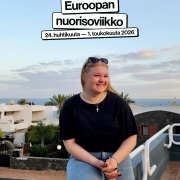
Regan Maher Local Elections

Regan

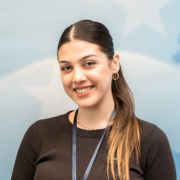
Regan, Ireland, Age 23

I would say if you’re looking to get involved in politics and elections for the first time and are adamant about being a candidate I would say go for it! It's a great experience and you learn a lot. It is something that requires a lot of time and energy.

What motivated/inspired you to get involved in the local elections in your county?

Well, I suppose my interest in politics started when I was about 15 or 16 years and since then politics has been one of my main interests. Throughout the years I thought of running to be a public representative, but I always put it down to being a pipe dream - something I would’ve liked to have done, but never pursued. I believed I had the right intentions and qualities to represent my community, that I had skills that were transferable to being a public representative and could contribute to positive change within local government but just because I think that of myself didn't mean others did. So, when I was approached, and it was suggested to me to run I decided to bite the bullet and say yes. It reaffirmed what I believed about myself in that instance. While that was the more personal motivation aspect, the external motivation for me was wanting more youth presentation in politics. There are two cohorts of young people who I believe deserve a louder voice in the public arena. One, young people under 18 years, who do not yet have a voice in terms of ability to vote and the other young people 18-29 years who are currently facing many challenges that many in positions of power haven’t faced when they were that age, because times were different when they were younger. There wasn’t a housing or student accommodation crisis, or increased  costs associated with higher education. Because the majority of public representatives are that bit older the experiences of young people are not adequately represented or considered.

What did it mean to be a candidate?

To me being a candidate meant putting myself forward to my community and asking for their confidence and with that the chance to represent them and bring a fresh and new perspective to the council. It meant asking for the confidence of voters in my ability to deliver for them and act in their best interests. It also meant accepting the responsibility and commitment of working on their behalf for the duration of the term in office if elected. As well as fully realizing how much of an immense privilege that opportunity would be if I was successful. 

What did you have to do as a candidate?

In the first instance I had to be officially selected as a candidate by the local party members at something that is called a selection convention, this is where members vote for who they wish to put forward as a candidate(s) and then forms are filled out by the candidate and pictures are taken. Portraits for leaflets and election posters must be taken, leaflet content like a short bio and priorities need to be written. A team needs to be assembled that will help with canvassing, putting posters up and also take down after the elections. Canvassing needs to be planned and prioritising of areas to canvas. I had a short enough campaign of 5 weeks from when I was selected to polling day and while 5 weeks sounds like a long time, in election time it flies by. Canvassing is the main thing that occupied any free time I had outside of work. If I wasn't at work I would be somewhere in the LEA (local electoral area) knocking on doors and engaging with people. Canvassing for me was the most daunting thing about running but once I got used to it i loved it. Social media of course is part of the equation for getting yourself out there and seen but as well as that traditional media plays as much as an important role as social media. Some journalists may reach out for interviews or press releases around your key issues and priorities are issued in the media as well. 

What did you learn from running as a candidate

I learned a lot as a candidate, I gained a better understanding of my community's needs and the importance of connecting with people and truly listening to their concerns and issues. Some issues are easily addressed without needing to hold office, it’s just about making people aware of the support and options available to them and assisting them through the process. I gained a level of fulfilment throughout the process. I really enjoyed meeting and talking with people, understanding where they are at and what's important to people - being able to help where I could and seeing what it meant to people.

Resilience was definitely another thing I gained during the experience particularly canvassing, you're never too sure what kind of reception you’ll receive when someone opens the door, most people are pleasant or more than pleasant regardless of if they have any intention of voting for you but there is a small minority of people who unpleasant or rude to deal with and being able to hold yourself in those situations is something you have to be comfortable and confident doing.

What advice would you give to others (including young people in Europe) and is it worth getting involved with elections in this way?

I would say if you’re looking to get involved in politics and elections for the first time and are adamant about being a candidate I would say go for it! It's a great experience and you learn a lot. It is something that requires a lot of time and energy. I would suggest contacting someone who has run successfully or unsuccessfully and have a conversation and ask questions of what is expected of you, what should you expect and get a better understanding of the process. If you're not interested in being a candidate or running in any election there are plenty of other ways to get involved in elections from canvassing, leaflet drops, putting up posters, doing social media, tallying at the count centre, etc. I would definitely encourage any young person to get involved in elections this way, it is an enjoyable experience, and you learn so much. Elections are such an exciting and important part of democracy and I think it's more than worthwhile getting involved and seeing what goes into it behind the scenes

What did you gain from being a candidate and do you have any plans to be a candidate in future?

I gained a lot, from personal growth and new skills, developing current skills to meeting new people and expanding my network. I gained friends and relationships I wouldn't have otherwise. I have people I consider mentors who I continue to learn from well after the election is finished. I mentioned it earlier but gaining that understanding of the true needs of the community was invaluable. 

Do you think it is easy for young people to get involved in politics / what are the barriers for young people getting involved in politics and any suggestions on how to overcome them?

In Ireland I don’t think it is easy for young people to get involved in politics, I don't mean that in a sense that there are barriers there for young people that aren't there for others when joining a political party or trying to run in elections, but in the sense that I don’t think we have a good enough political education for young people that encourages active participation in society in this way. 

A lot of young people do not have a good working understanding of how governments function at a local, national and particularly European level. I think more needs to be done in that area. Only when people have an understanding they can see where they can fit. I think for those who have the understanding of politics and how it functions I would say the main barrier for those wanting to run as candidates could be finances - election campaigns can be expensive and it would be worth seeing if you could fundraise or if the party could cover the expenses of posters and/or leaflets.

Regan ran as a candidate in the local elections in Co. Galway, her story was nominated by Youth Work Ireland Galway

Updated on Tuesday, 17/02/2026

Urša

My volunteering experience

Urša, Slovenia

Time went by very fast and when I got back home it almost felt like no time had passed at all.

I first found out about the European Solidarity Corps in a youth center back home. There I met volunteers from different countries and I got excited about the possibility of spending time abroad as a volunteer. After some time I decided to do it and later I found my opportunity to go to Finland for 9 weeks.
I was really excited but also a little scared. I did not know what to expect and that made me nervous, but when I came there that fear went away instantly. Everyone welcomed me with open arms and I knew that I came to the right place.

In the time that I spent there, a lot was going on. I met a lot of new wonderful people, saw some of the country, traveled to other countries nearby and learned a lot of new things. Time went by very fast and when I got back home it almost felt like no time had passed at all.

I am very glad that I had this experience. It was something that I was very curious about and I am happy that I did it. I got a new perspective on my life by getting a little distance and changing my routine. I also got a better understanding of what I want to do and what I want my life to look like.

I would recommend this experience to everyone who is even a little bit tempted to do something like this. It really is a wonderful experience to have. 
 

Updated on Tuesday, 17/02/2026

A young woman with long brown hair is sitting on a wooden chair by a window. She is wearing a blue and white striped shirt over a white top, with sunglasses resting on her head. A potted plant is on the windowsill, and the room has a warm, cosy atmosphere.

DiscoverEU Inclusion Action - Marilida

Marilida, Greece

It's an experience you'll never forget—one you’ll be telling your kids about someday.

I participated in a DiscoverEU Inclusion Action Project, and all I can say is, "Do it without a second thought." It's an amazing and creative initiative that lets us "new adults" take control of our lives and travel across Europe affordably and ecologically.

My friends and I chose to explore Scandinavia—it was an unforgettable experience! We traveled around Denmark, Sweden, and Norway using eco-friendly transportation, like trains, which gave us the chance to soak in the beautiful countryside. Honestly, when else will you get to visit three countries in just six days?

This program helped us manage our budget, plan our trip around everyone's needs, discover hidden gems in each country, and, of course, meet awesome people and make lifelong friends.

My favorite part? Cruising through parks and nature on electric scooters—it was budget-friendly and kept us aligned with the program’s environmental goals. I have to admit, I was a bit skeptical at first. I didn't really get why they'd pay five 18-year-olds to travel around Europe. But after this trip and everything I learned, I’m so glad I took the "risk."

It's an experience you'll never forget—one you’ll be telling your kids about someday. Sure, staying in a hostel might seem a bit intimidating at first—sharing a room with strangers can sound sketchy. But you quickly realize it's an awesome way to bond with your group and feel the team spirit.

Yeah, you might face some challenges and disagreements along the way, but in the end, you work through them together. After all, everyone’s there for the same reason: to be united, to feel like part of something bigger, to explore the world, and to discover themselves.

Updated on Tuesday, 17/02/2026

Julia

Volunteering in Split

Julia, Italy

I recommend you to come to Split because people are really nice.

Hi, I'm Julia.

I'm coming from Italy and I'm here in European Solidarity Corps and in particular for the organization HELP. 

I chose Split because I've been here for three times before this one and I really like the city, but I've always been here during summer.

So I want to experience how is life during winter times.

And what I can say I recommend to you to come to Split because it's people are really nice.

The weather is warm, even in December.

And what I learned from this experience? I mean, I found out something new about the topics, which is like helping people that use drugs.

And I also learned a little bit more how to approach young students and maybe explaining them like the risk and effects of taking drugs.


Updated on Tuesday, 17/02/2026

Katarina

Volunteering in Split

Katarina, Italy

Everyone should choose Split.

Hello, I'm Katarina. I'm from Italy.

I've been here for two weeks now and on Tuesday I'm gonna leave. So it will be 16 days in total because it's a short term volunteering project.

I chose Split because of the sea, because like the weather is really nice.

It's not a small city, so there's things to do every day.

My first impression was that people here are really nice.

I like the sea in general. I like the weather, beside for the wind part because I don't really like wind.

I think that another volunteer should choose Split because of the things that I just said and also because there are a lot of opportunities to, you know, having things to do activities.

I'm from HELP, so it's an organization that does harm reduction and prevention for drugs and other substances.

And I learned how to live with other people because I'm living with other people in my house and I'm satisfied.

I learned how to cooperate, how to improve my skills of talking in public and also I learned about many things about harm reduction and so things about my program.

Updated on Tuesday, 17/02/2026

Efe

Volunteering in Split

Efe, Türkiye

I learned how to coorperate with others.

Hello, I'm Efe, I'm from Turkey and I am here for two months and I will be here for another two months.

And why I chose Split is because the sea, of course, and the way of living.

And one of the things I really want to do is that I found here in HELP, in my organization.

And one of my first impression was that the city is really chill and it's very like calm, which made me feel calm.

But what did I learn?

Yeah, I can also say that I learned to feel chill and feel more calmer and also cooperate with others in group projects and that kind of.


Updated on Tuesday, 17/02/2026

Ud

Volunteering in Split

Ud, France

I learned how to not be afraid to talk with people even if you are not good in English.

My name is Ud and I come from France.

I'm here for seven months. I will be here for seven months and I'm here since two weeks.

I have good impression of this city because it's like, not too big, but not too small.

And you have the sea also.

And the people are really welcoming.

We have been yeah.

Like the people are have been really nice with us.

And also the city is really great.

So I have very very good impression. 

Don't be afraid to talk to people even if you don't talk the language or if you're not really good in like the language, because I'm not really good in English, so it's kind of great.

But I try my best and I think that's it for the moment. 

I chose Split for the nation because like the association and what they did interested me, but also for the city because it's like not small city lost in the country and you have also the sea so it's great too.

Updated on Tuesday, 17/02/2026

You

Volunteering in Split

You, Germany, Age 19

I felt like I'm in home because everyone was smashing down the boundaries immediately.

Hi, my name is You.

I'm from Germany and I'm staying for two weeks and I'm also 19 years old and I chose Split because of the organization.

I thought harm prevention and harm reduction is something that's really interesting.

And also I want to study medicine, so I have prior knowledge on different drugs and also different diseases related to drug use.

So that's the reason.

And my first impression of Split and the organization was really positive.

I thought that the people were really friendly, really welcoming.

And although I'm a foreigner and in a way also a tourist, I kind of felt like at home because everyone was just, just like smashing down the barriers immediately.

Updated on Tuesday, 17/02/2026

Two people stand outside a building with suitcases, smiling at the camera. They are dressed warmly, suggesting a travel or holiday setting. The building has a rustic appearance with stone and wood elements.

With a little courage, everyone’s lives can change too.

Cosmin & Tatiana, Romania, Age 17

Remember, you can always become a better version of yourself!

The youth exchange „Eco-Art for change” was implemented by the Romanian Humanist Association through Erasmus+ Accreditation, gathering 35 young people from Romania, Bulgaria, Greece, Italy, Spain and Portugal. The main concept behind the project was to encourage environmental awareness and activism through artistic methods (theatre, storytelling, drawing and music). During the 7 days of the activities participants learned more about climate change, environmental green practices and activism through theatre plays, scenario creations, collaborative writing and drawing, walking through nature, creating songs and innovative musical instruments. In the end, they have developed a Green Book, which includes 5 short stories of promoting ecological activism for change, that is available on our social media pages and in physical version. 

Cosmin and Tatiana are two of the young people that got involved in the project and we invite you to discover their stories below.

“Hello! My name is Cosmin, I am 17 years old, I am from Romania and I have a passion regarding Erasmus+ projects and everything related to youth opportunities offered by the European Union. I am a very sociable person with the need of knowledge and experiencing. I am always eager to go out of my comfort zone and try new things, visit places unknown to me and learn as much as I can. 

The year 2024 was important for me when talking about Erasmus+ projects. I have participated in two learning mobilities with the Romanian Humanist Association. 

One of them was called “EcoArt for Change” and it took place in November in Romania, Bușteni. Every project is different, and for me this one will remain in my memory because of the people I met there, having doubt at first about coming in the project or not. I have also found out about myself that I can facilitate, because of the activities we had to come up with and implement them. Of course, there could be obstacles in the way such as people not being on time, or the lack of ideas or the participants not paying attention to what you are saying and I think it represents a very good patience exercise.

This is only a part of my story that I can share with anyone. I wanted to talk about this so that I can convince at least one person that Erasmus+ projects have only benefits and can improve your life in a way you would not think about. I encourage everyone to get involved in these types of activities because for me it was the best decision to participate in the Romanian Humanist Association projects. Remember, you can always become a better version of yourself!”

“Hello, my name is Tatiana, and I am currently 17 years. The most recent project that I’ve been to, in Busteni, Romania emphasized environmental awareness. Through activities like researching environmental issues, performing theater, musical and artistical tasks , and capturing photographs during nature walks, I gained a deeper appreciation for sustainability. Writing games allowed me to channel my passion for self-expression. And what stood out to me was the chance to facilitate my own activity, where my leadership and organizational competences significantly improved. 

In spite of considering English one of my strengths, I’ve become aware that the need for constant interaction and mutual understanding in a multilingual setting always pushes me to constantly evolve and adapt.  In almost every project there is an intercultural activity where each country brings some traditional dishes/treats, not to mention the exchange of many sayings, phrases, words, and over time, imitation of other country’s accents each other's accents.

And that is most entertaining thing that makes me get out of my confort zone: interacting with people from such diverse backgrounds, learning about their lifestyles, their stories. Each time I get such a deep feeling of sonder, and it also makes me aware of my condition, my country, my values, and how much is there to be learned from every person that I encounter, especially those that take up the opportunity to participate in an Erasmus+ project.

All in all, for me, Erasmus+ changed my life. I will be forever grateful that I got the spark of these adventures from such a young age, and I am sure a bright future is waiting for me, where I can value all the competences I developed. Not only do I recommend engaging in these projects, I hope every teen realises what is waiting for them out there, and with a little courage, everyone’s lives can change too. ”

Updated on Tuesday, 17/02/2026

Nicola Strappazzon

YAMAG, the Voice of Youth

Nicola, Italy

In a rapidly evolving society, where the engagement of younger generations in the life of their country is increasingly at risk, gaining a clear understanding of the dynamics at play and the actions required to bridge existing gaps, offers a glimmer of hope.

My name is Nicola Strappazzon, and I am from Italy, specifically from the province of Vicenza. Over the past two years, I have served as an assistant project manager for the YAMAG project, co-funded by the European Union and part of the Erasmus+ programme. The project brings together local public administrations and third-sector organisations from Italy, Spain, Croatia, and Romania. My involvement with YAMAG began during a civil service experience, a year-long programme for young people aged 18 to 29 to contribute to their communities by serving in local organisations. The civil service placement I chose was at the Eurodesk point, which also serves as the Youth Information Office (Informagiovani - Infoeuropa) of the Municipality of Bassano del Grappa, a service closely linked to youth policies. During this time I began a collaboration with the office as an internal operator, supporting every phase of the project, which unfolded and developed over 24 months. 

Each phase of the project was coordinated by one of the partners, while the Municipality of Bassano del Grappa, as the lead organisation, was responsible for overseeing the proper implementation of the planned activities. The YAMAG project is dedicated to fostering a more active and meaningful role for young people in shaping their communities and societies. It seeks to promote civic and democratic participation among youth, not only at the local level but also across Europe, recognising the importance of empowering young voices in broader decision-making processes. 

By actively listening to their concerns and embracing their innovative perspectives, the project aspires to build stronger, more meaningful connections between youth and institutions, bridging gaps in understanding and fostering mutual collaboration for a better future.

As the project draws to a close, it is evident that YAMAG has been an opportunity not only for me on a professional level but also for all the parties involved. 

In a rapidly evolving society, where the engagement of younger generations in the life of their country is increasingly at risk, gaining a clear understanding of the dynamics at play and the actions required to bridge existing gaps, both on the part of institutions and their representatives as well as the youth themselves, offers a glimmer of hope. 

The project presented a powerful example of municipalities and organisations from different European states coming together to listen to voices, voices that are growing fainter. The sense of apparent powerlessness echoes in the shared narratives of young people: their actions and their inaction are both a call for help, representation and understanding. They are crucial to building solid foundations and securing a sustainable future for society. They are the future. In this context, YAMAG has acted as a spark, igniting an engine that could concretize tangible impacts in the near horizon, inspiring people, Institutions and the new generation in engaging in initiatives with the same goals, to carry forward the same vital message.

Updated on Tuesday, 17/02/2026

Subscribe to