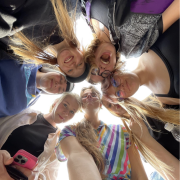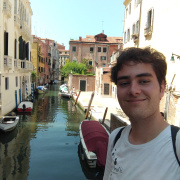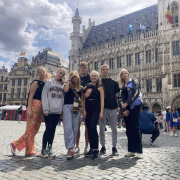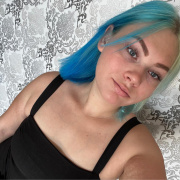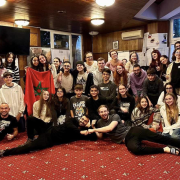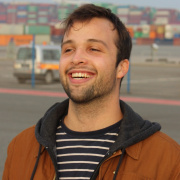

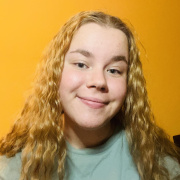
image of girl

European Solidarity Corps in Styria

Hazal, Austria

The European Solidarity Corps offers a lot of possibilities to discover not only new things about a country but also about oneself.💙

My European Solidarity Corps volunteering experience has been a transformative journey full of personal growth, meaningful connections, and unforgettable moments. As a young person eager to develop myself in the field of content creation for social media, which is independent from the field of translation I studied, and at the same time to make a positive impact through volunteering, I embarked on this adventure with a strong desire. Little did I know that this experience would bring me memories I could never have imagined. 

My Corps journey started when LOGO youth management accepted me to support their team in content creation for social media, which is exactly the area I wanted to develop myself in. Whether it was improving my German, having unlimited opportunities to develop myself in graphic design and video editing or taking part in the organization of events, each task left a lasting impression on me. 
 

One of the most enriching aspects of my Corps experience was living and working in a foreign country, interacting with locals, colleagues, and other volunteers. All of this has allowed me to broaden my horizons. Especially the chance to travel to other European countries! I had never been in such a multicultural environment before, so learning about different cultures first-hand showed me the beauty of cultural diversity and a broader perspective on the world. 


As a first-time international traveler, I can't say I had many difficulties. Adapting to a new environment, language barriers and cultural differences can be difficult, but they are not insurmountable. And with every obstacle you face you become stronger and more resilient. In fact, it's all part of the experience! Also, Graz is a great livable city where you can socialize easily. My organization and volunteer friends also always supported me and made me feel like I was never alone. 


It was also a great work experience for me, I was able to experience the office environment that I was so enthusiastic about. I learned a lot with the help of my colleagues. Seeing the tangible improvements of the work I was doing in my organization was one of the gratifying parts of my Corps experience. It showed the power of small acts of kindness and dedication. 


My European Solidarity Corps volunteering experience might be the best year of my life. I have made so many precious friendships, so leaving Graz and each other was very hard for all of us. This is an experience I will treasure forever, and I want to encourage others to embrace the transformative power of volunteering through the Corps.  

Updated on Tuesday, 17/02/2026
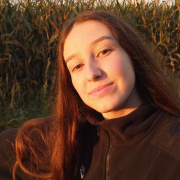
Anastasiia in Bohinj

Volunteering experience at Zavod Nefiks

Anastasiia, Slovenia

After the move, I needed to adapt to the new environment. Of course, the best way to integrate into a new society is volunteering

Anastasiia, a youth and student worker and university lecturer from Russia, joined Zavod Nefiks in 2023 as an international volunteer.

In Russia, she worked at a large university, was engaged in educational and extracurricular work with students, was their mentor, as well as a teacher of social work. In 2022, Anastasiia chose to move to Slovenia, leaving her family, friends and beloved job in Russia. Since Anastasiia worked in Russia in the field of education, she chose the legal path of moving through obtaining another diploma in Ljubljana.

“After the move, I needed to adapt to the new environment. Of course, the best way to integrate into a new society is volunteering. This means new acquaintances, immersion in the social sphere of a new country, acquaintance with systemic work. I started looking for various volunteering programs and learned about the European Solidarity Corps, submitted two applications to two organizations and received a response from Nefiks.

Volunteering at Nefiks is very similar to a part of my previous work - we also work with young people, inform them about various opportunities, and help them find their own career path. Specifically, my responsibilities include posting information and articles on websites, creating graphic and video content. I really like the staff of the organization - young, sympathetic and flexible people with whom it is pleasant to work.

For volunteers looking for vacancies in the European Solidarity Corps, I would recommend choosing those areas that you really like and resonate with your values. Don't just apply, get to know the organization online, check out their social media and what they do. If you really like the project - bingo! Feel free to apply.

When you arrive in a new country, you must respect the history of this country, know the language, laws and integrate into society. For me, volunteering in Nefiks was really a bridge to immerse myself in Slovenia.”

Updated on Tuesday, 17/02/2026
Training team in Arad

Facilitation skills for inclusive education activities - training in Arad

Beata, Hungary

At the end of January in 2023, I participated in the training "Facilitation skills for inclusive education activities" in Arad (Romania) together with young people and youth professionals from Italy, Spain, Portugal, Greece, Turkey and Romania.

During the eight days we tried to address the issue of how to achieve full inclusion not only in education but also in everyday life. What opportunities and tools exist to ensure that people with learning difficulties, physical or mental disabilities receive the quality education? Through playful exercises in small groups, we clarified concepts such as the difference between inclusion and integration, shared our own experiences and tried to suggest solutions on how to make progress with small decisions and changes.

The other focus of the training was to learn facilitator/trainer competences, so after the theoretical knowledge, we had the opportunity to hold a workshop for our peers on the theme of inclusion.

Of course, there was also time for relax: in the evenings we went for long walks in the centre of Arad, along the river, played bowling or just sat down somewhere to talk. The host organization provided a free day, which most of the team spent in Timisoara, with a free guided tour of the city.

Updated on Tuesday, 17/02/2026

Liva, Ida and friends

Sabbatical year in Europe

Liva and Ida, Denmark, Age 18

We didn't so much ask ourselves "Why?" but rather: "Why not?"

In 2021, my friend Ida and I applied for a DiscoverEU interrail pass. We had heard about the competition through our high school and although I had thought at first that it would be impossible to win, Ida had a good point; That we didn't win at all if we didn't participate. So we did.
Both Ida and I are very curious about both culture, history and new experiences, as well as being very adventurous, and a train journey throughout Europe therefore did not seem like a bad way to start our upcoming sabbatical year, so we applied and – to our great surprise – won.


We spent the summer saving as much money as possible, as well as carefully planning our trip. We decided to travel through Germany, Holland, Belgium, France and Spain, as we knew all along that the trip would led us to going to Spain, as we both majored in Spanish in High School and really liked it. Ida is half Dutch and i had never been there before, why it seemed like an obvious choice. All the other countries were chosen fairly randomly, and in terms of which cities we went to, we didn't so much ask ourselves "Why?" but rather: "Why not?". We took that mentality with us on the rest of our trip, and as a result we met many different people, which was probably the best part of the trip.


We saw so many amazing places and ate delicious food, but the best memories definitely came from the evenings spent hanging out with other young travelers at our hostel. We went to restaurants and karaoke bars and are taking with us a lot of good stories from all over the world. In addition to that we also have some lovely memories and pictures of beautiful places. A canal cruise in Amsterdam, a lookout over Barcelona, cathedral in Valencia and just the whole inner city of Bordeaux. The last one mentioned is probably what impressed me the most; The whole inner city of Bordeaux consists of the same beautiful polished stone,  and tiles with old buildings, bridges and archways. Although Bordeaux was the most beautiful place we were, all the places made their own impression. Dan Haag was adorable, Hannover was interesting and Seville was charming. It's the place that I still recommend people to go to. Plaza de España, flamenco, sangria, tapas and the nicest people of our entire trip. It was the longest stay of our trip and we were not disappointed. The Castle of Alcazar was probably the best thing we saw; Truly a fantastic preserved image of what Spain once was and how it became to what it is today. 


The hardest part of the trip was deciding what we wanted to see. Unfortunately you don't have the time to see everything, but recommendations from other travelers/locals often turned out to the best things we saw. Luckily you can always go back to Europe and visit most of the places again. Ida and I had chosen to book our hostel well in advance, as we wanted to save some money. 

We both had limited amout of time to save up money for the trip, but if I were to go again I would definately work to earn some more money, so we would have more flexibility on the trip, if we wanted to take an extra day here and there. This may also be one of the most important things I have learned through the journey; Planning is not always the right way to go. Sometimes you just have to jump in with both feet. 

If anyone else is considering going on a similar trip, this is probably my best advice. That, and lots of sunscreen and a good power bank:  That's how you get far!

Updated on Tuesday, 17/02/2026

A photo of Eva on the beach in a pink jacket

Never underestimate the impact you can have

Eva, Slovenia

That's our mission and our motivation.

With the help and motivation of the youth center CID Ptuj and as part of the Erasmus + program, I participated in the international event Mental Health in Youth Work: Inspirational Event in Portugal in May 2023.

Contributing to an inspirational event on youth mental health as a social work student, I have come to understand the complexity and importance of prevention in this field. The first day, filled with an introductory lecture, team building, workshops, and 'learning islands' on AI in mental health, reminded me of the importance of active listening and avoiding negative attitudes that could lead to despair or depression.

The second day was marked by provocative debates and reflections on the future of youth mental health. The realization that artificial intelligence can serve as a crucial tool in youth mental health was a breakthrough. Upon recognizing that every small change can alter an individual's life, I also understood my role in this process.

Throughout both days of the event, we connected in various ways with the concept of weather. I pondered my 'mental weather', the 'umbrellas' of protection and support that I use in challenging times, and the ways in which I can direct my work in the youth sector to 'shine sunlight' into the lives of young people.

If I had to give advice to other young people considering participating in similar activities, I would say it's worth it. Never underestimate the impact you can have, even if it seems small. Like the boy returning starfish back to the sea, we can make a difference in individuals' lives with our work. That's our mission and our motivation.

Updated on Tuesday, 17/02/2026

alex

Two totally different voluntary projects

Alexandra, Luxembourg, Age 20

...it brings you out of your comfort zone and makes you grow in ways you would never have in your country.

After finishing highschool, I always wanted to do a gap year to experience life and the world in a completely new way. I chose to do two totally different voluntary projects.

I worked in a wildlife hospital in Greece, which consisted a lot of routine work like preparing the food and cleaning the cages. What made this special was the opportunity to observe the vet examining or doing small operations on the animals. Other than that, the volunteers that I was living and working with made this experience unforgettable. I spent almost every minute with my roommate, which made us really close friends. Living in Greece and interacting with locals who went through the financial crisis and were licing with the consequences now made me aware of how privileged and wealthy we are in Luxembourg and how most of us take that for granted. It really made me count my blessings. 

I did my second voluntary project in Portugal. I worked in a daycenter for disabled people. They proposed a variety of activities to develop specific skills. They went to the shopping mall or restaurants with them for example to develop the social and communication skills. They also did things like sports, swimming, horse riding and crafting, which is supposed to combine fun and learning. I enjoyed enteracting with the disabled people even though I didn‘t speak Portuguese very well. Lots of them were unable to speak anyways, so we communicated mostly through body language. If something was unclear though, the educators who spoke English were always there to help.   

Apart from work, my free time in Portugal was literal heaven. I met so many beautiful people and we had so much fun in Lisbon, going to the beach and doing small trips to explore the rest of Portugal. I feel like in such projects you make completely different connections, sometimes they are so short, yet so meaningful.

For my personal growth, this experience was also extremely valuable because I learned to say No to people and situations I felt uncomfortable in an instead do what I really want to do. 

In general I would always recommend living or working in a foreign country for an extended period of time because it brings you out of your comfort zone and makes you grow in ways you would never have in your country.

Besides, it looks good on a CV;)

Updated on Tuesday, 17/02/2026

groupe

European Youth Event

Sixtine, Luxembourg, Age 30

The friendships you make here will stay with you forever.

Hello, Wilkommen, Moien, Bonjour!
My name is Sixtine and I'm here today to tell you about the European Youth Event, or EYE,
held in Strasbourg from June 9 to 10.
The aim of EYE was to bring together thousands of young people, aged 16 to 30, from all
over the European Union and the rest of the world, at the European Parliament in
Strasbourg and online, to share, exchange and shape their ideas for the future of Europe.
Why young people in particular? Because of the particular European and global context in
which we find ourselves following the latest crisis, but also because the European elections
of 2024 are fast approaching, and the parliament is doing everything they can to increase
youth involvement and motivate them to go to the polls.
Eurodesk Brussels coordinated our delegation, while I represented Eurodesk Luxembourg.
There were 29 young people and accompanying adults, with participants from Germany,
Belgium, Spain, France, Ireland, Italy, Romania, Sweden... a great team!
We all met up in Strasbourg: some arrived together, others alone, but on Thursday June 8,
2023 we were all there! The next morning, the alarm went off early for the whole delegation:
no time to lose! 
First step: the inauguration of the EYE Village in the presence of the Mayor of Strasbourg,
Jeanne Barseghian, and Fabienne Keller, former Mayor of Strasbourg and now Member of
Parliament. After some very interesting speeches, and a question-and-answer session that
didn't shy away from touching on delicate topics like the recent scandals, our delegation split
up so that everyone could get on with the activities they had chosen.
For me, this meant going to Parliament to attend the opening session in the Hemicycle, with
President Metsola. Or trying to: unfortunately, the organisation of the security checks at the
entrance caused such a queue that I ended up missing it completely. But the feedback I got
described a very interesting speech by the President:
"[This event is] The flagship event of the European Parliament. I and my colleagues here are
extremely enthusiastic and have been looking forward to this event, where you will hold us to
account. Tell us what you like. And above all, what you don't like. [...]I invite you to take
advantage of this opportunity to talk, listen, network and learn. To meet new people. Don't
just talk to your travel companions. Don't just use the language you're most comfortable in.
The friendships you make here will stay with you forever.
My second activity was extremely interesting, and worth the long wait to get in: a discussion
on multilingualism in Europe, chaired by American linguist Erin McInercy, and Alsatian MP
Victor Vogt, who campaigns for the preservation of Alsatian! Being both Belgian and
Luxembourgish, and therefore representative of the only two countries in the European
Union with three official national languages, I couldn't miss it! The discussion was
fascinating, not only for the linguistic, sociolinguistic and neurolinguistic aspects, but also for
the political aspects of languages and their use across Europe.
Then I took part in an Escape Game organized by the ERYICA Association on information,
access to information and fake news, which was very interesting and enabled me to
exchange ideas with young people from Turkey and the Czech Republic.
After that, I wandered around the parliament and tried out various activities open to the
public, particularly in the area dedicated to languages! And did you know? Luxembourgish is not one of the 24 officially recognized languages of the European Union! In fact, at the time,
the Luxembourg government only indicated German and French as their official languages.
To end a great day on an even greater note, our delegation met up at the EYE Village to
enjoy the food trucks and open-air concerts as part of the European Emerging Bands
Contest.
The next day, we got up early to make sure we could get into Parliament in time for our
activities. My first activity of the day took place in the hemicycle, and I have to say it's an
impressive place! It's huge, and very modern, and it was fascinating to see where the MPs
work, of course, but also where the interpreters are and how the translation tools work.
Some members of the public had their own sign language interpreter with them, although the
hemicycle had screens on which the translation was live. But I assume that the parliament's
interpreter was interpreting in English sign language, which of course differs from French,
German and so on.
The conference I attended was on the social gap in Europe and the different forms it can
take. The speakers - a pleasant surprise to have a 100% female panel! - were Belgian MP
Sara Matthieu, Sabina Gylsheni, from the European Centre for Social Welfare Policy and
Research, and Rosario Ortega, representing an association promoting the inclusion of
disabled people. Overall, the conference revealed that while much progress has been made
in recent decades, much remains to be done, and the recent crises have not helped.
I then spent the rest of the day exploring the parliament and the village, and chatting with
other young people, asking them for their views on the event, their expectations, and what
they see as the biggest issues for young people. Unsurprisingly, ecology and social
inequality were the most frequently mentioned issues, followed by human rights. Mental
health and access to it was also raised as an important issue, especially after the multiple
crises of recent years. Their main aims were to learn more about parliament and how it
works, as well as the impact of the decisions it makes and the opportunities it creates for
young people.
I was also able to talk to a delegation from Luxembourg, more specifically students, from
3eme and 4eme, and their teachers, from the Lycée Hubert Clément, one of the high
schools involved in the Europroject. They’d loved the conferences and discussions, as well
as an activity revolving around European cinema and film writing. But they also admit that
they were by far the youngest participants, and that some of the topics were things they'd
never thought about before, or that didn't concern them yet. Coupled with the language
barrier - English being the language of the event - they weren't always able to follow
everything as they would have liked. However, they really enjoyed their time at the EYE, and
were keen to learn more about European opportunities... which I took the opportunity to tell
them about Eurodesk, the Opportunity finder, but also about European volunteering with the
European Solidarity Corps!
All in all, I really enjoyed my stay in Strasbourg and my participation in EYE. I arrived without
knowing exactly what to expect, and I came away with a lot of information but, above all, a
lot of contacts, a lot of new encounters. And that, I think, is the strength of events like this: to
enable young people from all horizons to meet, exchange ideas and prepare to build the
future of Europe together.

Updated on Tuesday, 17/02/2026

lea

Saving Sea Turtles in Greece

Lea, Luxembourg, Age 20

So maybe you don't have to go the typical path that everyone tells you - school, college, work, die. Why not travel, work a little bit, travel again, discover more things?

1) What motivated you to go and have an experience abroad?
Especially the fact that I didn't know where to apply for university gave me the idea to do a gap year with a lot of different things. Traveling is and will always be one of the top things on my bucket list. 
Also, I live in Luxembourg, it's a beautiful but very small country. To learn something new and get confronted with other things, I feel like you must leave this country for a bit. Another reason was that I wanted to improve my English, that's why I wanted to go somewhere far.

2) What skills did you acquire during your experience abroad?
I think one of the skills I acquired is also one I still have to improve: organizing my grocery shopping and cooking. With the work going along, it was harder than I thought. 
Also, I already was an open person, but entering a place where none knew me, I could open some parts of myself even more without fear of judgement. And if so, I would not care as much. Of course, I now know a lot about sea turtles and their injuries!

3) Did you encounter any difficulties during your stay?
Yes! I think that's part of the experience. Meeting a new environment, new people and a new lifestyle brings a lot of changes and difficulties. In the beginning I had to stay in quarantine for 3 days, which was hard for me because I don't like to spend too much time alone, so started to think too much and regretted choosing this project before I could even start. Even at work or in the apartment we shared, we did things differently than the others, then we had to discuss it and find solutions. But we always managed:)

4) Why do you think going abroad is beneficial?
Being confronted with new places, new people, new languages, and new cultures forces you to get out of your comfort zone. I don't think there's anything negative about getting on board. It helps with self-development, and you can discover so many new things (even about yourself), meet a bunch of new people and exchange opinions and thoughts.

5) If you had to do it again, would you do it again, and if so, in what country?
A 100%, I would definitely do it again. Either in the same place (Greece, Glyfada) or somewhere else in the world. For me there are no limits anymore, wherever I want to go I would try to make it happen.

6) What was the most memorable experience you had abroad?
The most memorable experience I had was probably my first encounter with the sea turtles, that was exciting. I also have many good memories of the friends I made! Too many to count!

7) How did it change your view of the world?
I don't know if this experience really changed my view of the world. I think my opinion has only become stronger. The world is huge, but if you think about it, it's actually not that huge and everyone has their own little lives, their own problems, their own challenges, and yet everyone can be there for each other. I also saw this project as a kind of a hobby, but now I know that people can really work in such a place and get enough money to live. So maybe you don't have to go the typical path that everyone tells you - school, college, work, die. Why not travel, work a little bit, travel again, discover more things.

8) Did you learn anything about yourself or your own culture by being in a different environment?
I realized that I can manage better on my own than I thought, and my skills are not as bad as I thought. People were impressed that I could speak 4 languages, and now I feel more comfortable with that. Also, I could see again that people can be friends with me in a short time, which is nice. Although I don't really know if I learned anything "new" about myself.
As for the culture, of course the Luxembourgish culture is different from the Greek one. The food, the opinions, the religion, everything is different in its own way.

9) How do you think this experience will affect your future?
It opened my eyes a little bit to what else you can do besides just going to college and working. I can now also imagine working with animals or working in another country and in different circumstances.

10) What were the main cultural differences you noticed between your home country and the country you were in?
I think the most obvious difference was the traditional food, but also the religion. The Greeks are Orthodox and go to church very often. Also, for them Easter is a bigger event than Christmas or New Year's Eve.

11) Would you recommend going abroad to other young people?
Yes, definitely!

12) Did you know how to speak the language of the host country before coming? If not, how did you overcome the language barriers?
I didn't have to speak Greek, I could speak English everywhere. That way it was easy.

13) Do you intend to return to this country or travel to another country in the near future?
Yes. My travel plans are still very big! Travel is one of the most beautiful and important things you can do for yourself!


14) Why did you choose this particular destination?
Last year, a friend of mine was working with sea turtles, and I thought that was interesting and totally new. But she did it in Costa Rica, where you need to speak Spanish. Since I don't speak Spanish and wasn't planning on doing it in a short amount of time, I googled and saw this volunteer project in Greece. As I wanted to improve my English skills as well, I decided to go to ARCHELON, which was a very good choice!

15) Did you try any new activities or foods during your trip?
Yes! I have tried almost every traditional dish. It ranges from souvlaki, baklava, spinach feta pie, Greek salad, Greek pizza to donut balls, pistachios, honey feta pie, moussaka etc. I loved it! I also tried an alcoholic drink or two. I can't remember the names, though.

16) How did you adapt your lifestyle to the local culture?
As there weren't too many differences in terms of manners, behaviour, or dress, it was pretty easy. I did it without changing much in my lifestyle. The only thing I can remember is that every time I went into a church, I covered my arms, legs, or stomach.

17) Have you made any new friends?
Yes, I've made a lot of new friends, even some very good ones. I'm going to meet a girl at the end of July and go to Portugal with her for a few days. We're also planning to get together as a group, to see each other again and talk about what happened in our lives. Everyone has been so friendly and welcoming!


Updated on Tuesday, 17/02/2026

Creative Therapies in Youth Work

Creative Therapies in Youth Work

Anna, Hungary

Creative Therapies in Youth Work was the title of an 8-day training in Osijek, Croatia, organised by Kreaktiva, with the participation of nearly 30 participants.

As an art therapist, I attended with the aim of learning new techniques that I could confidently use in my regular work with young people. During the training we were divided into two groups. During the first 3 days of the programme we tried visual art techniques, and the last 3 days were dedicated to movement and dance therapy. During the art days we also worked a lot with raw clay, sometimes throwing it at the wall with all our might, sometimes holding it in our hands without any creative intention, moving it around, learning about its different states of aggregation, which had a very meditative effect.

During the dance therapy days we were introduced to individual, pair and small group exercises that can be used in therapy for people with disabilities.  

Both types of therapy ended with a trial group session with young people from the city, parents and Kreaktiva volunteers. This was a great opportunity for many of us to practice - in real life, in fact - and it also meant a lot in developing teamwork. I got to know extremely open, friendly and active people during the week, and the organisers also tried to keep all needs in mind and satisfied. Thanks also to FIRE Association for the excellent opportunity!

Updated on Tuesday, 17/02/2026

image

Poco a poco - ESC in Spain

Elena, Austria, Age 22

It‘s all about initiative; in the end, you decide where and how you put your efforts in.

It all started when I decided to quit my job back home. I had already known about the ESC and had been longing to do long-term volunteering.

During my 12-month project in Burgos, Spain, I collaborated with three different associations: Asociación Brújula Intercultural, Huerteco, and Asociación Abrego.

I spent my first six months working with my host organization "Huerteco." Huerteco is involved in various projects related to environmental education and ecology. On the one hand, we had our ecological garden in a small town close to Burgos, with about 200 chickens, a greenhouse, and other plantations. On the other hand, we did therapeutic gardening projects and collaborated, for example, with the Autism Center of Burgos and ADACEBUR (Association for People with Acquired Brain Injury). We also worked with schools and the town hall of Burgos, implementing workshops on organic gardening and other environmental topics.

There, I learned the basics of eco-gardening, such as how to prepare the soil and set up a watering system, tricks for dealing with long periods of dryness, planting in different seasons, composting, and taking proper care of chickens and breeding them. During the therapeutic gardening sessions, I could learn about different disabilities like autism, etc.

On some days of the week, we also collaborated with the association "Ábrego," which is dedicated to organizing rural development activities. My volunteer mate from Hungary and I accompanied them in their interesting workshops, for example, on bioconstruction, cheese production, or aromatic plants.

All of this might sound very intriguing, but of course, there were some downsides to the project as well. Huerteco was struggling with some internal problems, which made the structure and our day-to-day activities quite chaotic. At some point, I felt too uncomfortable with it. After six months, together with my coordinating organization (Brújula Intercultural) and Ábrego, I decided to work fully with Ábrego. However, on some occasions, I could also assist Brújula, for example, in organizing their Erasmus+ youth exchanges and European projects that also interest me a lot.

So, some important lessons I learned this year: it's crucial to communicate your needs to the people involved, not be afraid to speak openly, and actively search for ways to improve your situation. Especially as a volunteer, it's all about taking initiative; in the end, you decide where and how to put your efforts in.

Moreover, the people you share the experience with (co-volunteers, workmates, etc.) play an essential role. That was the part I personally enjoyed the most: meeting many new and diverse people with different backgrounds and stories, and learning from them.

In case you are considering a long-term ESC, go for it! Volunteering is never a bad idea!

Updated on Tuesday, 17/02/2026

Subscribe to