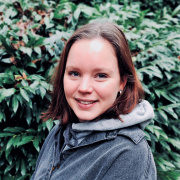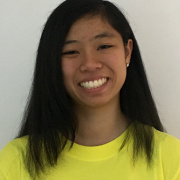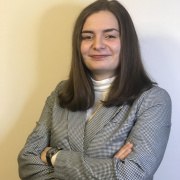

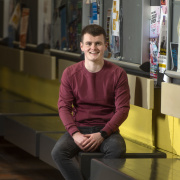
Manuel

Youth Week 2021: EuroPeers Austria - Trash Collection Event

Manuel, Austria

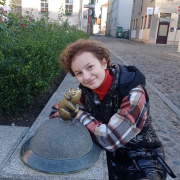
We spread over the whole city and cleaned streets, paths, riversides and even the city mountain! Not even the rain could stop us!

Everything started with our very first project meeting of the “Green Agenda” project group. Apart from the trash collection event we had a few (actually also pretty cool) ideas, like cooperating with Fridays for Future, painting the streets to raise awareness, or holding an educational workshop to improve peoples’ knowledge about sustainable products, greenwashing, and sustainable food seals. After discussing for a while, the main reason for deciding to realize this event was that we wanted to do something visible, physical and we wanted to have a “real-world impact”.


When we started the planning process, we quickly realized that things would not go as smoothly as we had all hoped (and actually expected) in the beginning. The first problem was that almost our entire group was based in Vienna, which made organizing an event in multiple cities and regions as we had intended complicated. Thus, we decided to focus on the three cities in which at least one EuroPeer was living – Vienna, Salzburg and Graz. The person from  Salzburg and me, who lives in Graz, automatically became the “project managers” for those cities. Plus, our plans strongly depended not only on the corona situation in Austria but also on the engagement of the people working in the municipal offices in those cities. 


When the day finally arrived, I was extremely surprised by how many people showed up to participate! Luckily, I had a little advantage in Graz as I am studying Environmental System Sciences and thus I had many motivated colleagues who participated. All over Austria, we were more than 50 people! I had already received gloves and trash bags beforehand and handed them out one after one as the people turned up. To ensure COVID-19 safety, I said people could turn up within a 45-minute time frame and I sent them out only in pairs.


We spread over the whole city and cleaned streets, paths, riversides and even the city mountain! Not even the rain could stop us! In the end, we had collected roughly 10 full trash bags and some people even waited with me until the trash was picked up by the garbage disposal. 


My personal highlight? Two women were standing at the entrance of their shop, asking us what we were doing and why we we doing this. After we had explained it to them, one of them went back into the shop and brought us a bottle of sparkling wine as a present!


I was truly happy with how this event turned out and thus, there will definitely be a trash collection event 2.0 by EuroPeers Austria!
 

Updated on Tuesday, 17/02/2026

Painting the shared apartment in Berlin

Volunteer in Berlin

Sigurd, Denmark

My gap year has definitely given me a wish to work in especially an EU-country

My name is Sigurd Vedsted Drejer and I am 21 years old. I worked as a teacher’s assistant at a German school, W-I-R Schule, in Berlin from September 1st 2019 to August 16th 2020 through The European Solidarity Corps.

In the summer of 2019 I graduated high school and I worked at 7/11 during my school years. Furthermore, I spend my free time hanging with friends, playing computer games and running. I wanted to use my gap year for something meaningful and I had no interest in working at 7/11 full time for a whole year just to save up money. I got a message on Lectio about the possibility of volunteering in Europe for free and I went to an info meeting and found it very interesting. What mainly made it interesting was that it was free. I already knew you could travel to countries and pay way too much to help a community. To me it doesn’t make sense to pay to do volunteer work because you offer your help. Besides, I have an interest in EU and its values and you learn a bit of that during your stay. That is why ESC made a lot of sense to me. So many things were awesome during my volunteer year. If I have to mention one thing, it’s to live together and get a whole network of volunteers from all over Europe. People had different jobs in Berlin. Some were assistants or performers at a children’s circus while others ran a church café with a focus on homeless people so there were always interesting stories from people’s work place. I myself lived with three girls from Tanzania, Spain and Turkey and I worked with a girl from Poland. There were often cultural exchange when we were together and I learned a lot about other nations politics and cultures.

You get a whole other view on yourself and Denmark as a country. I learned a lot and I dare to say that I have learned more about myself that year than all three years of high school. I learned German and I made friends from all over Europe. I have learned a lot about other cultures and I have learned how to work with kids with and without disabilities. I have learned a lot about Berlin and Germany. There are so many things that I’ve learned that I can’t mention it all. After I got home from Berlin, I started studying geography at Copenhagen University. It is my dream to return to Berlin to live and work, and I have no idea whether it will be for a year or permanent. I can’t imagine staying in Denmark from now on until I die. My gap year has definitely given me a wish to work in especially an EU-country.

Updated on Tuesday, 17/02/2026
Ready-made communication material for social media

Social media posts - English only
 
Editable Visuals in PowerPoint - All EU languages + Non-EU (IS, MK, NO, RS, TR)
  • Horizontal
  • Square


© Mathilda Jetiaga Diffu

Background of a comitted young girl

Mathilda, France

I want to give to all young people the voice and visibility to become agents of change.

Originally from Kenya, my name is Mathilda, I moved to France at the age of 2 and I did my studies in that country. I am now 18 years and I just obtenained my French Baccalaureat with distinction at Jules Ferry High School, in Conflans Sainte Honorine.

Since the age of 14, I have been involved as a volunteer in civic life. I worked on the subject of inequalities in all aspects, not just the financial one. The cultural gap between students struck me. It was essential to me to create awareness, therefore when I was in middle school, I decided to join a youth movement of an NGO called "Plan International for gender equality in the world".

At the same time, I founded a debate club within my high school, which was a partnership with various associations and international organisations: Plan International, Unicef, Expression de France, the Human Rights League, Greenpeace... It has been active for two years now and is called the "Rights and Equality club".

I recently received a quality cerfication from the United Nation Women France and Generation Equality Voices. My aim is to allow high school students to exchange views, debate and learn about current and social issues, in other words, to give them a place and a framework where they can express themselves on issues that concern them. I want to give them a voice and a visibility so that they can be agents of change.

It is essential to me that more young people, especially women of my generation, get involved to assert their point of view, in the public sphere.

Updated on Tuesday, 17/02/2026
© Valentine Lioret

« Pardon my French »: my European Solidarity Corps experience in Bulgaria

Valentine, France

This confrontation with the unknown also gives you the chance to better know yourself.

My name is Valentine, I am 25 years old, and I have been a volunteer with the European Solidarity Corps for 10 months at the Alliance Française of Varna, Bulgaria. This NGO promotes French language and culture offering courses and organizing events. While I had no specific expectation about the country where I would be living for a year (I was first appealed by the mission), now I can say Bulgaria was a great discovery!


Living in Bulgaria first helped me discovering the truth about Bulgarian people: while I had read testimonies describing them as not particularly friendly, I rather find that most people are welcoming and kind!

As it was my first time living in a country where I did not speak the language, I was afraid it would create a barrier for integration. In the end, many of the people I met spoke English or even French! And for those who did not, the difference of language obliged me to be creative and to develop my non-verbal communication skills, which sometimes lead to very funny situations! Luckily, the European Solidarity Corps programme included some Bulgarian language classes. Even if I still cannot have a debate on the world’s political order in Bulgarian, I now know enough vocabulary to manage a basic conversation. People are so encouraging and happy when they see that you make an effort to speak (or try to speak) their language that it is worth learning it.


Also, I had many opportunities to discover the country and its culture: hopping on a night train to go from the sea to the mountains, learning how to dance the traditional Bulgarian dance (called “horo”), or simply going to the local market to buy homemade lutenitsa, a delicious paste made from pepper, eggplant, and tomato.


Living and travelling abroad allows you to discover a new culture. This confrontation with the unknown also gives you the chance to better know yourself. That is why I can only encourage anyone to try this experience, whether it is with the European Solidarity Corps or another programme.


Updated on Tuesday, 17/02/2026

© Aurore Bellart

Unique experience at the Black Sea coast

Aurore, France

After this beautiful year, I feel more confident, happier, and I can just conclude by one thing: don’t hesitate, just do it!

Здравейте! My name is Aurore, I’m 24 years old and I come from the South of France. I started in September 2020 and for one year, a European Solidarity Corps project at the French Alliance of Varna, ​​in eastern Bulgaria, on the Black Sea coast.


After my graduation, I decided to go to the University and study Law. But at one point, I started to wonder about what exactly I wanted to do after my studies, and at the same time, I wanted to live a different experience, especially abroad. I finally found the perfect answer: the European Solidarity Corps. This program gave me the possibility to work in a field that interests me and would help me in my future professional choices, while discovering a new culture and living a completely new experience. I found a one-year educational and cultural mission in the French Alliance of Varna!


Before embarking on this adventure, I was really stressed because everything was totally new for me. First, I always followed the classical academic way, and volunteering abroad was not planned in my roadmap. Besides, I had never been in a country so far and for such a long time. But this stress vanished as soon as I moved into my new home and started my mission. I arrived in an alternative place, colorful and multicultural. From day one, I felt surrounded. I met a lot of young volunteers and European students with whom I travelled, discovered the nightlife by the sea, or even learned Bulgarian dance! From day one, I also found meaning in what was going to be my job for one year. I had various missions such as communication tasks, helping in the organization of cultural events, promoting the French culture and cultural exchanges by meeting young students… I even had the opportunity to create my own events, like conferences or workshops, about subjects that fascinate me and that I wanted to share.


After this volunteering, I realized that embarking on this adventure was the best decision I could take! It was an enrichment in two aspects. First, it helped me to find my professional way: thanks to that experience I will start a new master degree in a field that really suits me. Secondly, it was an amazing life experience: I travelled a lot, I made friends from all over the world, and I tried new activities I never thought I would do in my life! After this beautiful year, I feel more confident, happier, and I can just conclude by one thing: don’t hesitate, just do it!


Updated on Tuesday, 17/02/2026

Dorinel

Erasmus changing lives

Dorinel, Romania

"If you don't take the initiative and enjoy an Erasmus experience, you can't consider yourself a European student."

I could talk endlessly about my mobility experience and I would probably still leave some parts out. I made friends in the true sense of the word. We became much closer and connected with people we didn't know a few months ago. We were the Erasmus generation who "defied" the pandemic and for most students this study mobility was one of the most beautiful, special and unforgettable experiences of my life.

I had the most intense 5 months of my life. I left Austria thinking that in the next five years I would have 50 new friends and 17 countries to visit.

In addition to the theoretical knowledge I have acquired, the Austrian education system has taught me some important things. Teamwork greatly improves work outcomes. The people who teach are not just teachers, but colleagues and sometimes friends. They always listen and objectively analyse the feedback received.

A study mobility is not just a semester spent in another country, but dozens of new friends, hundreds of new experiences, thousands of memories captured in photos or videos and an unparalleled wealth of acquired knowledge. At the same time, the Erasmus+ experience means an accelerated process of personal, professional and intellectual development. Yes, you read that right: ERASMUS CHANGING LIVES!

If I haven't convinced you yet, just one question: Do you want your next semester/academic year to be exceptional and unforgettable or are you content with normality?

Updated on Tuesday, 17/02/2026

Silvia

The flying lesson

Silvia, Romania

"I came back from Erasmus a more mature, more calculated, more cerebral woman. Sometimes life teaches us the best lessons when we go through difficult times. While the year 2020 will go down in history for the entire planet, this year marked my existence as the moment of my maturation as an adult and future doctor. Erasmus, you gave me wings!"

I have always been a follower of a balance between my personal and professional development and, since I know myself, I have never turned down a good challenge. There are so many feelings that I have looking back on my Erasmus experience in France, that I can never manage to stifle my amazement at all that has happened, what an adventure! I landed on the path of my maturation in a new country with a completely different medical and academic system, a system that I did not easily understand at first, but in which I successfully integrated and flourished.

I enthusiastically received the doctors' confidence in my abilities and developed a boundless compassion for the patients assigned to me over time. I am grateful to the entire medical team I worked with, a team that did not regard me as a simple foreign student, but as a colleague and future doctor, who took me under their wing and allowed me to actively participate in operations, to make diagnoses and perform amazing manoeuvres.

The year 2020 has taken an unimaginable turn for all of us. With the onset of the pandemic, life changed dramatically. My university in Paris offered me the opportunity to continue my mobility and, despite the uncertain situation and but also after a long turmoil, I decided to stay. Our hospital was transformed into a frontline COVID-19 centre, and many wards were closed to make room for the huge wave of infected patients. We didn't know what lay ahead, but the same unease was gradually growing around the world ... And no one had an answer. I chose the Erasmus programme and set off with the desire to face a new challenge, but the last year exceeded any imagination. It was not an easy journey, but we faced it boldly thanks to the unconditional support of the medical team who protected, tested and encouraged us at all times.

Updated on Tuesday, 17/02/2026

Alexandra

Work and success

Alexandra, Romania

"I feel very fortunate to have had the opportunity to participate in this program and I am grateful for all the opportunities. It has been an intense time, but I have really enjoyed the journey, travelling a lot in Japan and meeting beautiful people from all over the world."

I think what motivates me to move forward in the career I have set for myself are the challenges and the constant desire to learn. That's what happened with the Erasmus programme. At that time, I was already working on many projects and travelling frequently to Japan, so the reason for applying was rather to get out of my comfort zone and experience what it's like to live in another country for 4-5 months, what the education system is like, how foreign and Japanese residents communicate and more.

Another reason was to improve my Japanese language skills, so I enrolled in seven Japanese language courses for fluent level and five more courses in English. I left Ritsumeikan with a huge amount of information that is very useful in my career today and if I could go back in time, I would not give up anything despite the difficulties I faced at the time.

I didn't want to give up the activities I already had in Romania, loving what I do very much, so I continued to teach Japanese online to Romanian students and I continued to offer advice and guidance to Romanian tourists arriving in the Kansai area.

Among other activities, I also taught origami in schools and kindergartens in Ibaraki or at themed events, but I also worked part-time at a coffee shop to practice my high level of Japanese politeness. Later I designed and wrote a virtual tour of Osaka for the Questo app, which was tested and highly appreciated by some of my Erasmus colleagues.

The biggest challenge and the most beautiful experience, was to be fukumusume (lucky maiden - virgins that herald good luck), a kind of priestesses for the Ebisu festival at the Imamiya Ebisu altar. Every year, out of 3000 Japanese and 100 foreign applicants, only 40 and 10 respectively are chosen on the basis of an interview. I found out about it from the university, and in addition to being chosen as one of the 50 girls who will be working at the altar and I was also chosen as one of the 4 representatives of the 2020 edition after a TV show.

Updated on Tuesday, 17/02/2026

Natalia, Romania

Pandemic volunteering

Natalia, Romania

“I got to better know my European identity, but I also discovered and learned about other cultures, religions and ways of living.”

All my friends started university last year. It was only me leaving for a volunteering mission in the city of Marseille from Southern France, far from anything familiar or habitual. But this choice of becoming a volunteer in the middle of the pandemic brought me incredible personal growth and different insights on life.

Volunteering in an association that works on themes such as international mobility or non-formal education, having flatmates and friends who come from Tunisia, Italy, Germany, Spain or Turkey, getting involved and organising projects around subjects such as interculturality or non-violent communication enriched me indeed. I got to better know my European identity, but I also discovered and learned about other cultures, religions and ways of living. 

The European Solidarity Corps is such a valuable source of opportunities! Thanks to this year of volunteering, I learned enough French in order to start my university studies in France, became much more competent in the digital work space and met some of the most authentic and inspiring people. Not even the pandemic stopped the volunteering, so our fears should not either. Volunteering transformed me and given me new perspectives.


Updated on Tuesday, 17/02/2026

Subscribe to