Monica

Monica Boggioni

Monica, Italy, Age 23

I think that in Sport the important thing is to win, at least with yourself, not only participate. As in life, what really matters is leading, not surviving. 

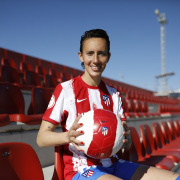
Monica is an athlete of the National Paralympic swimming team. Swimming is a very important aspect of Monica’s life, as it taught her to understand that disability is not a limit, rather than a strength. Monica’s dream is to specialise in medical genetics and study diseases of which still little is known and try to find a cure. 


Updated on Tuesday, 17/02/2026
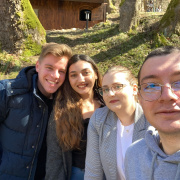
Jacob and his friends in Berlin

Jacobs DiscoverEU journey

Jacob, Denmark, Age 18

The whole journey was without any accidents or problems and we all agreed that this had been one of the best experiences of our lives.

During the summer of 2020, five of my best friends from school and I were selected for an Interrail Pass by DiscoverEU. We were really happy about it, because we had already planned to travel round Europe and now we had a chance to save some money that we could use during the travel instead of on transportation. 


We started our journey by taking a train from Copenhagen to Berlin where we had rented an apartment in the middle of the city. Due to the Covid restrictions a lot of Berlin were shut down, but we still got to see and experience a lot. 
After Berlin we went to Krakow where we had also rented an apartment for four days. There were less restrictions here so we got to enjoy both city life and night life.


We now all agreed that we had seen enough of the big city life and we wanted to go somewhere warm with a chance of bathing. We decided to go to Split in Croatia. Due to Covid-19 the train from Krakow to Split would take 40 hours so we made a kind of boring decision and flew from Warsawa to Split. We took a train to Warsawa and from there we took a flight without any problems. It would have been nice to experience more of Warsawa. 
When we arrived in Split we actually decided to take a trip out of the city to a village called Slatine. Here we had rented a part of an estate for four days which we shared with a nice old couple. 


We really enjoyed relaxing there, bathing, and make pizza from a stone oven. 
At the end we decided to go into Split where we had rented an apartment in the middle of the city for five days. It was nice to enjoy the goo weather and night life that was not very affected by the Covid situation at that time. 
After our days in Split we took a very long train ride from Split to Copenhagen. The whole journey was without any accidents or problems and we all agreed that this had been one of the best experiences of our lives. 
 

Updated on Tuesday, 17/02/2026
Portrait of Alexandre

Ordinary mornings in 2042

Alexandre, Czechia, Age 29

A future where science, technology and social innovation are the key enablers of a just sustainability transition.

7am, March 28th 2042:

My personal assistant wakes me up with my favorite workday song and turns on the coffee machine. An ordinary alarm clock would perfectly do the job, but the automatic coffee machine is convenient after all.

While I brush my teeth, my personal assistant displays daily news on the mirror in front of me. Scientists came up with a new way to efficiently store an infinite amount of energy. I guess we are close to reaching complete carbon-neutrality for electricity production (8 years ahead of the plan!).

The next article reports that the 4-day workweek which was implemented in the EU in 2035 shows promising results. People started exercising more, spent more time with their families, attended more cultural events and participated more in local politics. I would tend to confirm it in my own case.

The following article reports how the unified EU-wide social security system enables workers to swiftly move from one country to another with significantly less paperwork and administrative hurdles. I always wondered why it was not implemented earlier.

The next article discusses an ongoing problem in our society. Biotechnology has enabled humans to amplify their physical and cognitive abilities. These technologies became increasingly affordable (though still quite expensive), and it led to a dualistic society. I keep asking myself what we can do about it, probably nothing. We made a lot of progress in guaranteeing and protecting freedoms to choose our life paths, education, careers, whom we love, how we dress, which god we worship and so on and so on. I guess choosing to enhance our abilities is also part of these choices.

The last topic of my daily news review concerns the increase of retirement age. Apparently it's a side effect of the 4-day workweek. I guess I won't be retired before 2085 or something… But at least most bullshit jobs have been taken over by AI and automated systems and I have all the freedom to choose a professional activity that fulfills my life goals.


Feeling

I feel overwhelmed by the complexity and uncertainty of future developments. That is why foresight is a fascinating discipline in the sense that it allows structuring that complexity and imagining solutions to future challenges.

Influence

Yes, by taking actions today that are known to produce long-lasting positive effects.


Updated on Tuesday, 17/02/2026
Portrait of Jakub

Technological paradise

Jakub, Czechia, Age 23

I hope that humanity finally catches up with the genius of its own technological creations.

Entering the 2020s, humanity's prospects were bleak in the Western hemisphere. After decades of hindered productivity growth, widening social differences, growing polarisation, and unresolved climate change no one could picture life getting better in the future. However, like so many times in the past, when all seemed lost, technology proved to be the answer once again.
 
In the late 2020s, we could finally see the technologies that had been building up their momentum in the previous decade converge, and radically change the lives of all people for the better. Breakthroughs in AI and data science combined with robotics allowed us to optimise our production and ensure material abundance for everyone. On top, no more tedious labour is needed anymore, our robots take care of most manual tasks! We can dedicate our time to more meaningful and fulfilling work, helping and serving each other and feeling a much deeper connection with our communities.
 
Faster-than-expected advances in quantum computing, nuclear fusion, and the related AI algorithms allowed us to craft new cheap and scalable materials and methods for clean energy production. It was hard and we needed to compensate a lot of people for whom life got temporarily more expensive, but we finally overcame the long shadow of climate change that worried us for so long. Today, energy is clean, cheap, and abundant, and we pollute the environment no more!
 
We live much longer than in the past today. Our scientists managed to build new wearable sensors that monitor every person's bodily function 24/7, transforming healthcare into a proactive force, and greatly increasing our lifespan and life quality. It might seem like a story of science fiction, but it seems that we are close to living forever now! Longevity research has gained huge momentum and the rich are already adding decades of time to their lives - it is only a matter of time before the technology gets cheap enough for everyone else! Moreover, we could soon be able to upload our consciousness to the chips Neuralink is creating, wouldn't that be amazing?!
 
The governance of this whole process is much more balanced today than it used to be in the past. Everyone realised that the challenges we face must be tackled in cooperation, or everything will crumble. Unlike in the past, states and big enterprises no longer fight each other. Firms realised they need to pay their fair share to keep the society stable, while states now know they must give the markets the freedom to do what they do best - to innovate. Scientists are the rockstars of our time!
 
Well, life just seems great! I am just a bit worried about the news talking about the newest superintelligent AI model that seems to be gaining consciousness - but I am sure that is nothing!...Or is it not?


Feeling

I am very optimistic with regards to the exponential progress we are able to bring on as our technology advances. However, for that aim, we need enough time, and I am worried we are short of it as our ability to destroy ourselves is growing rapidly. My optimism and my worries are quite balanced.

Influence

I think many young people are overly optimistic about citizens' influence on the future. We are living in an age of "superstars" where a handful of individuals have more power than billions of commons, and this phenomenon will only accelerate. I will do my best to become one of these individuals, or to gain some influence over them, but my chances are admittedly slim.


Updated on Tuesday, 17/02/2026
Jennifer

Jennifer Fromm

Jennifer, Germany

Don’t hold back, especially in a field where only few women work. Trust your own abilities, support other women in your field, and always dare to speak your mind

Jennifer has studied in Germany and has been working on the applications of virtual and augmented reality (VR/AR) in the fields of crisis management, education, and decision-making processes. She has worked on a few European research projects and is now working on how virtual reality can support students in achieving their learning goals. In this pioneering field, she is an inspiring figure to follow.

Updated on Tuesday, 17/02/2026

Picture of Linda

Volunteering in Belgium

Linda, Germany

My highlight was an international youth exchange with young people from Belgium, Italy, Martinique and Guadeloupe.

I'm Linda and I worked in a project for residents of social housing and organized events with and for children, families and older people, e.g. an afternoon care for children, an internet café or movie nights. I also worked with young people in difficult life situations on the topic of mobility and assisting with info events, camps and public relations. The highlight was an international youth exchange with young people from Belgium, Italy, Martinique and Guadeloupe.

I profited a lot from the (European Solidarity Corps) volunteer service and especially from encounters with people of different backgrounds – with some I am still in contact. Together with two former volunteers, I started an informal initiative to connect volunteers from all over Belgium. This showed me that I enjoy a lot to bring people together.

Updated on Tuesday, 17/02/2026

Portrait picture of Irene

Free

Irene, Italy, Age 15

I hope for a world where love is not limited but free, where you can love a person of the same gender without being judged.

I want a future where no one is judged, Everyone is free to live as they want, to love whoever they want and not to be judged. I want a future where everything that is now considered abnormal is considered normal and finally I want a future where there is no longer discrimination against any category.

Feeling

I'm a bit afraid for the future, people don't change their minds easily so it's almost impossible to get to a world where people don't judge others for who they are.

Influence

I believe that everyone has an influence on the future because everyone does something that can change the world.
 

Updated on Tuesday, 17/02/2026

Portrait picture of Tico

Too busy for jobs

Tico, Spain, Age 24

Replacing the income and labor model with other freer modes of work and collaboration.

By 2040 nobody has a job. It’s not that we ran out of things to do, it is just that we don’t use the model based on labor and income anymore. It all started with the application of the universal basic income. People used to take the best job they could find while relying on their savings. Sometimes they stuck to their jobs because they feared not finding something better. Even governments offered legal concessions to businesses in exchange for fixing large amounts of labor. Once people didn’t have to choose their jobs out of scarcity, they became pickier about the jobs they were taking. Taking a job wasn’t a completely free choice before. Now only those truly willing to perform some activities do it. No one is looking after the paycheck. We got better practitioners, and they are highly motivated.

Some jobs have disappeared as they were particularly unpleasant for people. There are no teleoperators taking calls for clothing brands full-time, nor concierges attending the building hall, also there are way fewer fishermen. Since there were increasingly fewer people willing to take these roles, we had to redesign many of our processes, making them more intuitive.

Of course, technology had a role in all of this. However, we haven’t automated every task to replicate how life used to be. We are using robots in heavier industries. We are also applying AI nurtured with public data as an asset for the common good to improve decision-making and minimize workload. Nonetheless, there are way too many tasks that we can't automate. For those activities, we have to arrange deals with each other. People now have to take over way more tasks than they used to. Many of them are related to care, such as cleaning common spaces, cooking, or gardening. For example, when you go eating outside there are usually no waiters anymore, you have to serve yourself. Gamification is the cornerstone of our society. People are not forced to do anything in exchange for money. Then, they need to enjoy the activities they do or at least understand their purpose.

We still have people who study biology, people with amazing sewing skills, and people who fly planes. They have various incentives to do these activities, either creativity expression, prestige, curiosity, or self-fulfillment. They just don’t have to do these activities every day full-time. They do these when they want to or have committed with the people they work with. We had to find new ways of collaboration that were not based on labor to keep on having some of the systems we enjoyed, such as traveling. The experts create associations and manage their work to provide a stable service. 

People take on other activities the rest of their day, like looking after their loved ones, crafting, or resting. Monday to Fridays is not all about work, and there is way less anxiety over productivity. In the beginning, many people didn’t know how to manage all that free time. It is actually always free time now. The fixed schedule of labor was frustrating, but it provided certainty to people’s life. People weren’t used to associating freely or reciprocity culture. It has taken some years for people to imagine new lifestyles that are not defined by their profession but by their purpose. Now people are too busy doing their own thing to think about jobs.

Feeling

When thinking about the future I am hopeful yet concerned. I think the social situation is possibly improving, yet this trend is fragile and requires continuous assessment of the situation. It is also easy to have a blurry vision of society as a whole, biased by your closer context.

Influence

I do have some power to influence the future because of where I live, my skills, and some of my privileges. I can’t do much by myself, as I lack the resources and influence. However, I can collaborate with others to affect, at least, my closer environment.
 

Updated on Tuesday, 17/02/2026

Subscribe to