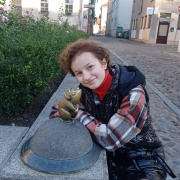
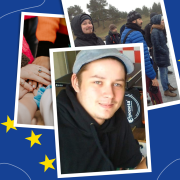
Agnė Jankauskaitė. Photo from personal archives

Youth exchange in Poland: meaningful moments of connections to remember

Agnė, Lithuania

During the week in Poland I had the time of my life. Despite me being scared to go, I took the opportunity and did it.

If you see an opportunity, take it! Me joining in youth exchange project in Poland came just because of this saying that I live by. I have no hesitation in saying that it is the best decision I have ever made. Becoming a part of Erasmus+ Project ″Cultural Understanding Leads to Unique Relationship Evolution″ in October had a great influence on my self-growth this year.

While looking for words to briefly describe this project, the first ones to come to my mind are: teamwork, cultural differences and incredible friendships that were made through-out the 7 days’ time. Since it was my first time participating in youth exchange the expectations were pretty high, but everything was fulfilled with a bunch.

Most of the activities the participants did were bonding tasks and projects through which we presented our culture, history and the life of the youth in our countries. I got a taste of Irish, Romanian, Slovakian, Latvian, Spanish, Polish cultures and experienced the native languages of the participants which did nothing but broadened my horizons and built a strong knowledge about different parts of Europe. Moreover, speaking English on a daily basis provided a grand tool for improving my oratorical and grammatical skills.

I feel a need to mention that the very essence of the project were the people and the great energy we created. Everyone made lots of memories that most likely will never fade away. The best moments of that week - celebrating my 16th birthday with newly made international friends, travelling alone and many more will often stay in front of my eyes.

In conclusion, during the mentioned week in Poland I had the time of my life. Despite me being scared to go, I took the opportunity and did it. Hopefully, you will never miss out on similar projects as well.

Updated on Tuesday, 17/02/2026

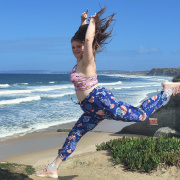
Nina jumping in the air.

Youth exchanges give memorable experiences and courage to try out new things

Nina, Finland

Do not dwell on being nervous. Just go out bravely!

Nina's name is familiar to many of those involved in international activities under EU programmes. Through Villa Elba in Kokkola, she has participated in numerous youth exchanges and seminars. She also serves as a EuroPeer, a young person who has participated in EU programmes and who, through her personal example, wishes to encourage other young people to be adventurous and open-minded and embrace internationality.

Myllylä, who is studying civic activity and Christian child and youth work, lists the countries she has visited through EU programmes while stroking Toivo, the cat sitting on her lap: she has been to EuroPeer training in England, EuroPeer meetings in Estonia and a youth exchange in Slovenia. Her latest youth exchange was quite recent, in fact: Myllylä only returned to Finland from Portugal a short while ago.

“The theme of this meeting was ‘different is good’”, Myllylä says.

On youth exchanges the participants reflect on a theme that interests young people, including youth culture, sustainable development or human rights. At the meetings, young people from different countries plan and come up with ideas for the activities based on their interests. For example, Myllylä has participated in a photography workshop where a group of young people examined how they could exert influence through photography. The activities resulted in exhibitions in Finland, Italy and Slovenia. Myllylä additionally has a passion for ballet dancing, and she has planned choreographies and organised flash mobs and dance workshops on youth exchanges. When I ask her about how long she has been dancing, the student from Kokkola gives a succinct answer.

“Always”, she laughs.


Open-mindedness pays off

Myllylä's best memory of youth exchanges dates back to 2019. That time, too, the destination country was Portugal, and the theme of the youth exchange was sustainable development and reducing your personal carbon footprint. Myllylä says it was fantastic.

“We learned about different ways of reducing our carbon footprint, for example growing our own food, and studied the soil to find out which plants would grow best where. We made everyday products like soap, deodorant and toothpaste ecologically and without harming the environment. We also did yoga and meditation”, Myllylä explains.

Aged 22, Myllylä learned about these activities in 2011 from her cousin, who was working at the Finnish National Agency for Education. It was love at first sight. Her first trip abroad was a youth exchange in Slovenia. Young Myllylä was nervous about travelling outside Finland for the first time.

“I had never been abroad before my first exchange. I was nervous about the airport terminal and what you could take with you through the security check.”

The trip was worth it, as Myllylä subsequently got hooked on international activities. She says that they have given her wonderful memories and that she has made many new international friends through them. You may even run into people you have not really kept in touch with at seminars and similar meetings, and you just carry on from where you left off the last time. It feels as if you last met yesterday. 

"All the highlights of my life and my best memories and moments have been associated with the international exchanges," she says.

Myllylä has a word of advice for young people going on youth exchanges.

“Do not dwell on being nervous. Just go out bravely!”

Myllylä lives as she teaches. Her favourite trip to Portugal in 2019 did not sound very attractive at first. According to the advance information she received about the trip, only outdoor showers and toilets would be available, and an ecological vegan diet would be followed at the meeting.

“I was really prejudiced and said to myself that yeah, this is probably not going to be a good exchange, it will be awful. But I faced my prejudices and applied for the exchange to challenge my preconceptions”, Myllylä says.

“I'm glad I did, because it was my best exchange ever.”

Updated on Tuesday, 17/02/2026

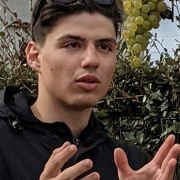
From personal Paulius's archives

The (not)once in a lifetime opportunity

Paulius, Lithuania

During DiscoverEU trip I had a lot of time to think about myself on trains, during walks and to prioritize different things in my life.

Getting empty wine bottles thrown at you for some reason in the street, getting a job offer on the train, accidentally joining two protests, exploring an unknown city during midnight with a group of foreign hostel people and changing your itinerary plans last minute... Just a couple highlights from my recent DiscoverEU trip, where I visited Berlin, Lyon, Rome, Prague, Warsaw and a lot of cities in-between. Hi, I am Paulius and I did my DiscoverEU trip alone on the summer of 2021.

Since the days went by and the day of departure came closer, the whole thing seemed more exciting and more scary. The excitement part is understandable: new people, new places, different culture, language barriers and so on. But the scary side? It‘s you and only you „against“ the whole Europe. You‘re responsible for your own plans, mistakes, accommodation, food. But also... You can choose where to go, when to go, who to go with! It‘s the freedom, the freedom of choice and I chose to follow this path.

I met some incredible people: from an Erasmus student, that studies at my own country, to a sailor, who has sailed the Atlantic ocean 4 times! The places and views were spectactular: from the Old Town of Prague, narrow streets of Rome to the mountains in Switzerland! The trip made me realize how lucky we are when we are so young and have this amazing opportunity of exploring Europe on our own!

During this trip I also had a lot of time to think about myself on trains, during walks and to prioritize different things in my life. The DiscoverEU trip is definitely once in a lifetime opportunity, so take it, don‘t miss it! But... The Interrail ticket is worth getting another time and that‘s why it‘s not only once in a lifetime experience!

Updated on Tuesday, 17/02/2026

Philippos photo

My DiscoverEU experience

Filippos, Greece

The most important experience for me was the opportunity I had to explore different cultures! I became more open-minded, and I realized how much we have in common with other Europeans.

Hello! My name is Filippos, and I am 22 years old and I am from Greece.

In 2018, as soon as I finished school, I had one of the most beautiful experiences of my life, utilizing the Discover EU programme!

I travelled by train from Italy to Madrid, and Ι discovered various European cities! This travel provided me with a learning experience like no other and pushed me out of my comfort zone.

The most important experience for me was the opportunity I had to explore different cultures! I became more open-minded, and I realized how much we have in common with the Italians and the Spaniards! Happy people, with intense culture and -definitely- perfect food! 

Together with my classmate Nikos we lived 10 unforgettable days, travelling, listening to nice music, and hanging out with young people from different European countries!

What stood out was our stay in Barcelona. We visited museums and got to know great works of art by Gaudi! We also made friends with whom we have kept in touch until today, and we hope that they will visit us in Greece soon!

This trip will remain forever engraved in my mind and my heart!

Updated on Tuesday, 17/02/2026

Simos photo

What unites us is much more than what divides us

Simos, Greece

Through Erasmus+ I discovered that what unites us is much more than what divides us. Dare it!

Hello everyone!

My name is Simos, and I am 19 years old. I am from Florina, Greece. A beautiful rural town near the international border of Greece with the Republic of North Macedonia. From an early age, one of my dreams was to explore and get to know Europe. When I was 16years old, I joined the association "Active youths (OENEF)" of Florina. Through the OENEF, I had the chance to participate in an Erasmus+ youth exchange program. Erasmus+ allowed me to explore Europe and changed my life forever.

On July 22nd-28th, 2021, I had the opportunity to attend the youth exchange in Krusevo, North Macedonia. Forty-three young people from eight different countries were participated at the "Queen's Tech" in Krusevo. We had the opportunity to discuss issues such as "Women in Science, Technology, Engineering and Mathematics (STEM)" and "Gender equality". It was amazing to work and communicate with people with who we share the same visions and needs. In only six days, we managed to put an "end" to every stereotype, to every prejudice of the past. Hope, vision, cooperation, reconciliation, and a common future were the key points towards a united Europe. In short, all the above describe and reflect my experience in Krusevo, North Macedonia. A life experience that I could never forget.

Through Erasmus+ I discovered that what unites us is much more than what divides us. Dare it!

Updated on Tuesday, 17/02/2026

Aleksi

From Lapland to Lithuania as a volunteer

Aleksi, Finland

Working in a youth club supported my professional development.

Aleksi from Lapland volunteered in Lithuania for a year. The European Solidarity Corps give young people opportunities to travel abroad and participate in volunteer work of their own choosing.

Aleksi's working day in Kolpene, Rovaniemi is over. As he answers his phone, he has just parked the car outside his house. Aleksi launches straight into reminiscences of his experiences abroad.

Several years have already passed since he volunteered: at that time, Ollonen was 22 and had recently completed his youth instructor qualification. He had found in his mailbox an e-mail from Rovaniemi youth services, which announced the possibility of participating in an EU-funded period of voluntary work abroad. Ollonen seized the opportunity, made his way to Lithuania the following summer, and spent a year volunteering in youth activities.

Youth activities were highly suited for Ollonen because of his qualification. Ollonen had previously worked with such groups as mental health rehabilitees.

“I had suitable experience, that's why I decided to go to Lithuania. Working in a youth club supported my professional development.”

Ollonen says that the work in youth clubs in Telšiai, Lithuania, was not much different from similar work in Finland. In their free time the volunteers did all sorts of things, for example baked Finnish Christmas pastries.

“We welcomed young people to the youth club and did whatever they wanted. We also organised events”, Ollonen describes his normal working day in Lithuania.

Mutual understanding without a common language

The length of voluntary work periods can vary from two months to a year. Ollonen spent one year, plus a few days’ holiday, in Lithuania. The first six months went by in a flash. This is why Ollonen finds that a full year was more useful than the six-month period he considered first, as he had more time to integrate into the destination country.

The working language was English. Towards the end, Ollonen also learned to speak some Lithuanian. The language barrier was not a problem for Ollonen, even though everyday chores, including shopping, were a bit of a challenge at the start.

“The actual employees of the youth club were always at hand to interpret if I needed to get something specific across”, Ollonen explains.

A common language is not always needed to work together. Most of the young people only spoke Lithuanian. Ollonen and the young people often communicated by gestures, and he says that not having a common language was something fun and exciting for the Lithuanian young people.

“I remember even teaching a card game to a Lithuanian young person who didn't speak a word in English. This person then taught it to others. We did not have a single word of a common language. We just communicated by nodding or shaking our heads”, Ollonen recalls.

International experience and independence

The best thing about volunteering abroad for Ollonen was growing more independent and having new international experiences. Various projects and working together with volunteers from other countries made his work more international.

“I met volunteers from other countries, including Germany, Italy and Spain. This gave me a broader understanding of work practices elsewhere in Europe.”

His brave decision to head off to Lithuania from Lapland was a big change in young Ollonen’s life. The experience taught him a lot, including taking responsibility for himself and others.

“It was the first time I moved away from home, to a distance of 1,400 kilometres all at once. It helped me become more independent.”

Ollonen, who is today employed in Kolpene, Rovaniemi, has continued doing similar work in a day care unit for people with intellectual disabilities. Tomorrow will be another working day. Perhaps somewhere in Telšiai, Lithuania, young people are still playing the card game they learned from a volunteer from Lapland, without having a single word of a common language.

Updated on Tuesday, 17/02/2026

Panagiotis photo

My Erasmus+ Youth Exhange experience

Panagiotis, Greece

Go for it, participate in a project, dare to step out of your comfort zone, say yes to travelling and follow your curiosity! Meeting new people and travelling is a precious investment in yourself!

Hi, I am Panagiotis from Greece.
Sometimes in life, you make some decisions that can change your perspective and view for many things. That’s what happened when I took part in a youth exchange Erasmus+ project called ‘’Volunteering 101’’ in France. The whole project lasted ten days, but I had the feeling that it had lasted much longer. I was lucky enough to live in the countryside of France, in a magnificent place near the Atlantic Ocean, and I had the opportunity to meet people from Spain, North Macedonia, France, Latvia and Poland with different backgrounds and different life perspectives. 
The project promoted volunteerism, and we shared our experiences about volunteering acts in our countries. Through daily projects and workshops, I had the opportunity to cooperate with different people and discuss various political, social, historical, formal and informal topics. I appreciated the value of cooperation, empathy and positive energy, and I also got a great chance to practice my English. I believe that those ten days were some of the happiest days of my life.
When I filled my application for the project, I didn’t know what to expect because this was my first ever Erasmus+ project, and I was excited and curious. In life, the best things happen when you don’t expect them. At the end of the project, I found myself being so emotional when we were saying goodbye at the airport with the people from the other countries that I was surprised. I had made some strong friendships in such a short period that I could have never imagined. I laughed more than ever before, and I shared some unforgettable moments. So my advice is: go for it, participate in a project, dare to step out of your comfort zone, say yes to travelling and follow your curiosity! Meeting new people and travelling is a precious investment in yourself!

Updated on Tuesday, 17/02/2026

Thanos photo

Thanos Discovers EU

Thanos, Greece

Participating in Erasmus+ programmes was an investment in myself and my personal development and changed my life forever.

A major question I’ve been asking myself since I started my university studies was how to unlock new aspects of me that I had never imagined. And that’s where my Erasmus+ experience kicked in.

Being one of the lucky applicants who won the DiscoverEU interrail pass, back in 2019, my friends and I decided to travel around Europe during Christmas holidays on our first year as university students. I would have never imagined the impact this experience had on me. I visited 7 European cities in 15 days during the trip, and thanks to the DiscoverEU Facebook community page, I made many friends around Europe. I also had the chance to pass through the French-Spanish borders on foot and hiking on the Pyrenees mountains due to a train strike, which I still consider the most unforgettable experience I’ve ever had.

After my trip, I was so inspired by the unity of the EU and the Erasmus+ benefits that I decided to be a DiscoverEU Ambassador and volunteer in the Erasmus Student Network in my university town, Ioannina. Moreover, DiscoverEU urged me to search for more Erasmus+ programmes and eventually participate in 4 Erasmus+ Youth Exchanges around Europe that really unlocked the new aspects that I was searching for. Erasmus+ allowed me to connect with young people from other countries, share common values and find our European identity. That is why I believe Erasmus+ was an investment in myself and my personal development and changed my life forever.


Updated on Tuesday, 17/02/2026

Taneli.

Hobbies and investments in education are important for supporting rural young people

Taneli, Finland

Co-operation makes one feel that they're a part of something bigger.

Taneli, who grew up in Kontiolahti, found his field of studies after a few false starts through folk dancing. He also found his way to the Finnish Youth Association's project team and became a candidate in the municipal elections. While he is sometimes concerned over young people’s opportunities in rural areas, Taneli nevertheless trusts the vitality of the countryside.

The Finnish Youth Association helped Taneli grow into an influencer and inspired him in selecting his field of study

In a sense, Taneli’s road from Kontiolahti to participation was paved at the age of three.

“The back story is quite funny. My parents met in a dance group for young people in Savo. They also wanted us to try dancing. I have been doing folk dancing in Motora, a youth association in Joensuu, since I was three. This sparked my personal interest in youth association activities.”

What Taneli finds the best is belonging to a great dance group that has remained the same for as many as six years. The group has also gradually led him to many types of meaningful activities. First of all, Motora trains instructors, which is why Taneli also ended up leading younger people’s groups. This, in turn, helped clarify his plans for the future.

“I'm studying for a qualification as a youth and community instructor for the second year. I guess it was Motora that got me interested in this instruction thing, to the point where I wanted to do it as a job.”

When you participate and do things together, you feel a part of something bigger.

Soon enough Taneli found himself in the core team of the Finnish Youth Association’s Young influencers project.

“I had been interested in the Finnish Youth Association as a national organisation for a long time. I have also always wanted to influence things, so I figured, what could be a better way of exerting influence than through something that is close to my heart. The project has coached us in exerting influence, but at the same time we get to bring up issues ourselves.”

Based on talking to young people, Taneli believes that their willingness to participate is on the rise: young people have opinions and even solutions to bigger problems, as long as they have the courage to come out with them. However, Taneli needs to reflect for a moment when asked where his own desire to exert influence actually stems from.

“Perhaps it makes you feel a part of something bigger when you exert influence and do things together. When we talk about things in our groups and then are told that the Finnish Youth Association’s Board has discussed them, it’s a really great feeling. We have been given power, and they really listen to us.”

Finally, Taneli would like to add one more thing.

“The Young influencers project also gave me the courage to go for municipal politics! I am now a candidate in the next municipal elections.”

Rural young people deserve their share of the budget

The European Youth Goal number six is Moving rural youth forward. In other words, it aims for safeguarding their equal opportunities with young people in the cities.

“That goal sounds insanely fantastic. As I have lived in Kontiolahti, I have not exactly had the same opportunities as those who live in Joensuu, for example. We have two youth clubs in Kontiolahti, but there are more in Joensuu, even in smaller areas. The amount of money the municipality budgets in youth work is also not the same.

In the Finnish Youth Association, Taneli is hoping to influence recreational and low-threshold activities, including ‘relaxed exercise’ open to everyone. From the point of view of equal opportunities, Taneli is concerned over not only the availability of hobbies but also about education and the provision of public transport in rural areas.

“I’ve actually been thinking about this a good bit. I live in student housing at the moment myself, and I think this really tells us something. The opportunities are not quite the same. I know some people whose parents would not let them live in the dorms. Or if there is a certain choice you would like to take in general upper secondary school but it’s not available around here – well, tough luck. I would like to see better public transport, for example between the small villages and larger cities, so that young people could go to school without having to move into a dorm or other major hassle.

Despite everything, Taneli sees a bright future with vibrant villages for young people in rural areas, at least in Kontiolahti.

"What gives me loads of hope is that the rural villages of Kontiolahti have really proud people. There is a real sense of community and people feel good – that’s what gives me hope.” 

Updated on Tuesday, 17/02/2026

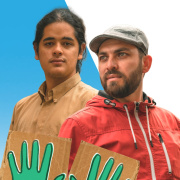
Arman and Aimal.

Good mental health needs community support, and refugeeism is not the only thing refugees have something to say about

Arman and Aimal, Finland

People often think that everything a refugee does is about being a refugee. But I can also know something about Finnish people’s problems, and in fact, I sometimes see them more clearly as an outsider.

Arman and Aimal were confused to observe the anxiety felt by people living in ‘the happiest country in the world’. Now their observation is being turned into a documentary film that got off the ground thanks to Solidary Corps project funding. Arman and Aimal reflect on how the lack of communality impacts on wellbeing, and on the obstacles that hamper refugees’ or immigrants’ involvement and participation.

The idea of a documentary expanded beyond the Solidarity Project and is already generating new ideas for peer support

Armani and Aimal had an idea for a documentary film about mental health problems in Finnish society which stems from an everyday observation.

They had carried out background research and talked to experts, they had the required training and skills for directing and filming, and they had spent several years getting the filming equipment together. Because of their studies and work, however, it was difficult to find time for the project.

“Then a Finnish film producer told us about the Solidarity Projects and said that although they had never funded a film project before, it was worth a try. We did receive funding, and the Solidarity Project gave us the energy to really launch the project”, Aimal recalls.

At first, they were planning to produce the documentary independently, only relying on the Solidarity Project funding. However, film producers advised them and said that taking more time and a more professional approach would be worthwhile if they wanted the documentary to reach the audience.

Some of their acquaintances, producers and production companies are currently interested in the documentary, but the first task is to find the rest of the characters from different parts of Finland. This is where some luck will be needed, as the topic is sensitive and requires networking, and the pandemic makes finding such people even more difficult. The film-makers have also had to take trouble in order to remain loyal to themselves as the process goes on.

“We have talked to many documentarists and producers, and all of them – each and every one – has suggested that we should have more refugees in our film. I have said from the outset that I do not want to make a film about the mental health problems of refugees. I have not experienced them, but I have experienced the mental health problems of Finns. People often think that everything a refugee does is about being a refugee. I do not agree. I do not want to be a refugee filmmaker. I just want to be a filmmaker, a person who makes films. Even so, it is more acceptable for me as a refugee talk about refugees’ problems. However, it is also possible for me to have knowledge about Finnish people’s problems. In fact, I can know more about them because I look at them from the outside”, Arman emphasises.

After coming a long way themselves, Arman and Aimal have started considering ways of making their skills, knowledge, networks and tools available for others interested in filmmaking to use and borrow. Not everyone has the same opportunities.

Arman and Aimal are also concerned in a more broad sense over how obstacles related to language skills, cultural differences, networks and resources affect immigrants’ and refugees’ possibilities to influence societal issues.

“When I came to Finland almost eight years ago, I was experienced and really wanted to change things, but there did not seem to be many opportunities for that. The language was one of the biggest challenges, and also people’s narrow way of thinking”, Aimal describes his experience.

Cultural focus on individuality may expose Finns to mental health problems

The fifth European Youth Goal is about Mental health and wellbeing: recognising them as an important theme and problem for young people, a need for better services, and fighting the stigma about mental health issues.

Arman and Aimal’s idea for the documentary also originated from an observation related to young people’s mental health – especially in Finland.

"It all started when I listened to Finns talking about their ordinary life. At some point I noticed that many of my friends suffered from anxiety. Some could not leave their homes for several days or weeks because they were so anxious. It was new to me, I had not experienced anything like that in my home country, Iran, where I lived for a short time. Then Finland was selected as the happiest country in the world. I think this is an interesting contrast”, says Arman.

Arman and Aimal hope to use their documentary to draw attention to this phenomenon and raise questions. As artists, they find that this role comes more naturally to them than proposing solutions directly.

“Personally, I think that this phenomenon could be caused by the focus on individuality and the fact that there are no communities in Finnish society. There are individuals and society, but nothing in between. If you think about Iran and Afghanistan, for instance, religion creates communities in these countries. Feeling that you belong to something makes it easier to face the difficulties of life. On the other hand, such issues as environmental problems have a negative effect on young people’s mental health, in particular”, Arman analyses.

Arman and Aimal think it is comforting that young people are not afraid to talk about mental health. It is not a taboo. On the other hand, they worry because people talk about it and agree, but that is all.

“Individualism is a tricky thing. We can't just say that you should get a community together. Different parties need to react and have access to support, we need public awareness, the media – perhaps a few films about this subject”, Aimal smiles knowingly.


Updated on Tuesday, 17/02/2026

Subscribe to