
The future is ours. Let’s make it what we want it to be
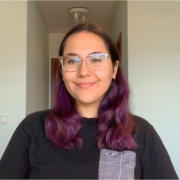
Ainhoa, Spain, Age 25I hope everyone can simply be. Free and without prejudices.
In a recent Disney movie, the lyrics of a song say “[…] All I need is a change. All I need is a chance. All I know is I can’t stay on the side. Open your eyes […]”
I think that idea simulates, precisely, a generic vision of what I expect from the future. Changes, opportunities, action, and a realistic vision of it.
I hope that the future holds plenty of opportunities for young people, especially in those areas where we are lacking today, such as in the job market. Opportunities cannot be given in an environment where academic preparation and previous professional experience have the same value in the selection process. Because we are aware that a certain level of education is required and competition is increasing, thus, we study a degree, a master's degree, or two if necessary, languages, soft skills, etc. We do our best, and then we run into institutions and companies that do not risk giving us that first opportunity to gain experience. And, of course, at the educational level, you don't acquire the knowledge of what the job is in practice.
I also hope that the future will be inclusive and with 0 discrimination. Where there is gender equality, and where color, race, sexual orientation, gender or any difference is not an issue. In other words, I hope we value diversity as a strength rather than a problem and everyone can simply be. Free and without prejudices.
I hope for many things in the future, but I also believe that all of this can only be achieved through, as I said, changes and opportunities. Based on taking action and working to make it possible. And it is in our hands; in those of all of us. I hope to achieve the future that I would like to see not only for me, but for those to come. And I believe that the start point to do so is education. The great changes will not come alone and immediately, but hopefully the youth will be educated in these values and among all, these changes and this eagerness to work on what is fair and necessary, will become a reality.
Feeling
I feel hopeful and encouraged. To continue learning from, moving forward with and being inspired by those who follow my same goal.
Influence
I believe that there is no better influence than the one you set for yourself when you have a clear objective. That determination and passion to achieve it will make others want to see themselves reflected and fight for their own goals. And that is what we need: people involved and willing to make the change.
Updated on Tuesday, 17/02/2026