
© Noemi Coppolella

An unforgettable experience in Poitiers

Noemi, Italy

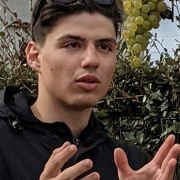
I decided to leave without too many expectations to make the most of this opportunity I had been given. For this reason, I left on September 5, 2018, at 2 a.m., with 2 suitcases, a backpack, and “a good luck” from my family.

"Gonna travel, gonna travel wild and free. I’m gonna pack my bags because this great big world is calling me" — Elvis Presley, "Harem Holiday"

If I had to describe my adventure, I would use these words.

My Erasmus experience has been incredible. It might sound trivial but, in the end, it was really like that. I did my Erasmus study in Poitiers, France. I didn’t know much about it other than the Battle of Poitiers and De André’s song “Carlo Martello”.

I decided to leave without too many expectations to make the most of this opportunity I had been given. For this reason, I left on September 5, 2018, at 2 a.m., with 2 suitcases, a backpack, and “a good luck” from my family.

As soon as I got there, after a long and exhausting journey, I realized from that day on I would live in a foreign country for the next six months. The next day, the first thing I did was to visit the city and meet the people I had added to the Erasmus group on Facebook. People with whom I still keep in touch and visited French cities, spent evenings eating "raclette" with good wine, went to parties, watched movies, laughed, joked, supported each other. In short, they had become my family. It is thanks to them that I fully enjoyed this experience because it is also the people you meet who make the difference.

However, when everyone hears the word "Erasmus", they only think of parties. But it is more than that. It's meeting other people. It's creating memories. It is finding yourself. And last, but not least, it is also studying. Yes, it is! I studied a lot to pass the exams and I met some of the best university professors, who gave me useful advice for my future.

At the end I enjoyed every single minute, sometimes I had bad moments, but this is also a part of this personal journey. Coping with myself, this is what I improved during those months. I grew emotionally and I became more responsible and more independent.

For this experience, I must thank the European Union, the people I met, my family and finally myself. I think that once you are an Erasmus, you will always be an Erasmus.

It simply can’t be forgotten because when you come back, you’re a completely different person.

Updated on Tuesday, 17/02/2026

© Irene Sechi

It’s not all peaches and dandelions… but it’s worth it!

Irene, Italy

If I had to describe my Erasmus in a single sentence, it would be: “Never give up, you won’t regret it!” Everything happens for a reason

We can say that the decision taken in 1973 by this country to join the Common Market has been reversed by this referendum to leave the EU” - said the BBC News anchorman.

This is my first memory of my Erasmus in Scotland.

I had landed a few hours before from Sardinia where I studied languages at the University of Sassari. It was June 2016, and British people were called to decide whether or not to stay in the EU.

The morning, when I was about to start my traineeship at a language school in Edinburgh, I switched on the TV and the Brexit news came out as a wet blanket! “Wow, discovering Europe in the first country which withdrew from EU”…Not a bad start! - I ironically remember thinking.

By that time, I didn’t know it would have been the least of my troubles.

Since the very first days of work in the school I noticed something weird in the air. One day I was told by my mentor that the school could no longer fulfill the traineeship agreement due to “strong differences of opinion between the headmaster and the rest of the staff”. In other words: the school was about to close permanently and I had to leave!

I felt frustrated and disappointed. I couldn’t believe that was happening to me and my Erasmus could end that way.

I had two choices in front of me: going back to Italy and give up or find another traineeship in a short time.

In accordance with my university, I chose the second option, and knocked on the door of the Italian Cultural Institute. They told me there were no chances to hire another trainee, due to fact that they already hired 4, but I left my CV anyway.

I spent the following days handing CVs in every corner of Edinburgh, running top to bottom of the town like Mark Renton in Trainspotting…

I had almost given up hope when my phone rang: “Hello…?” “Irene, this is Elisabetta from the Italian Cultural Institute. I am delighted to inform that you are welcome to join our staff… are you still interested in?”

That phone call changed everything. From that day on I had the chance to work with amazing staff and colleagues with whom I shared unforgettable moments and experiences.

One above all was the organization of the Italian events within the Fringe Festival - the largest arts festival in the world.

On that occasion I had the chance to interview Dario Fo - Nobel Prize for literature - and meet several Italian Ambassadors in Europe.

Apart from work, I had the opportunity to visit beautiful Scotland which now I consider my second home, and where I left a piece of my heart.

So, long story short: if I had to describe my Erasmus in a single sentence, it would be: “Never give up, you won’t regret it!” Everything happens for a reason.

Updated on Tuesday, 17/02/2026
© Lauren Halley

A journey of self-discovery

Lauren, Ireland

It was a life changing experience I will never forget

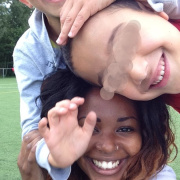
I had the opportunity to attend a Youth Exchange through Erasmus+ called 'Power Up'. All participants travelled to each country therefore I had the opportunity to travel to Estonia and Armenia and we hosted others in Ireland. The exchange focused on increasing self-awareness, self-discovery and improving yourself as a person in all aspects. We took part in activities such as exploring the local cities, treasure hunts, hikes and culture nights. We all bonded together as a team and I left with friends for life.

It was like a journey of self discovery for me, experiencing new cultures and learning more about myself as a person, and most importantly having fun. It was a life changing experience I will never forget.

Updated on Tuesday, 17/02/2026

© European Union

A school year with visually impaired children

Nicolás, Spain

Understanding the needs of the people and providing ways to improve their quality of life – that’s why I’m here.

20-year-old Nicolás Jiménez previously studied physical activity and sport in Valencia, Spain. Mid-degree, Nicolás was unsure of whether to continue with his studies but knew that he wanted to focus his career on using sports for a social cause. Upon learning of V-isability – a project in the Center for Education and Rehabilitation for the Blind in Athens, Greece - he knew that this would be his opportunity to follow his interests, working with people with disabilities and obtaining new life experiences in a different environment.

How does a day in the center for the blind looks like for volunteers? In the morning, Nicolás and three other volunteers print books in braille or create audio books. At lunch, they assist students in the dining room. Then, in the afternoon, they involve students in a variety of recreational activities, from sports to theatre. After 11 months in the project, volunteers leave with a deep knowledge of how to support the visually impaired in their everyday lives and how to organise educational activities for children.

Updated on Tuesday, 17/02/2026

© Yannick

What an experience!

Yannick, France

I wish I could describe it all...

My European Solidarity Corps year was a life growing experience that I couldn't imagine. During my volunteering in Poland, I had the chance to discover new places, new people, new dishes, new culture and much more! I have also been able to learn new skills and improve some. I wish I could describe it all!

I taught English, French and Italian. I am still learning Polish (I will probably need a few more years :-) ). I led cooking workshops with seniors, I did animation workshops in schools. I brainstormed. I helped to organise exhibitions and concerts. I did some gardening such as raking the leaves, preparing the soil, planting, watering - it is way more tiring than I could expect! I took initiative and created my own projects such as “cleaning walks”. I have been surprised. I played football and believe me, I am not a football guy. I have done crazy things. I hiked in the Tatras mountains and saw breathtaking landscapes. I danced and I sang. I laughed. I tried new dishes. I had stressful and scary times too. I had to step back, but I was helped and supported.  I learned and I adapted myself. I grew up...
I am convinced the European Solidarity Corps is a wonderful way to grow, learn about yourself and others. I still want to be part of it and that's why after my volunteering, I have chosen to be a project coordinator. Who knows... See you around! ;-)

Updated on Tuesday, 17/02/2026

© Nicolas Hecker

Vice President of the German Federal Youth Council / Deutscher Bundesjugendring (DBJR)

Marius, Germany

Young people help in shaping our society every day. They want to take on responsibility and are capable of doing so. As experts for their own lives, they contribute decisive perspectives. Involving them in decision-making is an enrichment to our democracy.

As a scout, I have learned from a very early age how important it is to consider the needs of children and young people, for example when organising group meetings or planning camps. The best way to do this is to involve children and young people directly in the decision-making. Young people are experts of their own lives and, therefore, the best advisors when it comes to (political) decisions that touch their interests.

As a German EU youth representative (2017-2019), I have taken part in 6 EU Youth Conferences in order to give a voice to the results of the participation rounds of the EU Youth Dialogue. Here I learned that although the basic will to involve young people in politics exists in principle, there are still some problems in the concrete implementation. On the one hand, there is often a lack of knowledge of what "good youth participation" means in practice. On the other hand, unfortunately, there is often a lack of willingness on the part of politicians to involve young people seriously - because in the final consequence this means sharing power. 

As the topic of youth participation (at the European level) is very close to my heart, I have run for Vice President of the German Federal Youth Council (Deutscher Bundesjugendring) in 2019. Deutscher Bundesjugendring is the policy-shaping umbrella structure of youth organizations in Germany and represents the interests of over 6 million young people and 53 youth organisations. As Vice President, I have the privilege of chairing the European Steering Group for the EU Youth Dialogue together with the German Ministry of Youth during the German EU Council Presidency. Here we are planning and steering the 8th cycle of the EU Youth Dialogue together with the National Youth Councils and Youth Ministries from Portugal and Slovenia, the European Youth Forum and the European Commission. It was important for me not only to criticise but to take responsibility and, therefore, to have the power of shaping the future EU Youth Dialogue in a joint effort. 
 

Updated on Tuesday, 17/02/2026

© EUYC Bucharest (March 2019)

International Affairs Vice-President of CTR (Romanian Youth Council)

Francesca, Romania

Creating the personal and professional development context for youth is the best investment in the future. There should not be any policy made for youth without consulting them and putting into practice their ideas. This is what EU Youth Dialogue does: creates a safe place where the youth can share ideas, concerns and solutions. It is our duty to make sure we will make their proposals become reality

I first got into contact with the EU Youth Dialogue 6 years ago. I was a participant, a consultation organizer, an EU Youth Delegate, the co-coordinator of the Romanian National Working Group and a member of the European Steering Group.

Basically, my development put me in every stage from every pillar of the EU Youth Dialogue. It is utmost important to bring together the youth, local administration, National and European decision-makers and youth organizations to act together. Let us all demonstrate that we are the generation that builds upon a constant dialogue and fruitful solutions. We must do more than engage, we must create the opportunity for dialogue and the most important: we must push an action plan forward. Our generation will do more than engage, we will create!

Updated on Tuesday, 17/02/2026

© European Youth Forum

How the EU Youth Dialogue impacts on young people's lives

Rita, Lithuania

This is when I really started to understand what a big impact the EU Youth Dialogue can have on the lives of young people giving us an opportunity to be involved in shaping policies that affect us.

My first encounter with the EU Youth Dialogue was in 2015 when I started working at the Lithuanian Youth Council. At first it was hard to see how the things we discuss with young people will be heard at the European level but then in Malta in 2017 I was able to attend the EU Youth Conference. There, European politicians, ministry representatives and young people themselves were discussing ideas and suggestions coming from young people from all the different corners of Europe that would later input into the EU policy making processes. This is when I really started to understand what a big impact the EU Youth Dialogue can have on the lives of young people giving us an opportunity to be involved in shaping policies that affect us. 

Now when I work for the European Youth Forum in Brussels, that is a part of the European Steering Group governing the process on the EU level, I have a chance to even better understand and experience how this EU wide youth participation mechanism works and what is its true potential. I am super excited to be able to work with many different stakeholders on maximising this potential and hope to see even more concrete examples of the impact of the process on young people’s lives locally, nationally and at the European level. To truly show to all young people that our voice matters.

Updated on Tuesday, 17/02/2026

© European Union

From local action to European policy making in the youth field

Celine, Belgium

It was enormously enriching to talk to other young people from all over Europe as well as decision makers from different EU countries. It showed that despite differences in country size, structure and political priorities, there are a lot of topics that still concern all young people in Europe.

I stumbled into the EU Youth Dialogue (back then Structured Dialogue) a bit by chance in 2015. Up until then I had already been working as a volunteer in the youth field as a guide in the Patromädchen St. Raphael Eupen (a local youth organization similar to a scouting group) and as member of the organizing committee of a student club in Brussels, but I had never worked on the policy side of things.

During my first employment, however, I was lucky to work in close contact with the Belgian German-speaking youth council (RDJ – Rat der deutschsprachigen Jugend), who introduced me to the EU Youth Dialogue. For around two years, I worked with our local national working group and could experience different aspects of the EU Youth Dialogue.

Two highlights stand out particularly from this time, one local and one on a European level. The local highlight was an appointment to present to our local parliament the results of an online survey the NWG had launched around the topic of mental health of young people in preparation of the EU Youth Conference in Amsterdam in April 2016. The other highlight was, of course, my participation in the EU Youth Conference in Amsterdam in 2016. It was enormously enriching to talk to other young people from all over Europe as well as decision makers from different EU countries. It showed that despite differences in country size, structure and political priorities, there are a lot of topics that still concern all young people in Europe.

Not only did the experience of the EU Youth Dialogue strengthen my believe in the next generation of Europeans, but it also inspired me on a personal level to continue to work in the European youth field, first as a volunteer and later on as a professional.

Updated on Tuesday, 17/02/2026

© European Union

Raising awareness about sustainable environmental protection

Valentina, Bulgaria

I can talk about solidarity as teamwork, with the aim of establishing mutual support and understanding within the society and improving the quality of life for everyone.

The Urban Ecology project focused on attracting attention, raising awareness and offering sustainable models for environmental protection in the city of Varna, Bulgaria. Through its waste reduction and recycling programmes, civic awareness campaigns, and school outreach efforts, the project aimed to make locals aware of their ecological footprint.

At the centre of this project is volunteer Valentina Vagge, 28, from Italy. After graduating with a Master’s degree in Local and Global Development, she joined the Urban Ecology project to kickstart her career in the environmental NGO sector. As a foreigner, her participation has not only piqued the locals’ interest in the programme, but has also allowed her to highlight the international dimension of environmental sustainability and share good practices from her home country.

Every week, Valentina visited kindergartens and schools in support of the paper and waste recycling programme, providing information and getting children involved in paper recycling activities. She also worked in the urban ecolab, measuring pollution, noise and radiation levels in order to inform the public of the state of their environment and motivate them to take action.

Updated on Tuesday, 17/02/2026

Subscribe to